

мостовой кран Изделие может полностью соответствовать стандартам OSHA, CE и GB на бумаге, но при этом не пройти приемку у заказчика — потому что соответствие требованиям инспекции и соответствие проектным требованиям — это разные вопросы, и каждая из трех систем назначает фактическую работу по инспекции разным сторонам.
Если вы закупаете или экспортируете мостовые краны через цепочки поставок, связанные с США, ЕС или Китаем, практический риск заключается не в выборе неправильного стандарта проектирования, а в предположении, что сертификат, подтверждающий соответствие конструкции, также подтверждает, что кран проходит надлежащую проверку в процессе эксплуатации с той частотой, которая фактически требуется целевым рынком.
В этом руководстве сравниваются требования OSHA, CE и GB к проверке мостовых кранов (не к общей сертификации), включая то, кто несет юридическую ответственность за ее проведение, как часто она требуется и какие пробелы в документации чаще всего задерживают приемку проекта.
Оглавление
Краткий справочник: OSHA против CE против GB Инспекция мостовых кранов
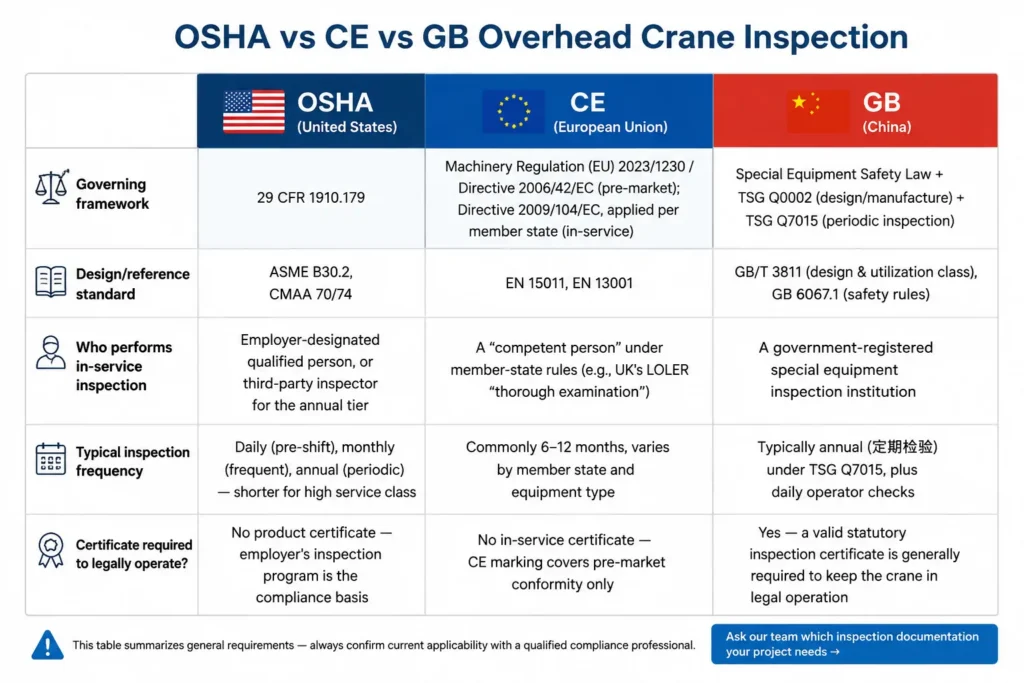
| Элемент | OSHA (США) | CE (Европейский Союз) | Великобритания (Китай) |
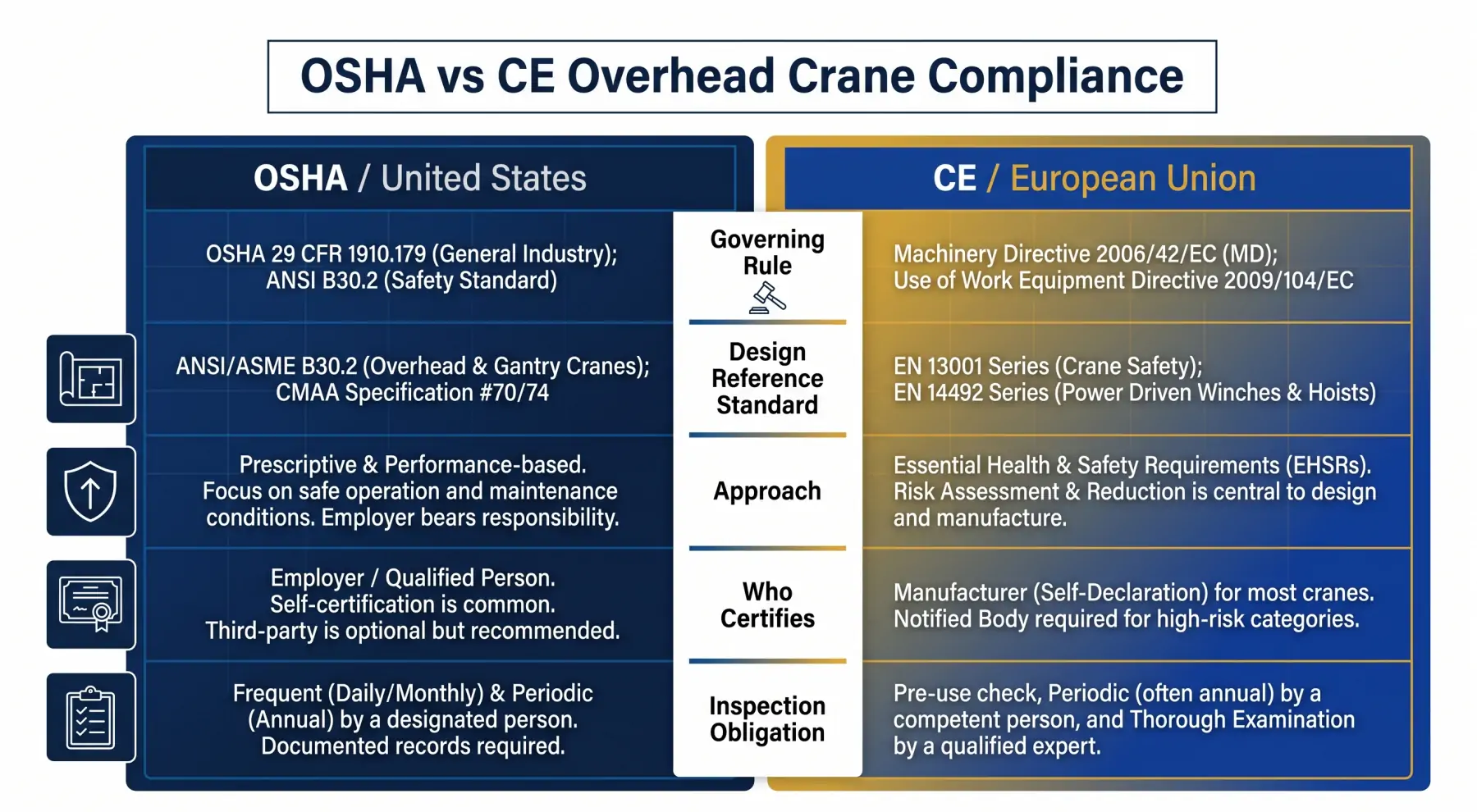
| Структура управления | 29 CFR 1910.179 | Регламент ЕС по машиностроению 2023/1230 / Директива 2006/42/EC (до выхода на рынок); Директива 2009/104/EC, применяемая в каждом государстве-члене (в процессе эксплуатации). | Закон о безопасности специального оборудования + TSG Q0002 (проектирование/изготовление) + TSG Q7015 (периодическая проверка) |
| Проектный/эталонный стандарт | ASME B30.2, CMAA 70/74 | EN 15011, EN 13001 | GB/T 3811 (Класс проектирования и использования), GB 6067.1 (Правила безопасности) |
| Кто проводит эксплуатационный осмотр? | Квалифицированное лицо, назначенное работодателем, или сторонний инспектор для ежегодной проверки уровня. | "Компетентное лицо" в соответствии с правилами государств-членов (например, "тщательная проверка" в соответствии с британским законом LOLER). | Государственное учреждение по инспекции специального оборудования |
| Типичная частота проверок | Ежедневно (перед сменой), ежемесячно (часто), ежегодно (периодически) — короче для высшего класса обслуживания. | Обычно от 6 до 12 месяцев, срок может варьироваться в зависимости от государства-члена и типа оборудования. | Как правило, ежегодное техническое обслуживание в соответствии с TSG Q7015, а также ежедневные проверки оператором. |
| Для законной деятельности требуется соответствующий сертификат? | Сертификат на продукцию отсутствует — соответствие требованиям обеспечивается программой инспекций работодателя. | Сертификат соответствия требованиям эксплуатации отсутствует — маркировка CE подтверждает соответствие только требованиям, предъявляемым до выхода продукции на рынок. | Да — для законной эксплуатации крана, как правило, требуется действующий сертификат обязательной проверки. |
В этой таблице приведены общие требования — всегда уточняйте актуальность требований у квалифицированного специалиста по вопросам соответствия. [Уточните у нашей команды, какая инспекционная документация необходима для вашего проекта →]
Получить коммерческое предложение →
Что на самом деле требуют OSHA, CE и GB для проверки мостовых кранов?
Эти три системы не просто используют разные стандартные номера — они назначают задание по проверке трем разным сторонам, и именно эта деталь определяет, что именно должен запросить покупатель.
OSHA: программа инспекций принадлежит работодателю, а не стороннему сертификату.
В соответствии с требованиями OSHA, сертификат проверки продукции не выдается. 29 CFR 1910.179 Обязанность по проведению текущих проверок возлагается на работодателя/оператора крана, а в соответствии со стандартом ASME B30.2 эта обязанность расширена до ежедневного, ежемесячного и ежегодного уровней. Это означает, что соответствие крана требованиям, предъявляемым к продукции, в США зависит не столько от прилагаемой документации, сколько от того, внедрит ли принимающая сторона необходимую программу инспекций с самого начала. Такая структура существует потому, что OSHA регулирует безопасность труда, а не сертификацию продукции — поэтому стандарт предполагает, что конструкция крана уже надежна (проверена на соответствие ASME B30.2/CMAA), и фокусирует свои правила на выявлении износа в процессе эксплуатации до того, как он приведет к инциденту. Полное описание четырех уровней инспекций OSHA/ASME и их точной периодичности см. в нашем сопроводительном руководстве: Что такое инспекция мостового крана?
CE: соответствие требованиям перед выходом на рынок и проверка в процессе эксплуатации — это два отдельных вопроса.
Маркировка CE подтверждает, что кран соответствовал основным требованиям безопасности на момент продажи — она не распространяется на текущий эксплуатационный осмотр, который государства-члены ЕС регулируют отдельно в соответствии с Директивой 2009/104/EC. Это наиболее часто неправильно понимаемый момент среди покупателей, впервые выходящих на рынок ЕС: Декларация соответствия CE — это заявление производителя перед выходом на рынок, подкрепленное соответствием проектным требованиям EN 15011/EN 13001, но в ней ничего не говорится о том, кто проверяет кран через шесть месяцев после установки. Эксплуатационная проверка ("тщательная проверка" в британской терминологии в соответствии с LOLER, с аналогичными требованиями в других государствах-членах, реализовавших директиву) обычно требуется каждые 6–12 месяцев в зависимости от оборудования и государства-члена и проводится 'компетентным лицом", а не государственным инспекционным органом. Кран может иметь действительную маркировку CE и при этом не соответствовать требованиям в стране эксплуатации, если предприятие не организовало необходимую эксплуатационную проверку.
В Великобритании обязательную проверку проводит зарегистрированный государством инспекционный орган, а не работодатель.
Стандарты Великобритании предусматривают проведение инспекций через обязательное государственное инспекционное учреждение, а не через владельца оборудования — GB/T 3811 устанавливает основы проектирования и класса эксплуатации, GB 6067.1 устанавливает правила безопасности, касающиеся инспекции и технического обслуживания, а TSG Q7015 регулирует саму обязательную периодическую инспекцию, как правило, ежегодно. Это структурно наиболее централизованная из трех систем: кран, работающий в соответствии с требованиями GB, как правило, не может оставаться в эксплуатации без действующего сертификата о проверке, выданного зарегистрированным инспекционным органом — по сути, это ближе к проверке технической исправности транспортного средства, чем к программе OSHA, управляемой работодателем, или к самодекларации производителя CE. Для покупателей, закупающих продукцию у китайских производителей, это важно, поскольку кран может иметь отличную документацию, соответствующую требованиям GB, для китайской системы внутренней инспекции, что само по себе не доказывает соответствие требованиям OSHA или CE в процессе эксплуатации для экспортного назначения.
Почему частота проверок зависит от интенсивности использования, а не только от стандартов?
Все три стандарта устанавливают минимальную частоту проверок, но частота, которая фактически обеспечивает защиту крана, зависит от способа его использования, а не от того, по какому стандарту он сертифицирован. Именно это предположение чаще всего приводит к повторяющимся проблемам: рассмотрение указанного в стандарте интервала как правильного интервала для каждого приложения, а не как минимального значения.
Два одинаковых крана, две совершенно разные скорости износа.
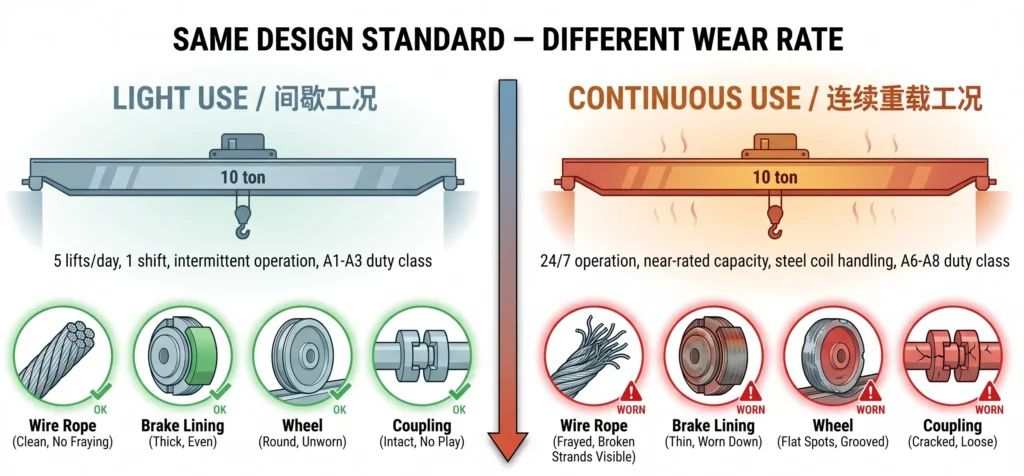
Два 10-тонных мостовых крана, построенных по одному и тому же проектному стандарту, могут изнашиваться с совершенно разной скоростью в зависимости от режима работы. Один кран, поднимающий штамп пять раз в день, подвергается лёгким, прерывистым нагрузкам. Идентичный кран, работающий 24 часа в сутки и перемещающий стальную рулонную сталь, непрерывно поднимает грузы, близкие к номинальной грузоподъемности, практически без простоев между циклами. Оба крана могут быть сертифицированы по одним и тем же проектным стандартам OSHA, CE или GB, но трос, тормозные колодки, колеса и муфта второго крана покажут измеримый износ гораздо раньше, чем первого, поскольку износ накапливается от фактических циклов нагрузки и часов работы, а не от имеющегося сертификата. Применение базового интервала проверки стандарта к обоим кранам в равной степени означает, что более тяжелый кран недооценивается по сравнению с фактическим риском отказа.
Когда интервал проверки должен быть короче, чем того требует стандарт.
Указанная в стандарте частота является минимальным требованием, а не правильным интервалом технического обслуживания для всех условий эксплуатации — интервал следует сократить при наличии любого из следующих условий: трехсменная непрерывная работа, высокие температуры, запыленность или коррозионная среда, длительная работа с грузоподъемностью, близкой к номинальной, или класс эксплуатации/использования A6, A7 или A8 в соответствии с GB/T 3811 (или эквивалентные более высокие классы эксплуатации CMAA/FEM). Ни одно из этих условий не меняет того, какой стандарт регулирует кран — они меняют частоту применения уровней инспекции, предусмотренных самим стандартом. Предприятие, эксплуатирующее кран с уровнем использования A6–A8, но при этом соблюдающее базовый годовой интервал, установленный стандартом, скорее всего, проводит недостаточное количество инспекций по сравнению с фактическим износом, независимо от того, по какой из трех систем он сертифицирован.
Ошибка при покупке: наличие сертификата CE не означает автоматического соответствия требованиям OSHA или GB.
Наиболее распространенная ошибка при трансграничных закупках кранов заключается в том, что сертификат CE рассматривается как доказательство соответствия крана требованиям OSHA к условиям труда, или наоборот — когда три системы регулируют разные аспекты соответствия и не заменяют друг друга.
Что именно охватывает каждая сертификация и что предполагают покупатели.
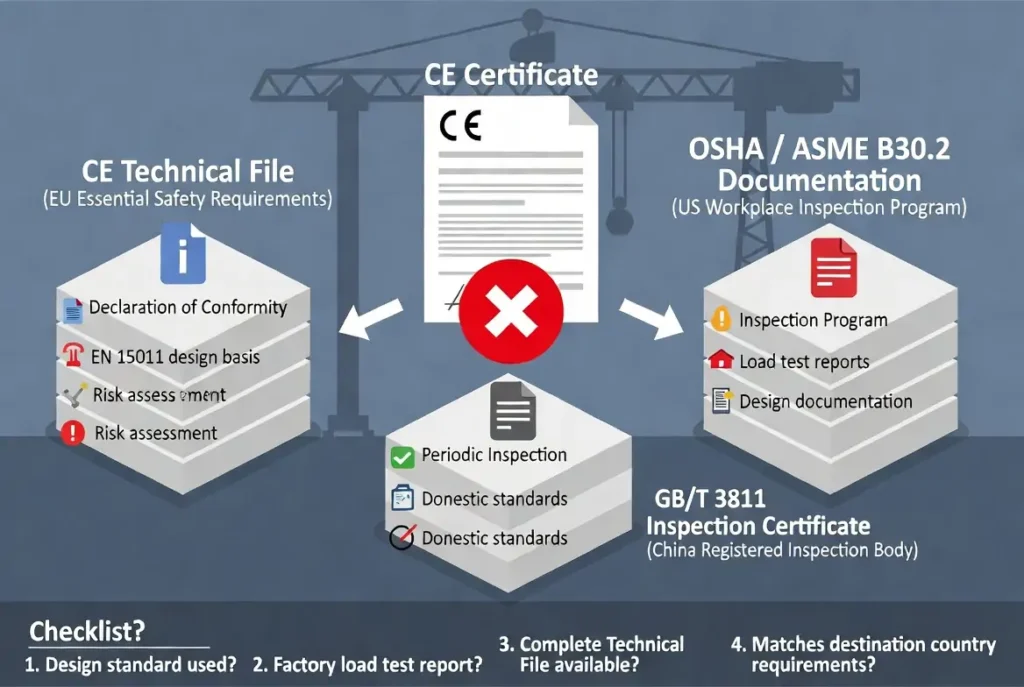
Маркировка CE подтверждает, что конструкция крана соответствовала основным требованиям безопасности ЕС на этапе производства — она ничего не говорит об обязательствах по инспекции на рабочем месте в США или о регистрации периодической инспекции в Китае. Соответствие требованиям OSHA зависит от программы инспекций работодателя, которая ссылается на проектную документацию ASME B30.2 — это не сертификат, который поставщик может передать так же, как декларацию соответствия CE, и он, безусловно, не передается предприятию за пределами США. Соответствие требованиям GB связано с системой зарегистрированных органов инспекции Китая и внутренними стандартами проектирования — сертификат инспекции GB крана не признается соответствующим требованиям OSHA или CE после экспорта оборудования. Разрыв между тем, что охватывает сертификат, и тем, что покупатель предполагает, что он охватывает, — это именно то место, где возникают проблемы при трансграничных закупках: заявление поставщика о "полной сертификации" должно быть разбито на то, к какой из трех систем это фактически относится и для какого пункта назначения.
Четыре вопроса, которые необходимо уточнить перед подписанием заказа на покупку.
Перед заказом подтвердите: по какому стандарту проектирования был изготовлен кран (ASME B30.2, EN 15011/EN 13001 или GB/T 3811)? Какова была основа заводских испытаний, и есть ли соответствующий протокол испытаний на нагрузку? Доступна ли полная техническая документация, а не только краткий сертификат? И соответствует ли документация нормативным требованиям фактического места назначения проекта, а не только страны-производителя? Один только сертификат не отвечает ни на один из этих вопросов — на них отвечают сопутствующие документы, и поставщик, который может предоставить только один тип сертификата, скорее всего, имеет право обслуживать только один из ваших целевых рынков.
Получить коммерческое предложениеПротоколы проверок зачастую ценнее запасных частей.
В экспортных проектах даже идеально работающий кран может не пройти приемку — не из-за механической неисправности, а потому что покупатель не может предоставить журнал осмотра, отчет об испытаниях на нагрузку или протокол проверки стального каната, которые должны быть представлены принимающему предприятию или аудитору.
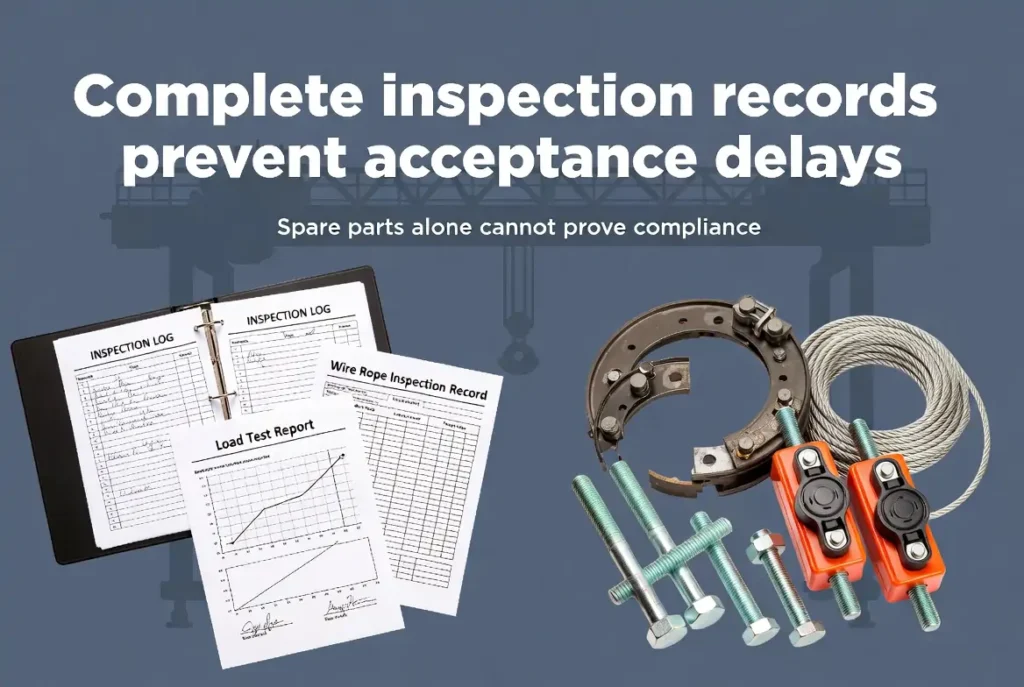
Отсутствие документов приводит к реальным задержкам в приемке, а не только к проблемам с документацией.
Предприятия часто вкладывают значительные средства в запасы запасных частей, рассматривая протоколы проверок как нечто второстепенное, — но в экспортных проектах зачастую именно пробелы в документации, а не дефекты оборудования, замедляют сроки. Кран прибывает, проходит физическую проверку при вводе в эксплуатацию, а затем приемка задерживается, потому что журнал проверок, отчет об испытаниях на нагрузку, протокол технического обслуживания или протокол проверки стального троса не соответствуют требованиям группы контроля заказчика или стороннего аудитора. Последствия одинаковы независимо от того, какой стандарт технически соблюден: приемка заказчиком задерживается, сторонний аудит проваливается из-за документации, а не из-за состояния оборудования, и завод, который рассчитывал на кран для начала производства, пропускает его — не потому, что кран небезопасен, а потому, что никто не может доказать, что он был должным образом проверен. В частности, для зарубежных проектов полные протоколы проверок сокращают количество споров по приемке и снижают риски ответственности в дальнейшем, чего не может обеспечить один лишь запас запасных частей.
Что инспекторы на самом деле обнаруживают в большинстве случаев
Большинство выявленных в ходе проверки проблем не являются катастрофическими структурными дефектами — это небольшие, накапливающиеся проблемы, которые легко пропустить по отдельности и дорого обходятся в совокупности: слишком большой зазор тормоза, смещение концевого выключателя со своего правильного положения, недостаточно смазанный трос, изношенная оболочка кабеля, недостаточно затянутые болты или ослабленное крепление рельса. По отдельности ни одна из этих проблем не выглядит срочной. Однако, если их не устранить, они накапливаются, приводя к тем самым отказам, предотвращению которых и призвана способствовать хорошая программа проверки: увеличение тормозного пути, преждевременный износ троса, повреждение рельса колесом или электрическая неисправность, останавливающая движение. Реальная ценность хорошо проведенной проверки, в соответствии с любым из трех стандартов, заключается в выявлении этих мелких проблем на ранней стадии, а не в ожидании, пока одна из них перерастет в незапланированный отказ.
Заключение
Требования OSHA, CE и GB к проверке мостовых кранов различаются не столько в целях, сколько в том, кто отвечает за их выполнение: OSHA передает программу инспекций в руки работодателя, CE отделяет соответствие конструкции перед выходом на рынок от регулируемой государством проверки в процессе эксплуатации, а GB направляет обязательную инспекцию через зарегистрированный государственный инспекционный орган. Перед следующим трансграничным проектом подтвердите, какой из трех стандартов фактически регулирует вашу страну назначения, рассматривайте указанный в каждом стандарте интервал как минимальный, а не целевой, если ваш кран работает в тяжелых условиях, и ведите записи об инспекциях так же тщательно, как и записи о запасных частях — именно они часто определяют, пройдет ли приемка гладко.
Нужна помощь в определении того, какая система инспекций подходит для вашего проекта, или в подготовке документации для экспорта?

Специалист по оборудованию
Успешный менеджер по работе с кранами с обширным опытом в управлении крупномасштабными проектами и операционным контролем. Подтвержденный опыт увеличения доходов и обеспечения соблюдения требований безопасности.
Часто задаваемые вопросы
В1: Соответствует ли мостовой кран с маркировкой CE требованиям OSHA или GB по проверке?
Нет. Маркировка CE подтверждает соответствие конструкции, разработанной до выхода на рынок, правилам ЕС; она не распространяется на программу инспекции рабочих мест OSHA в США, инициированную работодателями, или на зарегистрированную правительством Великобритании обязательную периодическую инспекцию в Китае. Требования к инспекции на каждом целевом рынке должны выполняться в соответствии с их собственными условиями, независимо от наличия других маркировок на кране.
В2: Кто несет юридическую ответственность за проверку мостовых кранов в соответствии с каждым стандартом?
В соответствии с требованиями OSHA, работодатель/оператор отвечает за программу инспекций. В соответствии с требованиями CE, инспекции в процессе эксплуатации регулируются имплементацией Директивы 2009/104/EC каждым государством-членом ЕС, и, как правило, требуют наличия "компетентного лица". В соответствии с требованиями GB, обязательную периодическую инспекцию проводит зарегистрированное государством учреждение по инспекции специального оборудования, и для поддержания крана в рабочем состоянии, как правило, требуется действующий сертификат.
В3: Как часто следует осматривать мостовой кран?
Каждый стандарт устанавливает базовый период — обычно ежедневный/ежемесячный/ежегодный в соответствии с OSHA, 6–12 месяцев в соответствии с правилами большинства государств-членов ЕС и годовой в соответствии с британским стандартом TSG Q7015, — но это минимальные значения. Непрерывная многосменная работа, суровые условия окружающей среды, подъем грузов, близких к номинальной грузоподъемности, или высокая степень использования (A6–A8) — все это оправдывает сокращение интервала ниже установленного стандартом минимума.
Вопрос 4: Какие документы, подтверждающие качество продукции, действительно необходимы зарубежным покупателям?
Как минимум: журнал осмотра, протокол испытаний на нагрузку, журнал технического обслуживания и протокол осмотра стального каната. В экспортных проектах отсутствие или неполные версии этих документов являются распространенной причиной задержки приемки заказчиком или провала сторонних аудитов — даже если сам кран находится в исправном состоянии.
В5: Что обычно выявляют при осмотре мостовых кранов?
В большинстве случаев выявляются незначительные, накопившиеся проблемы износа, а не серьезные структурные дефекты — например, слишком большой зазор тормоза, смещение концевого выключателя, недостаточная смазка троса, изношенная оболочка кабеля, недостаточно затянутые болты или ослабленное крепление рельса. Если эти проблемы не устранить, они накапливаются и приводят к более серьезным поломкам, поэтому выявление их на ранней стадии является основной целью программы регулярных проверок.
Связанные статьи
- Соответствие требованиям OSHA и CE для мостовых кранов: Практический контрольный список для покупателей и экспортеров (2026)
- Что такое осмотр мостового крана? Виды, периодичность и основные пункты контрольного списка.
- Пояснение: что означают обозначения A1–A8 и как выбрать правильный вариант (пояснение к классификации рабочих мест крана)
- Руководство по осмотру и замене тросов для кранов.

 English
  العربية
  Español
  Français
  Português
  Русский