

Маркировка OSHA и CE не являются взаимозаменяемыми, и заявление поставщика о "соответствии требованиям OSHA и CE" часто означает два отдельных технических файла, две отдельные проектные основы и — если вы покупаете оборудование для европейского предприятия — приближающийся срок соблюдения требований. Соответствие требованиям OSHA в США основано на проектных рекомендациях ANSI/ASME B30.2 и обязательствах по инспекции, изложенных в 29 CFR 1910.179; маркировка CE в ЕС основана на гармонизированных стандартах, таких как EN 15011 и EN 13001, в рамках системы регулирования машин и оборудования, которая существенно меняется в зависимости от... 20 января 2027 г., когда Регламент (ЕС) 2023/1230 полностью заменит действующую Директиву 2006/42/EC о машинах и механизмах.
Если вы закупаете мостовые краны для предприятий на любом из этих рынков — или на обоих сразу — практический риск заключается не в выборе неправильного стандарта, а в предположении, что одна сертификация распространяется на другую, или в заказе оборудования в соответствии с директивой ЕС, которая вскоре будет заменена, без проверки того, соответствует ли техническая документация вашего поставщика требованиям нового регламента.
Этот контрольный список охватывает фактические требования OSHA, фактические требования для маркировки CE, существенные различия между двумя системами, а также конкретные документы, которые необходимо запросить у любого поставщика перед подписанием заказа на покупку.
Оглавление
Краткий справочник: Соответствие требованиям OSHA и CE для мостовых кранов.
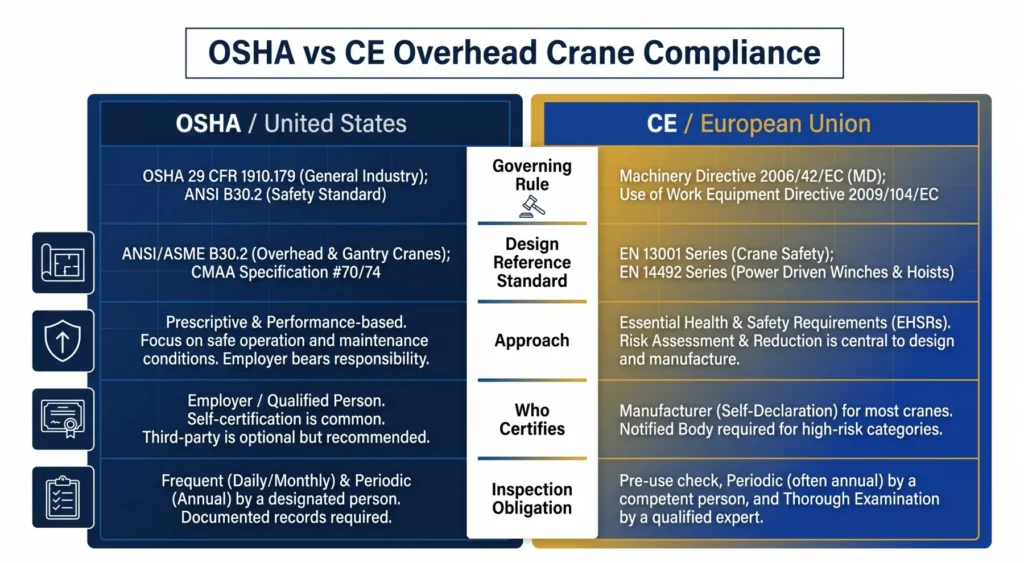
| Элемент | OSHA (США) | Маркировка CE (Европейский Союз) |
| Правило управления | 29 CFR 1910.179 (эксплуатация/инспекция) | Директива о машинах 2006/42/EC → Регламент (ЕС) 2023/1230 (полное применение с 20 января 2027 г.) |
| Проектный эталонный стандарт | ANSI/ASME B30.2, Спецификация CMAA 70/74 | EN 15011 (мостовые/козловые краны), EN 13001 (проектирование безопасности крана) |
| Подход | Нормативные — конкретные числовые требования | Оценка рисков — производитель проводит оценку рисков с учетом основных требований охраны здоровья и безопасности. |
| Кто проводит сертификацию? | Работодатель/оператор обеспечивает соблюдение требований посредством программы инспекций; сертификат на продукцию не выдается. | Производитель самостоятельно заявляет о соответствии (или использует уполномоченный орган для сложных функций безопасности) посредством декларации соответствия ЕС. |
| Обязанность по проведению инспекции | Частые (ежедневные/ежемесячные) + периодические (ежегодные) проверки, инициируемые работодателем. | Соответствие требованиям оценивается до выхода на рынок; инспекция в процессе эксплуатации регулируется отдельно правилами государств-членов (например, LOLER в Великобритании). |
В этой таблице приведены общие требования — всегда уточняйте актуальность требований у квалифицированного специалиста по вопросам соответствия. [Уточните у нашей команды, какая документация необходима для вашего проекта →]
Получить коммерческое предложениеСоответствие требованиям OSHA для мостовых кранов: что должны подтвердить покупатели из США.
OSHA не сертифицирует и не утверждает отдельные краны — она возлагает на работодателя ответственность за обеспечение соответствия оборудования и программы инспекций требованиям 29 CFR 1910.179, что на практике означает подтверждение того, что кран был спроектирован в соответствии со стандартом ANSI/ASME B30.2 а также в соответствии со спецификациями CMAA до начала установки.
Вот в чем чаще всего ошибаются покупатели: производитель не выдает никакого "сертификата" OSHA, как это происходит с декларацией соответствия CE. Правила OSHA в отношении кранов и подъемников возлагают бремя соблюдения требований на владельца оборудования/работодателя, который должен убедиться, что конструкция крана, программа инспекций и квалификация оператора соответствуют стандарту — именно поэтому вы фактически покупаете проектную документацию производителя (со ссылкой на ANSI/ASME B30.2 для подвесных и консольных кранов или соответствующую спецификацию CMAA для кранов с верхним или нижним расположением стрелы), а не штамп о подтверждении соответствия.
Обязанности по проведению инспекций делятся на два уровня, и покупателям, приобретающим новое оборудование, необходимо планировать оба с самого первого дня: В соответствии со стандартом, частые проверки (ежедневные или ежемесячные, охватывающие рабочие механизмы, крюки и канаты) и периодические проверки (ежегодная, более комплексная структурная и механическая проверка) являются обязанностью работодателя. Это означает, что при принятии решения о покупке следует также учитывать, предоставляет ли поставщик шаблоны документации для проверок или постоянную техническую поддержку, поскольку кран, соответствующий стандарту, но не имеющий программы проверок, все равно представляет опасность для OSHA.
Распространенный пробел в документацииПоставщики, экспортирующие продукцию преимущественно на рынки за пределами США, иногда указывают в своей технической документации только стандарты FEM или GB/T, которые охватывают в целом сопоставимые инженерные принципы, но не содержат ссылок на ANSI/ASME B30.2 или CMAA. Поэтому следует напрямую уточнить, указаны ли эти американские стандарты в проектной документации крана, поскольку специалист по технике безопасности или страховщик предприятия, предназначенного для рынка США, могут специально запросить упоминание этих стандартов во время ввода в эксплуатацию.
Маркировка CE для мостовых кранов: что должны подтвердить покупатели из ЕС.
В настоящее время маркировка CE для мостовых кранов регулируется Директивой 2006/42/EC о машиностроении, но Регламент (ЕС) 2023/1230 полностью заменяет ее с 20 января 2027 года — это означает, что любой проект с многолетним сроком реализации должен уже сейчас подтвердить, соответствует ли техническая документация поставщика действующей директиве или новому регламенту.
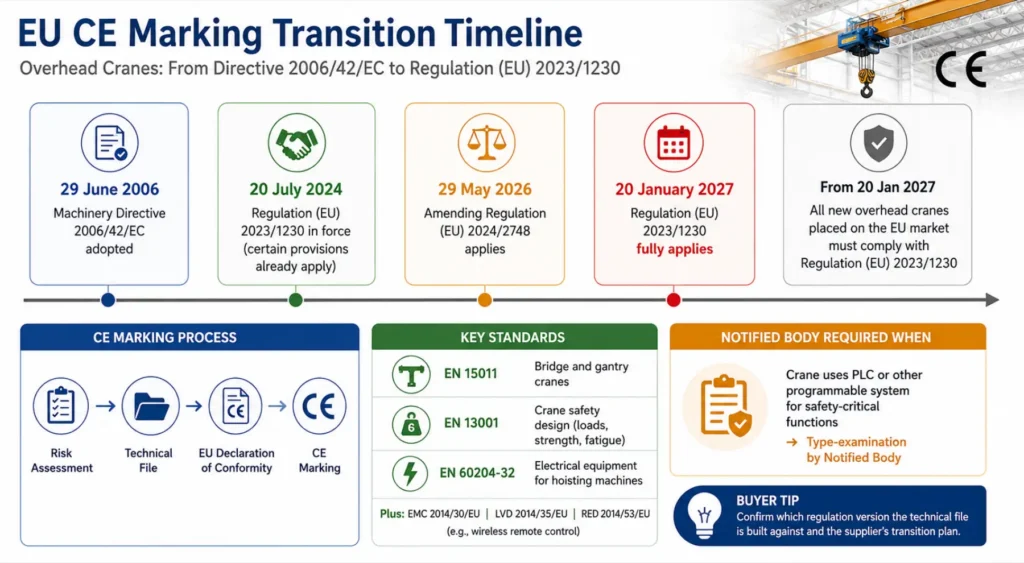
Основной механизм отличается от модели OSHA, ориентированной на работодателя: Маркировка CE — это самодекларация производителя. (или, для оборудования со сложными функциями безопасности, независимая оценка уполномоченного органа) что кран соответствует основным требованиям охраны труда и техники безопасности, подтвержденная технической документацией, оценкой рисков и декларацией соответствия ЕС. В частности, для мостовых кранов соответствующие гармонизированные стандарты, которые обеспечивают техническое руководство по их применению, следующие:
- EN 15011 — Краны: мостовые и козловые краны (проектирование, испытания, требования безопасности) — прямой функциональный эквивалент стандарта ANSI/ASME B30.2 в инженерной сфере.
- EN 13001 — Безопасность кранов: общие принципы проектирования (нагрузки, прочность, усталость).
- EN 60204-32 — Электрооборудование для подъемных механизмов, а также отдельные директивы по электромагнитной совместимости (2014/30/EU), низковольтному оборудованию (2014/35/EU) и радиооборудованию (2014/53/EU), если кран оснащен беспроводным дистанционным управлением.
Некоторые переходные сроки наступают раньше даты начала полного внедрения программы в 2027 году и уже действуют в настоящее время.Конкретные статьи Регламента (ЕС) 2023/1230, включая положения об обязательствах экономических операторов, применяются с 20 июля 2024 года, а поправки к Регламенту (ЕС) 2024/2748 вступают в силу с 29 мая 2026 года. Такая поэтапная последовательность действий делает вопрос "просто проверьте наличие маркировки CE" недостаточным для любого проекта, рассчитанного на следующие два-три года — следует конкретно уточнить, на какой версии регламента основана техническая документация и есть ли у поставщика план перехода к 2027 году.
В случаях, когда самодекларации недостаточноЕсли кран использует программируемый логический контроллер (ПЛК) для выполнения критически важных функций безопасности, то в соответствии с Директивой/Регламентом по машинному оборудованию, как правило, требуется типовая экспертиза, проводимая уполномоченным органом, а не просто самосертификация производителя — подтвердите это заранее, поскольку привлечение уполномоченного органа увеличивает время выполнения работ, чего не требуется для стандартного крана, заявленного производителем самостоятельно.
OSHA против CE: ключевые различия, которые действительно повлияют на вашу покупку.
Эти две системы различаются не только в документации, но и в философии: OSHA — это система, устанавливающая предписания и контролирующаяся работодателями, в то время как маркировка CE основана на оценке рисков и заявляется производителем, и ни одна из них не удовлетворяет требованиям другой, даже если базовые инженерные решения схожи.
- Рекомендательный подход против подхода, основанного на оценке риска: Спецификации ANSI/ASME B30.2 и CMAA содержат более конкретные числовые требования (процент испытаний на нагрузку, интервалы проверок), которые инспектор по соблюдению требований может проверить по фиксированному списку. Стандарты EN 15011/EN 13001 требуют от производителя проведения документированной оценки рисков и обоснования проектных решений в соответствии с основными требованиями — это означает, что два крана с маркировкой CE от разных производителей могут законно отличаться по конкретным числовым параметрам больше, чем два крана, соответствующие стандарту ANSI/ASME B30.2.
- Где лежит бремя соблюдения требований: В соответствии с требованиями OSHA, работодатель/оператор в США несет постоянную ответственность за проверку и безопасную эксплуатацию независимо от того, какая документация прилагалась к крану. В случае маркировки CE, производитель несет ответственность за заявленное соответствие в момент продажи, в то время как эксплуатационная проверка в странах ЕС/ЕЭЗ, как правило, регулируется отдельными нормативными актами государств-членов (такими как LOLER Великобритании, хотя после Brexit Великобритания теперь использует собственную систему аккредитации UKCA/CE, а не прямую маркировку CE ЕС).
- Что следует запрашивать у любого поставщика независимо от рынка: Указание на соответствие крана стандарту проектирования (а не просто "FEM/ISO/GB" в общем виде), технический файл или сводка расчетов, а также — для оборудования, подлежащего сертификации CE — Декларация соответствия ЕС со ссылкой на конкретную версию директивы/регулятора и применяемые гармонизированные стандарты.
- Если вы работаете на обоих рынках: Не следует предполагать, что один документ, подтверждающий "глобальное соответствие", охватывает оба рынка. Запрашивайте отдельное подтверждение для каждого рынка — проектная документация, соответствующая стандарту ANSI/ASME B30.2, и декларация соответствия CE — это разные документы, работающие в разных правовых рамках, и поставщик, который может предоставить только один из них, имеет право работать только на одном из ваших рынков.
Контрольный список соответствия: что нужно проверить перед подписанием заказа на покупку.
Краткая проверка документов перед заказом позволяет выявить большинство нарушений требований, которые в противном случае обнаруживаются во время таможенного оформления или ввода в эксплуатацию — уже после отгрузки крана.
Прежде чем заключать договор с поставщиком, необходимо убедиться в следующем:
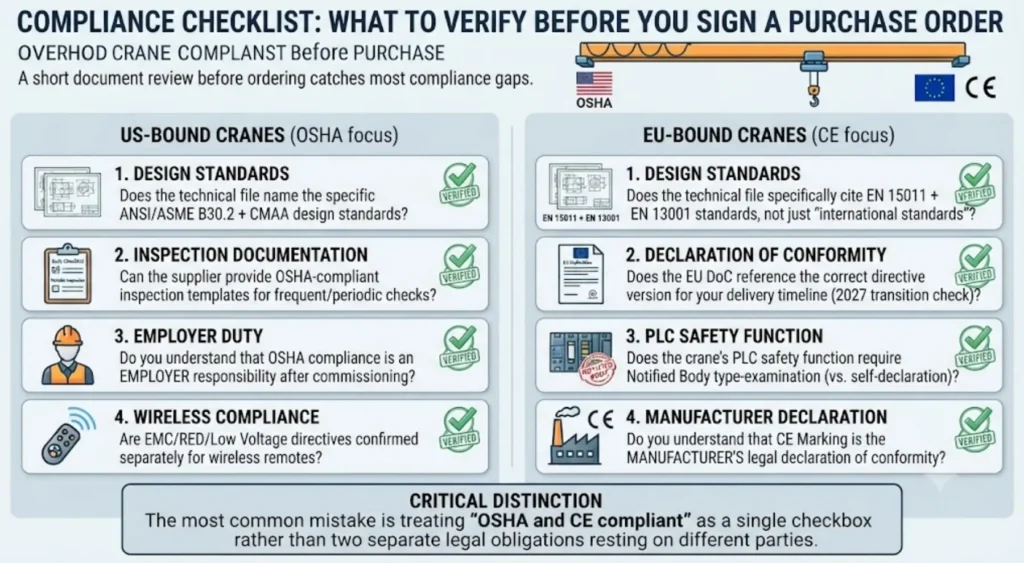
- Указывается ли в технической документации конкретный стандарт проектирования (ANSI/ASME B30.2 + CMAA для стандартов США; EN 15011 + EN 13001 для стандартов ЕС) — а не просто общее утверждение "соответствует международным стандартам"?
- В отношении оборудования, предназначенного для ЕС, указывается ли в Декларации соответствия ЕС соответствующая версия директивы/регулятора, соответствующая срокам реализации вашего проекта, с учетом переходного периода 2027 года?
- Включает ли кран функцию безопасности на основе ПЛК, которая требует проведения типовой экспертизы уполномоченным органом, а не самостоятельного заявления производителя?
- Предоставил ли поставщик (или может ли он предоставить) шаблоны инспекционной документации, подходящие для структуры частых/периодических проверок OSHA, если оборудование предназначено для использования в США?
- Если кран оснащен беспроводными пультами дистанционного управления, подтверждено ли соответствие директивам EMC/RED/низковольтного оборудования отдельно от соответствия базовому оборудованию?
Самая распространенная ошибка, которую допускают покупатели. Это означает, что соответствие стандартам OSHA и CE рассматривается как единый пункт, а не как два отдельных юридических обязательства, возложенных на разные стороны (обязанность по проверке, инициированная работодателем, против заявленного производителем соответствия) — подтверждение этого различия перед заказом является наиболее важным шагом во всем этом контрольном списке.
Заключение
Маркировка OSHA и CE решают одну и ту же основную проблему — обеспечение безопасности эксплуатации мостового крана — с помощью совершенно разных механизмов: OSHA возлагает ответственность за постоянные проверки на работодателя в США в соответствии с предписанными стандартами ANSI/ASME B30.2, в то время как маркировка CE представляет собой самодекларацию производителя на основе оценки рисков в соответствии со стандартами EN 15011/EN 13001, которые в настоящее время находятся в процессе перехода к новому регламенту, который полностью вступит в силу с января 2027 года. Перед заказом убедитесь, какой именно стандарт указан в технической документации вашего поставщика, запросите документацию, специфичную для вашего рынка, а не общее заявление о соответствии, и если сроки реализации вашего проекта приходятся на 2027 год, узнайте уже сейчас, как поставщик справляется с переходом на новый регламент. Для обеспечения соответствия мостовых кранов требованиям этот предварительный анализ документов стоит больше, чем любое сравнение цен.
Нужна помощь в подтверждении соответствия вашей документации требованиям? [Получить предложение напрямую от производителя →] | [Свяжитесь с нашей инженерной командой через WhatsApp →] | [Запросить образцы документации OSHA/CE →]

Специалист по оборудованию
Успешный менеджер по работе с кранами с обширным опытом в управлении крупномасштабными проектами и операционным контролем. Подтвержденный опыт увеличения доходов и обеспечения соблюдения требований безопасности.
Часто задаваемые вопросы
В1: Соответствует ли маркировка CE требованиям OSHA автоматически, или наоборот?
Нет. Маркировка CE и соответствие требованиям OSHA — это отдельные правовые рамки, обслуживающие разные рынки. Декларация соответствия ЕС для крана с маркировкой CE не заменяет проектную документацию, соответствующую стандарту ANSI/ASME B30.2, и программу инспекций, инициированную работодателем, которую OSHA требует для эксплуатации в США, и обратное также верно.
Вопрос 2: Когда в полную силу вступит новый Регламент ЕС по машинному оборудованию 2023/1230?
Регламент (ЕС) 2023/1230 полностью заменяет действующую Директиву 2006/42/EC о машиностроении с 20 января 2027 года, хотя с 20 июля 2024 года применяются специальные положения, включая определенные обязательства экономических операторов. Проектам с многолетними сроками следует уточнить, на основе какой версии составлен технический файл поставщика.
В3: На какой стандарт проектирования должен ссылаться мостовой кран для соответствия требованиям OSHA?
Для соответствия требованиям OSHA, в проектной документации крана следует указывать на стандарты ANSI/ASME B30.2 и соответствующую спецификацию CMAA (№ 70 для конфигураций с верхним расположением опор, № 74 для конфигураций с нижним расположением опор/портальной конструкцией) — общее упоминание только стандартов FEM, ISO или GB само по себе не подтверждает эту проектную основу.
В4: В каких случаях для маркировки CE требуется уполномоченный орган, а не самодекларация производителя?
Как правило, независимая экспертиза, проводимая уполномоченным органом, требуется, если кран использует программируемый логический контроллер (ПЛК) или аналогичную сложную систему для выполнения критически важных с точки зрения безопасности функций. Стандартные конструкции механических/электрических мостовых кранов, не имеющие такого критически важного программного обеспечения, обычно позволяют производителю самостоятельно заявить о соответствии.
Связанные статьи
- Что такое осмотр мостового крана? Виды, периодичность и основные пункты контрольного списка.
- Объяснение: что означают обозначения A1–A8 и как выбрать правильный вариант.
- Мостовые краны во Вьетнаме: рост рынка, соответствие нормативным требованиям и руководство для поставщиков (2026)
- Инспекция мостовых кранов: стандарты OSHA, CE и GB — что действительно нужно знать покупателям и экспортерам.

 English
  العربية
  Español
  Français
  Português
  Русский