
Gantry crane capacity is the maximum load, including any lifting devices, that the crane may lift at its hook, and for a gantry crane the right capacity depends on span, duty class and site conditions as much as on the weight of the load. A gantry crane usually works outdoors or on a ground-level rail, so you must also consider wind, rail and foundation loads, and the clear width and height under its legs. A crane sized only by the heaviest piece can be too weak in use, too expensive to build, or unsafe in a storm.
This guide gives a step-by-step way to choose gantry crane capacity, typical capacity bands, and the mistakes to avoid. For the equivalent indoor guide, see our overhead crane capacity guide.
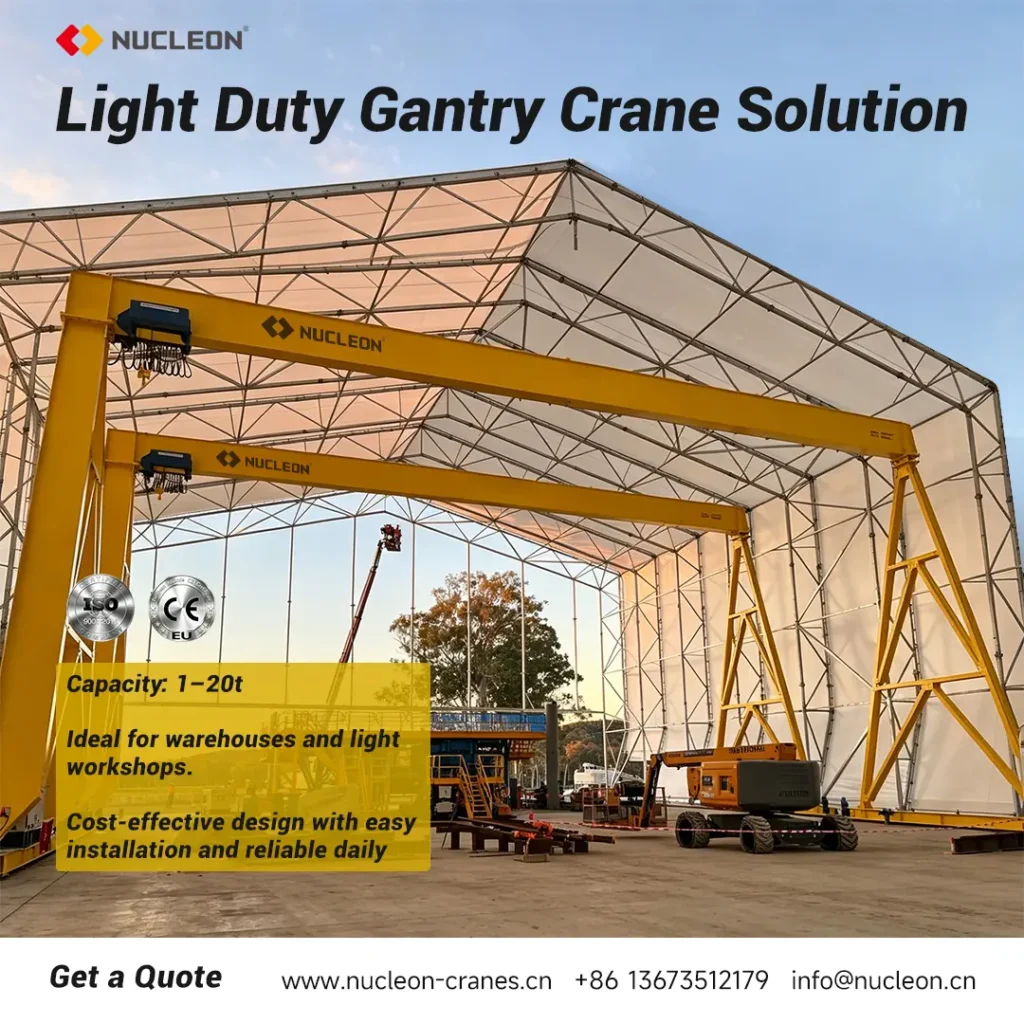
Table of Contents
What Gantry Crane Capacity Means
Rated capacity is the load shown on the nameplate. It includes everything hanging from the hook: the workpiece and any lifting devices such as spreader beams, magnets, grabs, clamps, slings and chains. A crane should never be loaded past its rating except for a test, and there is no built-in margin an operator can use as spare capacity.
Gantry cranes differ from overhead cranes in three ways that affect capacity selection:
- They stand on legs and rails at ground level, so the span, leg height and any cantilever (overhang) change the structure and the wheel loads.
- They are usually outdoors, so wind sets limits on working and parking.
- The ground carries the load, so rail beams and foundations matter as much as the crane.
Step 1: Add Up the Real Hook Load
Add the weight of everything on the hook on your heaviest lift:
| Item | Examples |
| Workpiece or product | Precast beam, steel coil, machine, container, vessel, mould |
| Lifting devices | Spreader beam, lifting beam, clamp, grab, vacuum lifter, magnet |
| Rigging | Slings, chains, shackles, pallets or fixtures that stay on the load |
| Material in containers | Loose material in a bucket, hopper or box |
Use the heaviest real lift, not the average, and use the maximum weight for uncertain loads such as wet material or partly filled containers.
Step 2: Choose the Next Standard Capacity
Gantry cranes are built in standard capacity steps (commonly 1, 2, 3, 5, 10, 16, 20, 32, 50 tons and above in Chinese series, with different steps in European series). Pick the capacity that comfortably covers the hook load, and move up one step if the load is at the limit or its weight is uncertain.
We do not recommend a fixed percentage margin. Every extra ton enlarges the girder, legs, wheels, rail and foundation. Cranes are test-loaded above their rating (OSHA 1910.179 limits test loads to 125% of the rated load unless the manufacturer says otherwise), but that proves soundness and is not working capacity.
Step 3: Check Span, Cantilever and Clear Dimensions
For the same load, a longer span needs a deeper, heavier girder and raises wheel loads, which in turn drives the rail and foundation design.
Check these dimensions:
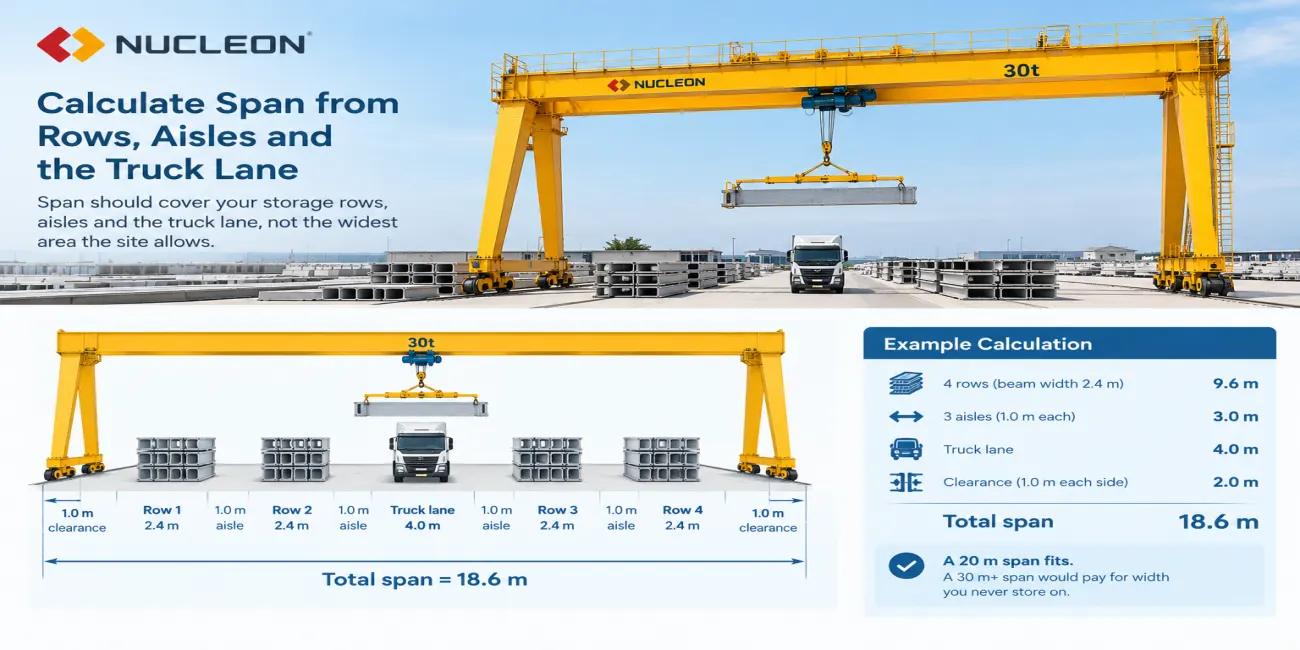
- Span. Distance between rail centres. Measure the actual yard or bay, not the building width.
- Lifting height. From ground to hook at its highest point, including the height of the load and lifting devices.
- Clear width and height under the legs. Trucks, trailers, stacked material and the load itself must fit under and between the legs.
- Cantilevers. If the crane has an overhang to reach outside the rails, confirm the capacity at the cantilever end separately.
- Rail length. Longer rails mean more foundation and more rail cost.
For measuring the first two, see overhead crane span and lifting height. The same principles apply to gantry cranes.
Step 4: Match Duty Class and Hoist Type
Tonnage does not describe how hard the crane works. A gantry crane that lifts a few times a day is built differently from one that handles loads continuously in a precast or steel yard, even if both are rated for 20 tons.
- Light intermittent work (A3–A4) suits general loading and unloading in factories, yards and warehouses.
- Repeated production lifts, heavier loads and longer shifts need a higher duty class.
Read crane duty class explained to place your operation on the scale. The lifting mechanism changes with capacity: single girder gantry cranes with an electric hoist typically cover small to medium capacities, and heavier or higher-duty work usually moves to a double girder gantry with a winch trolley. See wire rope hoist vs chain hoist and what is a crane winch for the difference.
Step 5: Consider Wind, Rail and Foundation
This is where gantry capacity decisions differ most from indoor cranes.
Wind.
- ISO 4302:2016 sets out how to assess wind loads on cranes, in service and out of service, and gives guidance on when to secure a crane. Chinese design follows GB/T 3811 for wind loads.
- A larger span and taller legs mean more windward area, so a heavier-capacity crane usually has to resist more wind as well as carry more load.
- Outdoor gantry cranes should have wind protection: rail clamps (often automatic), anchors or ties for storm conditions, and a wind-speed alarm so the operator stops lifting and parks the crane.
- Getting the out-of-service wind load wrong has caused real failures. One published investigation of a gantry crane derailment found the clamps were sized for a wind load that left out the aerodynamic coefficient, so they could not hold the crane in the strongest wind for that region.
Rail and foundation.
- Wheel loads increase with capacity, span and crane weight. Rails and foundations must be designed for those loads and for soil conditions, with correct levelling and drainage.
- On soft or reclaimed ground, treat the foundation as part of the project, not an afterthought.
Environment.
- Rain covers, corrosion-resistant paint and sealed electrics matter outdoors, as does temperature range. Gantry cranes should not be used in flammable, explosive or corrosive atmospheres unless specifically designed for them.
Typical Gantry Crane Capacity Bands
The table shows typical uses (industry practice, not a product limit).
| Capacity band | Typical uses | Usual crane type | Check also |
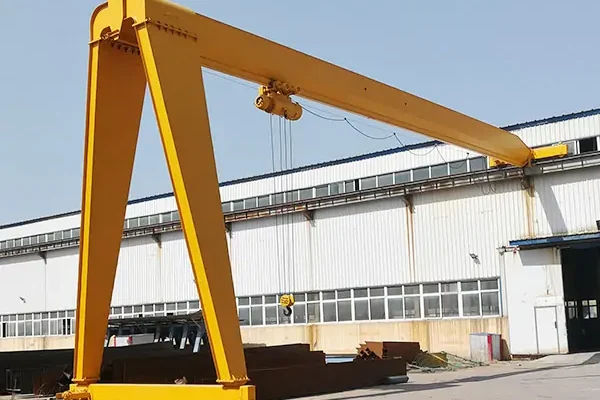
| 1–3 t | Small workshops, loading areas, maintenance, light stock | Single girder gantry, light-duty | Floor and rail, wind if outdoors |
| 5 t | General yards, workshops, warehouses | Single girder gantry (box or truss) | Span, clear height under legs |
| 10 t | Fabrication yards, building materials, machinery | Single girder gantry | Duty class, wind protection |
| 16–20 t | Precast yards, steel stock, heavier machinery | Single or double girder gantry, truss or box | Wheel load, foundation, wind |
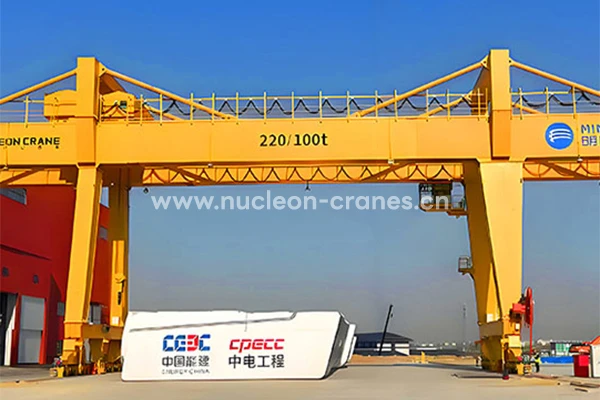
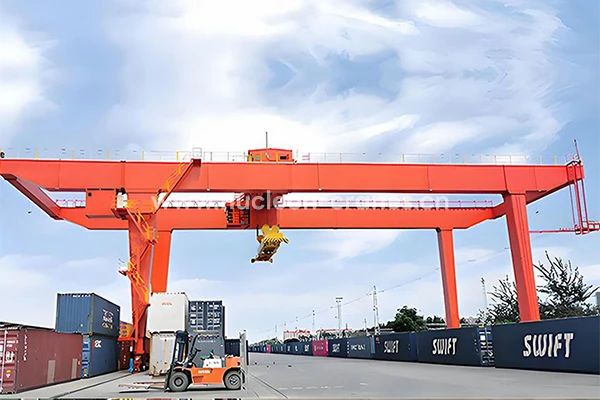
| 32 t and above | Heavy industry, large precast elements, shipyards | Double girder gantry with winch trolley | Span, rail, duty class, specialist design |
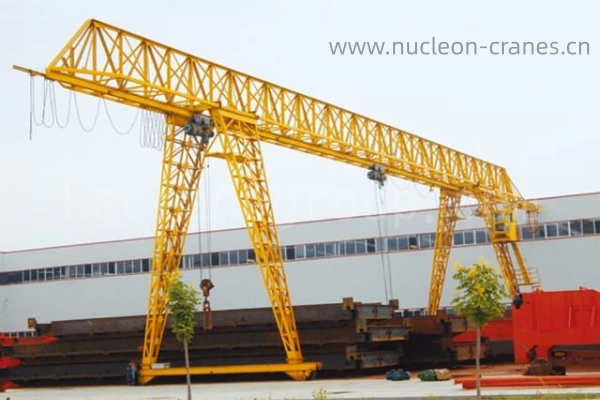
As an example of the upper-middle band, Nucleon has supplied 20-ton truss gantry cranes for a precast concrete beam yard in Chile. See what is a truss gantry crane for when a truss design suits large spans and wind exposure, and our gantry crane structure analysis for how the structure carries the load. Browse the single girder and double girder gantry crane ranges.
Five Common Capacity Mistakes
- Choosing by the heaviest workpiece only. Spreaders, magnets and rigging add weight, and lifting devices count toward the rating.
- Ignoring span. A 10-ton gantry at a long span is a very different structure from a 10-ton gantry at a short one, in cost and wheel load.
- Underestimating wind. The crane lifts the load safely but cannot be parked safely in a storm because the clamps or anchors were sized wrongly.
- Skipping the foundation. Rails and ground that were not designed for the wheel loads lead to settlement, misalignment and rail wear.
- Oversizing "to be safe." A larger capacity raises the cost of the crane, rails and foundation and gives no benefit if the loads never need it.
What to Send for a Capacity-Based Quote
- Heaviest lift, including all lifting devices
- Span, lifting height, rail length and any cantilever required
- Clear width and height needed under the legs
- Duty pattern: lifts per hour, hours per day, share of lifts near full load
- Site: indoor or outdoor, wind conditions, ground type, rain, corrosion, temperature
- Site power: voltage, frequency, phase
- Site drawings or photos, if possible
- Destination country and port, if exporting
For budget context, see our gantry crane price guide and truss gantry crane price guide.
Frequently Asked Questions
How do I choose the right gantry crane capacity?
Add the workpiece and all lifting devices on your heaviest lift, choose the next standard capacity that covers it, then check span, lifting height, duty class, wind exposure and the rail and foundation. Capacity alone does not decide the crane.
Does gantry crane capacity include the lifting devices?
Rated load includes lifting devices such as spreader beams, magnets, slings and chains, so their weight counts toward the capacity. State your lifting gear weights when requesting a quote.
Does span change the capacity I should buy?
The capacity you need depends on the load, but span changes the structure and cost. A longer span with the same rated load needs a deeper, heavier girder and puts higher wheel loads on the rails and foundation.
Is a 10 ton gantry crane enough for outdoor use?
It can be, if the crane is designed for the site wind loads and fitted with rail clamps or other wind protection, and the rails and foundation are suitable. Outdoor wind matters more as span and leg height increase.
What capacity do I need for a precast concrete yard?
It depends on the heaviest element plus the lifting device. Beams and slabs of 20 tons or more are common in precast yards, so a 20-ton class or larger gantry is typical, with duty class chosen for the production rate. Provide element weights and cycle times for a recommendation.
Is single girder or double girder better at higher capacity?
Single girder with an electric hoist is common for small to medium capacities. Higher capacity, longer spans or heavier duty usually call for a double girder gantry with a winch trolley. Confirm against your span, duty and hook height.
Can I lift more than the rated capacity occasionally?
No. A crane must not be loaded beyond its rating in service. Overloading damages the structure, brakes and hoist, and defeats the overload protection. If you often need more, choose a higher capacity.
Get a Gantry Crane Capacity Recommendation from Nucleon
Send your heaviest load, lifting devices, span, lifting height, duty pattern and site conditions through the Nucleon Crane contact page. Our engineers will recommend the capacity, duty class and structure, and quote a configuration with a clear inclusion list. You can also browse the full gantry crane range and our overhead crane price guide.

Equipment Specialist
Accomplished Crane Business Manager with extensive experience in heavy lift project management and operational oversight. Proven track record of driving revenue growth and ensuring safety compliance.


 English
 العربية
 Español
 Français
 Português
 Русский