

A truss gantry crane typically costs $3,000 to $70,000+ per set, depending mainly on capacity, span, and duty class rather than on the truss structure itself. If you're comparing quotes right now, the number on the page matters less than what it includes — runway steel, duty class, and certification can shift a "cheap" quote well past a higher-looking one once the missing scope gets added back in.
That's the problem with most truss gantry crane pricing you'll find online: a wide dollar range with no breakdown by tonnage, and no way to tell whether two quotes are even describing the same product. If you're a factory buyer or equipment manager trying to shortlist suppliers this week, you need the price tiers, the structural trade-offs, and the questions that expose a lowball quote before you sign anything.
This guide breaks down realistic price ranges by capacity, compares single-girder, double-girder, and box-girder options side by side, lists the specs you need to lock down before requesting a quote, and covers how to vet a supplier so the crane that arrives matches the one you priced.
Table of Contents
Quick Reference: Truss Gantry Crane Types & Price at a Glance

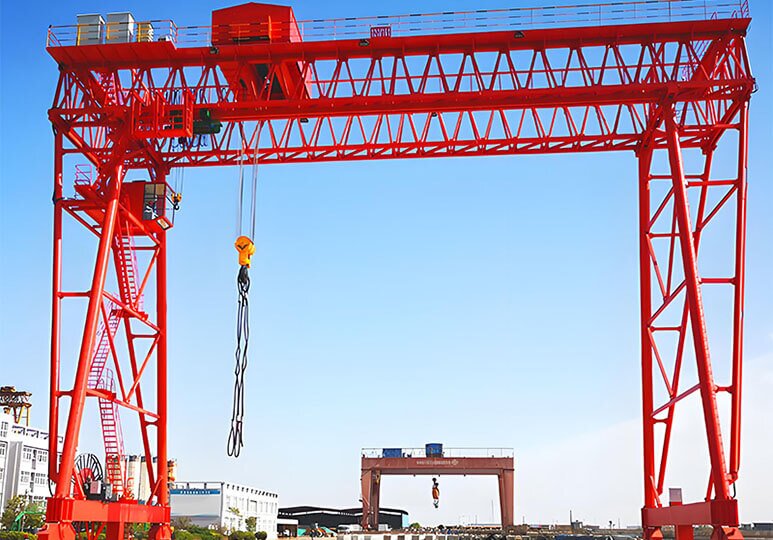
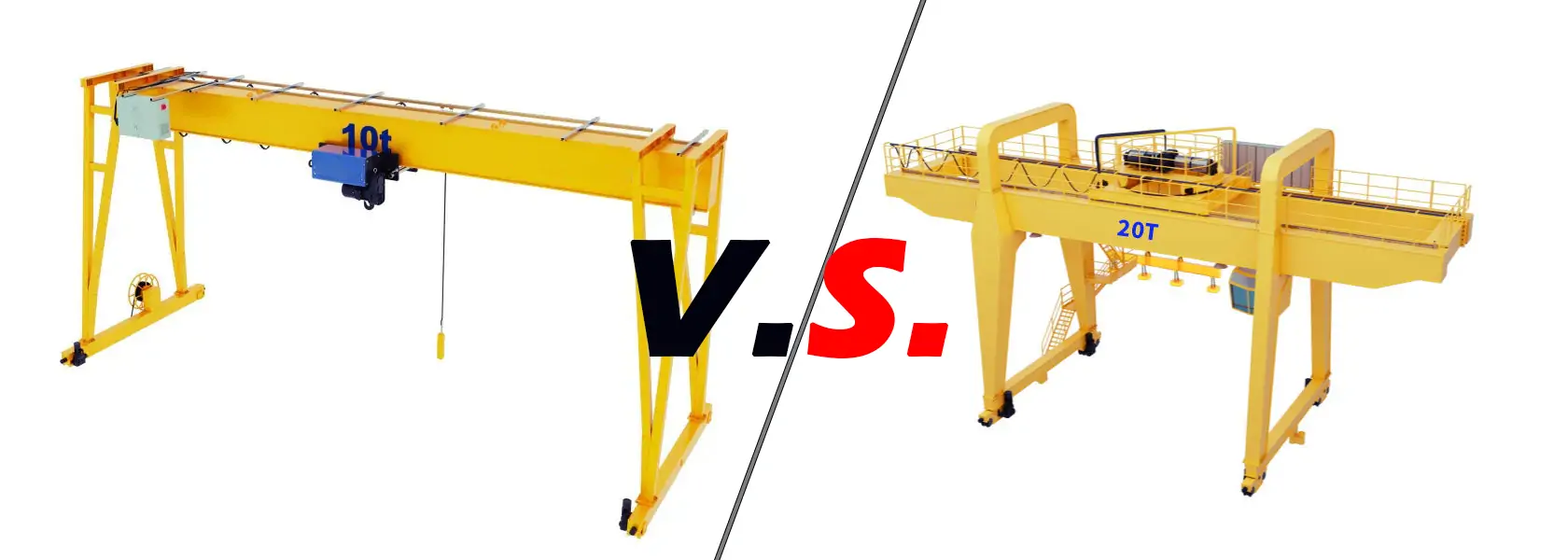
MH Single Girder Truss Gantry Crane
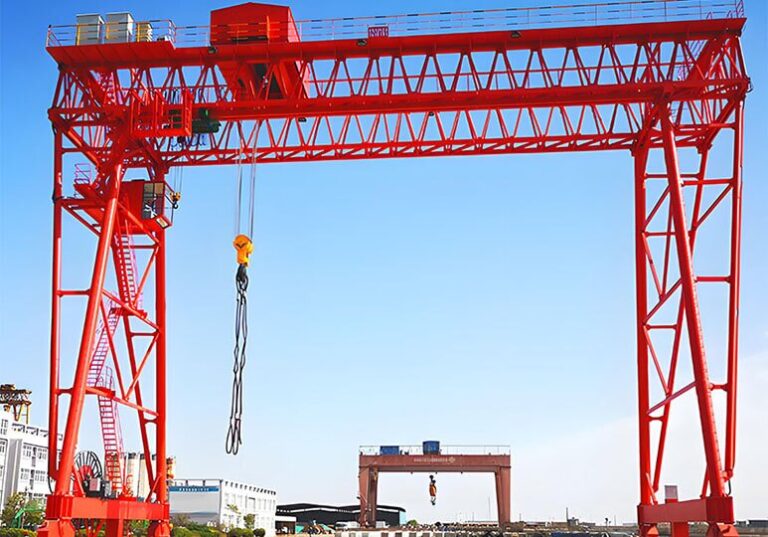
MG Double Girder Truss Gantry Crane

| Type | Typical Capacity | Typical Span | Market Reference Price* | Best For |
| Single-girder truss gantry crane | 1–15 tons | Up to ~30 m | $3,000–$17,000 | Light-to-medium loads, stone yards, small warehouses |
| Double-girder truss gantry crane | 5–50 tons | Up to ~40 m | $10,000–$70,000+ | Ports, shipyards, steel yards, heavier/continuous duty |
| Box-girder gantry crane (for comparison) | 5–100+ tons | Up to ~35 m | $7,000–$100,000+ | Indoor or moderate spans, higher rigidity requirements |
*Market reference range based on typical China-manufacturer pricing; actual quotes depend on duty class, electrics, and certification. Request a factory-direct quote →
Truss Gantry Crane Price by Tonnage: What Drives the Number Up or Down
A truss gantry crane's price is driven far more by duty class and span than by the tonnage number printed on the nameplate. Two 10-ton cranes can carry a price difference of 40% or more if one is built for occasional light lifting and the other for near-continuous cycling near rated load. Buyers who shop purely by tonnage often end up comparing two structurally different products without realizing it.
Reference Price Ranges by Capacity
Expect roughly $3,000–$9,000 for a 1–5 ton unit, $7,000–$20,000 for 5–10 tons, $15,000–$40,000 for 10–20 tons, and $35,000–$70,000+ above 20 tons, as a market-level starting point. These bands overlap deliberately — a 10-ton crane at 15-meter span in light duty class can cost less than a 5-ton crane at 35-meter span in heavy duty class, because span and duty class add steel and engineering complexity independent of the rated capacity. Use these figures to sanity-check a quote, not as a fixed price list; your supplier's engineering team should confirm the final number against your actual span, duty class, and site conditions.
What Pushes a Quote Toward the High End
Long span, heavy or continuous duty class, and outdoor wind/corrosion protection are the three factors most likely to push a truss gantry crane quote toward the top of its price band. Span matters because truss steel volume doesn't scale linearly — past roughly 30–35 meters, the truss depth and chord thickness both need to increase to control deflection, adding cost faster than span length alone would suggest. Duty class (per ISO 4301 or FEM 1.001) matters because a heavy-duty rating uses thicker structural members and a more robust hoist mechanism even at identical tonnage. Outdoor installations add cost for wind-resistance bracing and corrosion protection — galvanizing or marine-grade coatings typically add a noticeable percentage to the base structure price, which is money well spent compared with retrofitting corrosion protection after a few years of field corrosion.
What a Low Quote Often Leaves Out
The most common way a "low" truss gantry crane quote turns out to cost more is that it excludes runway rail, foundation, or installation supervision from the headline number — and for a typical 10–20 ton project, these add-ons together often run 50–80% on top of the FOB price. A supplier competing on the sticker price for the crane itself has every incentive to quote only the crane package and let the buyer discover the rest later, at which point switching suppliers is no longer practical.
| Cost item commonly left out of a "crane-only" quote | Typical range |
| Foundation / piling / concrete rail sleepers | $4,000–$30,000+ |
| Rail supply and installation (e.g. QU70/QU80 rail) | $15–$40 per meter |
| Ocean freight and insurance (CFR vs. FOB) | +4–7% (up to +9–13% for some regions) |
| Import duty (varies by destination and HS classification) | 0–13%+ |
| On-site installation labor | $4,000–$13,000 |
| Third-party load test and certification | $1,000–$3,000 |
As a rule of thumb, a $15,000 FOB truss gantry crane for a 10–20 ton project frequently turns into a $25,000–$28,000 landed project once foundation, rail, freight, duty, and installation are added — so compare quotes on total project cost, not the equipment line item alone.
Single-Girder vs Double-Girder vs Box-Girder: Choosing the Right Structure
A single-girder truss suits lighter, cost-sensitive jobs; a double-girder truss suits heavier or longer-span outdoor work; a box girder wins when headroom or indoor rigidity matters more than weight savings. The three options aren't ranked best-to-worst — each wins under a specific combination of load, span, and site constraint, which is why the comparison table below leads with the deciding factors rather than a single "winner."
| Factor | Single-Girder Truss | Double-Girder Truss | Box-Girder Gantry Crane |
| Capacity range | 1–15 tons | 5–50 tons | 5–100+ tons |
| Structural weight | Lightest | Light-to-moderate | Heaviest |
| Wind resistance (outdoor) | Good | Very good | Weaker (larger flat surface) |
| Headroom needed | Moderate | Moderate-to-tall | Least |
| Fabrication/joint count | Fewer joints, lower cost | More joints, higher cost | Fewest joints, simplest inspection |
| Typical site | Small yards, warehouses | Ports, shipyards, steel yards | Indoor plants, moderate spans |
Single-Girder Truss Gantry Crane — Best Fit
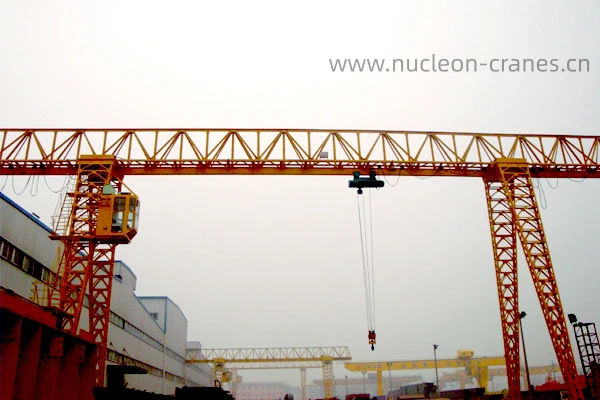
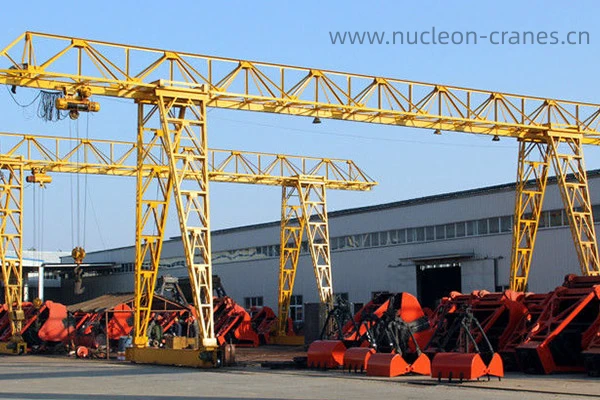
A single-girder truss gantry crane is the right call for loads under roughly 15 tons where budget and simplicity matter more than maximum span. It uses one main truss beam with the hoist trolley mounted underneath, which keeps the steel count — and therefore the price — lower than a double-girder equivalent. The trade-off is a lower practical capacity ceiling and typically a shorter maximum span, so it fits small-to-medium warehouses, stone or lumber yards, and light construction sites better than heavy industrial applications.
Double-Girder Truss Gantry Crane — Best Fit
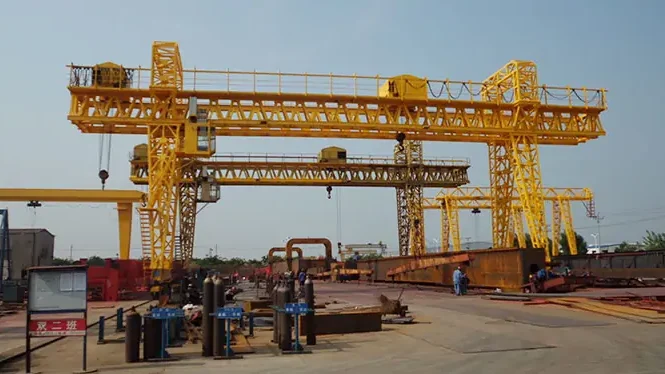
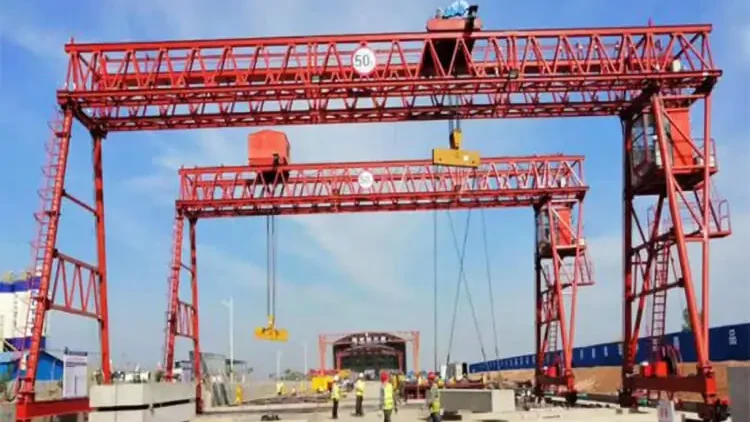
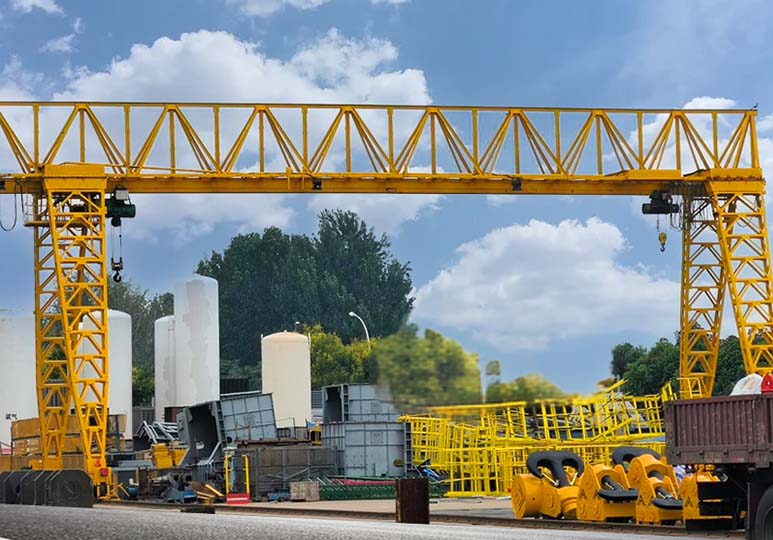
A double-girder truss gantry crane is the better choice once capacity climbs past roughly 15–20 tons, span extends beyond about 30 meters, or the site is exposed to significant wind loading. Running the trolley between two parallel trusses instead of under a single beam distributes load more evenly and allows a taller usable hook height for the same overall structure height, which is why ports, shipyards, and steel-yard buyers default to this configuration for heavier, longer-span work. It costs more than a single-girder equivalent of the same tonnage, but the gap narrows once you account for the fact that a single-girder truss usually can't be specified at all past a certain span and load combination.
When a Box-Girder Gantry Crane Wins Instead
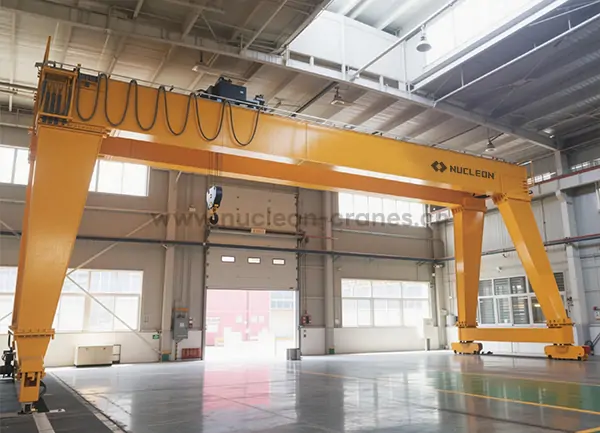
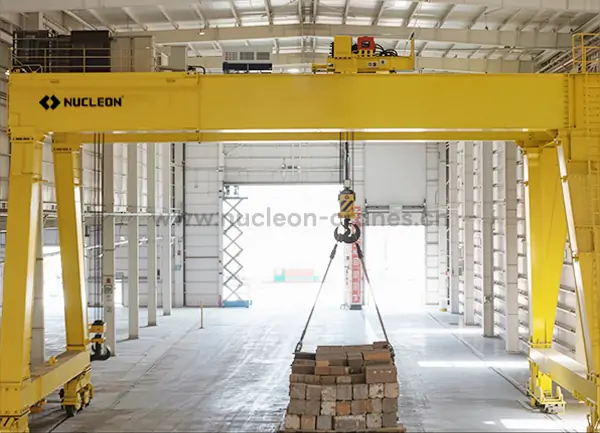
A box-girder gantry crane is usually the better choice when the site is indoor, headroom is tight, or duty class is heavy and continuous, because a solid box structure has less deflection and fewer weld points to inspect over time. Our companion guide on what a truss gantry crane is covers the underlying structural trade-off in more depth; the short version for a purchasing decision is that a truss design earns its cost premium specifically on long, wind-exposed outdoor spans — for a standard indoor span under 60 feet with decent ceiling height, a box girder is typically both cheaper to fabricate and simpler to maintain.
Specifications to Confirm Before You Request a Quote
Getting an accurate, comparable quote depends on locking down span, capacity, lifting height, and duty class before contacting any supplier — vague specs are the single biggest reason two "identical" quotes turn out not to be comparable. Suppliers can only price what you tell them; a quote based on incomplete specs will need revision later, which delays your order and often raises the price once the missing details are added.
Core Selection Parameters
Rated capacity, span, lifting height, and duty class are the four numbers that determine 80% of a truss gantry crane's design and cost — everything else is a refinement on top of these. Rated capacity should reflect your heaviest realistic single lift, not an average; span is the clear distance the crane needs to cover between rails; lifting height is measured from the ground (or pit, if used) to the maximum hook height you need; duty class (per ISO 4301 or FEM 1.001) should reflect how often the crane will lift near its rated load, not just how many hours a day it runs. Getting duty class wrong is the single most common way buyers end up with a crane that's technically rated for their tonnage but fatigues faster than expected under their real usage pattern.
Site & Environmental Factors That Change the Design
Wind exposure, ground/rail foundation condition, and power supply type all change the final design and price, and are frequently left out of a first-pass inquiry. Wind needs two separate ratings, not one: a typical in-service (working) wind resistance for outdoor truss gantry cranes is around 20 m/s (roughly 72 km/h), above which operation should stop — while the out-of-service (storm/parked) rating is a separate, usually much higher figure that should reflect your region's real conditions, commonly around 120–150 km/h inland and 180 km/h or higher in typhoon-prone coastal areas. Skipping the out-of-service figure, or borrowing a generic one that doesn't match your local wind data, is a frequent cause of rail-clamp failure or lateral sway during storms. Beyond wind, the rail foundation needs to be confirmed as adequate for the crane's wheel loads before a supplier can finalize the undercarriage design, and power supply voltage/phase needs to match your site to avoid a costly late-stage electrical redesign.
Common Buyer Misjudgment When Comparing Specs
Span moves the price more than tonnage does, and duty class stated without an edition or usage pattern is close to meaningless — both are common blind spots when comparing quotes. For the same 20-ton rated capacity, increasing span from 20 m to 35 m can add 40% or more to the steel structure weight, because deflection control at longer spans requires deeper truss sections, not just more of the same beam. A quote that only lists "20 tons" without confirming span against your site is not yet comparable to another supplier's "20 tons" quote.
Duty class is the other frequent blind spot. A crane specified as FEM/ISO duty class A5 but operated like A6 — for example, in a 24/7 precast yard rather than the occasional heavy lifting A5 is designed for — commonly shows fatigue cracking at the truss chord welds within 18–24 months. It's also worth asking which edition of the FEM or ISO standard a supplier's duty class rating follows: load factor assumptions changed meaningfully around 2017, so "FEM standard" without an edition number isn't a complete answer.
Get help matching specs to your site — talk to an engineer →
Certification, Supplier Evaluation & Order Process
Confirming the right standards, vetting the supplier's track record, and understanding the realistic order timeline are the three checks that separate a smooth truss gantry crane purchase from a stalled one. None of these three checks are optional if the crane is going to a facility with formal safety inspection requirements or is being imported across borders.
Standards and Certifications to Ask For
Ask suppliers to confirm design compliance with a recognized crane standard — such as ISO 4301, FEM 1.001, EN 13001, ASME B30.2, or China's GB/T 3811 — and to provide CE documentation if the crane is heading to a CE-regulated market. These standards govern duty classification and structural design principles for lifting equipment; a supplier who can't name which standard their design follows, or who only offers a vague "meets international standards" statement, is a signal to ask more questions before proceeding.
How to Vet a Supplier Before Placing a Deposit
Request the supplier's export history, ask for reference projects with similar tonnage and span, and confirm whether their factory does in-house fabrication or subcontracts the steel structure. A supplier that owns fabrication and welding in-house typically has tighter quality control over the truss's weld points — the most fatigue-sensitive part of the structure — than one that outsources steel work to a third party and only assembles the final electrics. Ask directly which parts of the crane package (structure, hoist, electrics) come from the supplier's own factory versus a subcontractor. Also check the hoist brand specifically — swapping to a budget hoist to shave a few percent off the quote is a common way suppliers trim price, but the rest of the structure is typically engineered for a 10-year service life while a low-grade hoist motor can wear out in under two years of regular use, so the "savings" often disappear at the first mechanism replacement.
Typical Order Timeline From Quote to Delivery
A standard truss gantry crane typically takes 30–45 days for fabrication after deposit and drawing confirmation, plus ocean freight time to your port, so total lead time from order to site arrival commonly runs 8–14 weeks depending on destination. Larger or heavily customized units (long span, special duty class, or non-standard electrics) can extend fabrication time further, so it's worth confirming a firm lead time in writing before finalizing the order, especially if the crane is tied to a facility opening or project deadline.
Conclusion
A truss gantry crane's price is set mainly by span, duty class, and site conditions — not the tonnage number alone — so the fastest way to get comparable quotes is to lock down those specs before you contact suppliers. Before requesting quotes: confirm whether runway steel and installation are included in the price, ask each supplier to state duty class and standard compliance explicitly, and check whether fabrication is in-house before placing a deposit. Ready to compare a real quote against these numbers? Send us your span, capacity, and site details and we'll turn around a factory-direct truss gantry crane quote with duty class and standard compliance stated up front.
Final equipment selection must be confirmed by a certified engineer and comply with local lifting-equipment regulations.
Get a Factory-Direct Quote
Our engineering team will confirm duty class, span, and certification before you commit — no guesswork on the quote.

Equipment Specialist
Accomplished Crane Business Manager with extensive experience in heavy lift project management and operational oversight. Proven track record of driving revenue growth and ensuring safety compliance.
FAQ
Q1: How much does a truss gantry crane cost?
A truss gantry crane typically costs $3,000–$70,000+ per set depending on capacity, span, and duty class. Small single-girder units (1–5 tons) start around $3,000, while larger double-girder units over 20 tons with heavy duty class can exceed $50,000. Get a firm number by sharing your span, capacity, and site conditions with a supplier's engineering team.
Q2: Is a truss gantry crane cheaper than a box-girder gantry crane?
It depends on span and site. For long, wind-exposed outdoor spans, a truss design often costs less overall once reduced runway/foundation steel is factored in. For standard indoor spans under 60 feet, a box-girder crane is usually the more cost-effective and simpler option.
Q3: What information do I need before requesting a quote?
Suppliers need rated capacity, span, lifting height, duty class, power supply details, and whether the site is indoor or outdoor. Missing any of these — especially duty class — is the most common reason a first quote needs revision, which delays ordering.
Q4: What certifications should a truss gantry crane have?
Ask for compliance with a recognized standard such as ISO 4301, FEM 1.001, EN 13001, ASME B30.2, or GB/T 3811, plus CE documentation if importing into a CE-regulated market. A supplier unable to name their governing design standard warrants closer scrutiny.
Q5: How long does it take to receive a truss gantry crane after ordering?
Fabrication typically takes 30–45 days after deposit and drawing confirmation, with total lead time to site — including ocean freight — commonly running 8–14 weeks depending on destination and customization level.
Related Articles
- What Is a Truss Gantry Crane? Structure, Types & When to Choose One
- Single Girder Gantry Crane VS Double Girder Gantry Crane
- Gantry Crane For Sale: Finding Perfect Solution For Your Needs
- 120 Ton Bridge, Gantry & Port Crane Price List 2026
- Truss Gantry Crane Manufacturer: Type Specs, Certification & How to Order
- Nucleon Crane Truss Gantry Crane: Model Lookup, Certifications & Support



 English
  العربية
  Español
  Français
  Português
  Русский