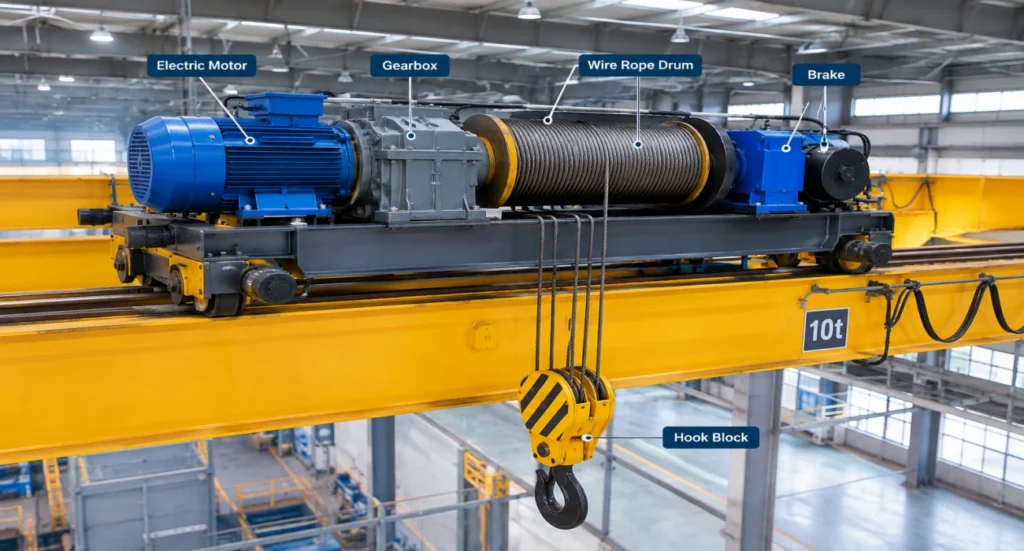
A crane winch is the motor-driven hoisting unit — motor, gearbox, drum, wire rope and brake — that lifts and lowers loads on an overhead, gantry, or port crane. Unlike a standalone pulling winch, it is built to carry repeated vertical lifts under a defined duty class and rated load, with a fail-safe brake as a mandatory safety feature — the same principle behind our electric wire rope hoists.
If you're sourcing a winch for a new crane or a replacement unit, the hardest part usually isn't finding a supplier — it's specifying the right unit. Two winches rated for the same tonnage can behave completely differently on the job if their duty class, lifting speed, or drum/rope pairing don't match your actual operating cycle.
This guide walks through how a crane winch works, the main types available, the parameters that actually decide performance, and the buying mistakes that lead to oversized invoices or undersized equipment.
Оглавление
Crane Winch Quick Reference
| Параметр | Typical Range | Примечания |
| Номинальная нагрузка | 1–500+ tons | Combine with duty class, not read alone |
| Скорость подъема | 0.8–15 m/min | Higher speed at same load needs a larger motor/brake |
| Duty class | M3–M8 (ISO 4301-1) | Based on cycles + load spectrum, not tonnage |
| Drum capacity | 20–600+ m of rope | Depends on lifting height, falls, and winding layers |
| Market reference price | roughly $400–$30,000+ | Wide range driven by capacity, duty class, and reeving |
Need help matching a winch to your actual lifting duty? Send us your rated load, lifting height, lifting speed, and duty class and our engineers will confirm a configuration.
What Is a Crane Winch and How Does It Work
A crane winch converts a motor's rotation into controlled vertical movement of a load, through a gearbox, drum, wire rope, and fail-safe brake working as one unit.
Core Components of a Crane Winch
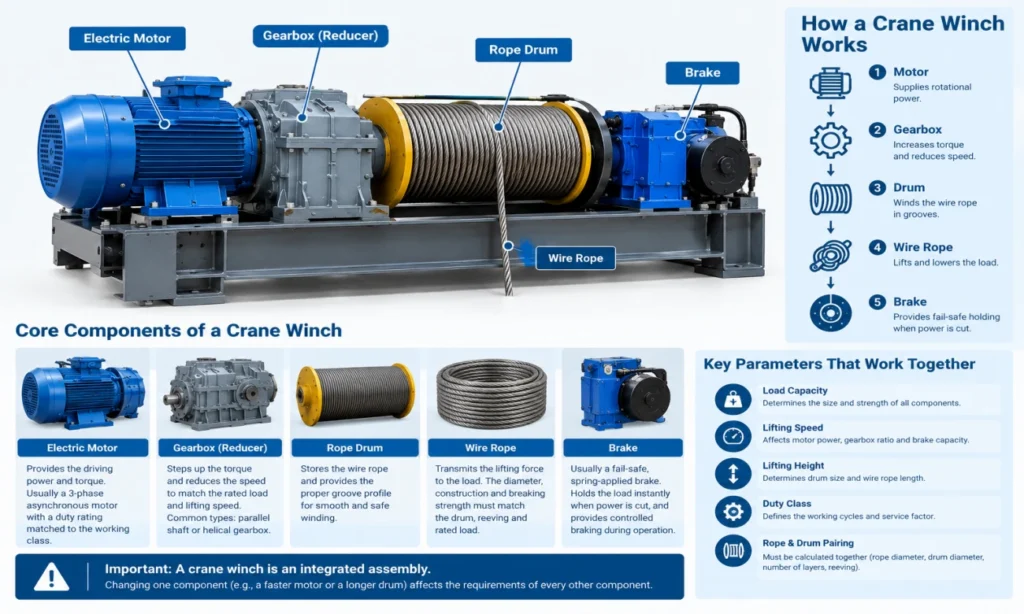
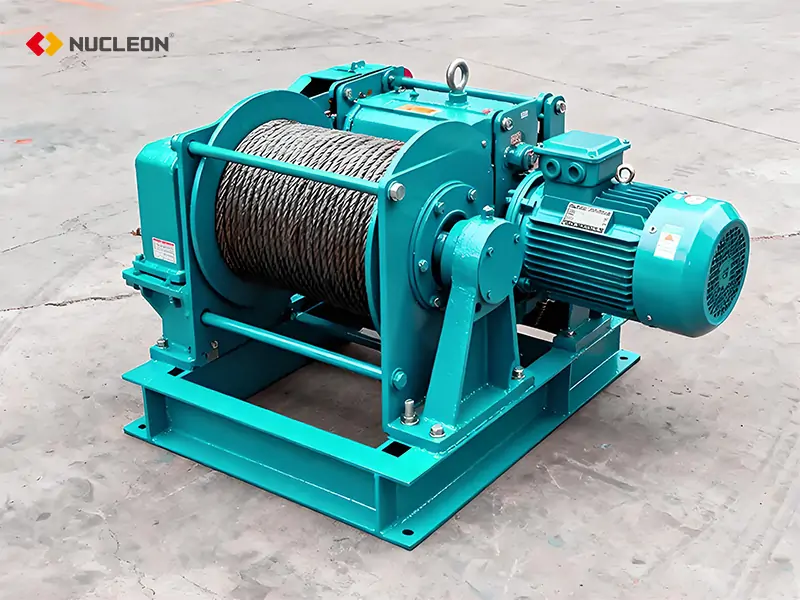
A crane winch is built from five parts that must be engineered together, not selected one at a time: the electric motor, the gearbox (reducer), the rope drum, the wire rope, and the brake. The motor supplies torque; the gearbox steps that torque up (and speed down) to match the rated load; the drum winds the wire rope in grooves sized to the rope diameter; and the brake — almost always a fail-safe, spring-applied design — holds the load the instant power is cut. This is why a crane winch is priced and specified as an assembly: changing one component (a faster motor, a longer drum) shifts the requirements on every other component.
Why this matters in practice: a supplier quoting "the same 10-ton winch" at a noticeably lower price has usually downgraded one of these five components — most often the brake torque margin, the gearbox service factor, or the motor's duty rating — rather than the visible steel structure. The failure shows up later as brake slip, gearbox overheating, or premature wear, not on day one.
How the Load Is Actually Controlled
Hoisting speed and rated load are governed jointly by the gearbox ratio and motor duty rating, not by drum size alone.
A higher gearbox ratio delivers more torque for a heavier load but reduces hoisting speed — this is a direct trade-off, not a free upgrade (see our crane gearbox selection guide for how ratio, torque, and duty rating interact). For example, a winch rated 20 tons at 5 m/min and one rated 20 tons at 12 m/min carry the same load on paper, but the second needs a larger motor, a gearbox rated for higher input speed, and a brake with more thermal capacity to dissipate heat from more frequent stops. Buyers who compare two "20-ton winch" quotes on rated load alone, without checking lifting speed, are often comparing two structurally different machines.
Crane Winch vs. Hoist vs. Standalone Winch
| Функция | Standalone Winch | Тросовый подъемник | Crane Winch |
| Primary motion | Horizontal pull | Vertical lift | Vertical lift, crane-mounted |
| Duty design | Intermittent, low cycle | Medium cycle | M3–M8 per ISO 4301-1 |
| Brake | Friction or dynamic | Fail-safe mechanical | Fail-safe, spring-applied |
| Governing standard | None specific to lifting | Hoist-specific | Crane classification + wire rope standards |
A general-purpose pulling winch should never be substituted for a crane lifting winch. The reason isn't marketing — it's duty. A pulling winch is built for occasional, low-cycle horizontal loads and typically uses a friction or dynamic brake. A crane winch has to hold a suspended load indefinitely and repeatedly, which requires a fail-safe brake, a duty-class-rated gearbox, and a drum/rope system sized for repeated winding cycles. Using an unrated winch in an overhead lifting role removes the safety margin the crane's design assumes exists.
Main Types of Crane Winches
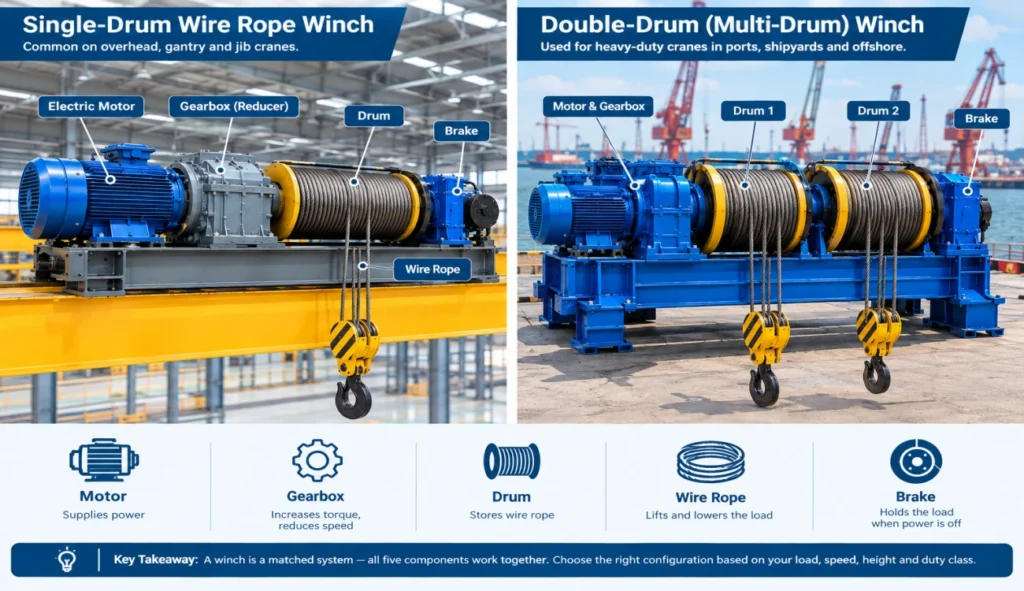
Crane winches split into single-drum wire rope winches for most overhead and gantry cranes, and double- or multi-drum configurations for heavy port, shipyard, and offshore lifting.
Single-Drum Wire Rope Winch
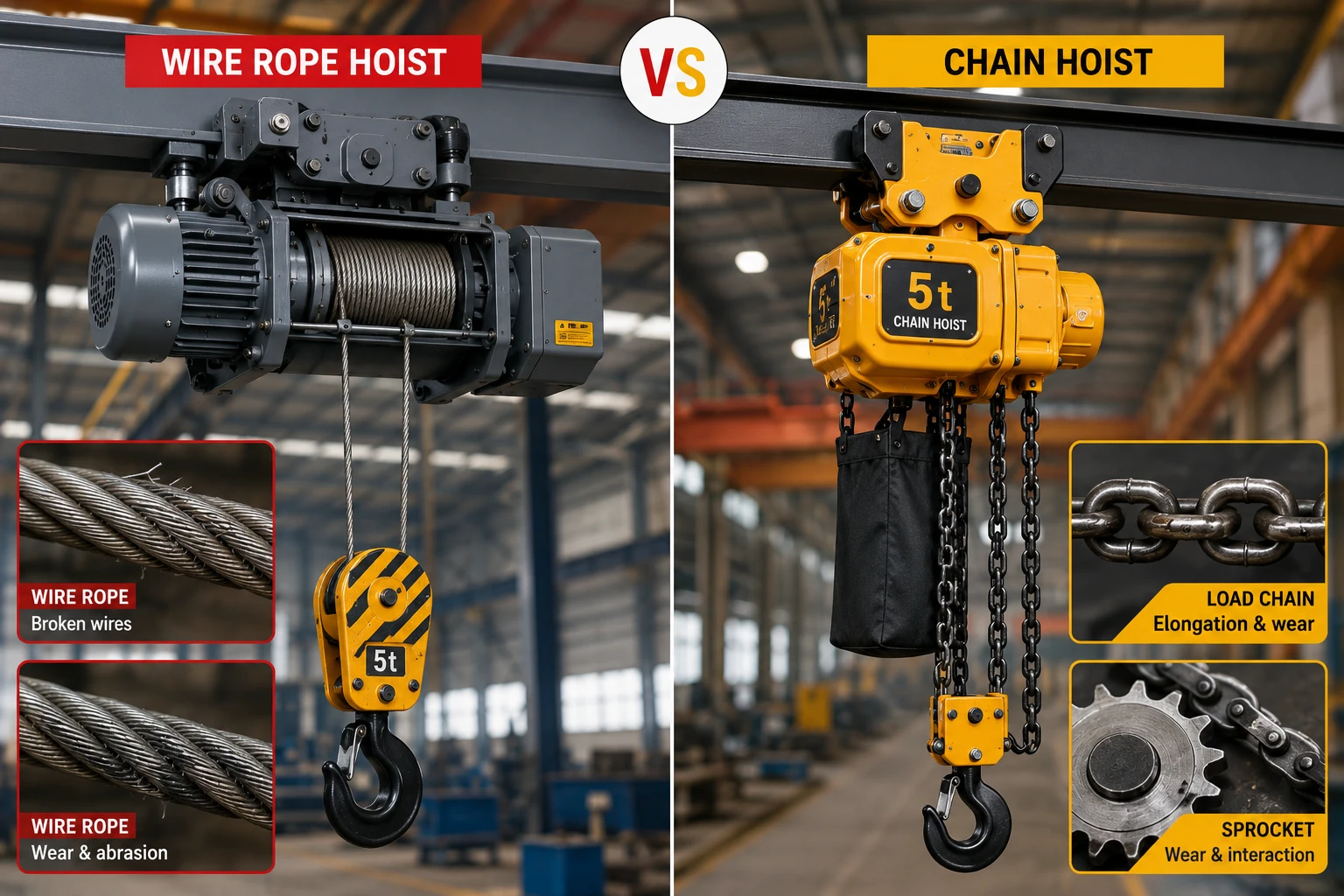
This is the standard configuration on overhead cranes, gantry cranes, and most jib and light cranes, covering roughly 1 to a few hundred tons of rated load. The wire rope winds onto a single grooved drum; capacity, lifting height, and duty class are set by the crane's application. The most common procurement error here is sizing the drum from rope length alone — buyers ask "I need 100 m of rope, what drum do I need?" without also confirming rope diameter, number of falls (reeving), groove pitch, the number of winding layers, and the required safety turns remaining on the drum at maximum lifting height — the same rope-diameter-to-sheave-diameter matching that applies to crane pulley wheel blocks and hook blocks in the reeving system. Get any one of those wrong and the rope either doesn't fit the drum capacity or crosses over itself in a way that accelerates wear — ISO 4309:2017 specifically calls out the crossover zones on multi-layer-spooled drums as the point where rope deterioration is measurably faster than anywhere else on the rope — see also our comparison of wire rope vs chain hoist service life for how duty class affects wear on either lifting medium.
Double- and Multi-Drum Configurations
Large port, shipyard, and offshore cranes typically use two or more drums driven from a single gearbox, allowing independent rope control for load leveling or spreader-beam operation. Mechanical synchronization between drums has to be built into the gearbox design — relying on electronic synchronization alone is not considered sufficient for safety-critical, heavy-duty lifting, which is why these configurations often move to hydraulic drive systems at the top end of the capacity range. This configuration costs meaningfully more than a single-drum winch of the same tonnage, so it's worth confirming with your crane OEM whether your application (spreader-beam handling, tandem lifting) actually requires it before specifying it.
Duty Class: The Parameter Tonnage Doesn't Capture
Duty class (M3–M8 under ISO 4301-1) is set by total working cycles and load spectrum, not by rated load.
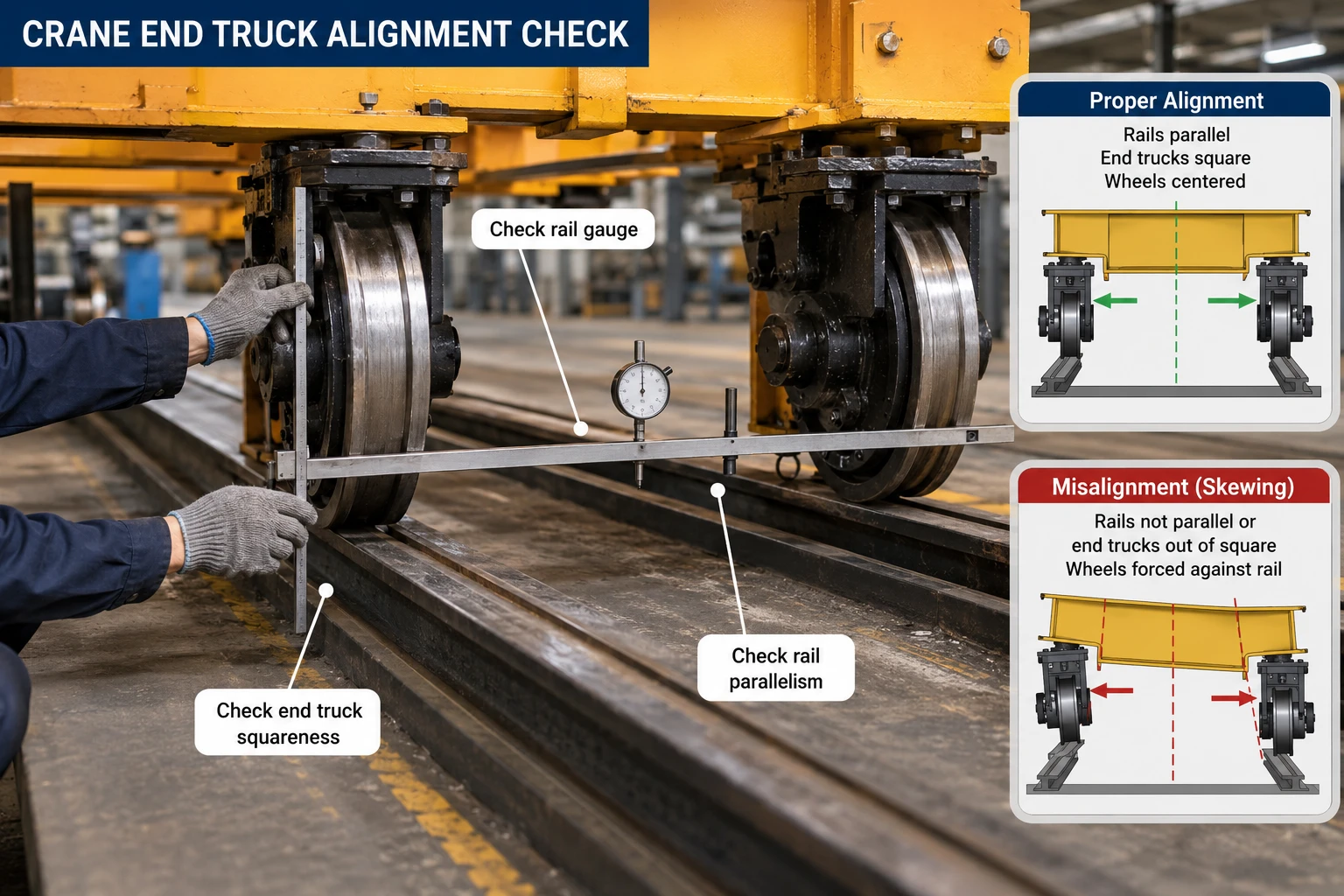
ISO 4301-1:2016 classifies cranes and their mechanisms by the total number of working cycles expected over the equipment's life, combined with a load spectrum factor describing what fraction of those cycles run at or near full rated load. In practice, this means a 10-ton winch running near-continuous production cycles can require a heavier duty class than a 30-ton winch used for occasional maintenance lifts — the same duty-class logic that drives wheel and end truck wear rates elsewhere on the crane. Buying strictly by "tons needed" and ignoring cycles-per-hour and load spectrum is the single most common reason a winch that looked correctly rated on paper wears out early.
How to Select a Crane Winch
Select from the complete lifting duty — rated load, lifting height, lifting speed, and duty class together — not from capacity alone.
Start With Duty, Not Tonnage
Before comparing quotes, write down four numbers: rated load, lifting height, required lifting speed, and expected cycles per hour (or shift). These four, read together, are what determine motor power, gearbox ratio, and brake thermal capacity — reading rated load in isolation tells a supplier almost nothing about the duty the winch actually needs to survive. If you don't know your cycle count, a rough shift-based estimate (lifts per hour × hours per shift) is enough for a supplier to propose a duty class; refine it later against ISO 4301-1 criteria if the application is safety-critical.
Size the Drum and Rope as One System
Confirm rope diameter, the number of falls (single or multi-part reeving), drum groove pitch, and the number of winding layers together, then check that the drum retains the required minimum safety turns at your maximum lifting height. Treating these as one calculation rather than four separate line items avoids the single most common drum-sizing mistake described above.
Compare Quotes Component by Component
Break every quote into motor, gearbox, drum, wire rope, brake, control system, reeving, duty class, and safety devices, rather than comparing a single bottom-line "20-ton winch" price. Two quotes at the same tonnage and a $2,000–$3,000 price gap are almost never identical machines underneath — the gap is sitting in the brake, the gearbox service factor, or the motor's duty rating, and it's cheaper to find out before installation than after a failure.
Common Crane Winch Purchasing Mistakes
Most crane winch purchasing failures trace back to specifying by tonnage alone instead of by full duty.
Buying by Tonnage Alone
As covered above, rated load without lifting speed, height, and duty class is an incomplete specification. This is the most frequent misjudgment in crane winch procurement, and it's also the easiest to fix — it just requires asking for four numbers instead of one.
Treating a General-Purpose Winch as Crane-Ready
A winch built for vehicle recovery or horizontal pulling is not a substitute for a crane-rated hoisting winch, even at the same advertised load rating, because it typically lacks a fail-safe spring-applied brake and isn't built for the fleet angles and duty cycles a crane drum sees.
Sizing the Drum From Rope Length Alone
Also covered above: rope length without diameter, falls, groove pitch, winding layers, and safety-turn margin at maximum height leads to a drum that either can't hold the rope correctly or wears it out faster than expected.
Comparing Bottom-Line Price Instead of Components
A lower quote at the same tonnage rating usually means a lower-spec brake, gearbox, or motor — not a manufacturing discount. Ask for the component breakdown before assuming two quotes are for equivalent equipment.
Maintenance and Wire Rope Inspection
Wire rope condition, not the winch housing, is usually the limiting factor on service life — and it must be inspected against a discard standard, not by eye alone.
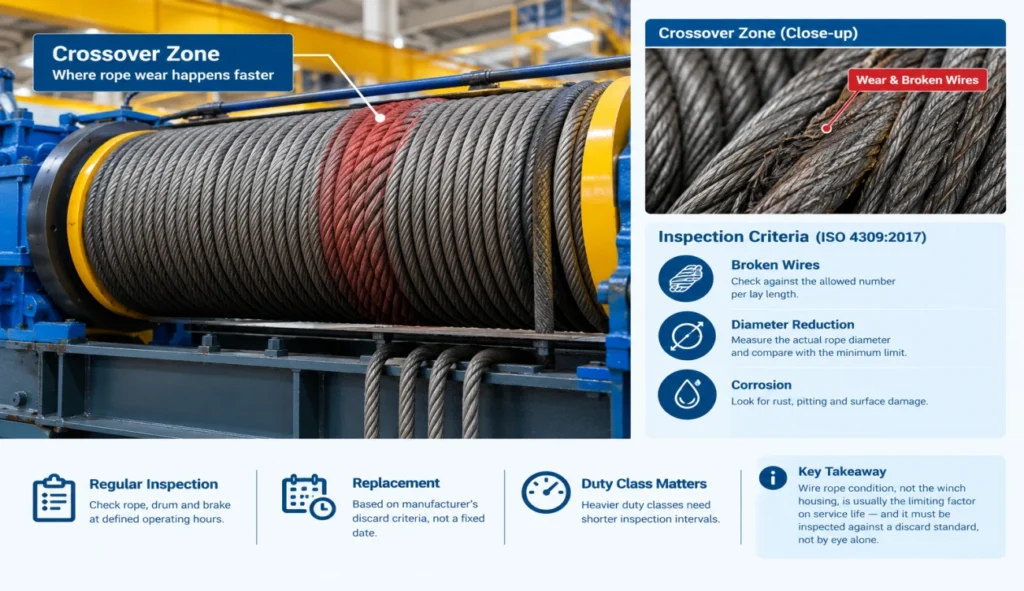
ISO 4309:2017 sets the inspection and discard criteria for wire ropes used on cranes and hoists, including specific criteria for multi-layer-spooled drums, where deterioration concentrates at the crossover zones rather than spreading evenly along the rope. A practical baseline for medium-duty winches is a visual check of rope, drum, and brake at regular operating-hour intervals, with rope replacement decided against the manufacturer's discard criteria (broken wires per lay length, diameter reduction, corrosion) rather than a fixed calendar date. Heavier duty classes need shorter inspection intervals — your winch's duty class should set that schedule, not a generic default.
Заключение
A crane winch is only correctly specified when rated load, lifting height, lifting speed, and duty class are read together — tonnage alone leaves out the variables that actually determine motor, gearbox, and brake sizing. Before requesting a quote, write down those four numbers, ask suppliers to break their price down by component, and confirm the drum and wire rope have been sized as one system. If you're comparing crane winch options for a new or replacement application, share your rated load, lifting height, lifting speed, and duty class with our engineering team and we'll confirm a configuration rather than a guess.

Специалист по оборудованию
Успешный менеджер по работе с кранами с обширным опытом в управлении крупномасштабными проектами и операционным контролем. Подтвержденный опыт увеличения доходов и обеспечения соблюдения требований безопасности.
Часто задаваемые вопросы
Q1: What is a crane winch used for?
A crane winch is the hoisting mechanism on overhead, gantry, and port cranes, lifting and lowering loads vertically by winding wire rope on a motorized drum. It is not designed for horizontal pulling or vehicle recovery — those use a different winch type with different brake and duty requirements.
Q2: What's the difference between a crane winch and a hoist?
"Hoist" usually refers to the complete lifting unit — motor, gearbox, drum, rope, and hook block — while "winch" can mean just the drive-and-drum assembly. Many suppliers use the terms interchangeably, but when ordering spare parts, specify whether you need the full assembly or the drive unit alone.
Q3: How much does a crane winch cost?
Market reference prices typically range from roughly $400 for a small-capacity single-drum unit to $30,000 or more for high-tonnage, high-duty-class or multi-drum configurations. The rated load number alone explains only part of the price — duty class, lifting speed, drum/rope reeving, and brake spec move the price as much as tonnage does.
Q4: Can I use a standard industrial winch on a crane instead of a crane-rated winch?
No. Standard winches typically lack a fail-safe spring-applied brake and aren't rated for the duty cycles or rope fleet angles found on crane drums. The price difference is small relative to the safety and liability exposure of using an unrated winch in an overhead lifting role.
Q5: How often should a crane winch be inspected?
Inspection intervals depend on duty class: a practical baseline for medium-duty winches (M4–M5) is a visual check of rope, drum, and brake every few hundred operating hours, with rope replacement decided against ISO 4309:2017 discard criteria rather than a fixed calendar date. Higher duty classes (M7–M8) need shorter intervals — check your winch's specific maintenance manual.
Связанные статьи
- Crane Gearbox/Reducer Selection Guide: How to Choose the Right Ratio, Torque and Duty Rating
- Тросовая или цепная лебедка: какая прослужит дольше?
- Crane End Truck & Wheel Maintenance Guide
- Overhead Crane Main Girder: Materials & Structure
- Grab Bucket for Overhead & Gantry Cranes: Types, Capacity & Price Guide


 English
  العربية
  Español
  Français
  Português
  Русский