

TL;DR
- Straddle carriers are used across port terminals, heavy manufacturing, aerospace, precast concrete, and intermodal logistics — not just container yards.
- In high-throughput port operations, a fleet of straddle carriers can process 25–35 container moves per hour per crane (Lloyd's List benchmark), cutting horizontal transport costs versus RTG alternatives.
- Choosing the wrong equipment type for your facility — straddle carrier vs. reach stacker vs. forklift — is one of the most common and costly procurement mistakes in outdoor yard operations.
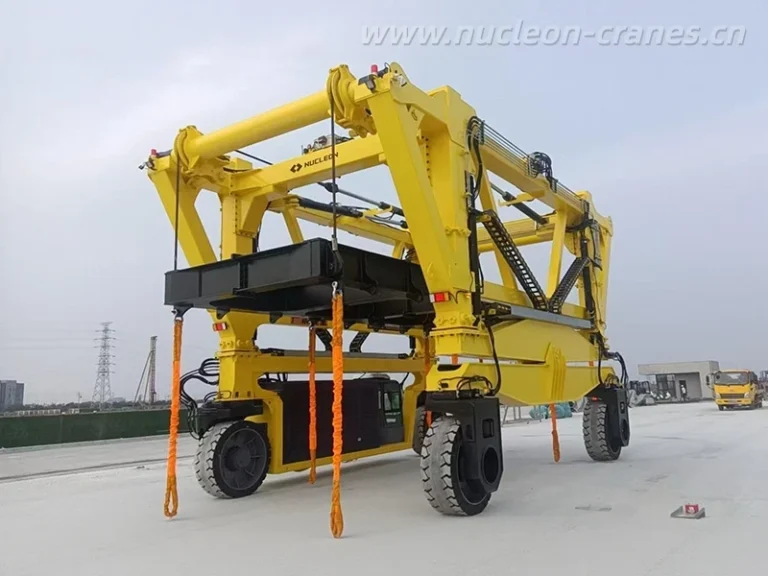
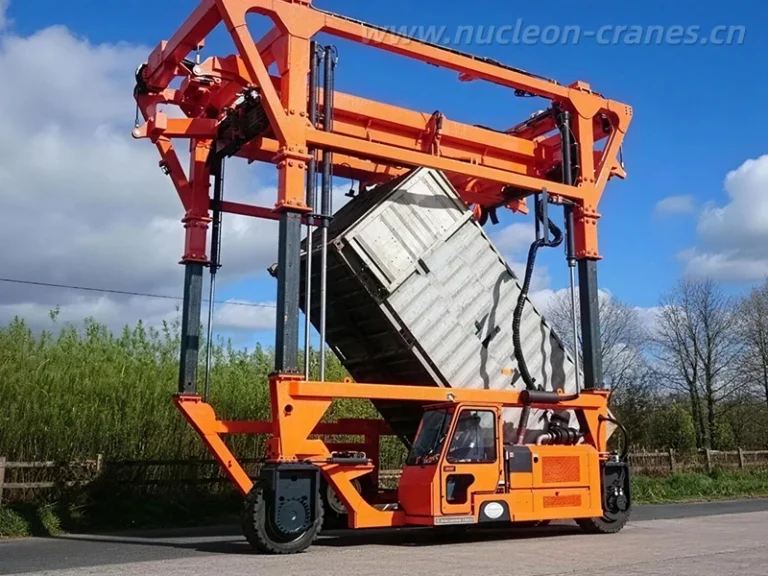
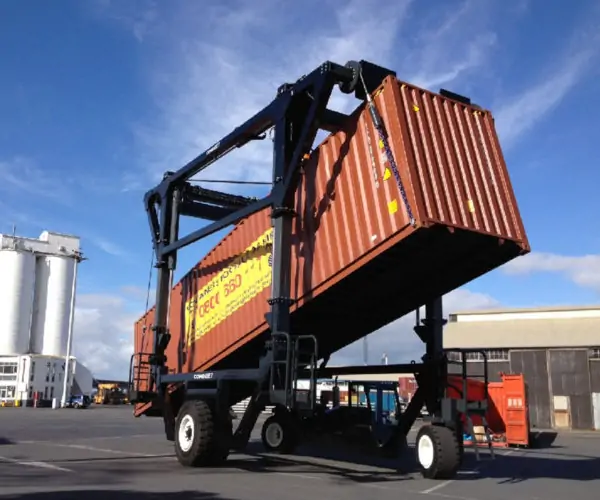
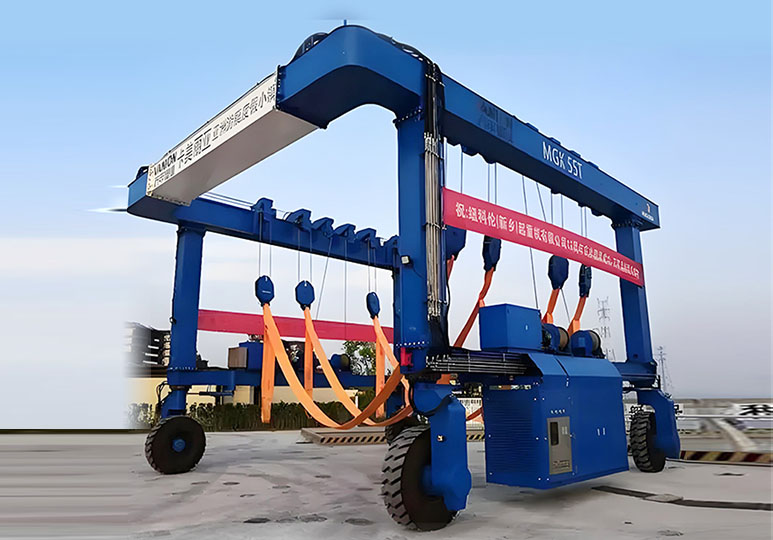
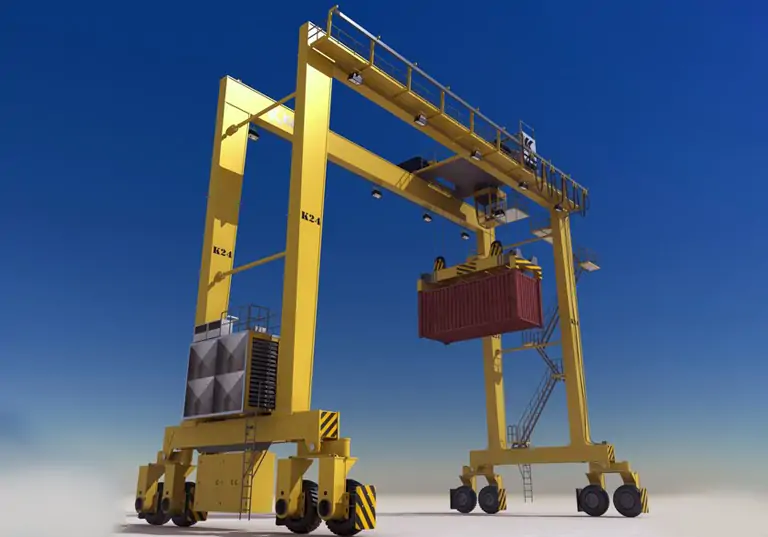
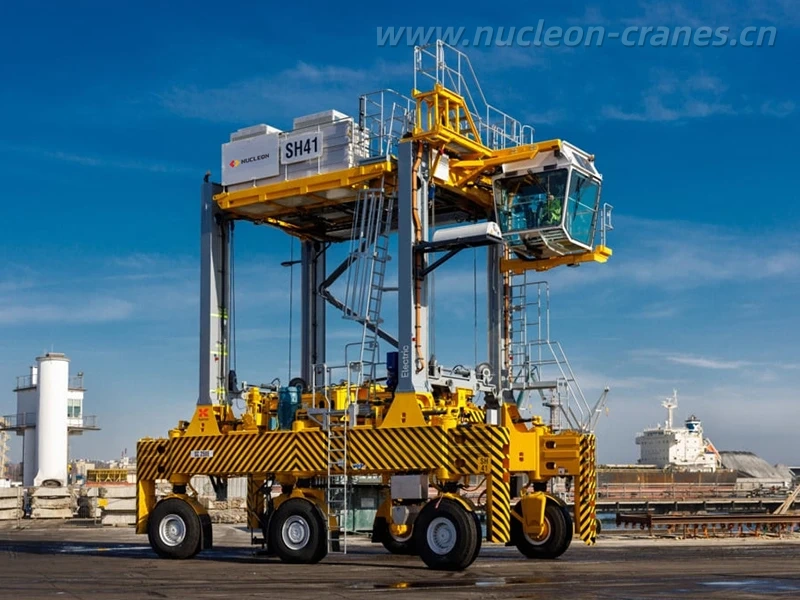
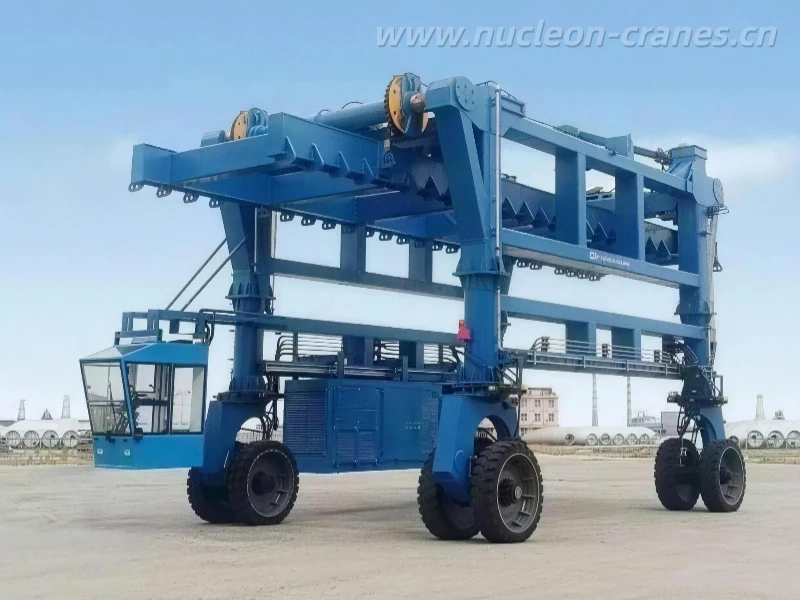
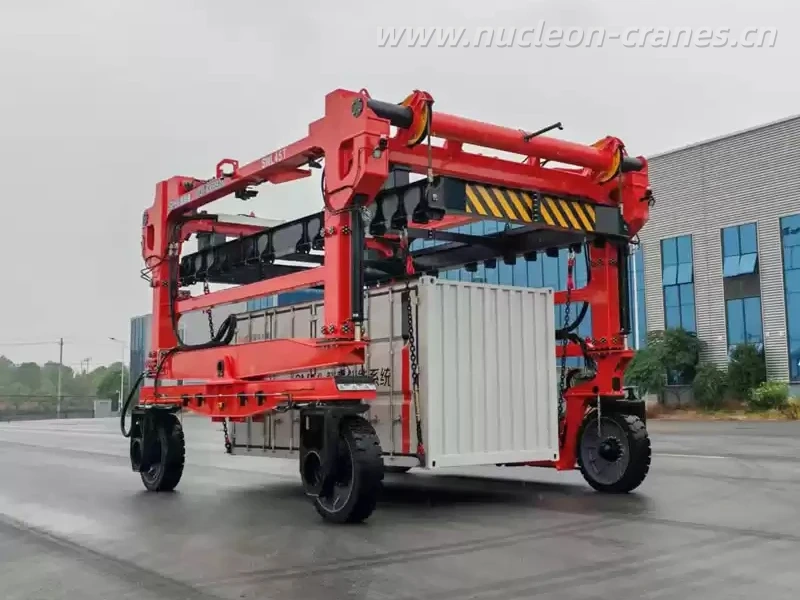
A straddle carrier is a rubber-tired, self-propelled gantry vehicle designed to lift, transport, and stack ISO containers or heavy unitized loads by straddling them from above. Most facilities that search for straddle carriers already know the port terminal use case. What they rarely find is a clear breakdown of how the equipment performs — and what it demands — across every industry where it's actually deployed.
This article maps the six most active deployment environments for straddle carriers in 2026, with specific figures on throughput, floor load requirements, and the hidden trade-offs that only emerge once the machine is on site.
Table des matières
1. Port Container Terminals: The Core Use Case — and Its Real Limits
Why straddle carriers dominate container yard horizontal transport
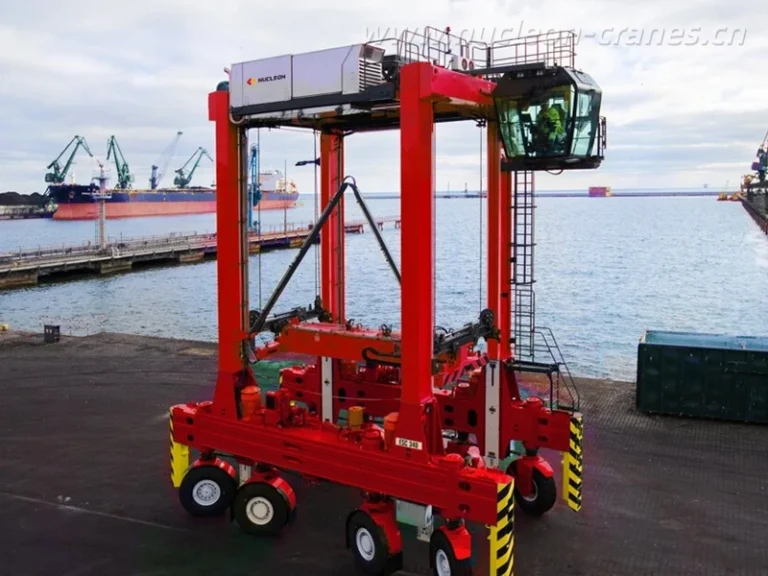
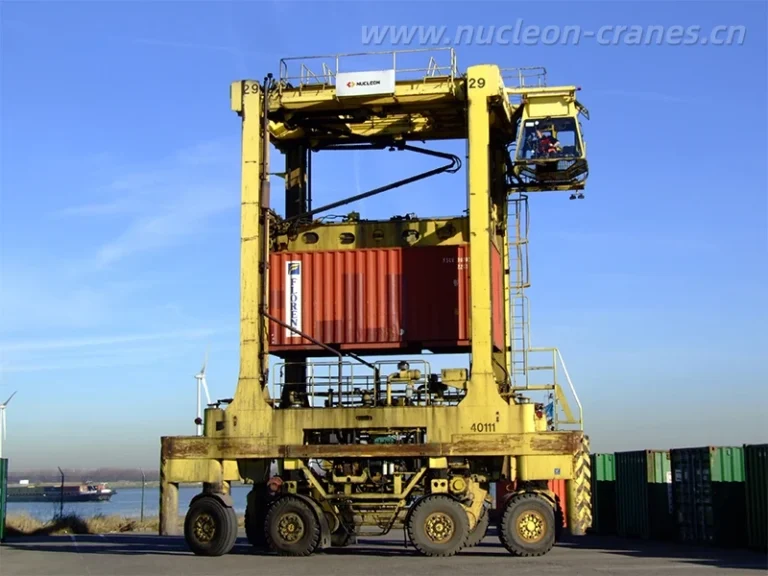
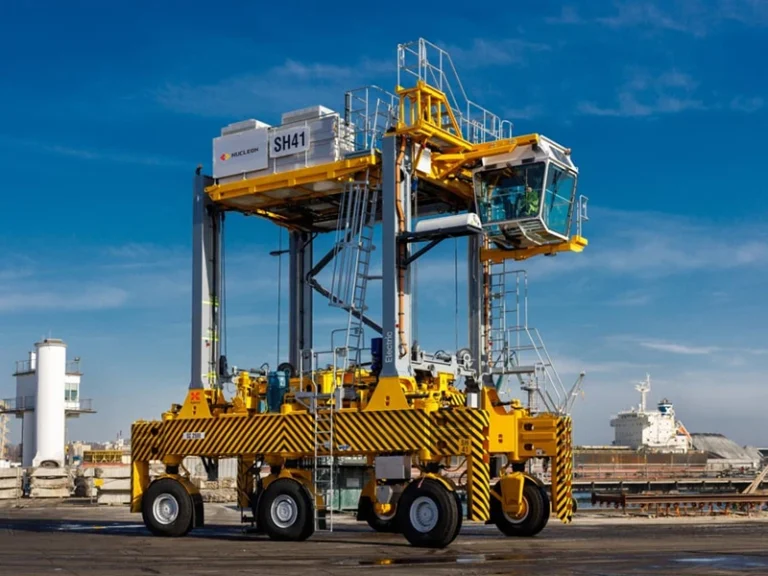
Port container terminals account for the majority of straddle carrier deployments worldwide. The equipment's core advantage here is infrastructure independence: unlike rail-mounted gantry cranes (RMG), straddle carriers require no fixed rail investment, making them the preferred choice for terminals expanding in phases or operating on unpredictable berth layouts.
A standard diesel-electric straddle carrier handles one 20-foot or one 40-foot ISO container per lift, with 1-over-2 or 1-over-3 stacking capability. Kalmar and Konecranes (the two dominant OEMs) both offer configurations lifting up to 60–66 tonnes with travel speeds of 15–30 km/h. Under FEM 1.001 duty class M5, these machines are rated for continuous multi-shift operation with maintenance intervals of up to 1,000 hours.
The operational model that makes straddle carriers uniquely effective in port yards is quay–landside decoupling: straddle carriers handle horizontal transport between ship-side quay cranes and the stacking area independently, without blocking either operation. This separation is why high-throughput terminals — including Patrick Container Ports in Brisbane, the world's first fully automated straddle carrier terminal — achieve quay crane productivity consistently above 25 net moves per hour, the standard government benchmark for Australian ports.
The procurement mistake most port buyers make
Selecting straddle carriers based on ISO container capacity alone, without specifying duty class, is the most common over-specification error in port procurement. A machine rated at 50 tonnes under FEM duty class M3 (light intermittent use) will reach fatigue limits significantly earlier when operated at M5 (heavy continuous use) in a 24/7 terminal. The result is accelerated frame wear and a maintenance cycle that arrives 18–24 months ahead of the projected schedule — a gap that typically isn't discovered until the warranty has expired.
Always specify duty class alongside tonnage when issuing an RFQ to Fabricants OEM.
2. Intermodal Freight Yards: Short-Distance Transfer at Scale
The role of straddle carriers in rail-road-ship interchange
Intermodal logistics centers — facilities that coordinate container transfers between ship, rail, and truck — are the second-largest deployment environment for straddle carriers. The equipment's rubber-tired mobility allows it to operate across all zones of the yard without dedicated lane infrastructure, making it more flexible than fixed overhead gantries for facilities handling variable container flows.
At inland container depots and dry ports, straddle carriers handle three primary tasks: receiving inbound containers from rail flatcars, positioning them for customs inspection or storage, and pre-positioning outbound loads for truck pickup. Typical yard density in these environments runs 150–300 containers per hectare, a range where 1-over-2 stacking (three containers high) provides the best balance of density and cycle time.
Automation readiness as a selection criterion
Intermodal yards investing in automated operations should confirm that any manual straddle carrier under consideration is diesel-electric rather than diesel-hydraulic. As Konecranes notes in its A-STRAD product documentation, only diesel-electric machines can be retrofitted with autonomous guidance systems without structural modification. Purchasing diesel-hydraulic units to save on initial capex can eliminate the automation upgrade path entirely — a TCO decision that becomes clear only 3–5 years into the asset lifecycle.
3. Heavy Manufacturing & Outdoor Industrial Yards
Why straddle carriers outperform forklifts for loads above 20 tonnes
In heavy manufacturing — steel fabrication, wind turbine component staging, shipbuilding, and large-equipment assembly — the equipments handle loads that exceed the practical capacity of counterbalance forklifts. When loads are long, wide, or irregularly shaped (turbine nacelles, structural steel bundles, pre-assembled modules), a spreader-equipped straddle carrier provides stable, balanced lift from above without requiring the load to have forklift-accessible pockets.
The key operational advantage over heavy forklifts in outdoor yard environments is ground pressure distribution. A straddle carrier spreads its weight across four multi-wheel bogies, typically achieving ground pressure of 12–18 tonnes per axle. A comparable counterbalance forklift concentrates load through two rear axles, often exceeding 25–30 tonnes per axle under full load — a critical difference when operating on compacted gravel or asphalt yards not engineered for forklift-level axle loading.
This distinction is the hidden cost most industrial buyers miss: upgrading yard surface specification to handle forklift ground pressure adds $80,000–$250,000 per 1,000 m² of reinforced pavement, depending on soil conditions. Straddle carriers may cost more to purchase but frequently reduce civil engineering expenditure in greenfield yard projects.
4. Aerospace & Defense: Handling Cargo That Cannot Be Dropped
Custom spreaders and precision positioning requirements
Aerospace cargo handling represents a specialized but growing application for straddle carriers. Aircraft engine modules, fuselage sections, and wing assemblies are too large for standard forklifts and too fragile for sling-based crane lifts without purpose-built fixtures. The container cranes equipped with custom rigid spreader frames — typically designed to ISO 668 container interface points or bespoke aerospace tooling fixtures — provide controlled, vibration-damped horizontal transport within hangars and tarmac staging areas.
The operating environment creates specific equipment demands: floor load capacity in aircraft hangars is strictly governed, typically limited to 5–8 tonnes/m² per EN 1991-1-1 (Eurocode) or comparable national standards. Straddle carriers selected for aerospace facilities must have bogie configurations verified against specific floor slab engineering — a specification step often omitted by procurement teams sourcing equipment through general industrial channels.
Operating clearances are equally critical. Hangar door heights of 8–14 m and aisle widths of 12–18 m define the usable envelope for equipment selection, and straddle carrier mast height in travel position must be confirmed against facility drawings before order.
5. Precast Concrete & Construction Logistics
Stacking precast elements: what the load charts don't tell you
Precast concrete manufacturers — producing bridge segments, tunnel liners, wall panels, and structural beams — use straddle carriers as the primary material handling system within production yards. The economics are straightforward: a straddle carrier replaces multiple gantry cranes and eliminates the fixed infrastructure cost associated with overhead crane runways.
What the standard load charts from OEM manufacturers do not highlight is the dynamic load shift during precast element rotation. When asymmetric elements (T-beams, L-shaped retaining wall units) are repositioned from casting orientation to stacking orientation, the center of gravity migrates laterally during the lift. This creates a lateral moment on the spreader that can exceed design tolerances on machines specified only for symmetric ISO container loads. Precast buyers should confirm active load monitoring systems (such as Konecranes TRUCONNECT or equivalent IoT-enabled load sensing) are included in the specification, not treated as an optional add-on.
6. Zero-Emission & Autonomous Operations: Cross-Industry Transition
The state of electric and hybrid straddle carriers in 2026
Electric and hybrid straddle carriers are no longer limited to new greenfield port projects. As of 2026, Konecranes offers modular power configurations (hybrid, battery, hydrogen) that are interchangeable on the same frame with minimal downtime — a significant shift from earlier generations where power system conversion required major structural rework. Kalmar's electric straddle carrier uses lithium-ion batteries with zero point-of-use emissions, suitable for cold storage adjacent facilities, airport zones with emissions restrictions, or urban intermodal depots with night operation noise limits.
Hybrid models from both major OEMs reduce fuel consumption and emissions by up to 40% compared to conventional diesel-electric machines through regenerative braking and power demand management — a reduction consistent with ISO 14083 scope 1 emissions accounting for logistics operations.
For autonomous operations: the Kalmar AutoStrad™ system and Konecranes A-STRAD are both proven in live terminal environments, with the A-STRAD deployable in phased sections of an existing manual fleet, reducing operational disruption during transition.
Use-Case Selection Framework: Matching Straddle Carrier Configuration to Facility Type
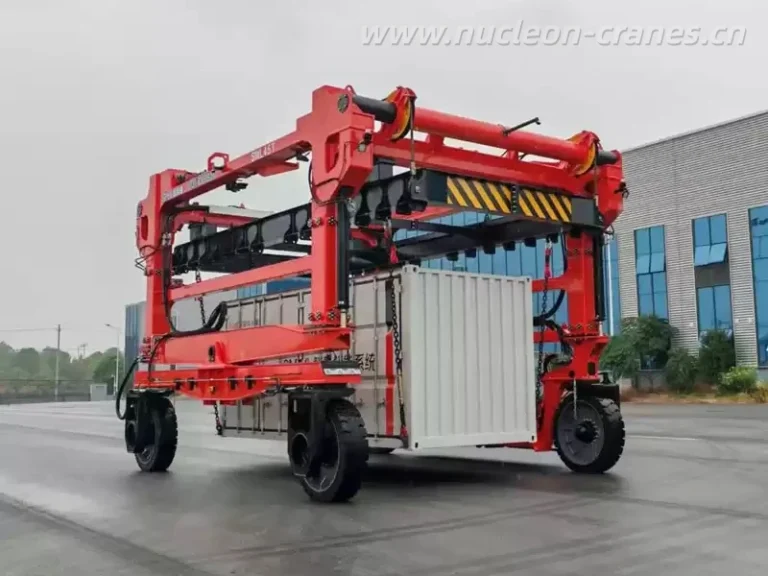
| Facility Type | Recommended Config | Hauteur d'empilage | Key Spec to Confirm |
| Port container terminal (high throughput) | Diesel-electric or hybrid, 40–66t | 1-over-3 | Duty class M5, automation-ready |
| Intermodal / inland depot | Diesel-electric, 35–50t | 1-over-2 | Diesel-electric (not hydraulic) for future automation |
| Heavy manufacturing yard | Custom spreader, 30–80t | Ground level or 1-over-1 | Ground pressure per axle, yard surface spec |
| Aerospace / defense hangar | Rigid custom spreader, 20–50t | Ground level | Floor load limit, mast travel height, aisle clearance |
| Precast concrete yard | Standard or custom spreader, 30–60t | 1-over-2 | Active load monitoring, lateral CoG shift capacity |
| Urban / restricted emission zone | Battery-electric or hybrid, 30–60t | 1-over-2 | Charging infrastructure, noise limit compliance |
The right straddle carrier configuration for your facility starts with three numbers: maximum single-lift weight, required stacking height, and yard surface bearing capacity. These three inputs eliminate most unsuitable configurations before any OEM specification sheet is consulted.
Conclusion
Straddle carriers serve a wider range of industrial environments than their port-terminal reputation suggests. From aerospace hangars to precast yards to urban zero-emission depots, the underlying logic is consistent: the equipment excels where loads are heavy, the yard is large, and infrastructure flexibility matters more than aisle density.
The procurement decisions that go wrong most often are not about which brand to choose — they're about under-specifying duty class, overlooking ground pressure implications, or purchasing diesel-hydraulic machines that cannot be automated. Getting these three parameters right before RFQ issue saves significantly more than any unit price negotiation will.
If you're evaluating a straddle carrier for a specific facility type, the next logical step is confirming your tonnage range and operational duty cycle against the buying framework in our Straddle Carrier Buying Guide, or reviewing current market pricing in our Tendances et prévisions de prix du marché des cavaliers porte-engins en 2026.Related Article: A Comprehensive Guide to Straddle Carrier Maintenance
FAQ
Q1: Can straddle carriers be used indoors?
They are primarily designed for outdoor yard operations and require substantial overhead clearance — typically 8 m or more in travel position. Indoor use is possible in purpose-built facilities (aircraft hangars, large precast production halls) where floor load and aisle dimensions are engineered to accommodate the equipment. Standard warehouse environments with conventional ceiling heights and floor slabs are not suitable without significant civil upgrades.
Q2: What is the minimum yard size needed to operate a straddle carrier efficiently?
A functional straddle carrier yard requires a minimum turning radius clearance of approximately 12–15 m and aisle widths of at least 8–10 m between container rows. Below this threshold, cycle times increase substantially and the equipment's mobility advantage over fixed gantry systems is lost. For small yards under 2 hectares, a reach stacker or counterbalance forklift will typically deliver better cycle economics.
Q3: How does duty class affect straddle carrier selection?
Duty class, defined under FEM 1.001 and referenced in ISO 4301-1, classifies lifting equipment by total operating hours and load spectrum over the design life. A straddle carrier operating two shifts per day in a continuous port environment requires minimum M5 classification. Selecting M3 or M4 equipment for high-intensity applications shortens structural fatigue life by 30–50% versus the projected design life — a common source of premature maintenance costs.
Q4: Are electric straddle carriers suitable for 24/7 operations?
Yes, with appropriate charging infrastructure. Battery-electric straddle carriers from Kalmar and Konecranes support opportunity charging during driver shift changes and meal breaks. For uninterrupted 24/7 operations, terminals typically run a battery swap or fast-charge protocol, with charging cycles engineered into the operational schedule. Hydrogen fuel cell variants under evaluation by major OEMs in 2026 offer faster refueling times comparable to diesel and are better suited for terminals where charging downtime is operationally unacceptable.
Q5: What safety standards apply to straddle carriers in European markets?
Straddle carriers sold in the EU must comply with the Machinery Directive 2006/42/EC and carry CE marking. Structural design is typically validated against EN 13001-1 (crane safety general principles) and FEM 1.001 (rules for the design of hoisting appliances). For port applications, IACS (International Association of Classification Societies) guidelines may apply to marine terminal equipment. Buyers importing from non-EU manufacturers should request full CE technical file documentation, not just the Declaration of Conformity, to verify structural calculation compliance.

 English
  العربية
  Español
  Français
  Português
  Русский