

Hay docenas de configuraciones de grúas en el mercado, pero cuatro tipos de grúas para la construcción Los proyectos representan la gran mayoría de las aplicaciones industriales y de infraestructura: grúas aéreas, grúas de pórtico, grúas portuarias y grúas de pluma. Si has reducido tu búsqueda a estas cuatro opciones, ya estás haciendo la pregunta correcta.
La pregunta más difícil es: ¿cuál de ellos está realmente diseñado para su lugar de trabajo?
Cada tipo de grúa tiene una zona de resistencia claramente definida. Las grúas puente predominan en instalaciones industriales cerradas. Las grúas pórtico se desplazan por patios abiertos sin infraestructura fija. Las grúas portuarias manejan cargas marítimas extremas a gran escala. Las grúas de pluma permiten realizar elevaciones de precisión en espacios a los que otras grúas simplemente no pueden llegar.
Esta comparativa elimina la confusión. Encontrarás datos comparativos sobre capacidad, movilidad, instalación, entorno operativo, requisitos de certificación y coste total de propiedad: todo lo que un comprador serio necesita para tomar una decisión segura y fundamentada.
Tabla de contenidos
- Comparación de los 4 tipos principales de grúas para la construcción: Primero, los datos que importan.
- Grúa puente: Máxima eficiencia en espacios confinados
- Grúa pórtico: Flexibilidad de despliegue sin compromisos
- Grúa portuaria: Diseñada para las condiciones extremas de la logística marítima.
- Grúa de pluma: Precisión donde otros tipos de grúas se quedan cortos.
- El marco de decisión: cuatro preguntas que determinan su respuesta.
- Comparación de certificación y cumplimiento
- Conclusión
- Preguntas frecuentes
- P1: ¿Cuáles son los principales tipos de grúas que se utilizan en proyectos de construcción?
- P2: ¿Puedo usar una grúa pórtico en lugar de una grúa puente para ahorrar en los costos de la estructura del edificio?
- P3: ¿Cuál es la altura mínima del edificio requerida para una grúa puente?
- P4: ¿Son las grúas portuarias adecuadas para proyectos de construcción de gran envergadura que no impliquen operaciones marítimas?
- P5: ¿Se puede instalar una grúa de pluma debajo de un sistema de grúa puente ya existente?
Comparación de los 4 tipos principales de grúas para la construcción: Primero, los datos que importan.
Antes de entrar en detalles, aquí les presentamos una comparación directa de las dimensiones que influyen en la mayoría de las decisiones de compra.
| Factor de comparación | Puente grúa | Grúa pórtico | Grúa portuaria | Grúa pluma |
| Rango de capacidad típico | 1–500 toneladas | 0,5–1.000 toneladas | 40–800 toneladas | 0,1–10 toneladas |
| Movilidad | Bahía fija | Riel de tierra / neumático de caucho | Fijo a móvil | Arco fijo (180°–360°) |
| Complejidad de la instalación | Alto | Mediano | Muy alto | Bajo |
| El mejor entorno | Zona industrial cerrada | Patio abierto / al aire libre | Terminal marítima/portuaria | Taller / puesto de trabajo de la planta |
| Tiempo promedio de instalación | 1–4 semanas | 3–10 días | 3–6 meses | 1–3 días |
| Estándar de diseño clave | ISO 4301 | EN 13001 | ISO 23853 / FEM | FEM 1.001 |
| Certificación (Mercado de la UE) | CE | CE | CE + FEM | CE |
| Vida útil típica | 20-30 años | 15-25 años | 25–35 años | 15-25 años |
Esta tabla es su punto de referencia. Las secciones siguientes explican el razonamiento detrás de cada fila.
Grúa puente viajeraMáxima eficiencia en espacios cerrados
Lógica de diseño principal
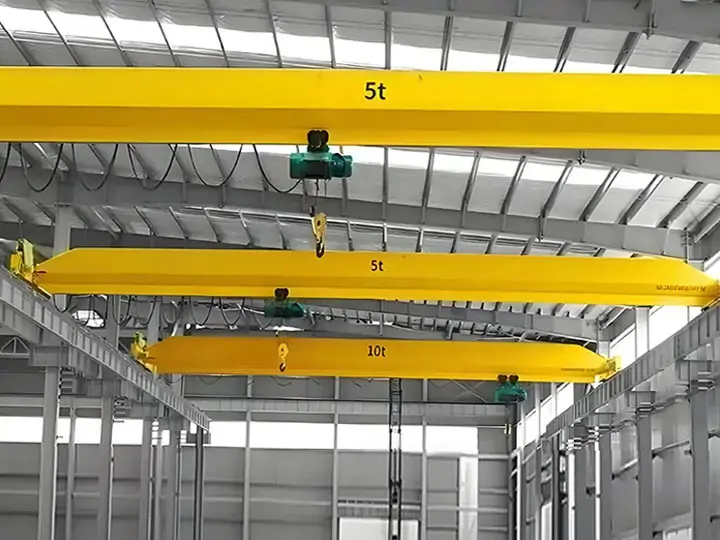
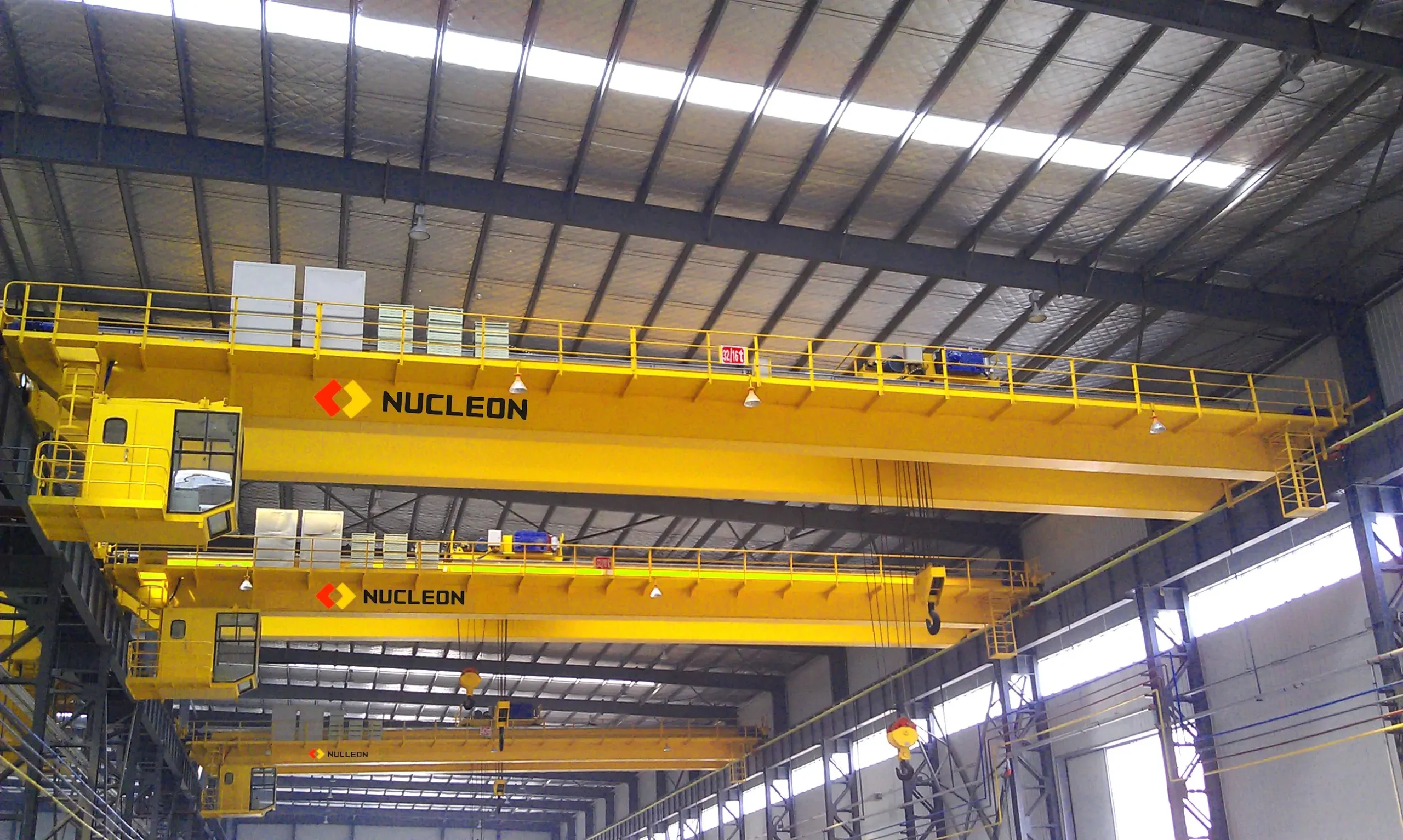
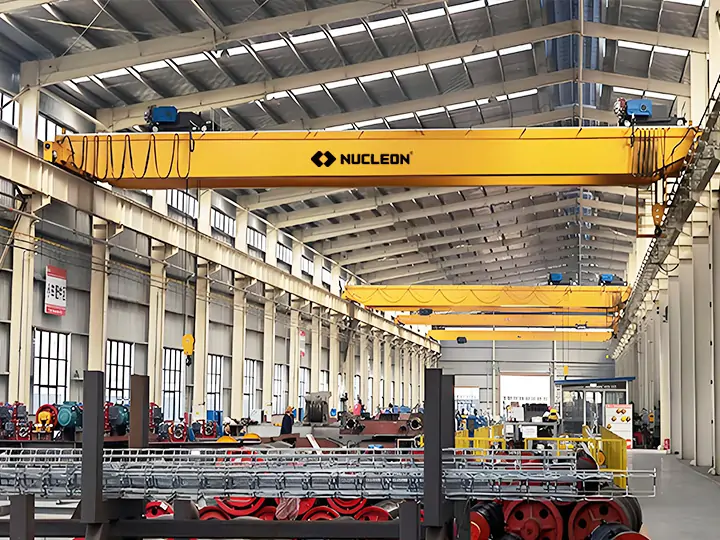
Una grúa puente se desplaza sobre vigas de riel elevadas fijadas a las columnas estructurales de un edificio o a marcos de soporte específicos. El puente se desplaza a lo largo de estas vigas; el polipasto se desplaza a lo largo del puente. El resultado es una grúa completamente... Cobertura XYZ abarcando toda una bahía, sin ocupar espacio en el suelo.
Esta filosofía de diseño prioriza Rendimiento y precisión en un espacio fijo y cerrado.. Ningún otro sistema ofrece la misma combinación de frecuencia de elevación, precisión en el recorrido del gancho y cobertura de la bahía.
Dónde triunfa
Las grúas puente son la opción indiscutible para:
- Fabricación industrial pesadaFabricación de acero, montaje de maquinaria, instalaciones de fundición pesada
- Plantas de hormigón prefabricado: Manipulación repetitiva de moldes con cargas de 10 a 80 toneladas.
- Almacenamiento a gran escalaAlmacenamiento de bobinas, almacenamiento de placas, manipulación de barras largas.
Viga única Las configuraciones permiten manejar cargas de hasta 20 toneladas de manera eficiente. Doble viga Las configuraciones amplían la capacidad más allá de las 300 toneladas y ofrecen una mayor altura de gancho, algo fundamental al levantar cargas por encima de maquinaria existente o estructuras de entrepiso.

Grúa puente monorraíl estándar FEM
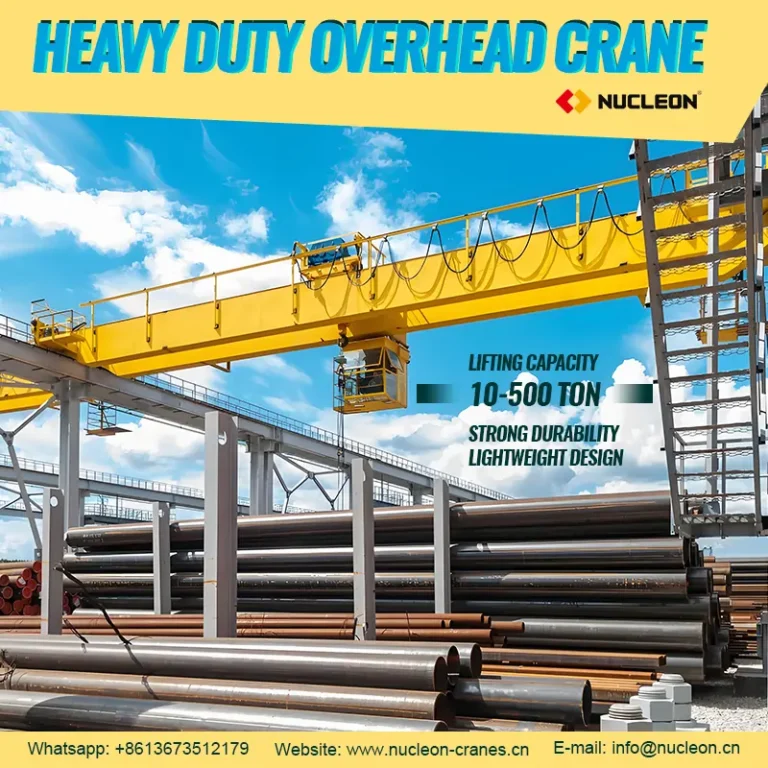
Grúa puente de doble viga estándar FEM
Lo que los compradores suelen subestimar
La estructura del edificio debe soportar las cargas de la viga de la vía. En las construcciones nuevas, esto se planifica desde el primer día. En las reformas, es obligatorio realizar una evaluación estructural antes de la especificación. Omitir este paso ha retrasado más proyectos que cualquier otro error en la adquisición de grúas industriales.
El cronograma de instalación para un sistema estándar de doble viga con vigas de riel generalmente es de 2–4 semanas. Incluya esto en el presupuesto de su proyecto con anticipación.
Veredicto sobre la grúa aérea
Elija una grúa puente cuandoUsted opera en un espacio cerrado con elevación repetitiva y de alta frecuencia, requiere una colocación precisa de la carga y cuenta con la infraestructura estructural necesaria para soportarla, o bien está construyendo dicha infraestructura.
Grúa pórtico: Flexibilidad de despliegue sin compromisos
Lógica de diseño principal
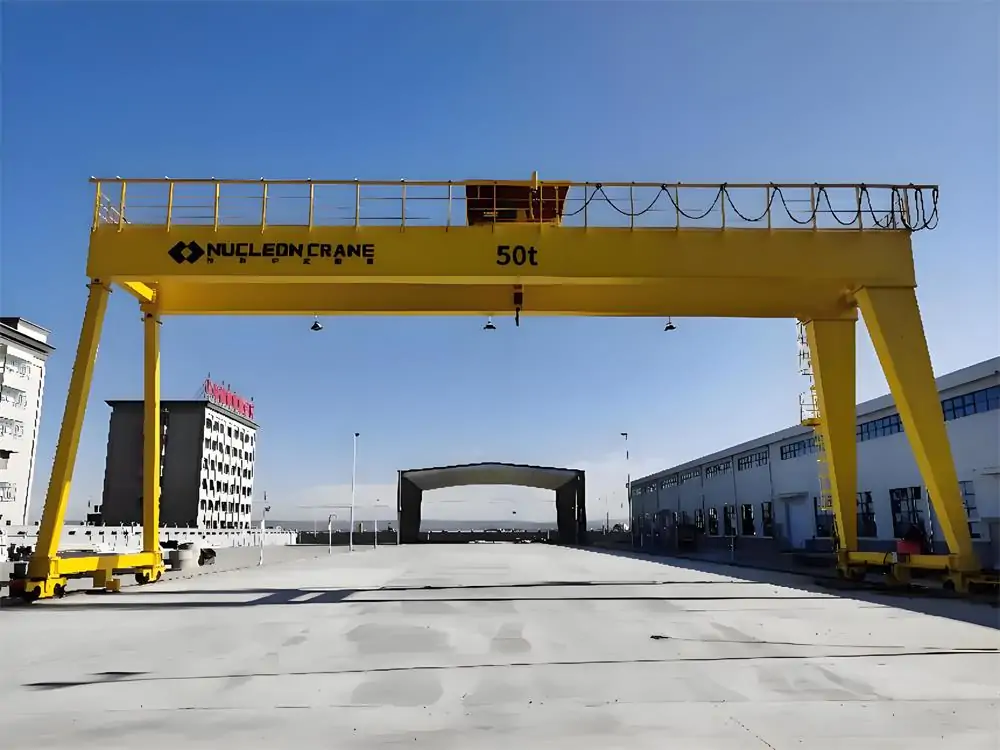
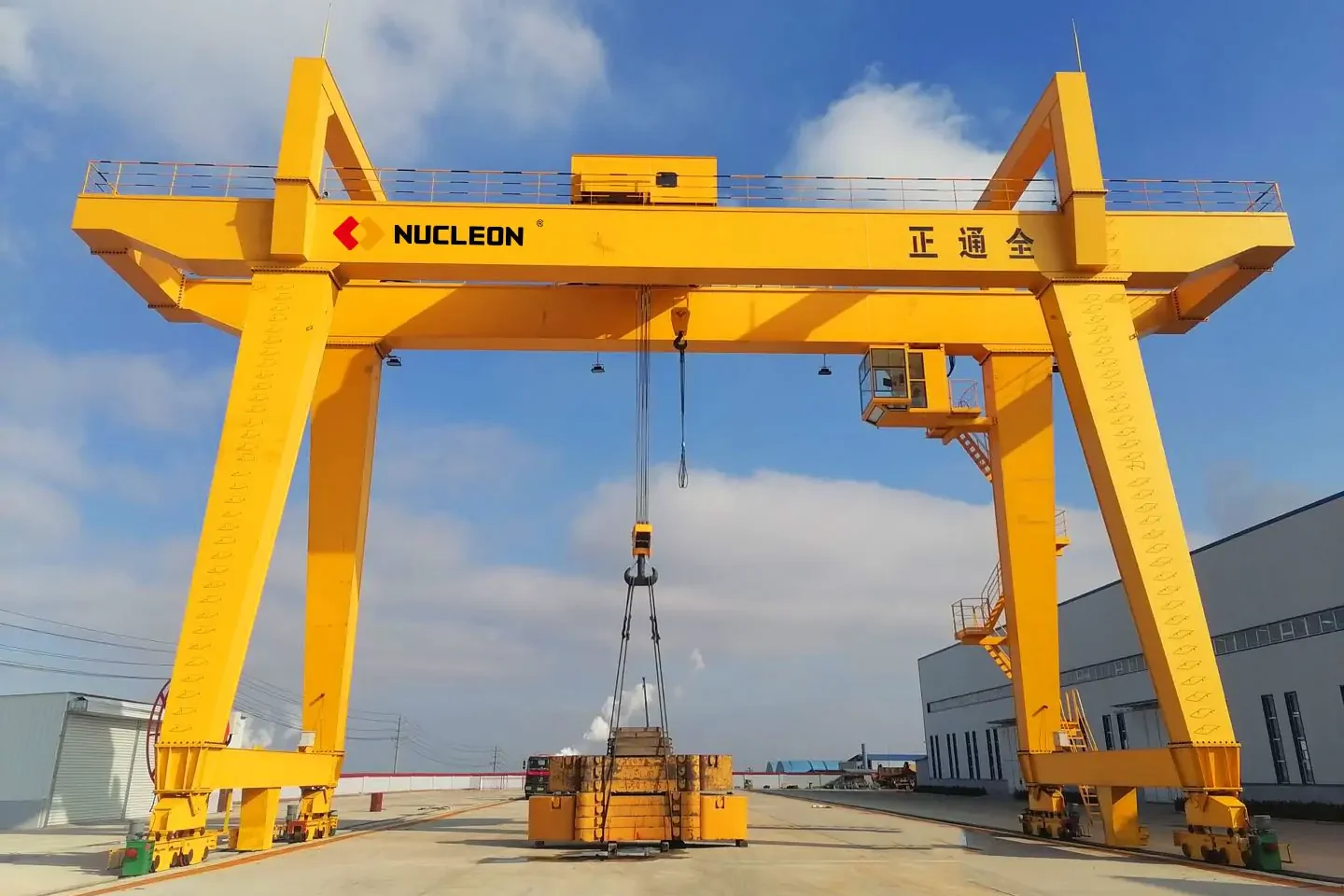
Una grúa pórtico cuenta con su propia estructura de soporte. Dos patas sostienen la viga del puente, desplazándose sobre rieles a nivel del suelo o neumáticos de goma. No requiere ninguna estructura de edificio. Esta única diferencia abre la puerta a escenarios de uso completamente inaccesibles para las grúas puente.
Dónde triunfa
Entre todos los tipos de grúas para la construcción, las grúas pórtico cubren la gama más amplia de aplicaciones:
- Patios abiertos de prefabricadosManipulación de vigas, columnas y paneles de pared de hormigón.
- Astilleros y diques secos: Traslado de secciones del casco y conjuntos pesados
- proyectos de construcción ferroviariaColocación de traviesas, vigas e infraestructura de vías
- Obras de construcción temporalesDesplegable y reubicable entre fases del proyecto.
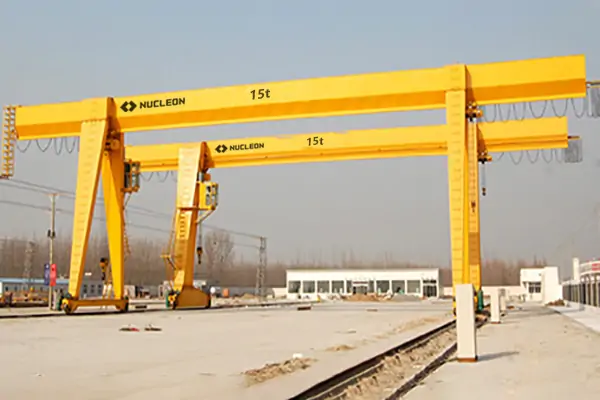
Grúa pórtico monorraíl tipo L
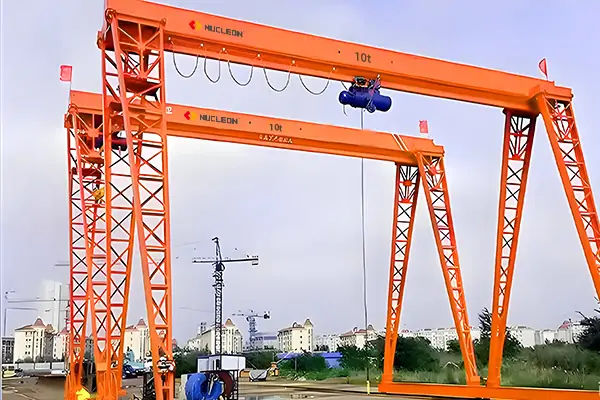
Grúa pórtico de celosía simple MH
Variantes estructurales y sus ventajas e inconvenientes
| Variante | Ventaja clave | Limitación clave |
| Pórtico montado sobre rieles | Alta capacidad, estable | Vía férrea fija, se requiere preparación del terreno |
| Pórtico sobre neumáticos (RTG) | Alta movilidad, rutas flexibles | Mayor mantenimiento, menor capacidad máxima |
| Semipórtico | Un lado comparte la pista de aterrizaje del edificio. | Específico del sitio, menos flexible |
| Pórtico portátil/de taller | Despliegue rápido, bajo costo | Solo para uso ligero (menos de 5 toneladas) |
Lo que los compradores suelen subestimar
La capacidad portante del terreno es la especificación de grúa pórtico que con mayor frecuencia se pasa por alto. Los sistemas montados sobre rieles transfieren cargas concentradas a través del riel hasta el suelo. Las cimentaciones insuficientes provocan asentamientos del riel, desalineación y desgaste acelerado de las ruedas. Siempre se debe solicitar un estudio geotécnico antes de finalizar el trazado del riel.
Para grúas pórtico exteriores, Clasificación de carga de viento Es una especificación crítica para la seguridad. La norma EN 13001-2 proporciona el marco de cálculo. Confirme que la velocidad del viento de diseño coincide con los requisitos regionales de su emplazamiento.
Veredicto sobre la grúa pórtico
Elija una grúa pórtico cuando: su emplazamiento es abierto o carece de estructura de edificio para vías elevadas, necesita manipular materiales voluminosos o largos, o requiere la flexibilidad de reubicar equipos entre las fases del proyecto.
Grúa portuaria: Diseñado para las condiciones extremas de la logística marítima.
Lógica de diseño principal
Las grúas portuarias no son simplemente grúas grandes. Sus sistemas, diseñados específicamente para soportar un funcionamiento continuo en condiciones que degradan rápidamente los equipos industriales estándar. La corrosión por aire salino, los ciclos de funcionamiento ininterrumpidos (24/7) y las cargas que superan con creces las de la mayoría de las demás aplicaciones de construcción definen esta categoría.
Entre los tipos de grúas para la construcción y la logística, las grúas portuarias representan el nivel más alto de especificaciones de ingeniería. El término "grúa portuaria" abarca varios tipos de equipos distintos, cada uno con una función específica.
Explicación de los tres tipos principales
Grúa de barco a tierra (STS) — Operaciones del muelle
La máquina que define las operaciones de las terminales de contenedores. El alcance abarca el alcance 50–70 metros para cubrir toda la manga de los buques portacontenedores ultragrandes. La capacidad de elevación suele ser de 40–65 toneladas por ciclo de elevación. Una sola grúa STS puede manejar Entre 25 y 35 movimientos de contenedores por hora. bajo una gestión eficiente de la terminal.
Estas se encuentran entre las grúas estructuralmente más complejas que existen. Los plazos de entrega de adquisición de 18–36 meses Son características estándar para las nuevas grúas STS de los principales proveedores.
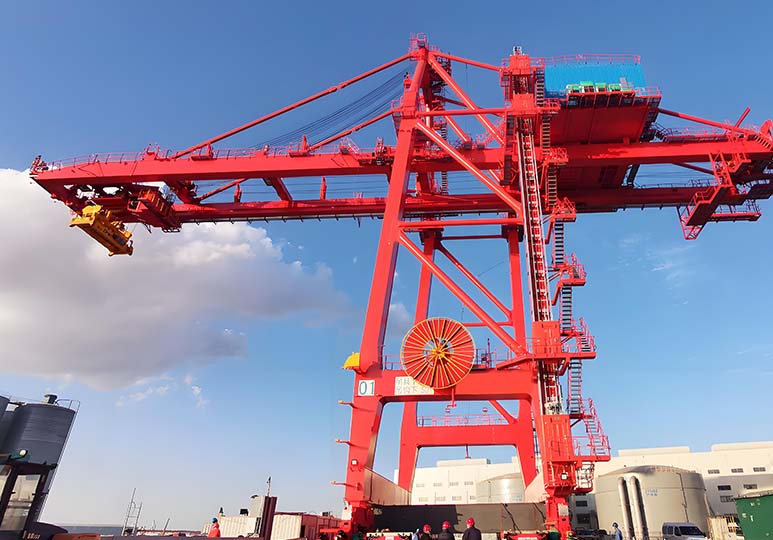
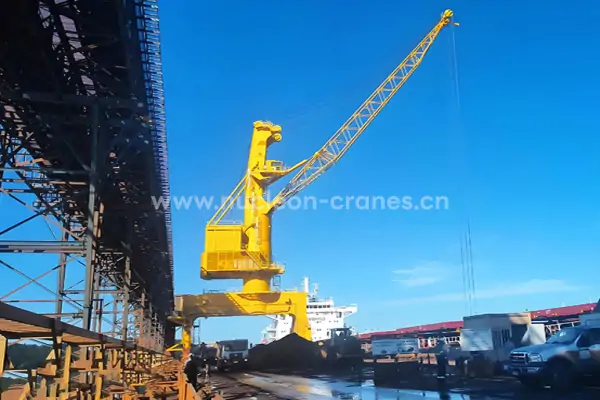
Grúa móvil portuaria — Manipulación flexible de múltiples cargas
Montados sobre rieles o sobre ruedas de caucho, con capacidades de elevación de De 40 a 200 toneladas. Las grúas portuarias móviles manejan contenedores, carga a granel, carga general y carga de proyectos desde una sola máquina. Esta versatilidad las convierte en la opción preferida para terminales multipropósito y puertos más pequeños con una variedad de cargas.
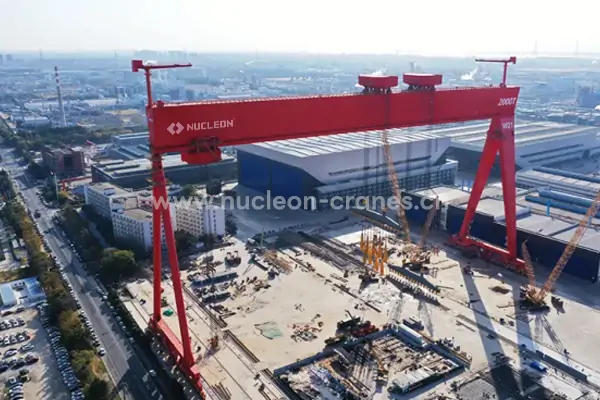
Grúa pórtico para astillero — Construcción naval y elevación de cargas pesadas
Se utiliza en astilleros y diques secos para el ensamblaje de bloques de casco y la colocación de componentes pesados. Las capacidades varían desde De 50 a 800 toneladas. Algunas grúas pórtico para la construcción naval están configuradas como sistemas de elevación en tándem, lo que duplica la capacidad efectiva para elevaciones ultrapesadas.
Protección contra la corrosión: No negociable
Los entornos marinos imponen las condiciones de corrosión más agresivas en cualquier aplicación de grúa. La norma ISO 12944 define las categorías de protección contra la corrosión; las grúas portuarias requieren C4 (alto) o C5 (muy alto) La clasificación depende de la exposición directa al agua de mar. Esto afecta la preparación del acero, la selección de la imprimación, las especificaciones de la capa final y el espesor del recubrimiento, aspectos que deben documentarse en el contrato de suministro.
Veredicto de la grúa portuaria
Elija el equipo de grúa portuaria cuandoSu proyecto implica la manipulación de carga marítima, operaciones en terminales de contenedores, construcción naval o construcción de diques secos. Esta categoría requiere adquisiciones especializadas, plazos de entrega más largos e ingeniería naval específica.
Grajo de foque: Precisión donde otros tipos de grúas se quedan cortos
Lógica de diseño principal
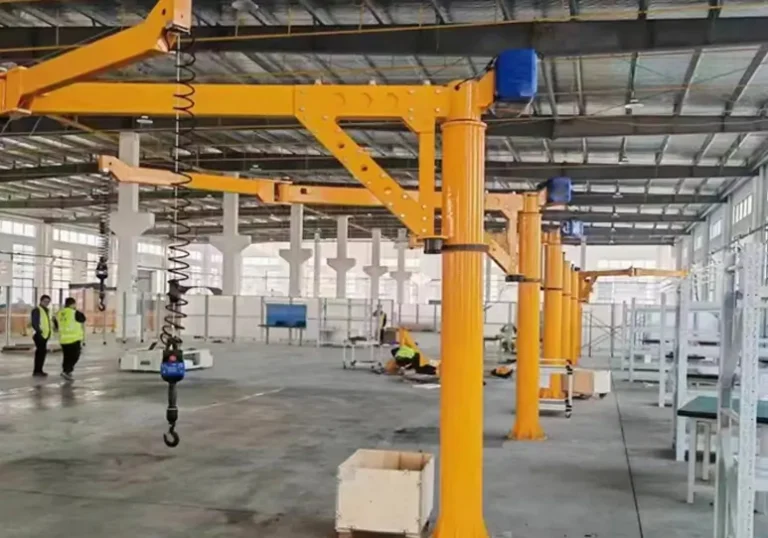
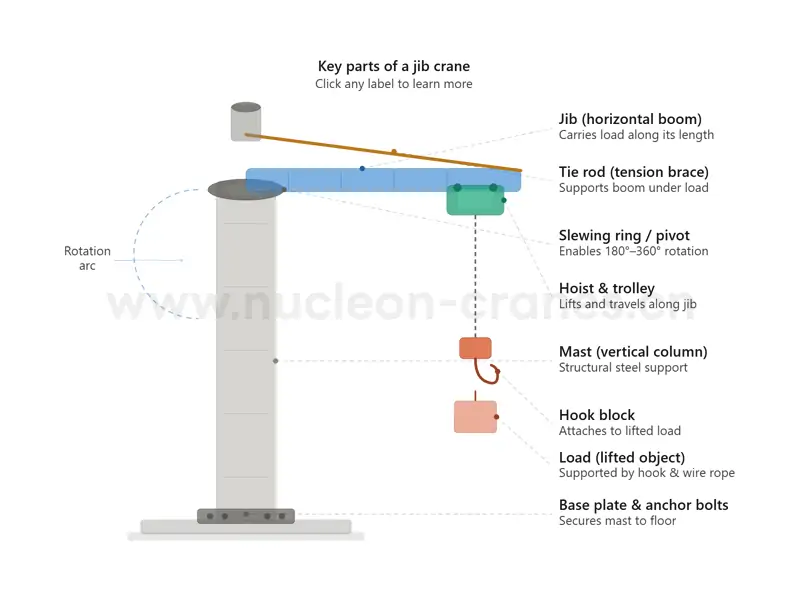
Una grúa de pluma es un brazo horizontal —la pluma— montado sobre un pilar de pie o un soporte de pared. Gira a través de un arco definido y eleva dentro de esa zona de cobertura. Las capacidades varían desde De 0,1 a 10 toneladas.
El valor de la grúa de pluma no es su capacidad bruta. densidad de cobertura — la capacidad de prestar servicio a una estación de trabajo o zona estructural específica con elevación rápida, precisa e independiente, sin necesidad de que la grúa puente completa se desplace por toda la nave.
Opciones de configuración
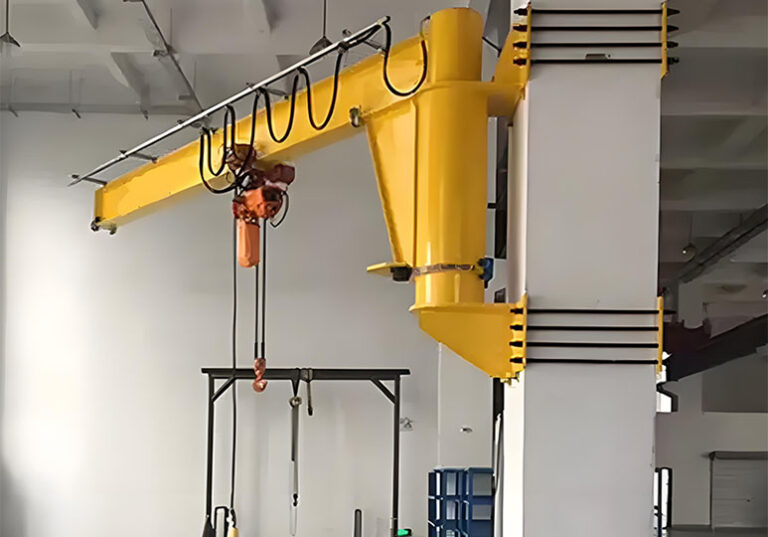
Grúa de pluma mural: Fijado a una columna o pared estructural. Rotación de hasta 180°. Mínimo coste de instalación. Depende de la capacidad de carga de la estructura.
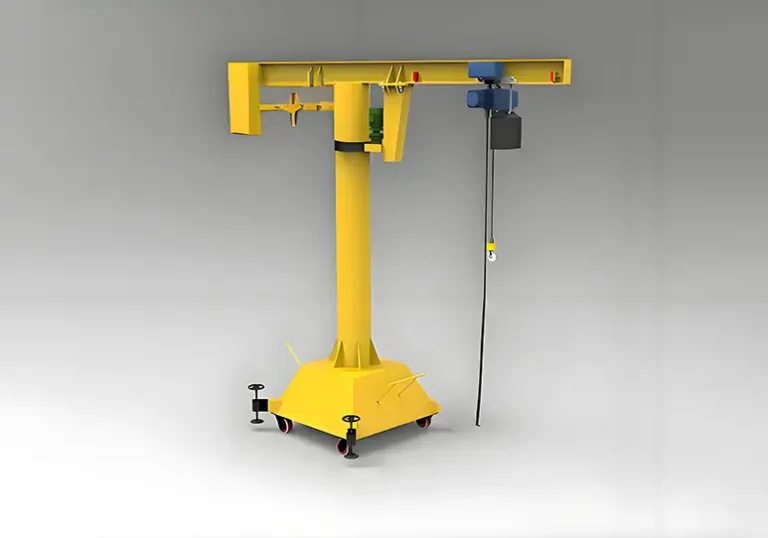
Grúa de pluma montada sobre pilares (autoportante): Anclaje de suelo independiente. Rotación completa de 360°. Requiere diseño de cimentación e instalación de pernos de anclaje. Máxima flexibilidad de colocación.
Grúa de pluma articulada: Brazo de dos segmentos con un pivote adicional en el punto medio. Permite sortear obstáculos y acceder a espacios reducidos. Es común en la construcción de plantas automotrices e instalaciones aeroespaciales.
Donde las grúas de pluma añaden un valor cuantificable
Las implementaciones más efectivas combinan grúas de pluma con grúas puente:
- Grúas de pluma servicio estaciones de trabajo individuales y zonas de columnas fuera de la trayectoria de desplazamiento eficiente de la grúa puente
- Ellos manejan ligeros movimientos de alta frecuencia que de otro modo consumirían capacidad de grúa aérea
- Cubren esquinas y bahías de extremo donde el tiempo de viaje por el puente es más largo
Un diseño de instalación bien concebido utiliza grúas de pluma para realizar elevaciones ligeras rutinarias, reservando la grúa puente para movimientos pesados, de precisión o transversales. Esta combinación aumenta notablemente la productividad sin necesidad de ampliar la infraestructura de las vías de acceso.
Veredicto sobre la grúa de pluma
Elija una grúa de pluma cuandoNecesita elevación localizada en estaciones de trabajo específicas, su grúa puente no puede dar servicio de manera eficiente a cada esquina y zona de columnas, o necesita una capacidad de elevación ligera independiente con un tamaño mínimo y una instalación rápida.
El marco de decisión: cuatro preguntas que determinan su respuesta.
Comprender los tipos de grúas para la construcción es solo la mitad del trabajo. La clave está en elegir la más adecuada para las condiciones específicas de su proyecto.
Pregunta 1: ¿Cuál es su carga máxima y con qué frecuencia la levanta?
Para operaciones de alta frecuencia con cargas superiores a 20 toneladas, los operarios suelen optar por una grúa puente o una grúa pórtico. Cuando la carga supera las 100 toneladas y se encuentra en un patio exterior, prefieren una grúa pórtico. En entornos marítimos con cargas superiores a 40 toneladas, los expertos recomiendan una grúa portuaria. Para cargas inferiores a 10 toneladas en un puesto de trabajo específico, una grúa de pluma es la opción más adecuada.
Pregunta 2 — ¿Su emplazamiento es cerrado, abierto o marítimo?
En recinto cerrado, la grúa puente es la opción base. En patio abierto, se añade una grúa pórtico. En terminal marítima/portuaria, se añade una grúa portuaria. En cualquier entorno, en una estación de trabajo localizada, se añaden grúas de pluma.
Pregunta 3 — ¿Qué tan permanente es la instalación?
Instalación cerrada permanente → grúa puente. Patio abierto permanente → pórtico sobre raíles. Proyectos puntuales o reubicables → pórtico sobre neumáticos o pórtico portátil. Soporte de estación de trabajo permanente → pluma montada sobre columna o pared.
Pregunta 4: ¿Cuál es su horizonte de costo total de propiedad?
Si solo presupuestas el precio de compra, casi con seguridad gastarás menos de lo necesario en la calidad de la instalación y más de lo necesario en el mantenimiento durante la vida útil de la grúa. Una grúa puente bien especificada con una instalación eléctrica y de rieles adecuada suele costar 30–50% más adelante Es más económico que una alternativa de bajo costo y ofrece un costo de mantenimiento significativamente menor durante un ciclo de vida de 20 años.
Comparación de certificación y cumplimiento
| Norma/Certificación | Puente grúa | Grúa pórtico | Grúa portuaria | Grúa pluma |
| Marcado CE (UE/EEE) | Requerido | Requerido | Requerido | Requerido |
| Certificación EAC (CIS) | Requerido | Requerido | Requerido | Requerido |
| ISO 4301 (Clasificación de cargas) | Estándar básico | Aplicable | Aplicable | Aplicable |
| EN 13001 (Diseño) | Aplicable | Estándar básico | Aplicable | Aplicable |
| ISO 23853 (Interfaz de contenedor) | — | — | Requerido (STS) | — |
| FEM 1.001 | Aplicable | Aplicable | Requerido | Estándar básico |
| ISO 12944 (Corrosión) | Típico C2–C3 | Dependiendo de C2–C4 | Se requiere C4–C5 | Típico C2–C3 |
| ASME B30 (América del norte) | B30.2 | B30.2 | B30.2 | B30.9 |
Antes de finalizar las especificaciones, verifique siempre con su proveedor de grúas y la autoridad reguladora local las normas aplicables a su mercado y tipo de proyecto específicos.
Conclusión
La comparación es clara. Estos cuatro tipos de grúas para la construcción No compiten por los mismos puestos de trabajo; cada uno está diseñado para condiciones de funcionamiento fundamentalmente diferentes.
Grúas aéreas Ofrecen la máxima eficiencia en instalaciones industriales cerradas donde el izamiento repetitivo y de precisión es la operación principal. Grúas de pórtico Ofrecen la flexibilidad de despliegue que las grúas puente no pueden proporcionar: patios abiertos, instalaciones reubicables y operaciones al aire libre de gran envergadura. grúas portuarias Están diseñados específicamente para las exigencias extremas de la logística marítima, con estándares de ingeniería y protección contra la corrosión que reflejan dichas exigencias. Grúas de pluma Resolver el problema de la precisión de último metro en estaciones de trabajo individuales, de manera más eficaz como complemento de los sistemas de grúas aéreas.
Elija la grúa que mejor se adapte a las condiciones específicas de su proyecto, no la que tenga el precio más bajo ni la marca más conocida. La selección adecuada entre los diferentes tipos de grúas para la construcción reduce los tiempos de inactividad, disminuye el costo total del proyecto y garantiza que este avance según lo previsto.

Especialista en Equipos
Gerente de Negocios de Grúas con experiencia y amplia trayectoria en gestión de proyectos de elevación pesada y supervisión operativa. Historial comprobado de impulso del crecimiento de los ingresos y garantía del cumplimiento de las normas de seguridad.
Preguntas frecuentes
P1: ¿Cuáles son los principales tipos de grúas que se utilizan en proyectos de construcción?
Los cuatro tipos de grúas más utilizados en la construcción son: grúas puente (para instalaciones industriales cerradas), grúas pórtico (para patios abiertos y obras al aire libre), grúas portuarias (para operaciones marítimas y terminales) y grúas de pluma (para elevación de precisión a nivel de estación de trabajo). Además de estas, las grúas torre y las grúas móviles se utilizan comúnmente en la construcción de edificios verticales. Esta guía se centra en los cuatro tipos más relevantes para los compradores de la construcción industrial y de infraestructuras.
P2: ¿Puedo usar una grúa pórtico en lugar de una grúa puente para ahorrar en los costos de la estructura del edificio?
Sí, en muchos casos. Si su instalación es de nueva construcción y la vía de la grúa puente requiere mejoras estructurales importantes, una grúa pórtico sobre raíles puede ser una alternativa rentable. La desventaja es que las grúas pórtico ocupan espacio a nivel del suelo con sus patas y la infraestructura de raíles. Evalúe ambas opciones comparando el coste total de instalación, no solo el precio del equipo.
P3: ¿Cuál es la altura mínima del edificio requerida para una grúa puente?
Depende de la altura de gancho requerida, la profundidad estructural de la grúa y el espacio libre sobre la carga. Un mínimo aproximado es: altura de gancho + 1,5 × altura de carga + profundidad estructural de la grúa + espacio libre de seguridad. Para una altura de gancho de 5 metros, normalmente se necesitan al menos 8-10 metros de altura libre del edificio. Confirme siempre con su ingeniero de grúas durante la fase de diseño.
P4: ¿Son las grúas portuarias adecuadas para proyectos de construcción de gran envergadura que no impliquen operaciones marítimas?
Técnicamente, algunos tipos de grúas portuarias, en particular las grúas móviles, se utilizan para cargas pesadas fuera del entorno portuario tradicional. Sin embargo, están diseñadas y cotizadas para ciclos de trabajo propios de un puerto. Para la mayoría de las construcciones pesadas no marítimas, las grúas pórtico de gran capacidad o las grúas sobre orugas son opciones más adecuadas y rentables.
P5: ¿Se puede instalar una grúa de pluma debajo de un sistema de grúa puente ya existente?
Sí, y esta es una de las configuraciones de grúa más eficaces para instalaciones de fabricación y montaje de alta densidad. La grúa de pluma sirve a las estaciones de trabajo individuales, mientras que la grúa puente se encarga de las elevaciones transversales y de cargas pesadas. Confirme las dimensiones de espacio libre con ambos proveedores de grúas antes de realizar el pedido.

 English
  العربية
  Español
  Français
  Português
  Русский