

Container gantry cranes — including RTG, RMG, and Ship-to-Shore (STS) types — are available factory-direct from certified Chinese manufacturers, with market reference pricing starting from $130,000 for RMG equipment, $150,000 for RTG units, and $1,000,000+ for STS cranes. CE certification, FEM duty class documentation, and on-site commissioning support are available as standard deliverables for export orders.
If you've already evaluated types and are now ready to specify, verify certifications, and confirm a delivery timeline, this page covers the complete process — from technical specification confirmation through factory acceptance testing to site commissioning.
Tabla de contenidos
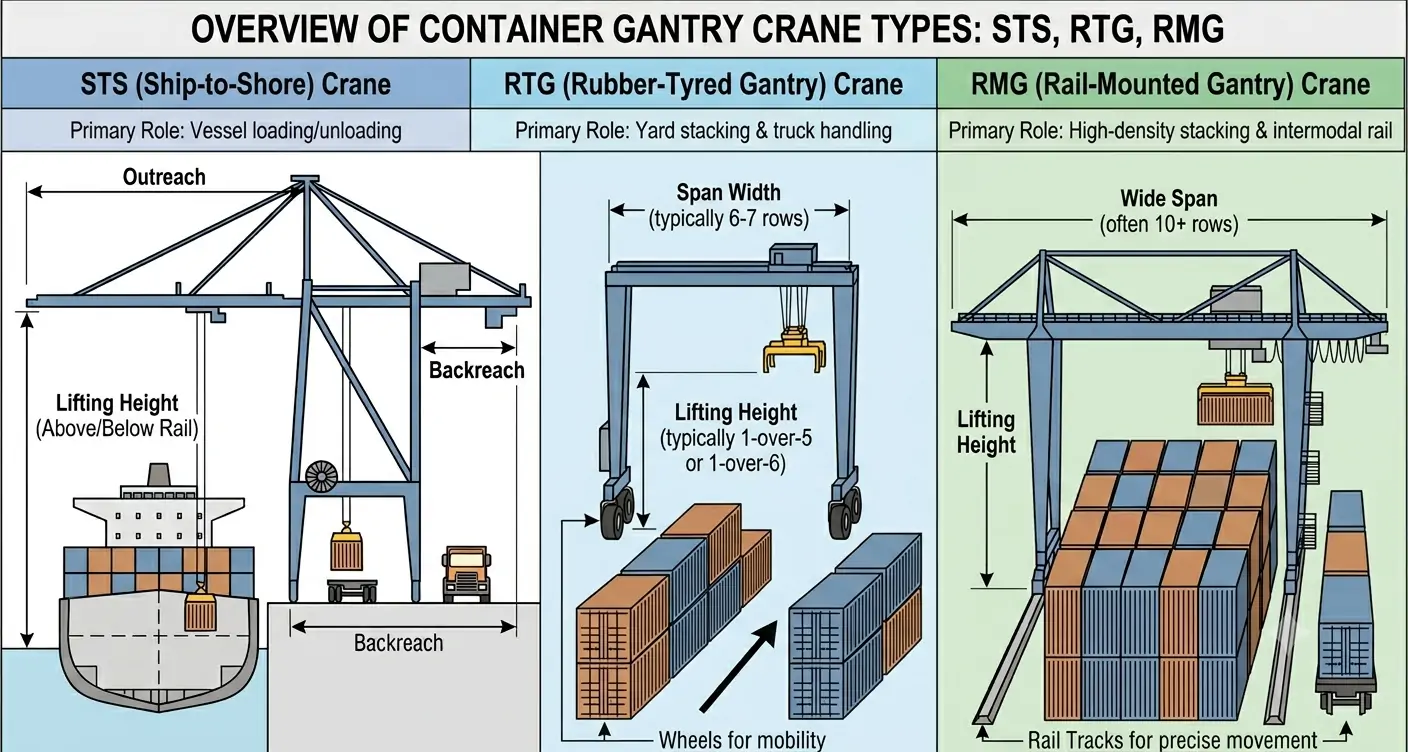
Specification Speed-Reference: Container Gantry Crane Types at a Glance
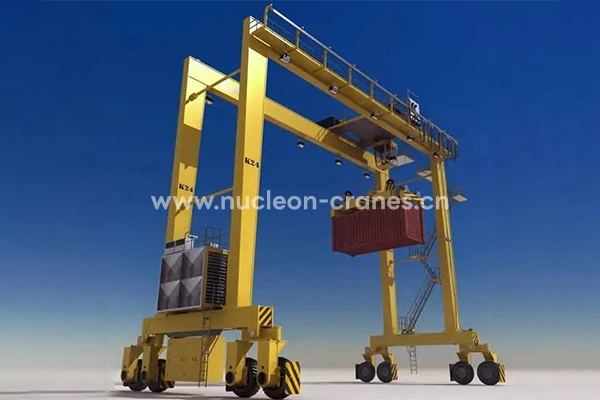
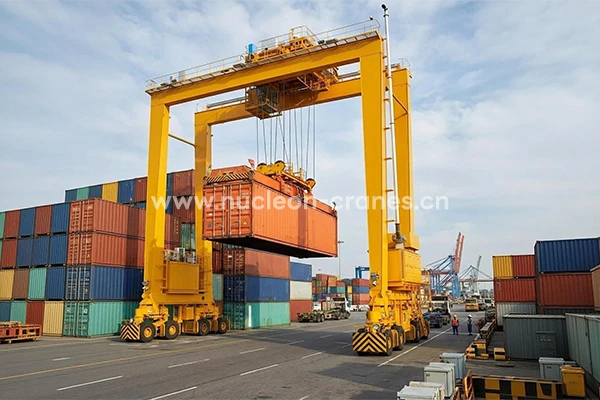
Grúa RTG
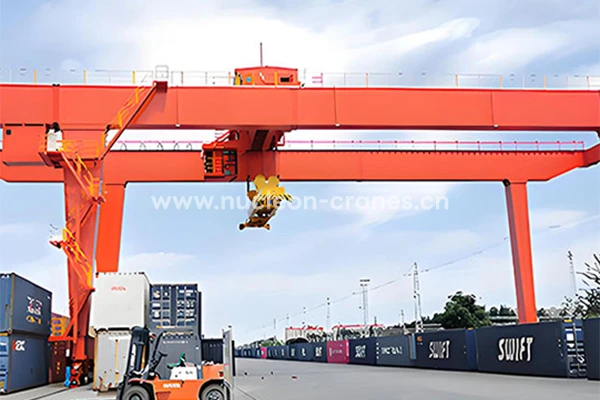
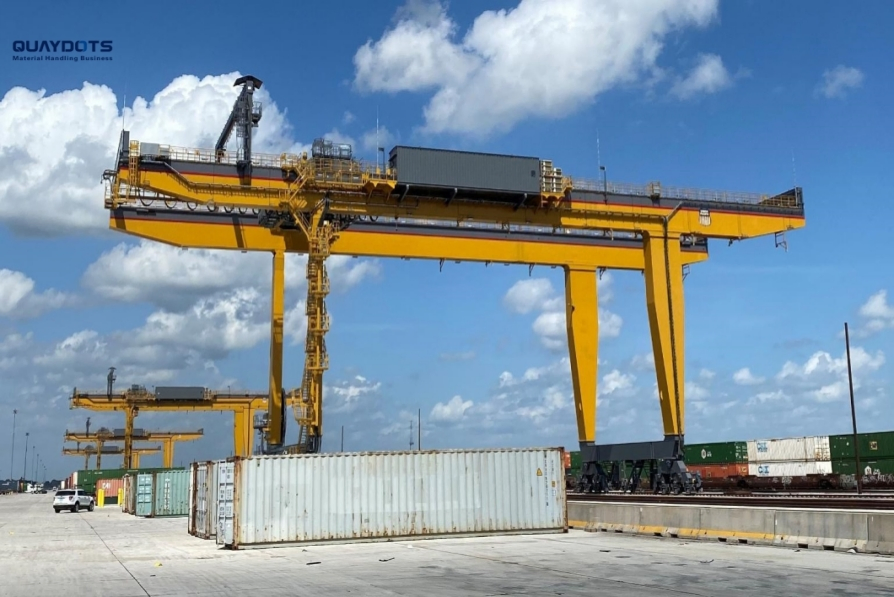
Grúa RMG

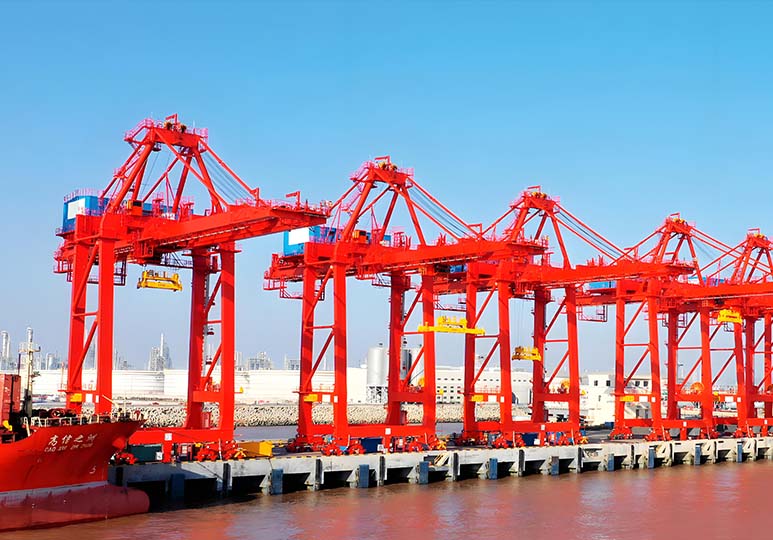
STS Crane
| Especificación | Grúa RTG | Grúa RMG | STS Crane |
| Typical capacity | 35–65 t | 30–65 t | 40–65 t (up to 80 t twin-lift) |
| Span | 23–32 m (6+1 lanes) | 22–35 m | 50–75 m outreach |
| Stack height | 4–6 contenedores | 6–8 contenedores | Vessel deck + 1–2 tiers |
| Hoisting speed (full load) | 20–30 m/min | 25–45 m/min | 40–90 m/min |
| Power system | Diesel / Hybrid / Electric | Grid electric | Shore power (6.6–13.2 kV AC) |
| Positioning accuracy | ±50–80 mm (manual) | ±20–30 mm | ±25 mm (with anti-sway) |
| FEM duty class (typical) | A5–A7 | A6–A8 | A7–A8 |
| Market price reference | $150,000–$700,000 | $130,000–$250,000+ (equip. only) | $1,000,000–$6,000,000+ |
| CE certification | Standard for export | Standard for export | On request |
| Lead time (ex-factory) | 60–120 days | 90–150 days | 180–360 days |
All prices are market reference levels from Chinese manufacturers. RMG total installed project cost (including foundations and electrical infrastructure) typically runs 35–50% por encima de la cotización del equipo — see the RMG section of our Commercial Evaluation Guide for the full breakdown.
Obtener cotización de soluciónCertifications: What to Request and How to Verify Them
CE marking is the entry requirement — but the document behind it is what matters
For crane imports into Europe, the Middle East, Southeast Asia, and most markets that reference EU standards, CE marking under the Machinery Directive 2006/42/EC is the baseline compliance requirement. Every credible export-grade container gantry crane manufacturer will provide CE marking. The differentiation is not whether they claim CE — it's whether they can produce the full technical documentation that CE marking legally requires.
When you request a quote, simultaneously request the following document package. A supplier who cannot provide all of these is not genuinely CE-compliant, regardless of what their letterhead says:
- Declaration of Conformity (DoC): signed by an authorized representative, naming the specific Directive (2006/42/EC) and harmonized standards applied
- Technical File index: confirms a Technical File exists and where it is held (required under the Directive, even if not shipped with the crane)
- Duty class confirmation letter: explicitly states the FEM 1.001 duty class assigned to your configuration and the corresponding design load spectrum
- ISO 4301 classification document: crane group classification aligned with your operating cycle data
- Load test certificate: confirming the crane was tested at 100% rated load (and ideally 125% static overload) at the factory before shipment
- ISO 3874 spreader compliance note: if the spreader is included in scope
One additional verification step that most buyers skip: ask for the CE Notified Body number if a third-party conformity assessment was performed. For complex lifting machinery, involvement of a Notified Body (a TÜV, Bureau Veritas, or equivalent) adds a meaningful layer of independent verification that self-declaration alone does not provide.
The One Specification Most Buyers Misread: Operating Wind Speed vs. Storm Rating
"Wind resistance 55 m/s" on a datasheet describes the parked crane — not what you can operate in
Container gantry crane datasheets consistently list a storm-mode wind resistance figure — typically 55–60 m/s — referring to the structural design limit for the crane in its anchored, out-of-service configuration (storm clamps engaged, boom lowered or locked). This is a structural integrity specification, not an operating parameter.
Normal crane operation has a much lower wind speed ceiling. As a general industry reference, most container gantry cranes are designed for normal operation up to around 20 m/s (approximately Beaufort 8), with reduced-speed cautious operation potentially extending to 25 m/s, and mandatory shutdown above that threshold. The exact limits depend on your specific crane's structural design and must be confirmed by the manufacturer for your site's wind profile.
Why this matters for procurement: terminals in exposed coastal locations, elevated plateau sites, or monsoon-zone ports experience operating wind speeds above 20 m/s far more frequently than procurement teams typically account for. If your site has a high annual frequency of 18–25 m/s winds, your throughput planning model needs to incorporate the resulting downtime — and your crane specification may need reinforced structure or lowered operational wind ceiling thresholds confirmed in writing.
Request the site wind study from your civil engineer and present it to the crane manufacturer before finalizing the specification. Ask them to confirm the operational wind speed limit and storm anchoring specification for your site classification. If this conversation doesn't happen before order, it will happen during a weather-related downtime event after commissioning.
From Inquiry to Commissioning: The Complete Project Timeline
A realistic timeline for a container gantry crane project runs 6–14 months end-to-end
The most common project scheduling error is using the manufacturer's "lead time" figure — which typically refers to ex-factory production time — as the full project duration. It isn't. Here is what a realistic timeline looks like, phase by phase:
Phase 1 — Technical Inquiry & Specification Alignment (2–4 weeks)
You submit your site parameters (throughput, container types, span, lift height, wind zone, power availability, duty class estimate). The manufacturer issues a technical proposal with preliminary drawings. This phase typically requires 2–4 rounds of clarification before both parties have a confirmed specification baseline.
Phase 2 — Commercial Terms & Contract (1–2 weeks)
Price negotiation, payment terms (typically 30% deposit, 60% before shipment, 10% on commissioning), warranty scope, spare parts package, and commissioning arrangement are finalized and contracted.
Phase 3 — Engineering & Drawing Approval (3–6 weeks)
The manufacturer produces fabrication drawings for your review and approval. Delays in drawing approval are the most common source of overall project delay — a 2-week drawing review that stretches to 5 weeks pushes every subsequent phase. Assign a technical reviewer with authority to approve on Day 1 of this phase.
Phase 4 — Manufacturing (60–150 days depending on type)
RTG cranes in standard configurations: typically 60–90 days. RMG systems: 90–120 days. STS cranes: 180 days or more. Confirm a production slot with the manufacturer at contract signing, not at deposit payment — popular factories carry 3–4 month order backlogs.
Phase 5 — Factory Acceptance Testing & Shipment (2–4 weeks)
Factory load test is performed (confirm whether you or a third-party inspector will witness it — this is strongly recommended for first-time supplier relationships). Documentation package is compiled. Crane is disassembled, packed, and shipped. Oversized structural elements require flat-rack or break-bulk shipping arrangements; confirm freight routing and destination port capabilities before shipment planning.
Phase 6 — Site Installation & Commissioning (3–8 weeks)
RTG cranes are faster to commission (no rail work required). RMG cranes require rail foundations to be complete before crane arrival — civil work must run in parallel with manufacturing. STS cranes involve the most complex commissioning: rail alignment, electrical termination, anti-sway calibration, and TOS integration each require dedicated time. Allow buffer: first-time commissioning on a new site with a new crew typically takes longer than the manufacturer's estimate.
Total realistic project duration:
- RTG: 5–8 months from contract to operational
- RMG (including civil works): 8–12 months
- STS: 12–18 months
How to Qualify a Container Gantry Crane Supplier Before You Order
Five verification steps that separate credible manufacturers from catalog resellers
The container crane supply market includes genuine manufacturers with engineering departments, factory floor capacity, and export track records — and intermediaries who aggregate quotes from sub-manufacturers and cannot control quality, delivery, or documentation. The distinction matters enormously for a 20–30 year asset. Here is how to verify before committing:
1. Request a factory audit or video walkthrough. A genuine manufacturer can show you the structural fabrication bay, CNC cutting equipment, welding stations, and the load testing rig — in real time. An intermediary typically offers brochure photos. If a factory audit is not possible in person, a live video call with facility walkthrough conducted without advance staging is the next best option.
2. Require load test certificates from completed projects. Ask for load test certificates (with crane serial number, rated capacity, test load, date, and inspector signature) from 2–3 recently delivered cranes of similar type and capacity to your order. This is primary evidence of manufacturing capability, not just documentation of intent.
3. Verify the CE Declaration of Conformity structure. The DoC must name a specific person authorized to sign on behalf of the legal entity (not a job title), identify the Directive and harmonized standards applied, and be issued specifically for your crane model and serial number range — not a generic blank certificate. Generic CE certificates pre-printed without serial numbers are a red flag.
4. Confirm spare parts response time in writing. For a crane operating 24/7 at a live terminal, critical component availability determines downtime cost. Ask: "If my VFD drive fails, what is the delivery time for a replacement unit to my country?" If the answer is vague or exceeds 4–6 weeks, verify whether the manufacturer has regional parts inventory or partner service agents near your location.
5. Request verifiable reference contacts at comparable installations. Not project photos — actual contact details for an operations or maintenance manager at a terminal running the same crane model for 2+ years. A supplier confident in their product quality will provide this. One who doesn't may have reasons not to.
Conclusión
You now have the specification reference, certification document checklist, wind speed operating boundary, project timeline, and supplier verification framework to move forward with confidence. The next step is a technical inquiry — not a general price request, but a structured brief covering your required crane type, capacity, span, lift height, power availability, wind zone, and expected operating cycles per shift. That brief is what turns a quote into a real proposal.
Get a Factory-Direct Quote for Your Container Gantry Crane →
Submit your site parameters today and receive a project-specific technical proposal — including CE certification scope, duty class confirmation, and delivery schedule — within 24 hours.

Especialista en Equipos
Gerente de Negocios de Grúas con experiencia y amplia trayectoria en gestión de proyectos de elevación pesada y supervisión operativa. Historial comprobado de impulso del crecimiento de los ingresos y garantía del cumplimiento de las normas de seguridad.
Preguntas frecuentes
Q1: How do I get a container gantry crane price?
Submit your key parameters — crane type (RTG / RMG / STS), required capacity, span, lift height, power system preference, and expected cycles per shift — to receive a project-specific quote. Market reference levels run from $300,000 for standard RTG units to $12,000,000+ for ultra-large STS configurations. A generic price without your specifications is an estimate, not a proposal; the specification drives the final figure.
Q2: What certifications should my container gantry crane have?
For most export markets, CE marking under EU Machinery Directive 2006/42/EC is the baseline requirement. Beyond the CE mark itself, require: the signed Declaration of Conformity, duty class documentation per FEM 1.001, ISO 4301 crane group classification, factory load test certificate, and ISO 3874 spreader compliance note if applicable. A supplier who cannot provide all five documents is not genuinely CE-compliant.
Q3: What is the lead time for a container gantry crane from China?
Ex-factory production lead time typically runs 60–90 days for standard RTG configurations, 90–120 days for RMG systems, and 180 days or more for STS cranes. However, total project duration from contract to operational is significantly longer: 5–8 months for RTG, 8–12 months for RMG (including civil foundation work), and 12–18 months for STS. Confirm a production slot at contract signing, not at deposit payment.
Q4: What wind speed can a container gantry crane operate in?
The storm-resistance figure on a datasheet (typically 55–60 m/s) refers to the anchored, out-of-service design limit — not the operating limit. Normal crane operations are generally limited to around 20 m/s as an industry reference, with mandatory shutdown above approximately 25 m/s. Your site-specific operating wind speed limit must be confirmed by the manufacturer based on your structural specification. For high-wind-exposure sites, require this in writing before order.
Q5: How can I verify a container gantry crane supplier is a genuine manufacturer?
Request a live factory video walkthrough (structural fabrication bay, load test rig), load test certificates from 2–3 comparable completed projects (with serial numbers and inspector signatures), a correctly structured CE Declaration of Conformity (not a generic blank certificate), spare parts response time in writing, and direct contact details for an operations manager at a reference installation. A genuine manufacturer will provide all five without hesitation.
Artículos relacionados
- Grúa pórtico para contenedores en venta: RTG vs RMG vs STS — Precios, costes reales y cómo elegir
- ¿Qué es una grúa pórtico para contenedores? Tipos, cómo funciona y cómo elegir la adecuada.
- Tipos de Grúas Utilizadas en Puertos: Nombres, Funciones y Aplicaciones Explicados
- Different Types of Container Cranes: Which One Is Right for Your Operation?
- How to Select the Right Power Supply System for Your RTG Crane?
- Container Gantry Crane Brands: Official Resources, Model Lookup & Authentic Supplier Guide

 English
  العربية
  Español
  Français
  Português
  Русский