
Choosing the wrong crane for your warehouse doesn't just waste money — it slows operations, creates safety risks, and forces costly retrofits down the line. With dozens of configurations on the market, the decision can feel overwhelming. This guide cuts through the noise.
Whether you're evaluating an grúa puente for a steel fabrication shop, a grúa pórtico for an outdoor yard, or an polipasto eléctrico for a light assembly line, the right choice comes down to four things: lifting capacity, span, duty cycle, and application environment. Get those four factors right, and the rest of the selection process becomes straightforward.
This guide covers every major warehouse crane type — bridge/overhead cranes, gantry cranes, port cranes, electric hoists, and jib cranes — with technical specifications, real-world comparisons, and actionable selection criteria. By the end, you'll have a clear framework for making a confident procurement decision.
1. Bridge Crane (Overhead Crane / EOT Crane)
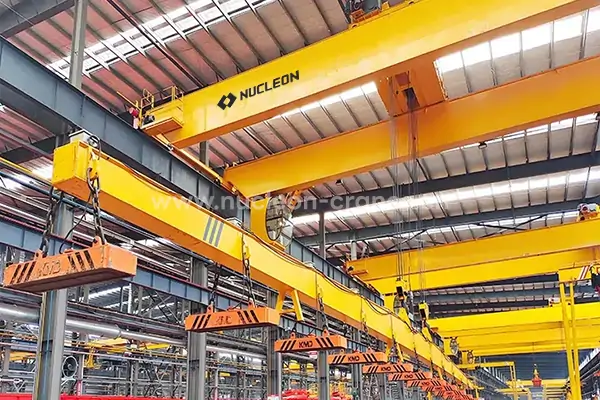
The bridge crane — also called an grúa puente, Grúa puente (Electric Overhead Traveling crane), or industrial overhead crane — is the backbone of heavy manufacturing and warehousing. It travels along elevated runway rails mounted to the building structure, leaving the floor completely clear for operations below.
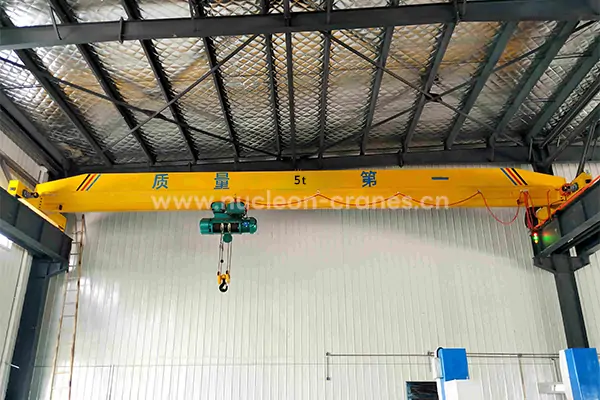
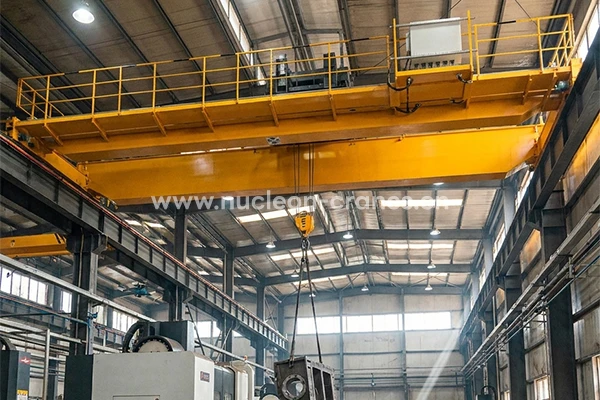
Single Girder vs. Double Girder Overhead Crane
The most critical structural decision in overhead crane selection is the girder configuration. Both types serve distinct load and duty cycle profiles.
| Parámetro | Puente grúa monorriel | Puente grúa birriel |
| Typical Lifting Capacity | 1–20 t | 5–500 t |
| Rango de amplitud | Up to 28 m | Up to 35 m+ |
| Tipo de polipasto | Underhung electric hoist | Top-mounted hoist (wire rope) |
| Hook Height | Lower headroom available | Greater hook height |
| Duty Class (ISO 4301) | A3–A5 | A5–A8 |
| Aplicaciones Típicas | Light manufacturing, warehouses | Steel mills, shipyards, foundries |
| Rango de precios indicativo (USD) | $4,000–$30,000 | $15,000–$250,000+ |
Source: ISO 4301-1:2016 (crane classification); FEM 1.001 (duty groups); indicative market pricing based on industry data, 2022–2024.
En Puente grúa de una viga is the go-to choice for facilities with moderate lifting needs and limited headroom. Because the hoist travels underneath a single beam, it delivers lower hook heights — a genuine advantage in buildings where ceiling clearance is tight. For spans under 28 meters and loads under 20 tons, it also offers meaningfully lower capital cost.
En puente grúa birraíl becomes necessary when loads exceed 20 tons, spans stretch beyond 28 meters, or the duty cycle demands continuous heavy use. With the hoist mounted on top of two parallel girders, it achieves greater hook height and far superior rigidity under load. This configuration dominates in steel processing, automotive body shops, and heavy engineering facilities.
Key Selection Parameters for Overhead Cranes
Before contacting any bridge crane manufacturer o overhead crane supplier, lock down these four numbers:
Lifting capacity (t): Maximum load including rigging, spreader beams, and any lifting attachments.
Span (m): Center-to-center distance between runway rails.
Lift height (m): Distance from floor to maximum hook position.
Duty class: ISO 4301 class A3 (light, infrequent) through A8 (continuous, severe). Undersizing the duty class is one of the most common and costly specification mistakes.
Para custom overhead crane projects — unusual spans, extreme environments (foundry heat, corrosive atmospheres, explosion-proof zones), or tandem lifting configurations — always engage the manufacturer's engineering team early. Standard catalog configurations rarely cover these cases.
2. Gantry Crane
Where an overhead crane relies on building structure for its runway, a grúa pórtico carries its own legs. The bridge sits atop two supporting frames that travel on ground-level rails or rubber tyres. This self-supporting design makes gantry cranes the preferred solution for outdoor yards, facilities without adequate roof structure, and operations that need mobility between sites.
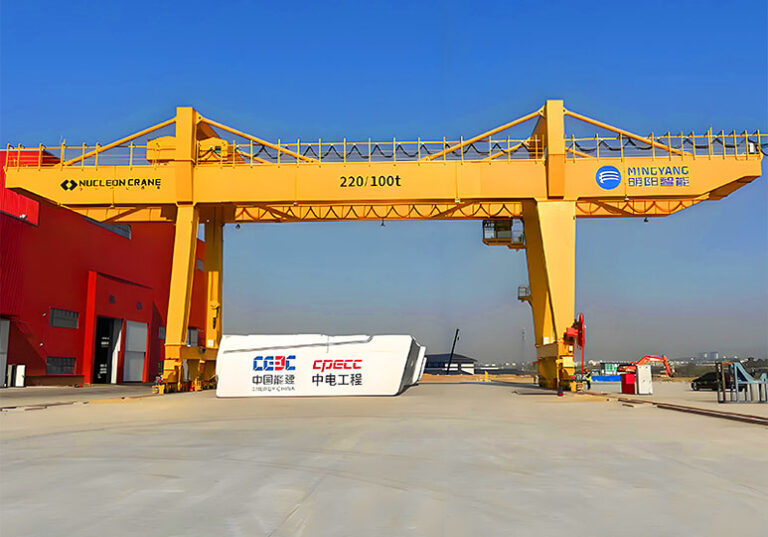
Grúa pórtico birraíl
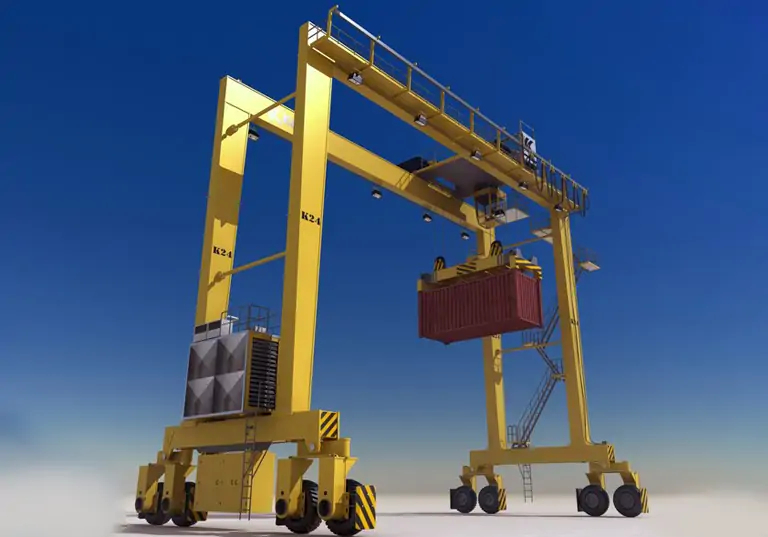
Grúa RTG
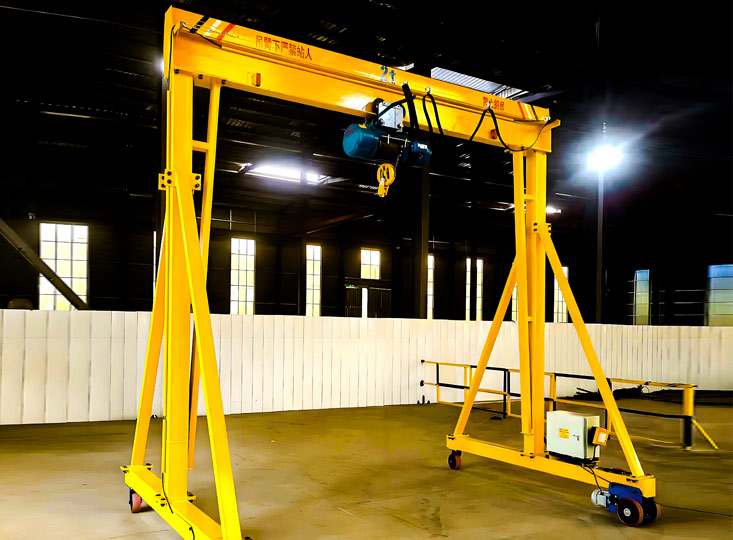
Grúa pórtico portátil
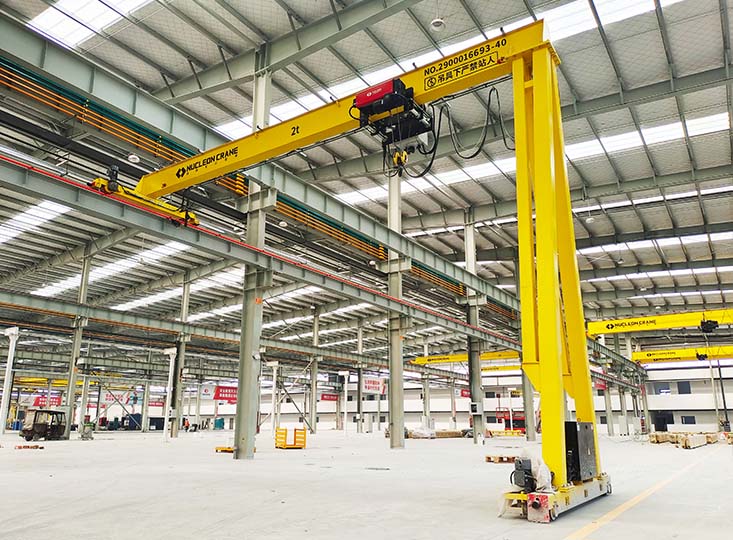
Grúa semipórtico
Gantry Crane Variants: Which Type Fits Your Application?
| Tipo | Estructura | Movilidad | Caso de uso típico |
| Double Leg Gantry Crane | Two full-height legs | Fixed rail | Steel yards, precast plants |
| Single Leg (Semi-Gantry) Crane | One leg + one runway rail | Fixed rail | Space-constrained facilities |
| Rubber Tyred Gantry Crane (RTG) | Full gantry on rubber tyres | High mobility | Container terminals, ports |
| Grúa pórtico portátil | Lightweight, bolt-together | Manual/motorized | Maintenance bays, small shops |
Source: EN 15011:2011+A1:2014 (bridge and gantry cranes); industry application data 2022–2024.
En double leg gantry crane is the workhorse configuration for outdoor material handling. Spanning 10–35 meters with capacities from 5 to 500 tons, it handles structural steel, precast concrete, wind energy components, and bulk materials in open yards where building overhead cranes is impractical or too costly.
En semi-gantry crane (single leg gantry) offers a practical compromise for facilities that have one suitable runway rail along a building wall but cannot support a full overhead crane. One leg travels on a floor rail, the other runs on an elevated wall-mounted rail, delivering overhead crane-level performance at reduced structural investment.
Rubber Tyred Gantry cranes (RTG) represent a specialized high-value segment. Operating on pneumatic tyres with diesel or electric drive, RTGs are the defining equipment of container terminal operations, capable of stacking containers 4–5 high across 6–8 rows. Leading container terminal operators worldwide — including those at the Port of Shanghai, Port of Rotterdam, and Port of Singapore — rely on RTG fleets as core intermodal infrastructure.
Bridge Crane vs. Gantry Crane: The Decision Framework
The most common selection question procurement teams face: overhead crane vs. gantry crane. The answer depends primarily on three factors:
Building structure: If your facility has adequate roof structure and column spacing, an overhead crane is typically lower total cost. If it doesn't — or if you're working outdoors — a gantry crane is the answer.
Operations area: Overhead cranes cover a defined bay. Gantry cranes (especially RTGs) can be relocated or expanded more readily.
Span and capacity: For very large spans (35 m+) or extremely heavy lifts, gantry cranes with purpose-built leg structures can outperform what a building structure can accommodate.
3. Port Crane (Harbor Crane / Quay Crane)
grúas portuarias — encompassing quay cranes, ship-to-shore cranes (STS cranes), mobile harbor cranes, y dock cranes — operate in one of the most demanding environments in industrial lifting. Salt atmosphere, continuous heavy-duty cycles, precision positioning requirements, and exposure to wind and weather combine to make port crane specification a specialized discipline.
Ship-to-Shore Crane (STS Crane)


En ship-to-shore crane is the defining image of modern container ports. These rail-mounted structures straddle the quay edge, with outreach booms that extend over anchored container vessels. A typical STS crane specification:
| Parámetro | Panamax STS | Post-Panamax STS | Super Post-Panamax STS |
| Divulgación | 35–40 m | 45–50 m | 60–72 m |
| Lifting Capacity (under spreader) | 40–50 t | 50–65 t | 65–85 t |
| Lift Height (above rail) | 30–35 m | 36–42 m | 45–50 m |
| Hoist Speed (loaded) | 60–90 m/min | 90–120 m/min | 120–180 m/min |
| Clase de servicio | A8 (ISO 4301) | A8 | A8 |
Source: ZPMC product specifications 2023; ISO 4301-1:2016; Liebherr STS technical data 2023.
Grúa móvil portuaria
Where fixed STS infrastructure is too capital-intensive or port layout doesn't permit rail installation, the mobile harbor crane provides flexible, high-capacity ship unloading and loading. Operating on rubber-tyred undercarriages, modern mobile harbor cranes from Liebherr (LHM series) and Konecranes achieve lifting capacities of 100–200 tons with outreach up to 48 meters, serving bulk cargo, general cargo, and even container operations.
Real-world reference: The Port of Felixstowe (UK) and Port of Durban (South Africa) both operate mixed fleets combining fixed STS cranes for primary container operations with mobile harbor cranes for flexible berth coverage — a common configuration in mid-size ports balancing throughput and capital efficiency.
4. Electric Hoist
En polipasto eléctrico is the most widely deployed lifting component in manufacturing and warehousing globally — and one of the most frequently underspecified. An electric hoist is not a standalone crane; it's the lifting mechanism that travels along a monorail, an overhead crane bridge, a jib crane arm, or a fixed suspension point.
Wire Rope Electric Hoist vs. Polipasto eléctrico de cadena
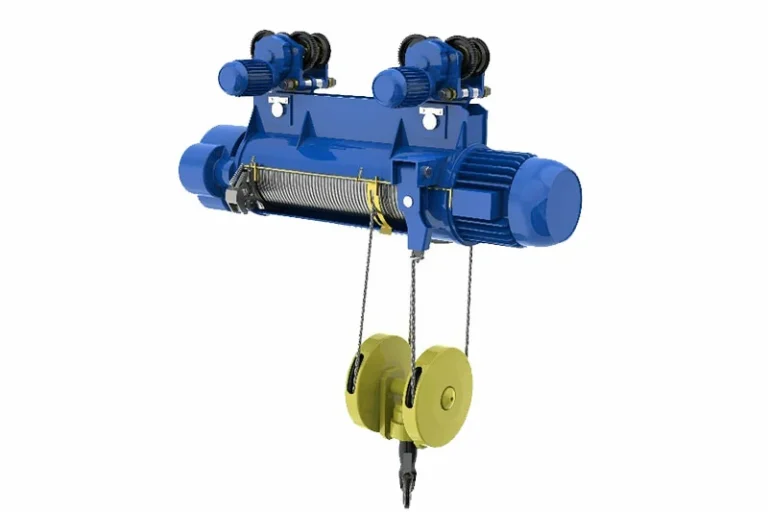
Polipasto eléctrico de cable
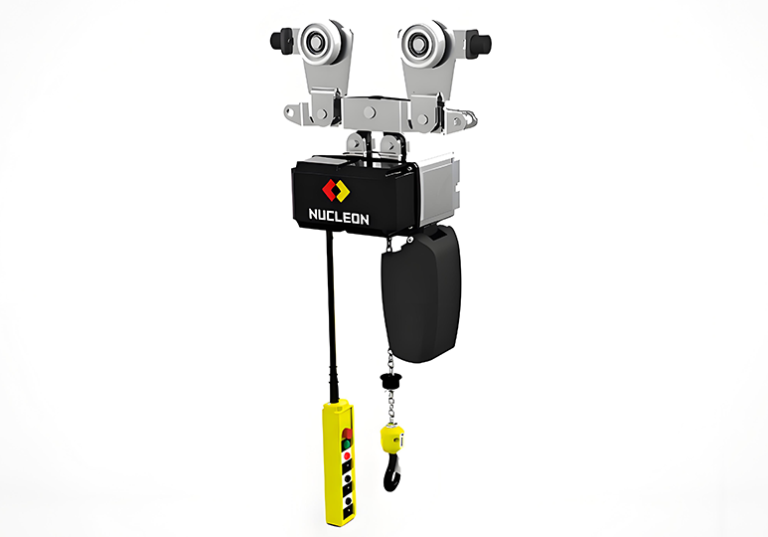
Manual Chain Hoist
The two dominant technologies serve different capacity and duty cycle profiles:
| Parámetro | Wire Rope Electric Hoist | Polipasto eléctrico de cadena |
| Capacity Range | 0.5–80 t (standard); to 320 t custom | 0.1–10 t |
| Lift Height | Up to 30 m+ standard | Up to 12 m standard |
| Lift Speed | 0.5–16 m/min (variable) | 0.5–8 m/min |
| Clase de Servicio (FEM) | 1Bm–5m | 1Am–4m |
| Typical Drive | Dual-speed or VFD motor | Single or dual-speed motor |
| Lo mejor para | Heavy industrial, high-cycle production | Light assembly, maintenance, toolrooms |
| Common Models | CD1, MD1 (China standard); CM, SX series | Yale, Demag DC-Pro, Kito ER2 |
Source: FEM 9.511 (electric hoists); IEC 60034 (motor standards); manufacturer technical data 2022–2024.
En Polipasto eléctrico CD1 y MD1 electric hoist are the most widely produced wire rope hoist designs globally, originating from Chinese national standard GB/T 14405. The CD1 offers single lifting speed; the MD1 provides dual speed (10:1 ratio), enabling precision load positioning — an important distinction for assembly operations and die/tooling changes.
Wire rope electric hoists dominate in loads above 3 tons and anywhere lift heights exceed 6–8 meters. The wire rope drum allows far greater rope capacity than a chain pocket wheel, making them the only practical solution for deep lift applications.
Chain electric hoists excel in light, frequent lifts where compact dimensions matter. Their low deadweight and small envelope make them ideal for workstation cranes, jib crane applications, and maintenance bays where a wire rope hoist's size would be an obstacle.
5. Jib Crane
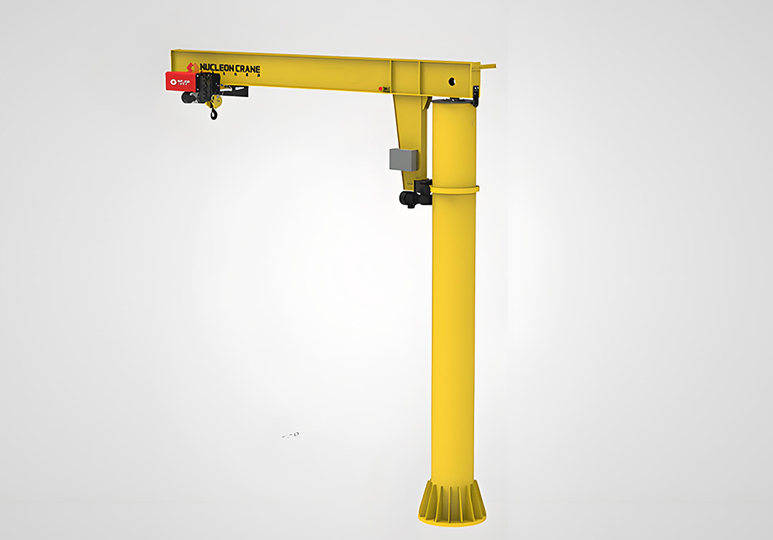
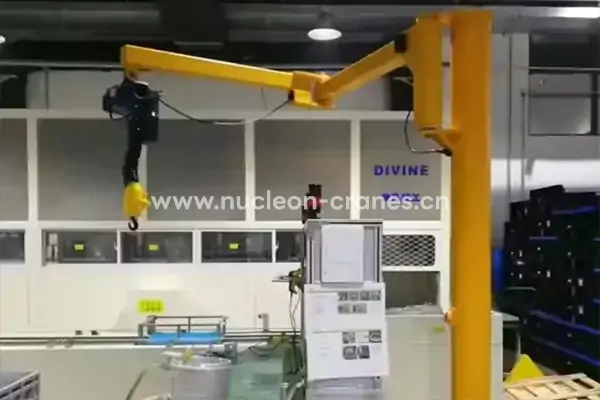
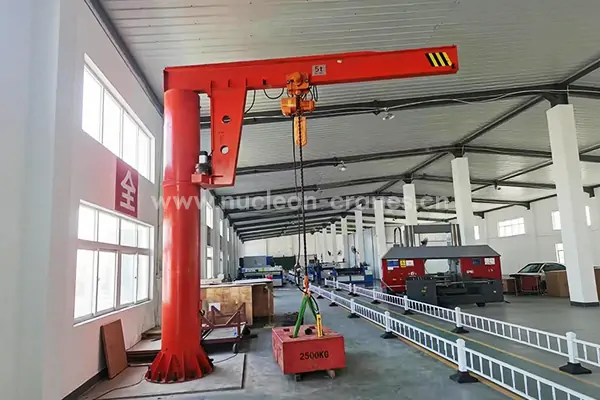
En grúa giratoria solves a problem that overhead cranes and gantry cranes don't address well: providing lifting coverage for a defined workstation or work zone without consuming runway real estate or requiring a dedicated crane bay. A jib crane serves one operator, one machine, or one assembly station — delivering fast, precise material movement within a 180° to 360° rotation arc.
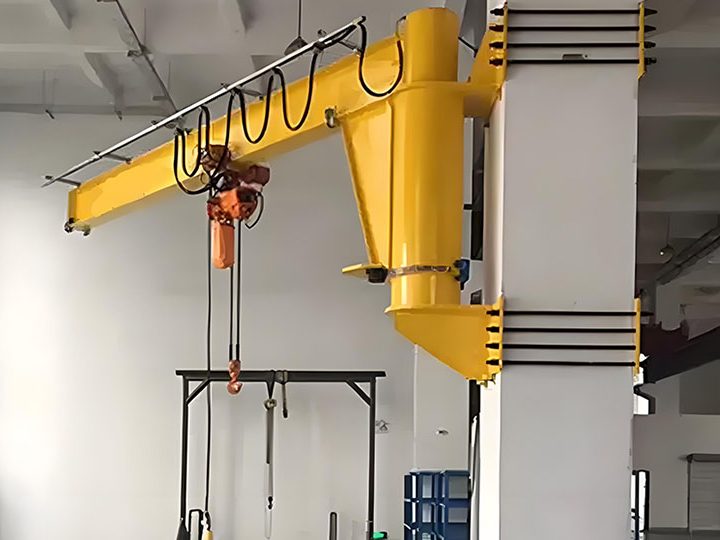
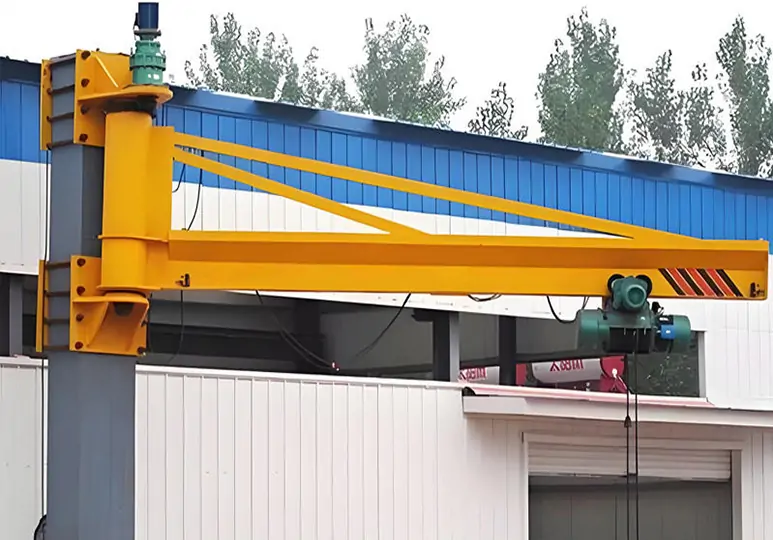
Grúa pluma de pared
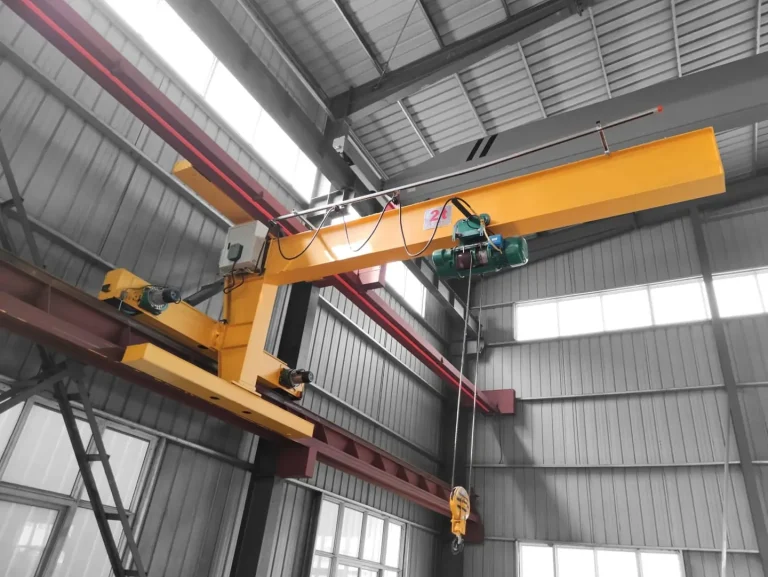
Grúa giratoria de pared
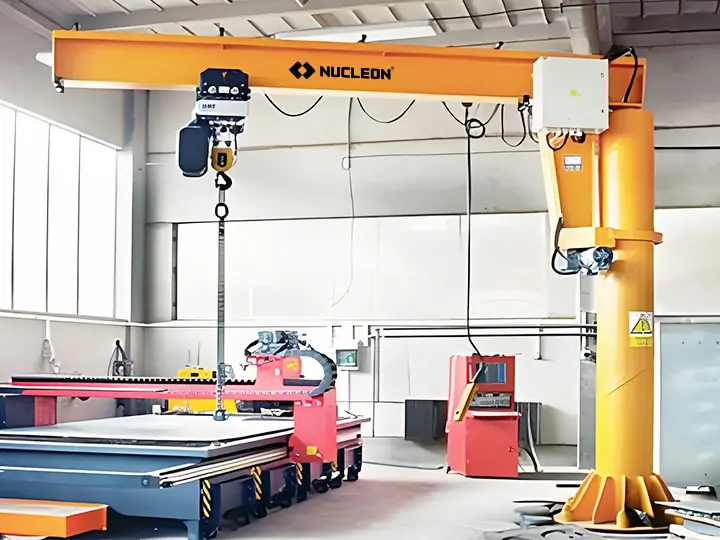
Grúa giratoria de suelo
Jib Crane Types and Their Applications
| Tipo | Rotación | Capacity Range | Typical Mount | Best Application |
| Pillar Jib Crane (Free-Standing) | 360° | 0.1–5 t | Floor-mounted column | Open floor areas, no wall available |
| Wall-Mounted Jib Crane | 180° | 0.1–3 t | Masonry/structural wall | Along building perimeter |
| Wall-Traveling Jib Crane | 180° + travel | 0,1–2 t | Wall-mounted rail | Linear work zones |
| Articulated Jib Crane | 360° + articulation | 0.05–1 t | Wall or column | Complex workstation reach |
| Mast-Type Jib Crane | 360° | 1–10 t | Floor + overhead tie | High-capacity workstation |
Fuente: EN 13001-1:2015 (crane design); FEM 1.001; manufacturer technical data 2022–2024.
En pillar jib crane is the most versatile configuration, requiring only a reinforced floor anchor rather than structural wall capacity. For facilities with concrete slab foundations adequate for the overturning moment (typically 300–500 mm slab depth depending on capacity), installation is straightforward and doesn't affect building structure.
En wall-mounted jib crane is the lower-capital option where a suitable structural wall exists. The 180° rotation arc covers a semicircle workstation reach — sufficient for most single-machine serving applications. Load ratings must always account for the bending moment transferred to the wall; a structural engineer review is mandatory before installation.
Jib crane vs. overhead crane — the decision is usually determined by whether you need coverage of a full bay or just a workstation. Jib cranes cannot substitute for overhead cranes in high-volume throughput applications, but they dramatically outperform overhead cranes in flexibility, response speed, and cost-per-workstation for dedicated station service.
Crane Selection Guide: How to Choose the Right Type
Selecting the right crane type is a structured decision, not a catalog browse. Use this framework:
Step 1 — Define the load. Maximum lift weight including all rigging, plus 10–15% safety margin. This determines the minimum required SWL (Safe Working Load).
Step 2 — Define the geometry. Span, lift height, and travel distance. These three dimensions often eliminate entire crane categories.
Step 3 — Determine duty class. How many lifts per hour, hours per day, days per year, and load spectrum distribution? Use ISO 4301 or FEM 1.001 to establish the correct duty class before specifying any component.
Step 4 — Assess the environment. Indoor/outdoor, temperature extremes, corrosive atmosphere, explosive atmosphere (ATEX), or food-grade requirements all affect component selection.
Step 5 — Calculate total cost of ownership. Capital cost is rarely the dominant factor over a 20-year crane life. Energy consumption, maintenance frequency, spare parts availability, and downtime risk matter more. Evaluate suppliers on crane maintenance support capability, not just purchase price.
| Escenario de aplicación | Recommended Crane Type |
| Heavy manufacturing bay, 10–100 t, fixed building | Puente grúa birraíl |
| Light assembly/warehouse, 1–10 t, limited headroom | Puente grúa monorraíl |
| Outdoor storage yard, no building structure | Double leg gantry crane |
| Container terminal stacking | Rubber Tyred Gantry (RTG) |
| Ship loading/unloading | STS crane or Mobile harbor crane |
| Single workstation, 0.5–5 t | Jib crane (pillar or wall-mounted) |
| Light/frequent lifts, 0.1–5 t | Electric hoist on monorail |
Summary and Action Steps
Every warehouse crane type exists because it solves a specific combination of load, geometry, duty cycle, and environment that other types handle less effectively. The most expensive mistake in crane procurement is selecting based on initial price rather than application fit — a mismatch typically costs 3–5× the price difference in lost productivity, structural modification, or premature replacement. To actually select the best option for your warehouse, download our free evaluation framework: How to Select the Right Warehouse Cranes for Your Facility →
Three actions to take now:
- Document your four key parameters (capacity, span, lift height, duty class) before approaching any supplier.
- Request ISO 4301 duty class calculations — not just SWL ratings — from every overhead crane supplier or gantry crane manufacturer you evaluate.
- Specify in writing what crane inspection checklist and after-sales maintenance support is included. Crane safety standards (OSHA 1910.179, EN 13001, GB/T 3811) require periodic inspection; factor that cost and responsibility into your supplier selection.

Especialista en Equipos
Gerente de Negocios de Grúas con experiencia y amplia trayectoria en gestión de proyectos de elevación pesada y supervisión operativa. Historial comprobado de impulso del crecimiento de los ingresos y garantía del cumplimiento de las normas de seguridad.
Preguntas frecuentes
Q1: What is the difference between a bridge crane and a gantry crane?
A bridge crane (overhead crane) runs on elevated runway rails that are attached to a building's structural columns or roof, using the building itself as support infrastructure. A gantry crane is self-supporting: its bridge sits on two legs that travel on ground-level rails or rubber tyres, requiring no building structure. This makes gantry cranes the practical choice for outdoor operations, open yards, and facilities where the building cannot carry runway loads. For indoor manufacturing bays with adequate structure, an overhead crane typically delivers lower installed cost and greater hook height.
Q2: How do I calculate the lifting capacity I need?
Start with the maximum gross weight of any load you'll ever lift — including the load itself, any spreader beams, lifting slings, hooks, and rigging hardware. Add a minimum 10% safety margin. Then confirm your local crane safety standards: ASME B30.2 (USA), EN 13001 (Europe), and GB/T 3811 (China) each specify how SWL must be calculated and marked. Never size a crane to its maximum rated capacity as routine operating load — that practice accelerates wear and increases failure risk. For overhead crane lifting capacity calculations, consult the crane manufacturer's engineering team with your full load spectrum, not just peak lift weight.
Q3: What is the duty class, and why does it matter for overhead crane specifications?
Duty class (ISO 4301 class A1–A8, or FEM 1Am–5m) classifies a crane's working intensity based on total number of lift cycles over its design life and the load spectrum (what fraction of lifts are at maximum load vs. partial load). A crane specified at too low a duty class will reach its design fatigue life far sooner than expected, requiring either early retirement or expensive structural inspection and recertification. An A3-class crane in a high-cycle application might fail structurally in 5–7 years where an A5 crane would operate safely for 20+. Always calculate actual duty class from your production data before purchasing.
Q4: What is the price range for an industrial overhead crane?
Overhead crane prices vary enormously based on capacity, span, duty class, and specification level. As a general market reference: single girder overhead cranes typically range from USD $8,000–$60,000; double girder configurations from $30,000 to $500,000+; and specialized heavy-duty or custom overhead cranes can reach $1M+. These are indicative ranges for equipment only — installation (runway structure, electrification, control systems) can add 30–80% to total project cost depending on facility conditions. Always obtain itemized quotes that separate equipment, installation, commissioning, and training costs. Contact multiple suppliers and request complete overhead crane specifications before comparing prices.
Q5: What crane maintenance and safety inspections are legally required?
Requirements vary by jurisdiction, but most major markets mandate: daily pre-shift operator inspection (visual and functional checks); monthly maintenance inspection by a qualified technician; annual thorough examination by a competent person (engineer or certified inspector). OSHA 1910.179 (USA), LOLER 1998 (UK), and EN 13001 (EU) all establish mandatory inspection intervals. A structured crane inspection checklist should cover: structural integrity (welds, girder deflection), mechanical components (hoist, brakes, wheels), electrical systems (controls, limit switches, festoon), and safety devices (overload protection, end stops). Maintain complete inspection records — regulators and insurers require them, and they're essential for crane life extension decisions.

 English
  العربية
  Español
  Français
  Português
  Русский