

Se você é responsável pela aquisição de equipamentos portuários ou pelo planejamento das operações de um terminal, uma das primeiras perguntas que você enfrentará é: que tipos de guindastes são usados em portos e qual é o mais adequado para a sua operação? A resposta é muito mais importante do que a maioria dos compradores imagina. A escolha errada de um guindaste pode criar gargalos de fluxo, inflar os orçamentos de manutenção e, em última análise, comprometer a vantagem competitiva de um terminal.
tipos de guindastes portuários Os guindastes portuários variam significativamente em estrutura, capacidade de elevação, mobilidade e cenário de aplicação. O icônico guindaste Ship-to-Shore (STS) domina os terminais de contêineres, enquanto o ágil guindaste portuário móvel é ideal para atracadouros com múltiplas cargas – cada máquina resolve um desafio operacional específico. Este guia abrange todos os principais nomes e funções de guindastes portuários, com comparações técnicas e contexto de aplicação no mundo real, para que você possa tomar uma decisão de compra bem informada.
Índice
- 1. Por que a seleção de guindastes define a eficiência portuária
- 2. Lista completa dos tipos de guindastes portuários: nomes, funções e aplicações
- 2.1 Guindaste de Navio para Terra (STS) — Terminais de Contêineres
- 2.2 Guindaste Pórtico sobre Pneus (RTG) — Pátio de Contêineres
- 2.3 Guindaste Pórtico Montado em Trilhos (RMG) — Terminais Automatizados
- 2.4 Guindaste Portuário Móvel (MHC) — Atracadouros Multiuso
- Guindaste de garra de 2,5 m (manuseio de granéis portuários)
- 3. Comparação de Guindastes Portuários: Principais Parâmetros Técnicos
- 4. Como escolher o tipo de guindaste mais adequado ao perfil operacional do seu porto
- 5. Casos de aplicação no mundo real
- 6. Conclusão: Combine o guindaste com a missão
- Perguntas frequentes (FAQ)
- Q1: Qual é o guindaste mais comum usado em portos de contêineres?
- Q2: Qual é a diferença entre gruas RTG e RMG?
- P3: Um guindaste portuário móvel consegue manusear contêineres?
- Q4: Como escolher entre guindastes portuários fixos e móveis para um novo terminal?
- Q5: Quais certificações e normas se aplicam aos guindastes portuários?
1. Por que a seleção de guindastes define a eficiência portuária
As aplicações de guindastes portuários raramente são intercambiáveis. Um guindaste pórtico sobre pneus (RTG) é excelente para empilhar contêineres em um pátio, mas não consegue descarregar um navio graneleiro. Um guindaste STS pode lidar com mega-navios, mas tem localização fixa e não é adequado para a flexibilidade de múltiplos berços de atracação. Compreender os limites funcionais de cada tipo de guindaste é o primeiro passo para uma aquisição mais inteligente.
A Associação Internacional de Portos e Terminais (IAPH) Observa-se que a seleção de guindastes influencia diretamente indicadores-chave de desempenho, incluindo produtividade do cais (movimentos por hora de guindaste), densidade do pátio e tempo de resposta. Para terminais que movimentam mais de 500.000 TEUs anualmente, a incompatibilidade do tipo de guindaste é uma das três principais causas de ineficiência operacional.
2. Lista completa de Tipos de guindastes portuáriosNomes, funções e aplicações
Esta visão geral estruturada abrange os guindastes mais comuns usados em portos em todo o mundo, incluindo suas funções principais e cenários de aplicação primordiais.
2.1 Guindaste de Navio para Terra (STS) — Terminais de Contêineres


Guindaste de navio para terra – também conhecido como guindaste de cais ou guindaste de contêineres – define os terminais de contêineres modernos. Este guindaste pórtico sobre trilhos posiciona-se na orla e carrega/descarrega contêineres entre os navios e o cais. Os guindastes STS apresentam um grande alcance, tipicamente de 60 a 72 metros, que cobre toda a boca de navios porta-contêineres ultragrandes (ULCVs).
Guindastes STS modernos de fabricantes como ZPMC, Liebherr e Konecranes atingem tempos de ciclo de 25 a 40 movimentações por hora de guindaste (MCH) em condições ideais. Guindastes STS de elevação em tandem podem manusear dois contêineres de 20 pés simultaneamente, melhorando significativamente a produtividade. Eles são a espinha dorsal dos terminais de contêineres de primeira linha em todo o mundo.
2.2 Guindaste Pórtico sobre Pneus (RTG) — Pátio de Contêineres


O guindaste RTG Opera no pátio de contêineres e empilha contêineres em fileiras de até 6 unidades de altura, abrangendo de 6 a 7 larguras de contêiner. Como um guindaste pórtico sobre rodas, o RTG oferece flexibilidade operacional: os operadores podem deslocá-lo entre blocos sem infraestrutura ferroviária, tornando o RTG popular em terminais em expansão, onde ocorrem ajustes frequentes no layout.
Os RTGs são alimentados por sistemas a diesel ou eletrificados (através de um carretel de cabo ou barra condutora). Os operadores de terminais têm preferido cada vez mais os RTGs eletrificados (E-RTGs) devido às suas menores emissões e custos operacionais reduzidos. O banco de dados Terminal Benchmarking confirma que, em 2023, os RTGs estavam instalados em mais de 601.000 toneladas de grandes terminais de contêineres em todo o mundo.
2.3 Guindaste Pórtico Montado em Trilhos (RMG) — Terminais Automatizados
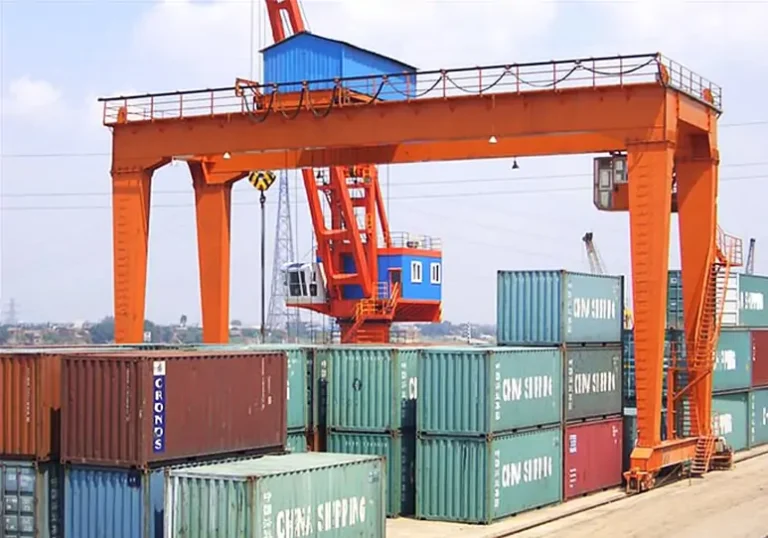

Guindaste pórtico sobre trilhos Os RMGs são a opção preferida para terminais de contêineres automatizados e depósitos de contêineres no interior (ICDs). Operando sobre trilhos fixos, os RMGs oferecem maior precisão de posicionamento e são mais fáceis de integrar com veículos guiados automaticamente (AGVs) e sistemas operacionais de terminais (TOS). Seu percurso consistente torna a programação da automação mais confiável do que com os RTGs.
Os guindastes RMG podem ser projetados com configurações de carro simples ou duplo, com alguns modelos atingindo alturas de empilhamento de até 9 contêineres. Projetos como o terminal Yangshan Fase IV em Xangai e o terminal Rotterdam Maasvlakte II dependem fortemente de sistemas RMG para operações totalmente automatizadas.
2.4 Guindaste Portuário Móvel (MHC) — Atracadouros Multiuso
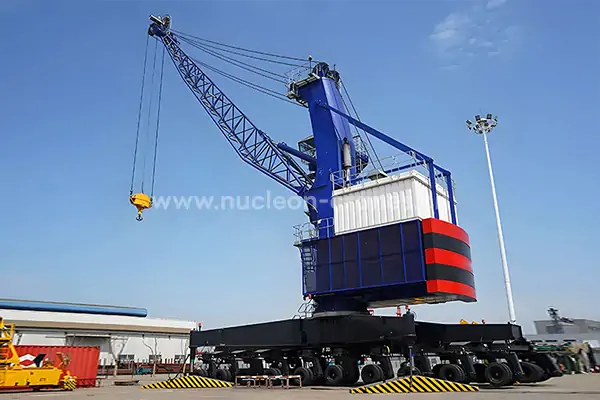
O guindaste portuário móvel é um equipamento de elevação portuária altamente versátil, montado sobre unidades de transporte com pneus que permitem o reposicionamento entre os cais sem infraestrutura ferroviária. Os guindastes portuários móveis são adequados para portos que lidam com uma variedade de cargas — a granel, carga geral, carga de projeto e contêineres — frequentemente dentro do mesmo terminal.
Os principais modelos da Liebherr (série LHM) e da Gottwald (agora Konecranes) oferecem capacidades de elevação de 100 a 308 toneladas, com alturas de gancho de até 57 metros. Uma ampla gama de garras, spreaders e ganchos equipa os guindastes de grande porte, tornando-os um dos tipos de guindaste mais adaptáveis para portos que lidam com cargas não padronizadas.
Guindaste de garra de 2,5 m (manuseio de granéis portuários)


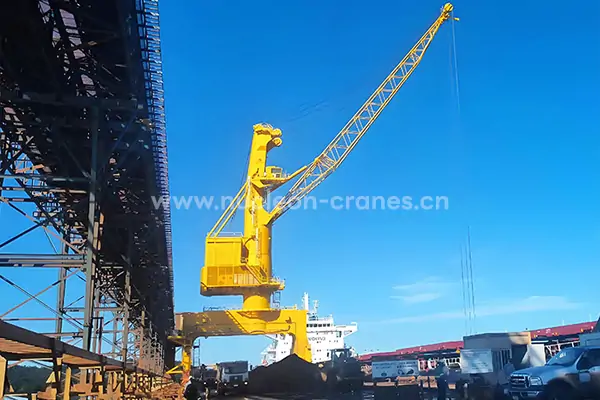
O guindaste de garra é projetado especificamente para o manuseio de cargas a granel — minerais, carvão, grãos, fertilizantes e materiais similares. Equipados com garras hidráulicas ou mecânicas, esses guindastes recolhem grandes volumes de material solto dos porões dos navios. Os guindastes de garra utilizados em portos são geralmente do tipo ponte ou montados sobre pedestal e integrados a sistemas de esteiras transportadoras para descarregamento rápido.
As taxas de descarga de guindastes de garra modernos podem atingir de 1.500 a 3.000 toneladas por hora, dependendo do volume da garra e da velocidade do ciclo. Portos como o Porto de Richards Bay (África do Sul) e o Porto de Hedland (Austrália) dependem amplamente de sistemas de guindastes de garra para operações de alto volume com granéis.
3. Guindaste portuário Comparação: Principais parâmetros técnicos
A tabela abaixo compara os principais parâmetros técnicos dos principais tipos de guindastes portuários para auxiliar na tomada de decisões de aquisição.
| Tipo de Guindaste | Capacidade de elevação | Aplicação | Mobilidade | Potencial de Automação |
| Navio-para-Terra (STS) | 40–80 t (espalhador) | Terminal de contêineres, cais | Fixado no trilho | Elevado |
| Grua RTG | 40–60 t | empilhamento de contêineres no pátio | com pneus de borracha | Médio–Alto |
| Grua RMG | 40–60 t | Pátios automatizados, ICDs | Fixado no trilho | Muito Alto |
| Guindaste portuário móvel | 100–308 t | Atracação multiuso | com pneus de borracha | Baixo–Médio |
| Guindaste de garra | 10–50 t (pegar) | terminais de carga a granel | Fixo/Semifixo | Médio |
Dados de referência: Especificações de produto Liebherr 2023; Ficha técnica do guindaste de terminal Konecranes 2024; Série técnica ZPMC STS 2023.
4. Como escolher o tipo de guindaste mais adequado ao perfil operacional do seu porto
4.1 O tipo de carga é o filtro principal
Antes de avaliar qualquer modelo de guindaste, defina a composição do seu perfil de carga. Cargas conteinerizadas acima de 80% de volume indicam a necessidade de sistemas STS e pórticos (RTG/RMG). Um perfil de carga mista — onde contêineres, granéis e carga geral coexistem — favorece guindastes portuários móveis devido à sua flexibilidade. Terminais com predominância de granéis exigem infraestrutura dedicada para guindastes de garra e sistemas de esteiras integrados.
4.2 Dimensões do terminal e nível de automação
Para terminais em fase inicial de construção, com o objetivo de movimentar mais de 1 milhão de TEUs, os sistemas RMG automatizados com integração de AGVs representam o investimento a longo prazo com a melhor escalabilidade. Para terminais de médio porte ou com configurações de berços irregulares, os RTGs oferecem o melhor equilíbrio entre flexibilidade e custo. Terminais pequenos ou multiuso com variação sazonal de carga se beneficiam mais dos guindastes portuários móveis.
4.3 Custo Total de Propriedade
O preço de aquisição é apenas uma dimensão. Guindastes elétricos (E-RTG, RMG) têm custos iniciais mais elevados, mas custos de energia e manutenção significativamente menores ao longo de uma vida útil de 20 a 25 anos. Um estudo de 2022 da PortEconomics estimou que os custos operacionais de E-RTG por movimentação de contêineres são de 18 a 221 TP3T menores do que os equivalentes a diesel em um horizonte de 15 anos. A modelagem do custo do ciclo de vida deve sempre acompanhar a seleção do tipo de guindaste.
5. Casos de aplicação no mundo real
Caso 1: Terminais PSA de Singapura — Integração STS + RMG
O Terminal Pasir Panjang da PSA Singapore é um dos terminais de contêineres mais produtivos do mundo, processando mais de 35 milhões de TEUs anualmente. O terminal utiliza uma combinação de guindastes STS de dois carros no cais e sistemas RMG automatizados no pátio, conectados por frotas de AGVs. Essa arquitetura STS-RMG-AGV alcança taxas de produtividade dos guindastes de cais superiores a 35 milhões de TEUs por hora durante os períodos de pico de operação.
Fonte: Relatório Anual da PSA International 2023; Lloyd's List Port Intelligence.
Caso 2: Porto de Antuérpia — Guindaste portuário móvel para cargas múltiplas
O Porto de Antuérpia-Bruges opera guindastes portuários móveis Liebherr LHM 550 em diversos terminais multiuso, movimentando cargas de projetos, aço e itens de grande porte, além de contêineres. A capacidade de reposicionar os guindastes entre os berços de atracação no mesmo turno oferece aos operadores de terminais a flexibilidade necessária para responder às mudanças na programação dos navios — uma vantagem fundamental em um porto que movimenta mais de 289 milhões de toneladas de carga anualmente.
Fonte: Estatísticas Anuais de Carga do Porto de Antuérpia-Bruges 2023; Lista de Referência de Guindastes Marítimos Liebherr.
6. Conclusão: Combine o guindaste com a missão
Os tipos de guindastes usados em portos não são ferramentas intercambiáveis — cada um é projetado para um contexto operacional específico. Os guindastes STS definem a produtividade do terminal de contêineres no cais. Os guindastes RTG e RMG gerenciam o empilhamento no pátio com diferentes graus de automação. Os guindastes portuários móveis oferecem flexibilidade no nível do berço para ambientes de carga mista. Os guindastes de garra impulsionam operações de granéis de alto volume.
A seleção adequada de guindastes portuários exige que o tipo de guindaste esteja alinhado ao perfil da carga, às metas de produtividade, à estratégia de automação e ao custo total de propriedade. Trabalhe com fabricantes certificados e consultores portuários independentes para validar sua seleção antes de se comprometer com a compra. Uma frota de guindastes bem escolhida é um ativo estratégico para várias décadas, que gera benefícios em termos de produtividade, segurança e resiliência operacional.

Especialista de Equipamento
Gestor de Negócios de Gruas com vasta experiência em gestão de projetos de elevação pesada e supervisão operacional. Histórico comprovado na promoção do crescimento da receita e na garantia da conformidade com as normas de segurança.
Perguntas frequentes (FAQ)
Q1: Qual é o guindaste mais comum usado em portos de contêineres??
Os guindastes Ship-to-Shore (STS) dominam os terminais de contêineres em todo o mundo, sendo o tipo de guindaste mais utilizado. Esses guindastes são responsáveis pela transferência de contêineres entre navios e o cais, e seu alcance abrange navios porta-contêineres modernos de grande porte. Para operações de pátio, os guindastes Rubber Tyred Gantry (RTG) são os mais comuns, juntamente com os guindastes STS, em terminais não automatizados. Juntos, os guindastes STS e RTG formam a espinha dorsal da maioria das frotas de guindastes de terminais de contêineres em todo o mundo.
Q2: Qual é a diferença entre gruas RTG e RMG?
Os guindastes RTG (Rubber Tyred Gantry) se deslocam sobre pneus, o que os torna móveis e fáceis de reposicionar dentro do pátio de contêineres. Os guindastes RMG (Rail Mounted Gantry) se deslocam sobre trilhos fixos e oferecem maior precisão e capacidade de automação. Os RMGs são preferidos para novos terminais automatizados, onde trajetórias de deslocamento consistentes são necessárias para a integração de AGVs (Veículos Guiados Automaticamente). Os RTGs são mais econômicos para terminais que precisam de flexibilidade de layout ou que operam em um ambiente semiautomatizado. O investimento em infraestrutura ferroviária é o principal diferencial de custo inicial.
P3: Um guindaste portuário móvel consegue manusear contêineres?
Sim. Guindastes portuários móveis podem movimentar contêineres quando equipados com um spreader. No entanto, sua produtividade em operações exclusivamente com contêineres é menor do que a de guindastes STS (Single-to-Shift) projetados especificamente para esse fim. Os guindastes portuários móveis são mais indicados para locais com mix de carga diversificado, movimentando carga geral, a granel, carga de projeto e contêineres no mesmo cais. Para terminais de contêineres dedicados que processam grandes volumes, os guindastes STS continuam sendo a opção tecnicamente superior e mais econômica por movimentação de contêiner.
Q4: Como escolher entre guindastes portuários fixos e móveis para um novo terminal?
Os principais fatores de decisão são a variedade de tipos de carga, o volume de movimentação e a configuração do cais. Se o seu terminal lida principalmente com carga conteinerizada em volumes superiores a 200.000 TEU anualmente, os guindastes STS são a escolha padrão. Se o seu terminal lida com um perfil de carga misto com volumes de contêineres menores, ou se você precisa de flexibilidade de cais para vários tipos de carga, os guindastes portuários móveis oferecem um melhor retorno sobre o investimento. Restrições orçamentárias e limitações de espaço no cais também influenciam a decisão — os guindastes portuários móveis não exigem infraestrutura ferroviária fixa e têm custos de instalação mais baixos.
Q5: Quais certificações e normas se aplicam aos guindastes portuários?
Os guindastes portuários devem cumprir diversas normas importantes, que variam conforme a região e a aplicação. As principais referências incluem: ISO 4306 (terminologia e classificação de guindastes), EN 13001 (projeto e segurança de guindastes na Europa), Série ASME B30 (normas para guindastes na América do Norte) e FEM 1.001 (regras de projeto de guindastes da Federação Europeia de Manuseio de Materiais). A marcação CE é obrigatória para equipamentos de guindaste vendidos na União Europeia. As autoridades portuárias também podem impor requisitos locais adicionais relativos à estrutura, eletricidade e meio ambiente. Sempre verifique se a documentação do fornecedor do guindaste inclui todas as certificações de conformidade antes de finalizar a compra.

 English
  العربية
  Español
  Français
  Português
  Русский