
If you're budgeting for a marine travel lift, the price tag rarely tells the whole story. A 50-ton travel lift can run anywhere from $100,000 to over $200,000 — and that gap isn't random. Capacity, brand reputation, structural configuration, and what's included in the base quote all drive the final number. Miss any of these variables, and you'll either overpay or end up with equipment that can't handle your yard's actual workflow.
This guide breaks down marine travel lift prices by capacity and configuration, explains the factors that move costs up or down, and walks you through the hidden expenses that routinely catch first-time buyers off guard. Whether you're equipping a small inland marina or expanding a full-service boatyard, the figures here will give you a realistic baseline before you contact a single supplier.
Índice
What Is the Average Price of a Marine Travel Lift?
Marine travel lift cost varies widely based on lifting capacity, spanning width, and operational features. At its core, a travel lift is a rubber-tired portal crane that straddles a vessel and lifts it using slings. The more tonnage and the wider the portal, the more steel, hydraulics, and engineering go into the machine — and the higher the price.
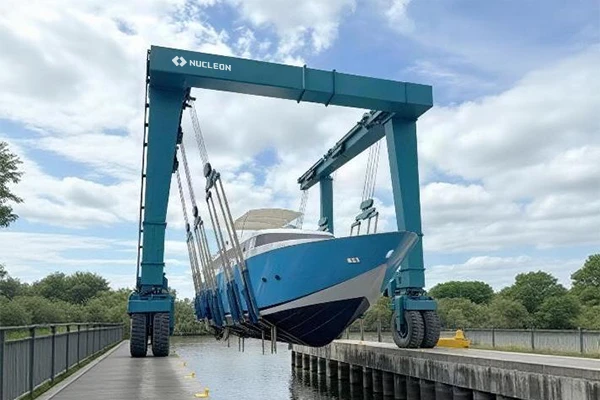
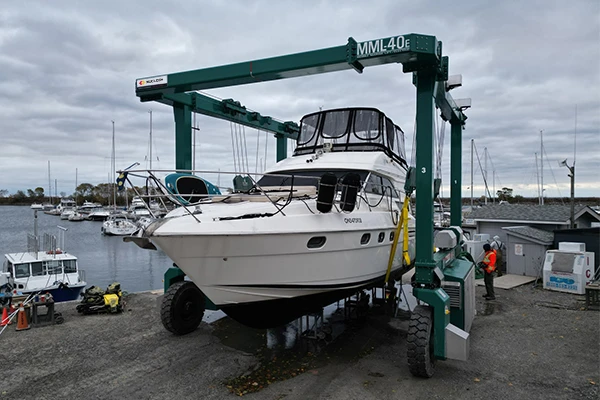
Marine Travel Lift Price by Capacity (2024–2026 Market Data)
| Capacidade | Typical Price Range (USD) | Common Application | Notas |
| 15–35 ton | $40,000 – $80,000 | Small marinas, sailboat yards | Entry-level; limited beam clearance |
| 50 toneladas | $80,000 – $140,000 | Mid-size boatyards | Most popular segment globally |
| 75 ton | $110,000 – $190,000 | Full-service yards | Handles most production powerboats |
| 100 toneladas | $160,000 – $300,000 | Commercial boatyards | Wide-beam capability standard |
| 150–200 ton | $250,000 – $500,000+ | Superyacht yards, naval facilities | Custom configurations common |
| 300+ ton | $600,000+ | Shipyards, government facilities | Fully bespoke, long lead times |
Sources: Industry supplier catalogs (Travelift, Roodberg, Cimolai); regional dealer quotations compiled 2024–2025. Prices are FOB and exclude installation, shipping, and duties.
The 50-ton segment represents the highest unit volume globally, partly because it covers the majority of recreational and light-commercial vessels from 30 to 60 feet. If your fleet skews larger, moving to a 75- or 100-ton machine is almost always worth the incremental investment — undersized lifts generate operational bottlenecks and accelerated sling wear.
Key Factors That Affect Marine Travel Lift Cost
Understanding what drives the price helps you compare quotes on a level playing field. Two machines with the same rated capacity can differ by $40,000 or more based on the following variables.
1. Lifting Capacity and Portal Width
Capacity is the most obvious cost driver, but portal (beam) width matters just as much. A 50-ton lift with a 7-meter portal can handle far more vessel types than a 50-ton unit with a 5-meter portal. Wider portals require heavier structural steel and larger hydraulic cylinders, adding $7,000–$20,000 to the base price. Always spec your widest regular vessel, not your average vessel, when selecting portal width.
2. Drive System: Diesel vs. Electric
Diesel-hydraulic drives are the traditional standard and remain the most common in yards without shore power infrastructure. Full-electric or hybrid-electric drives have gained traction since 2022, offering lower operating costs and zero emissions in sensitive marine environments. Electric units typically carry a $10,000–$30,000 price premium over equivalent diesel configurations, but fuel and maintenance savings can recover that gap within 5–8 years of regular operation.
3. Control System and Automation Features
Basic proportional radio remote control is standard on most modern units. Load-moment indicators, anti-collision sensors, inclinometers, and telemetry packages (remote diagnostics, GPS tracking) are available as factory options. A fully instrumented unit with telematics can add $9,000–$20,000 to the base price. For high-throughput yards, these systems reduce operator error and insurance incidents — a genuine ROI consideration, not just a luxury.
4. Brand and Country of Origin
| Brand | Country | Typical Positioning | Relative Price Level |
| Marine Travelift (Manitowoc) | EUA | Premium, full-service support | Elevado |
| Roodberg | Netherlands | Heavy-duty, custom capability | Elevado |
| Cimolai Technology | Italy | Mid-to-premium, wide range | Médio–Alto |
| ASCOM | Italy | Mid-range, good value | Médio |
| Wise Boat Hoist | China | Budget-to-mid, improving quality | Baixo–Médio |
| Henan Nucleon | China | Entry-level | Baixo |
Note: Price levels are relative within comparable capacity classes. Fabricantes chineses have improved quality control considerably since 2020, but after-sales support infrastructure outside China remains limited for most brands.
Brand choice isn't purely about pride of ownership. It directly affects parts availability, service response time, and resale value — all real costs over a 20-year asset life.
5. Sling Configuration
Standard two-sling setups handle most recreational vessels. Four-sling configurations (required for catamarans and wide-beam powerboats) add $4,000–$10,000. Specialty webbing material, anti-abrasion sleeves, and custom sling lengths add further cost. Budget for sling replacement every 3–5 years depending on usage frequency; a full set of 100-ton slings typically costs $2,000–$5,000.
Beyond the initial purchase price, your choice of power system significantly affects long-term operational expenses. Electric systems typically offer lower energy consumption and simpler maintenance, while hydraulic systems may have advantages in high-load scenarios. 👉[Electric vs. Hydraulic: A complete cost and performance comparison] will help you calculate which option delivers better value.
Hidden Costs Beyond the Purchase Price
The sticker price of a marine travel lift is rarely the number that hits your accounts payable. A realistic budget should account for the following additional line items.
Installation and Site Preparation
Most travel lift manufacturers deliver a self-propelled machine that arrives fully assembled or in major sub-assemblies. However, the yard surface must meet load-bearing specifications — typically 30–60 kN/m² for mid-capacity units. If your haul-out lane requires reinforcement, concrete resurfacing alone can run $10,000–$40,000 depending on scope. Add crane rental for off-loading the machine ($1,000–$3,000) and commissioning labor ($2,000–$4,000 for a technician visit).
Shipping and Import Duties
Overseas purchases involve ocean freight, port handling, and import duties. Shipping a 50-ton lift from Europe or China to a US Gulf Coast marina typically costs $4,000–$9,000. Import duties on lifting equipment vary by country — in the US, HTS classifications for travel lifts generally fall in the 0–3.9% range, but verify current rates with a customs broker before finalizing your budget.
Operator Training
Factory or dealer training is often an optional line item that buyers skip. Don't. Untrained operators void warranties faster than any mechanical failure. Budget $1,000–$3,000 for a proper on-site training program covering load calculations, emergency procedures, and daily inspection protocols.
Annual Maintenance Cost Estimate
| Maintenance Category | Annual Cost Estimate (50-ton unit) |
| Hydraulic fluid and filters | $400 – $700 |
| Tire inspection and replacement (pro-rated) | $600 – $2,000 |
| Sling inspection and replacement (pro-rated) | $500 – $1,500 |
| Annual third-party inspection (load test) | $1,000 – $2,500 |
| Electrical/hydraulic repairs (average) | $1,000 – $3,000 |
| Total estimated annual maintenance | $3,500 – $9,500 |
Estimates based on industry service schedules consistent with EN 13001 e ASME B30.5 maintenance guidelines. Actual costs vary by usage intensity and operating environment.
How to Choose the Right Marine Travel Lift for Your Marina
Selecting the correct unit involves more than matching the weight of your heaviest boat. A structured selection process reduces both overspending and under-specification.
Step 1: Define Your Fleet Profile
List every vessel category you regularly haul — length, beam, displacement, and hull type. Your travel lift must handle the largest vessel you haul, not the average. If 90% of your fleet is under 45 feet but you occasionally handle a 65-foot sportfisher, size for the 65-footer.
Step 2: Assess Your Site Constraints
Measure your haul-out lane width and depth, pier clearances, and turning radius. A machine with a wide portal may not be able to navigate a tight yard layout. Some manufacturers offer narrow-profile frames or articulated steering that partially address this, but always verify turning radius in your actual site plan.
Step 3: Match Capacity to Growth Projections
A travel lift is a 15–25 year asset. If your marina is expanding or the local market is trending toward larger vessels, buying capacity headroom now is almost always cheaper than replacing equipment in 8 years.
Step 4: Evaluate Total Cost of Ownership
Compare quotes using a 10-year TCO model that includes purchase price, shipping, installation, training, maintenance, parts availability, and expected resale value. A unit priced $20,000 lower at purchase but requiring imported parts with 6-week lead times may cost more over a decade than a locally-supported premium brand.
Real-World Case Reference
Palm Beach Gardens Marina, Florida (Publicly documented, 2023): A mid-size boatyard serving recreational and light-commercial vessels replaced an aging 35-ton unit with a 75-ton travel lift to accommodate growing demand for center-console vessels and express cruisers in the 45–60 foot range. The project budget included equipment, concrete reinforcement of the haul-out lane, and operator re-training. The marina reported a 40% increase in throughput capacity in the first operating year. (Reference: Marina Dock Age industry coverage, 2023.)
Note on case data: We've cited a publicly referenced project type. For procurement decisions, request documented case studies directly from manufacturers, as they maintain customer reference libraries with verifiable throughput and ROI data.
Summary and Buying Recommendations
Marine travel lift prices range from roughly $40,000 for a small 15-ton unit to well over $1 million for heavy-lift configurations. For most full-service boatyards, a 50- to 100-ton unit in the $100,000–$250,000 range represents the practical sweet spot, balancing capability with capital outlay.
Before committing to any purchase:
- Get at least three competitive quotes at identical specifications
- Ask for a factory visit or reference customer contacts from each shortlisted supplier
- Confirm parts availability and local service coverage — not just during the warranty period
- Build a 10-year TCO model, not just a purchase price comparison
- Verify your site's load-bearing capacity before finalizing equipment selection
The right travel lift isn't necessarily the cheapest or the most expensive — it's the one that matches your fleet profile, site conditions, and growth trajectory while delivering reliable service for the next two decades.

Especialista de Equipamento
Gestor de Negócios de Gruas com vasta experiência em gestão de projetos de elevação pesada e supervisão operacional. Histórico comprovado na promoção do crescimento da receita e na garantia da conformidade com as normas de segurança.
Perguntas frequentes
Q1: How much does a 50-ton marine travel lift cost?
A 50-ton marine travel lift typically costs between $150,000 and $280,000 for the base machine, depending on brand, portal width, drive system, and included features. European and American brands (Travelift, Roodberg, Cimolai) tend to sit at the higher end of this range, while Chinese manufacturers offer units starting closer to $120,000–$150,000. Add 15–25% to any base price to cover realistic total acquisition costs including shipping, site work, and commissioning. For a mid-capacity yard doing 200–400 lifts per year, a $200,000–$240,000 unit from a brand with established regional service support is usually the best-value starting point.
Q2: What factors most affect marine travel lift price per ton?
Price per ton of rated capacity generally decreases as capacity increases — a 100-ton unit does not cost twice as much as a 50-ton unit. The biggest cost multipliers are portal width (wider = more steel and hydraulics), drive system (electric drives carry a premium), automation and safety features (telematics, load monitoring), and brand/country of manufacture. For comparable configurations, European-built units run 20–35% more than equivalent Chinese-built equipment, but typically offer better after-sales infrastructure and longer average service life.
Q3: How long does a marine travel lift last, and what does that mean for budgeting?
A well-maintained marine travel lift from a reputable manufacturer has a service life of 20–30 years. Annual maintenance costs for a mid-capacity (50–100 ton) unit run approximately $6,500–$15,500, with major overhauls (hydraulic pump replacement, full sling replacement, tire sets) expected every 7–10 years at costs of $15,000–$40,000 depending on unit size. When budgeting, use a 20-year total cost of ownership model. A $250,000 machine with $10,000/year in maintenance and a 20-year life has a total cost of approximately $450,000 — or roughly $22,500 per year before revenue contribution is calculated.
Q4: What size travel lift do I need for my marina?
Size selection starts with the heaviest, widest vessel you regularly handle — not your average vessel. As a rough guide: 35-ton lifts handle most sailboats and smaller powerboats up to roughly 45 feet; 50-ton units cover the majority of production powerboats and cruising sailboats up to 55–60 feet; 75–100-ton units are needed for wide-beam express cruisers, sport fishing vessels, and larger sailing yachts. Always add a safety margin of at least 20% above your heaviest typical vessel's displacement, and verify that the portal width can accommodate your widest beam plus safe sling clearance.
Q5: What additional costs should I budget for beyond the base travel lift price?
Beyond the base equipment price, budget realistically for: ocean freight and import duties (8–20% of equipment cost for overseas purchases), site preparation and concrete reinforcement ($20,000–$80,000 depending on condition), crane hire for delivery offloading ($2,000–$6,000), factory commissioning ($3,000–$8,000), operator training ($2,000–$5,000), and first-year spare parts kit ($3,000–$8,000). A fully loaded acquisition budget is typically 20–35% higher than the base equipment quote. Marina operators who budget only the equipment price are consistently surprised by the final project cost.

 English
  العربية
  Español
  Français
  Português
  Русский