

Overhead travelling cranes are indispensable heavy lifting equipment in industrial settings, enabling vertical lifting and horizontal movement of materials through a bridge-like structure. They are widely used in factories, warehouses, ports, and other locations. Based on structural design, lifting capacity, and application scenarios, overhead cranes can be classified into various types. This article will provide a detailed introduction to the characteristics, components, and applications of different types of overhead travelling cranes, helping you choose the most suitable lifting solution.
Table of Contents
What is an overhead crane?
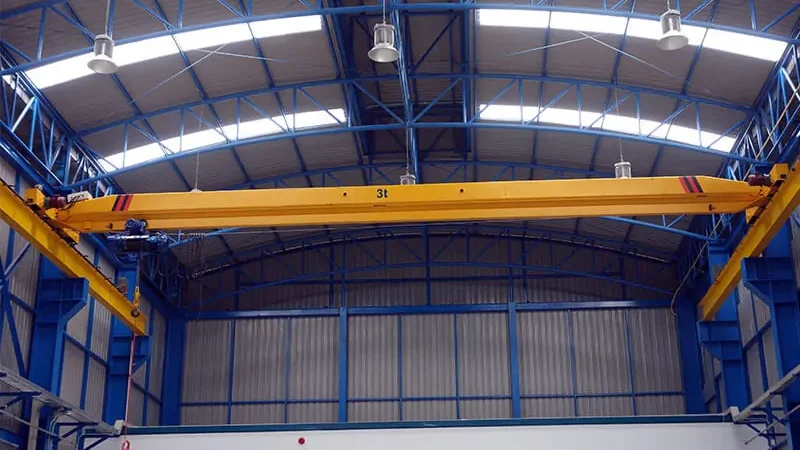
An overhead crane is a heavy-duty lifting device installed above a workspace and running along fixed tracks. It uses a bridge-like structure to achieve vertical lifting and horizontal movement of materials.
- Structural features: It consists of a main beam (one or two) spanning the work area, end beams supporting both ends, a movable lifting trolley, a lifting mechanism, a traveling mechanism, and a control system. The overall shape resembles a bridge.
- Working principle: It moves along three axes – the main beam moves longitudinally along the overhead track, the trolley moves transversely on the main beam, and the lifting mechanism vertically lifts the load, thus precisely and stably transporting heavy objects from point A to point B.
- Control methods: It can be operated via a control cabin, remote control, or handheld controller, and complies with international safety standards (CE, ISO, EAC, etc. certifications).
Bridge crane parts
A bridge crane consists of several key components that work together to lift and move loads. The following is a description of the function of each component:
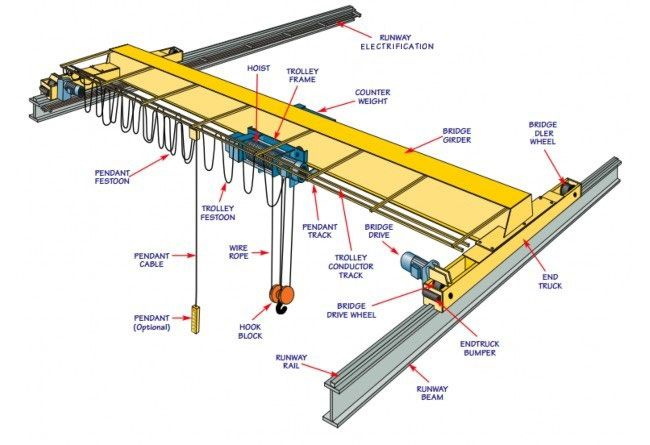
- Main Girder - The load-bearing structure spanning the workspace, on which the trolley runs (single girder for ≤20 tons, double girder for ≥20 tons)
- End Girders - Mounted at both ends of the main girder, equipped with wheels that run along the overhead track
- Hoisting Trolley - A movable unit that travels laterally along the main girder
- Trolley Traveling Mechanism - Enables the lateral (left and right) movement of the trolley
- Bridge Traveling Mechanism - Enables the longitudinal (forward and backward) movement of the crane
- Hoisting Mechanism - Includes the motor, wire rope/drum, and hook, enabling the vertical lifting and lowering of loads
- Control System - Operated via a control cabin/remote control/handheld pendant, equipped with safety features such as overload protection
- Electrical System - Provides power to the entire machine (motors, cables, power distribution unit)
- Safety Devices - Limit switches, overload limiters, emergency stop buttons, buffer protection devices
- Control Cabin - Operator control station
- Walkway/Platform - Used for maintenance and inspection
Overhead Travelling Crane Types
I. General Overhead Travelling Cranes
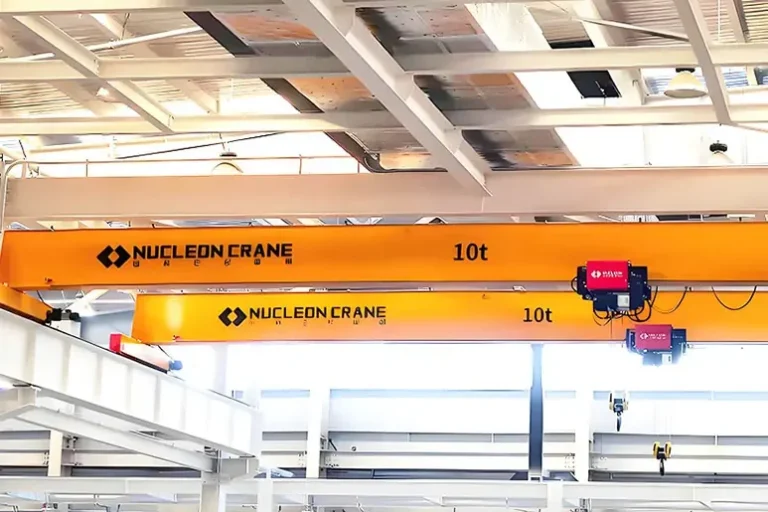
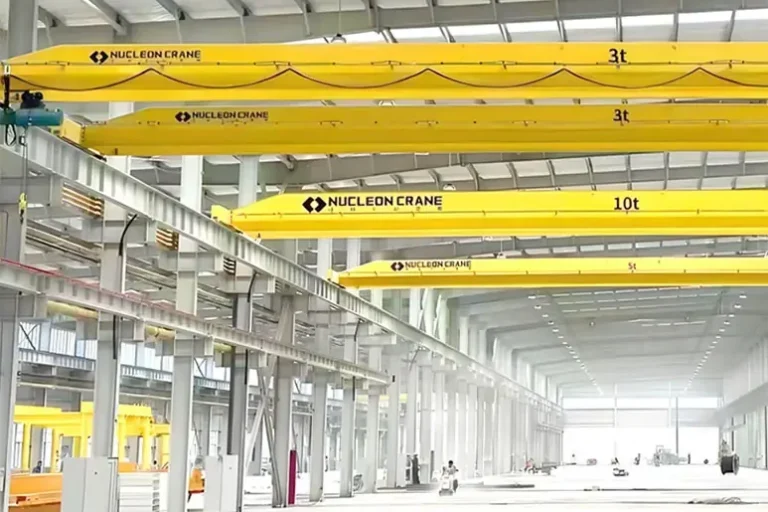
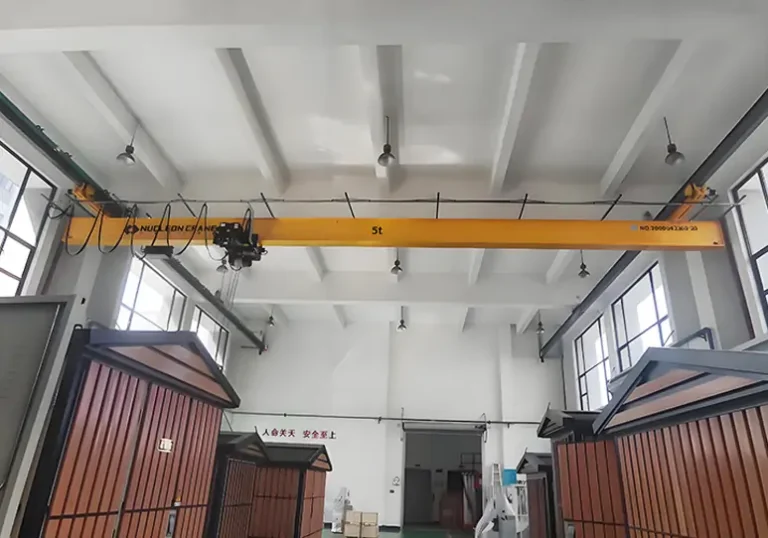
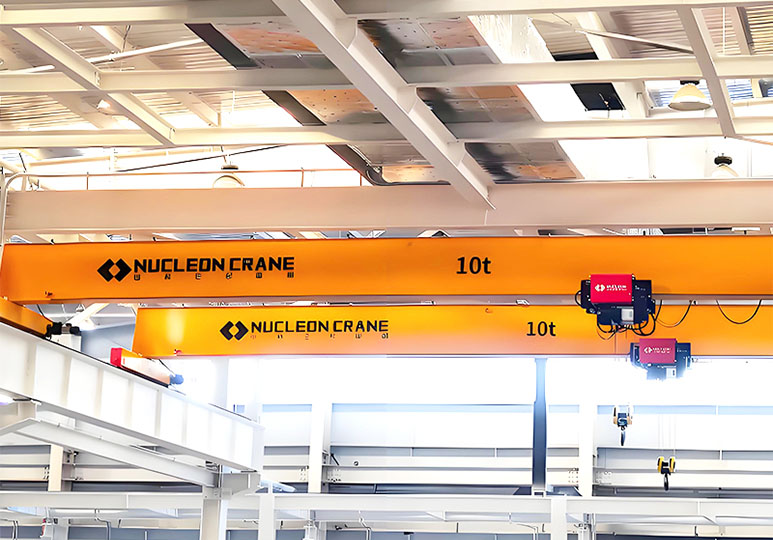
1. Single-Beam Overhead Crane
Structure Composition:
• The core structure is a single main beam.
• Composed of a bridge frame, two end beam trolleys, and a trolley hoist.
• The end beams run on overhead tracks.
Technical Parameters:
• Lifting capacity: 1-32 tons
• Applicable span: ≤22 meters
Main Features:
• Compact structure, low cost, and simple operation
• Less material usage, low installation and construction costs
• Stable operation, high space utilization
• Complies with CE/ISO/EAC international standards
Application Scenarios:
• Production workshops, warehouses, repair workshops, construction sites
• Lifting and handling of medium and light materials
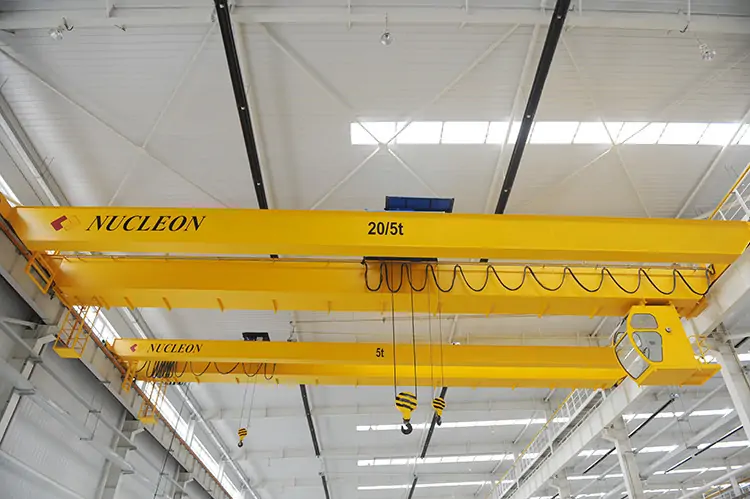
2. Double-Beam Overhead Travelling Crane
Structure Composition:
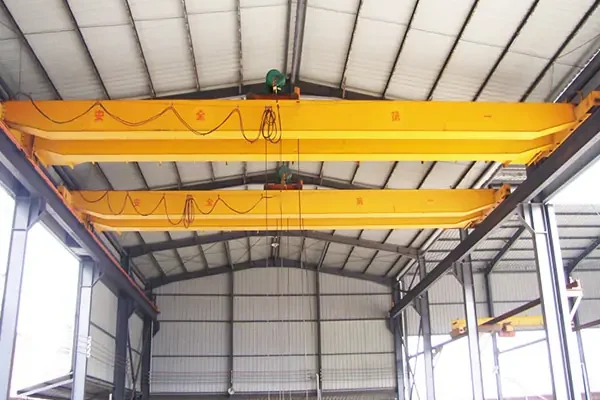
• Uses two parallel steel main beams.
• Composed of two bridges, two end carriages, and one to two sets of trolley hoists.
• The trolley hoists run on tracks installed on top of the bridges.
• Includes key components such as main beams, end beams, electrical system, traveling mechanism, lifting mechanism, and safety devices.
Technical Parameters:
• Lifting capacity: 5-320 tons (conventional), up to 500 tons
• Higher lifting capacity can be customized
Main Features:
• Double-beam design provides strong stability and low deflection.
• Strong load-bearing capacity, smooth operation, safe and reliable.
• Modular design, convenient maintenance, and less downtime.
Application Scenarios:
• Large factories, ports, steel mills, industrial and mining enterprises
• Heavy-duty high-precision operations, lifting steel coils, ship hull components, and other super-heavy items

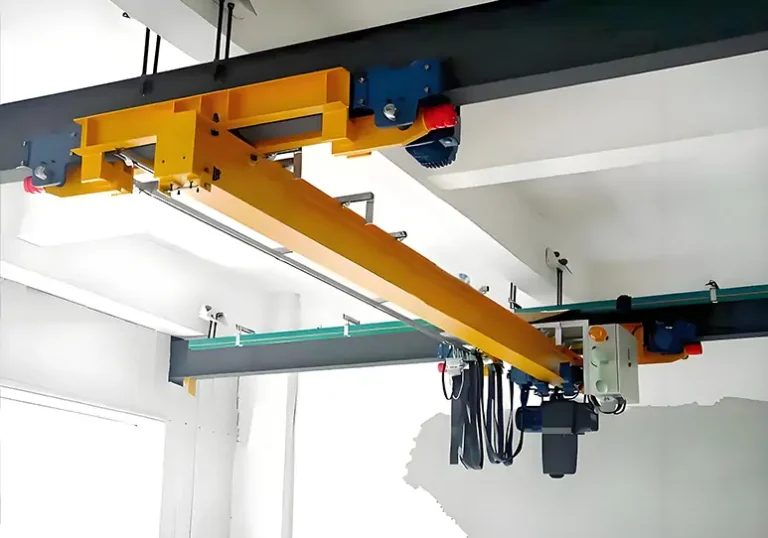
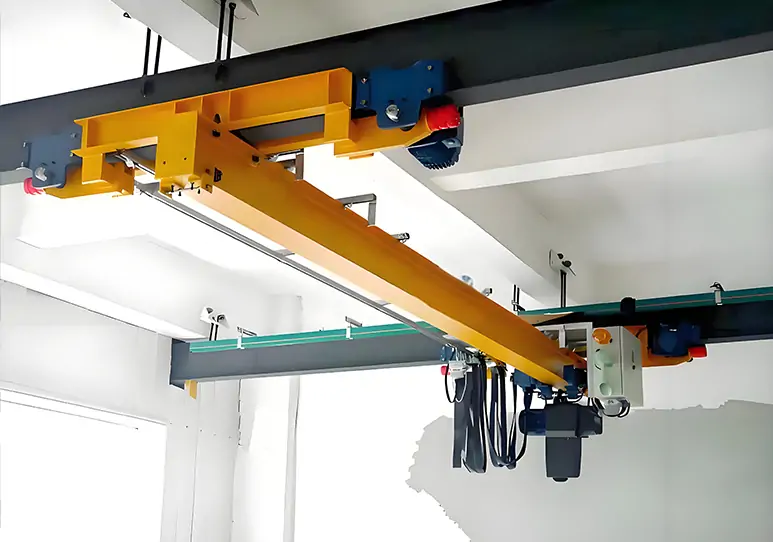
II. Underslung Overhead Travelling Crane (LX Type)
Structural Components:
• Consists of a bridge frame, cantilever, hoisting trolley, and control system.
• The end trolleys are directly suspended from the building's roof support beams.
• The bridge frame is suspended from the building structure via rails.
• The end beams run on the lower flange of the rail beams.
Technical Parameters:
• Lifting capacity: 0.5-20 tons (not exceeding 10 tons)
Main Features:
• No ground support required, space-saving, compact structure
• Lightweight, high flexibility, low cost, easy maintenance
Working Principle:
• The cantilever moves along the track, working in conjunction with an electric hoist or grab.
• Achieves precise lifting and handling in three dimensions.
Control Methods:
• Manual operation, wireless remote control, cab operation
Safety Features:
• Overload protection, limit switches
Application Scenarios:
• Locations without column support, small workshops, electronics factories, logistics warehouses
• Medium to low intensity frequent loading and unloading operations
III. FEM Standard Overhead Travelling Cranes
Design Standards:
• Complies with European FEM design standards
• Utilizes advanced bridge crane technology
Core Advantages:
• Shorter distance from electric hoist to wall, lower headroom
• Closer to the working area, higher lifting height
• Modular design, compact structure, small footprint
• Small operating limit dimensions, high load capacity, low energy consumption
• Precise control, built-in safety devices
1. Single-Girder FEM Standard Overhead Crane
• Lightweight, suitable for light loads
• Used with electric hoists for fast, small-scale lifting
• Applications: Workshops or small factories
2. Double-Girder FEM Standard Bridge Crane
• Robust structure, capable of handling heavy loads
• Used with trolleys, suitable for heavy and large items
• Applications: Large factories or logistics centers
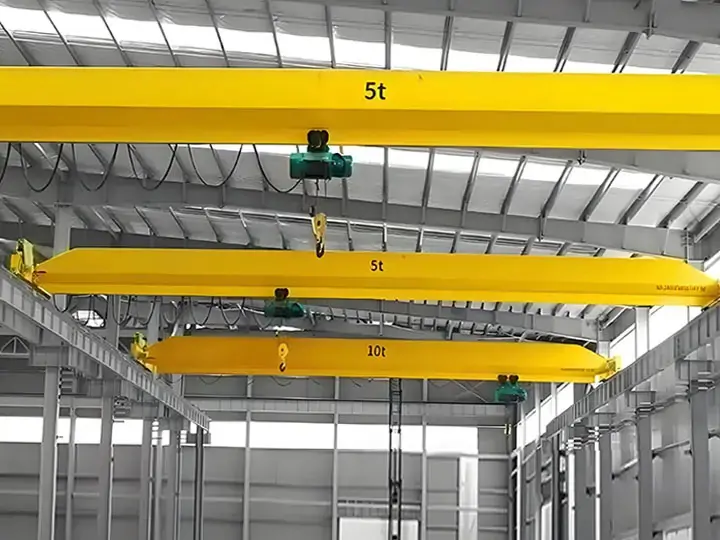
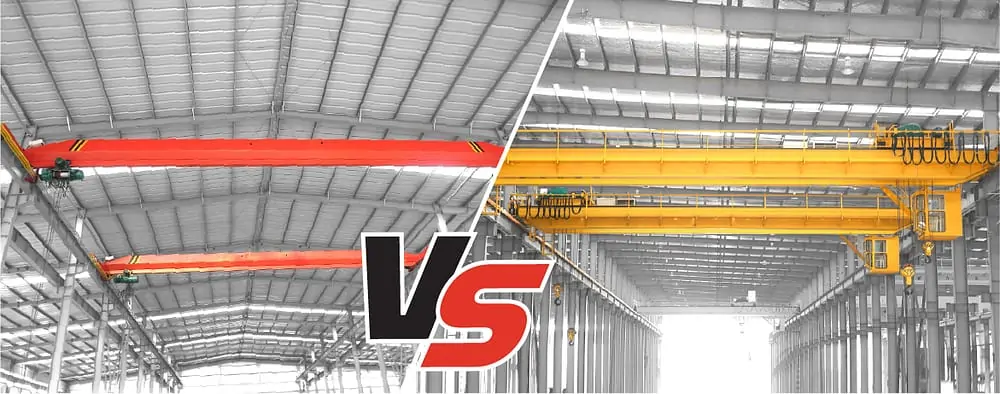
Single girder eot crane
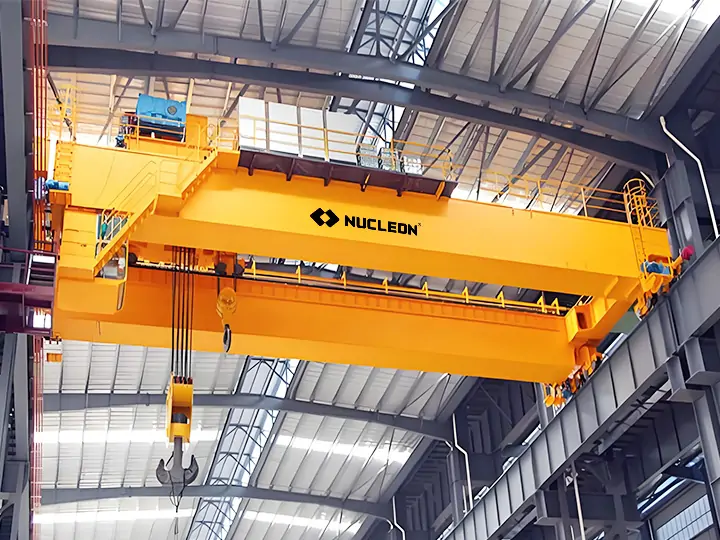
Double girder overhead crane
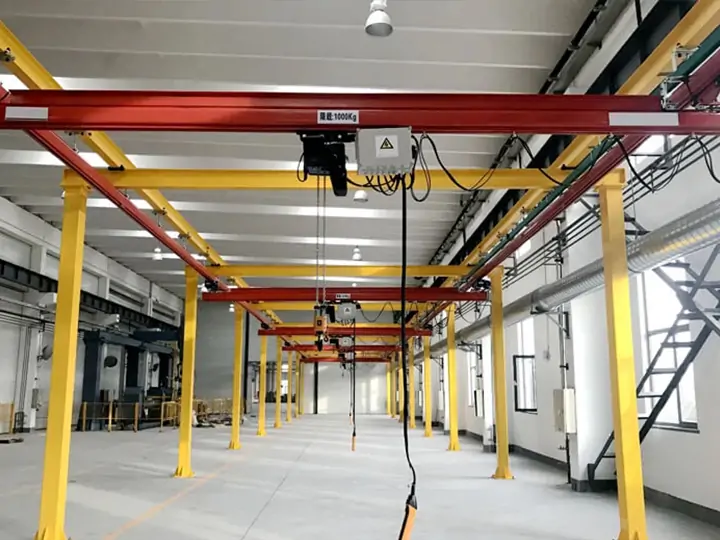
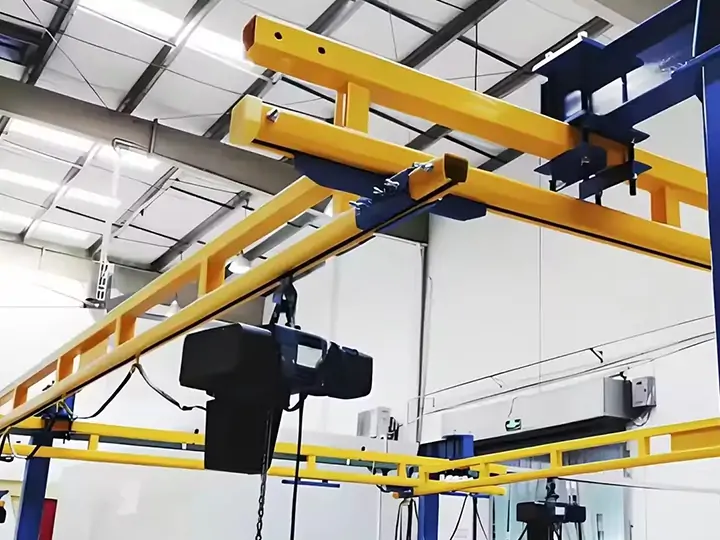
IV. Freestanding Overhead Travelling Crane System
System Characteristics:
• Modular lightweight lifting system
• Standardized components for flexible combination and adjustment
Main Features:
• Easy installation and reconfigurability
• Smooth operation and advanced design
• Reduces manual labor, improves efficiency, and lowers labor intensity
Application Scenarios:
• Workshops, assembly lines, and indoor storage areas
• Electronics, automotive, machinery, and other industries
• Light to medium-duty lifting operations
V. Workstation Crane
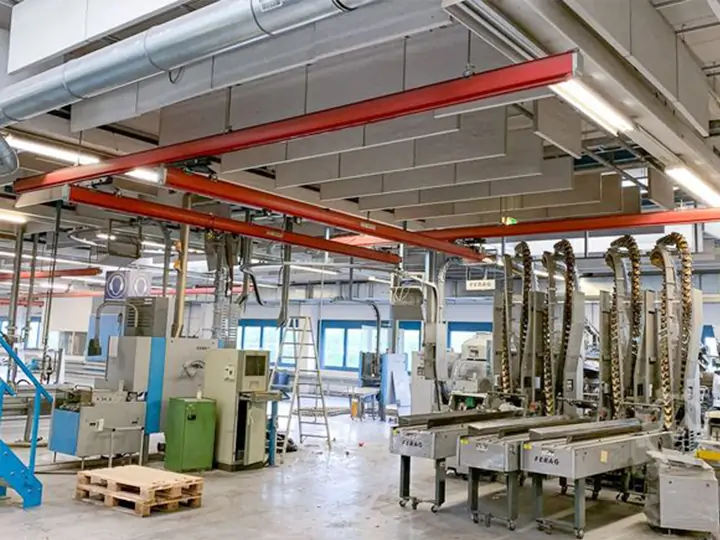
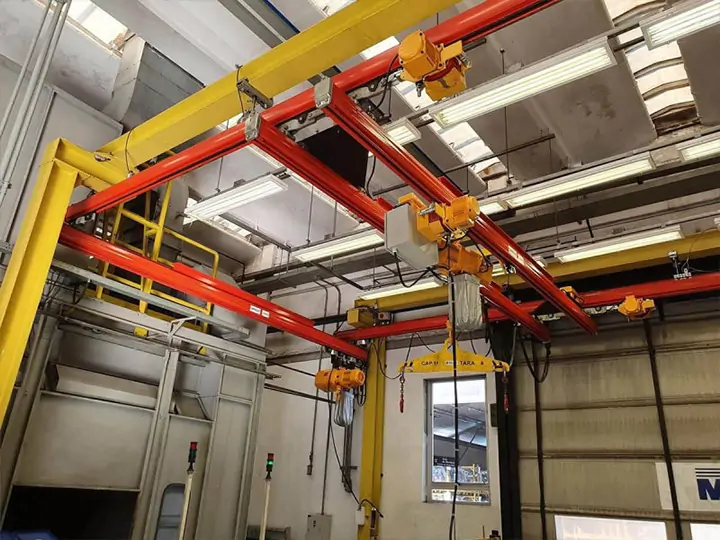
Equipment Positioning:
• Small, flexible lifting tool, specifically designed for workstations.
Structural Features:
• Simple track system, lightweight hook
• Easily moved by hand
Main Features:
• Easy to install, suitable for confined spaces
• Precise lifting, safe and easy to use, space-saving
Application Scenarios:
• Parts handling on assembly lines, handling small items on workbenches
• Frequent handling of lightweight materials
VI. Special Purpose Double Girder Overhead Cranes
Overall Characteristics:
Suitable for extreme environments and special tasks; Utilizes cutting-edge materials and safety features; Ensures precision, reliability, and worker safety.
Core Device: Hydraulic or mechanical grab
Application Scenarios: Port logistics, mining
Materials Handled: Coal, ore, grain, and other bulk materials

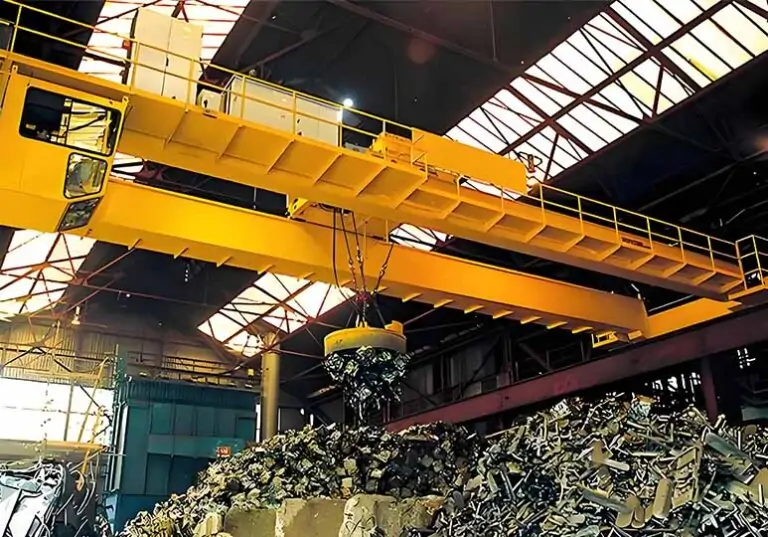
2. Electromagnetic Overhead Crane
Working Principle: Lifting with powerful magnets
Safety Features: Emergency backup battery system to prevent dropping during power outages
Applicable Materials: Steel coils, scrap metal, and other ferromagnetic materials
Application Scenarios: Steel mills, scrap metal recycling plants, metal processing companies
3. Explosion-Proof Bridge Crane
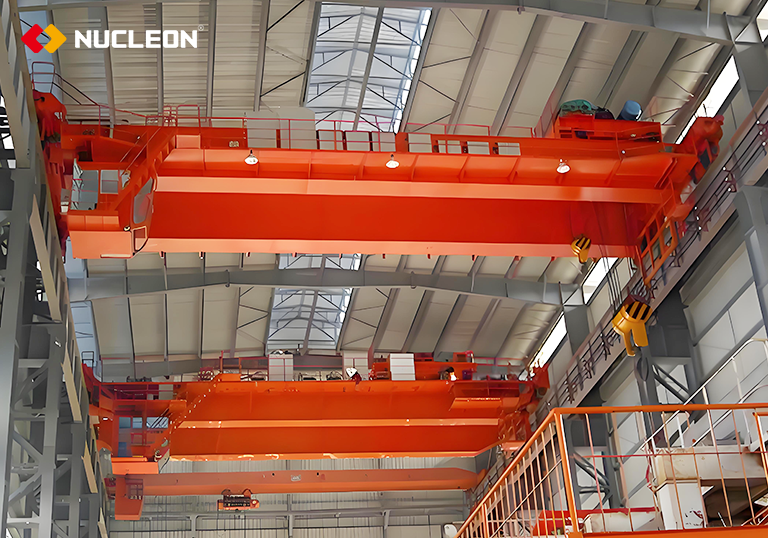
Safety Design: Flame-retardant casing, spark-free components
Execution Standards: Complies with GB3836.1 and other standards
Application Scenarios: Chemical plants, petroleum industry, flammable and explosive environments
Insulation Design: High-strength fiberglass structure, 220kV rated insulation
Application Scenarios: Power industry, substations, high-voltage equipment maintenance
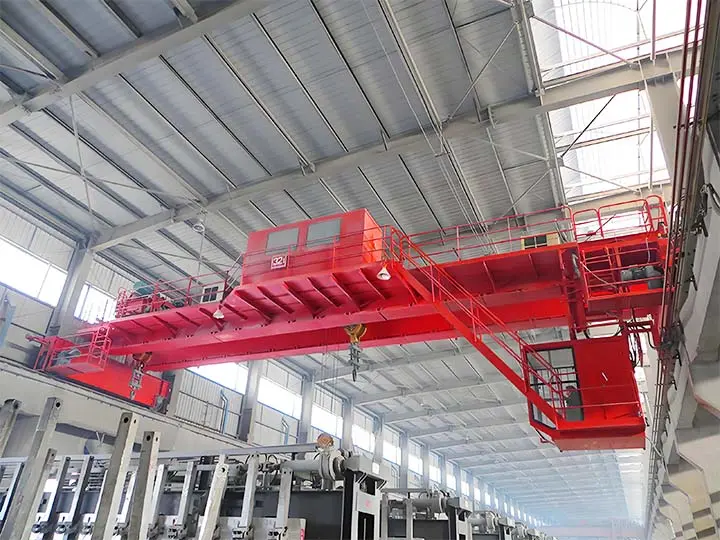
Industry Value of Special Purpose Cranes: Covering key industrial sectors such as mining, power, chemical, port logistics, and steel, providing safe and efficient heavy lifting solutions.
Overhead crane cost
| Product Type | Lifting Capacity | Span | Application | Price Range |
| Single Girder Overhead Crane | 1-32 tons | ≤22m | Production workshops, warehouses, maintenance shops, construction sites | $2,000 - $14,000 |
| Double Girder Overhead Crane | 5-500 tons | 10-35m | Large factories, ports, steel mills, heavy industry | $4,000 - $30,000+ |
| Underhung Overhead Crane (LX Type) | 0.5-20 tons | 3-16m | Small workshops, electronics factories, logistics warehouses | $1,800 - $15,000 |
| Single Girder FEM Standard Crane | 1-20 tons | 7-22m | Workshops, small factories | $8,000 - $35,000 |
| Double Girder FEM Standard Crane | 5-80 tons | 10-31.5m | Large factories, logistics centers | $20,000 - $200,000 |
| Free-standing Overhead Crane System | 0.5-10 tons | 3-12m | Assembly lines, workshops, indoor storage | $1,000 - $10,000 |
| Workstation Crane | 0.125-2 tons | 2-6m | Assembly lines, workbenches, small workstations | $1,000 - $8,000 |
| QZ Type Grab Crane | 5-50 tons | 10.5-31.5m | Ports, mines, bulk material handling | $23,000 - $120,000 |
| QC Type Electromagnetic Crane | 5-50 tons | 10.5-31.5m | Steel mills, scrap recycling stations, metal processing | $20,000 - $120,000 |
| QB Type Explosion-proof Crane | 5-50 tons | 10.5-31.5m | Chemical plants, petroleum industry, explosive environments | $25,000 - $150,000 |
| QY Type Insulated Crane | 5-50 tons | 10.5-31.5m | Power industry, substations, live-line maintenance | $24,000 - $130,000 |
Pricing Notes:
- The above prices are reference ranges; actual prices vary by configuration, brand, and region
- Prices do not include transportation, installation, and commissioning costs
- Customization requirements will affect the final quotation
- Special-purpose cranes are priced higher due to special materials and safety technologies
- European standard cranes are typically more expensive than conventional models due to advanced technology
Chinese Professional Overhead Travelling Crane Manufacturer and Supplier
Nucleon is a professional overhead crane manufacturer and supplier in China, focusing on engineering safety and technological innovation, and committed to providing efficient and reliable material handling solutions for global customers.
We not only offer a full range of overhead crane products but also provide customized solutions such as gantry cranes, jib cranes, port cranes, and crane accessories according to customer needs.
Conclusion
This article introduces the definition of bridge cranes, their key components, and six main types (general-purpose, underhung, FEM standard, freestanding, workstation, and special-purpose cranes), covering lifting capacities from 2 to 500 tons. Each type has its unique advantages and application scenarios, meeting the needs of different industries.
For more information or customized solutions, please contact the Nucleon technical expert team. We will provide professional support.
Nucleon – Your trusted partner for lifting equipment!
Get Solution Quote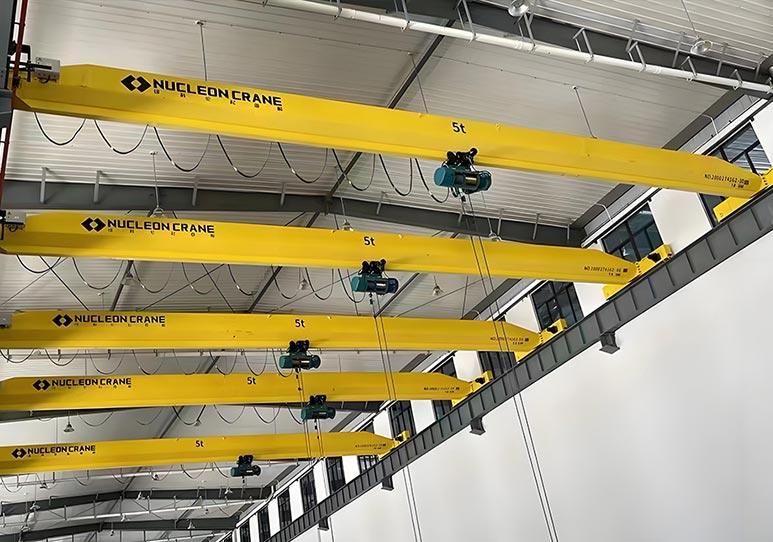

 English
  العربية
  Español
  Français
  Português
  Русский