

If you've come across the term FEM standard electric hoist while sourcing lifting equipment for a European project — or comparing hoist specs from different manufacturers — you're not alone in finding it confusing. FEM, DIN, ISO: the acronyms pile up fast, and the stakes are high. Choose the wrong hoist classification, and you're looking at accelerated wear, unplanned downtime, or worse, a safety incident on the shop floor.
Here's the short answer: a FEM hoist is an electric hoist designed and rated according to specifications published by the Fédération Européenne de la Manutention (FEM), the European materials handling federation. These standards define how a hoist should be engineered, classified, and tested — based on how intensively it will actually be used in real industrial conditions.
This guide walks through what FEM means in practice, how FEM working classes affect your selection decision, how FEM compares to DIN and ISO frameworks, and what to look for when buying a FEM standard electric hoist for industrial use. Whether you're equipping a steel plant, an automotive assembly line, or a general-purpose warehouse, the following sections give you a clear, decision-ready framework.
Table of Contents
What Is FEM — and Why Does It Matter for Electric Hoists?
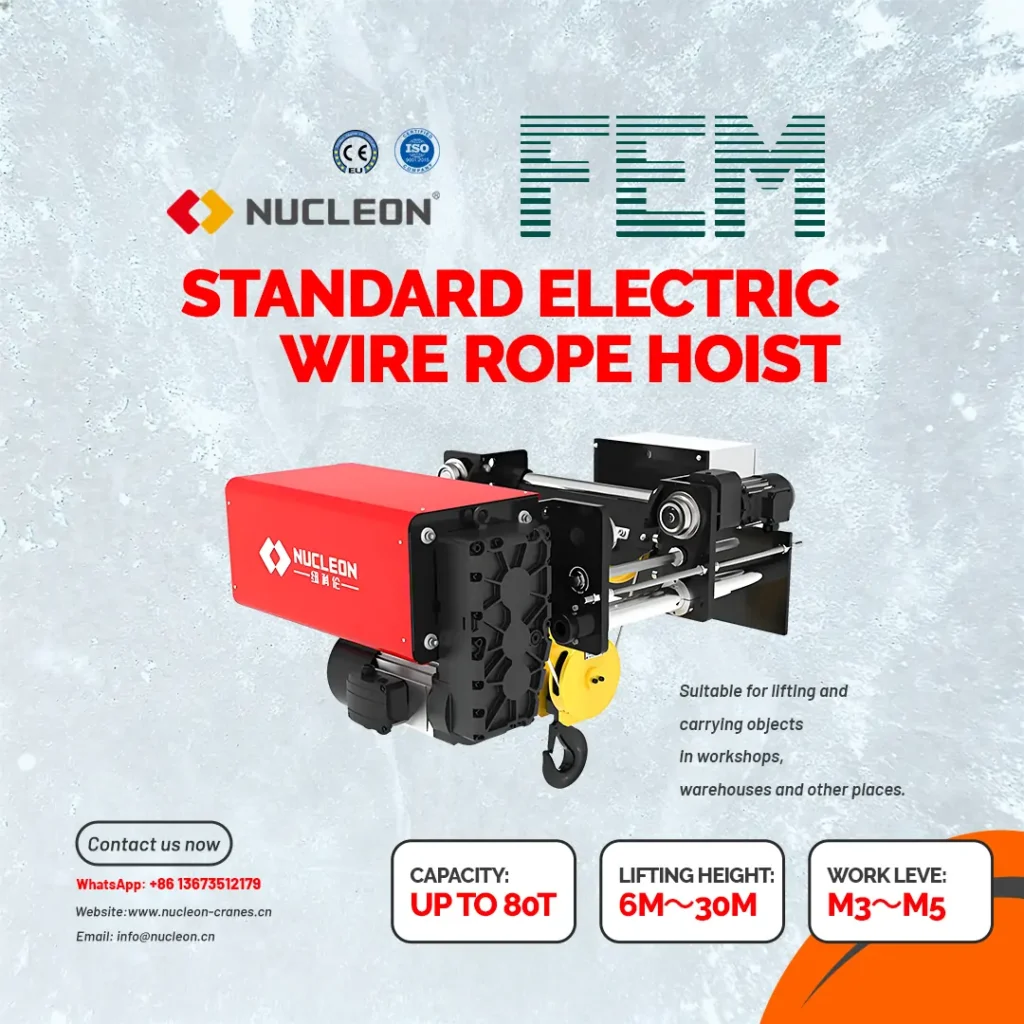
FEM standards for European Materials Handling Federation, the European federation for materials handling, lifting, and storage equipment. Within the FEM framework, Section I covers lifting appliances — including wire rope hoists, chain hoists, and the overhead crane systems they integrate with.
What makes FEM relevant to hoist buyers is its duty-based classification system. Rather than simply specifying motor power or rope diameter, FEM standards require manufacturers to rate their equipment according to how hard it will work over its designed service life. This includes:
- Load spectrum — the distribution of actual loads relative to the rated capacity
- Total number of operating cycles expected over the equipment's lifetime
- Duty cycle — the ratio of running time to total elapsed time
A hoist rated for light, intermittent use is engineered very differently from one expected to lift near its rated capacity dozens of times per shift. FEM formalizes this distinction in a way that directly informs purchasing decisions, maintenance planning, and component fatigue life.
For procurement teams sourcing lifting equipment for European markets or international projects with EU references, understanding FEM hoist specifications is not optional — it's foundational to safe, cost-effective equipment selection.
The History and Origin of FEM Hoist Standards
FEM was established in 1953 and has since developed into one of the most authoritative voices in the European lifting equipment sector. Its technical sections cover everything from industrial trucks to overhead cranes and hoists.
The FEM Section I rules for lifting appliances — particularly FEM 9.511 (rules for the design of serial hoists) and related documents — emerged from the need for a unified European technical framework that could be applied consistently across manufacturers and national markets. Before such harmonization, buyers had to navigate fragmented national standards, making cross-border procurement and equipment comparison difficult.
Over time, FEM hoist standards became deeply integrated with broader EU regulatory frameworks, particularly the EU Machinery Directive (2006/42/EC), which governs the safety of machinery placed on the European market. While FEM standards are not legally mandatory on their own, they provide the technical backbone that many manufacturers use to demonstrate compliance with directive requirements and support CE marking of their equipment.
Today, FEM hoist standards are referenced by major crane and hoist manufacturers across Europe and globally, and are widely recognized as a benchmark for European electric hoist standard design and verification.
FEM vs DIN vs ISO: How FEM Stands Apart
When evaluating hoist specifications, three standards frameworks come up most often: FEM, DIN, and ISO. Each has a distinct origin, scope, and application context. Understanding the differences helps clarify why manufacturers specify one over another — and what it means for your equipment selection.
FEM vs DIN Hoist
DIN stands for Deutsches Institut für Normung, the German national standards organization. DIN standards for cranes and hoists (such as DIN 15020 for wire rope drives) have historically been highly detailed and widely used across German-speaking markets and their trading partners. A FEM hoist vs DIN hoist comparison is not a straightforward "better or worse" question — rather, they represent different levels of scope.
DIN standards often focus on specific components or sub-systems (rope drums, sheaves, hook assemblies), while FEM standards address the entire hoist system as a duty-classified unit. In practice, many European hoist manufacturers design to both frameworks simultaneously, with DIN covering component-level requirements and FEM covering system-level duty classification.
FEM vs ISO Hoist
ISO (International Organization for Standardization) standards such as ISO 4301 cover the classification of cranes and lifting appliances internationally. The ISO classification system uses a similar concept of load spectrum and utilization class, but the grouping and notation differ from FEM.
| Framework | Origin | Scope | Classification System | Key Documents |
| FEM | European (FEM federation) | System-level hoist design and duty rating | Working class M1–M8 (or S1–S10 in some usages) | FEM 9.511, FEM 9.755 |
| DIN | Germany (DIN institute) | Component-level crane/hoist design | Grouped by mechanism groups | DIN 15020, DIN 15400 |
| ISO | International (ISO) | Crane and appliance classification globally | ISO crane groups A1–A8 | ISO 4301-1, ISO 4301-3 |
Sources: FEM Section I publications; ISO 4301-1:1986 (reaffirmed); DIN 15020-1. Cross-reference mapping per FEM 9.511 technical notes.
The key practical difference: FEM is the most commonly referenced standard when European hoist manufacturers publish duty ratings in commercial literature. If a supplier's datasheet shows "FEM 3m" or "Working Class M5," they are using FEM classifications.
Key Features of FEM Standard Electric Hoists
A FEM standard electric hoist is not defined by a single feature but by a combination of design requirements and verified performance characteristics. Here are the most important technical features that distinguish FEM-rated hoists from generic alternatives.
Duty-Rated Design
Every FEM hoist is designed and rated for a defined duty class, which reflects the expected load spectrum and annual operating hours. This is not cosmetic — it determines motor sizing, gearbox construction, rope or chain selection, brake specification, and structural fatigue life. Hoists not designed to a recognized duty standard may carry optimistic load ratings that degrade quickly in real operating conditions.
Load Capacity and Fatigue Strength
FEM hoist specifications require that the hoist structure — including the load hook, rope drum, gearbox housing, and suspension points — be verified for fatigue strength across the expected number of load cycles. This is particularly critical for applications where the hoist operates at varying load levels across many cycles, which describes most real-world material handling environments.
Motor and Brake Specifications
FEM-rated hoists typically incorporate motors specified for the relevant duty cycle, often compliant with IEC 60034 for electric motors. Brake systems are sized to match the motor and load class, with fail-safe design (spring-applied, electrically released) being standard for safety-critical applications.
Integration with Overhead Crane Systems
Most FEM electric hoists are designed to integrate with standard overhead crane systems — either as part of a new crane installation or as a replacement unit. Compliance with FEM standards facilitates this integration by ensuring that the hoist's performance envelope is clearly documented and matched to the crane's duty classification.
Understanding FEM Hoist Working Classes (S1–S10)
The FEM hoist working class system is the most practically important aspect of FEM classification for buyers and engineers. It directly determines which hoist is appropriate for a given application.
How Working Class Is Determined
FEM working class is determined by combining two inputs:
- Load spectrum factor (km) — how the actual loads lifted compare to the hoist's rated capacity. A hoist that always lifts at or near full capacity has a heavier load spectrum than one that mostly handles light loads.
- Total operating time (T) — the expected total number of hours the hoist will operate over its design life.
These two factors together produce a working class designation. The FEM system traditionally uses classifications M1 through M8 for mechanisms, with some literature referencing S-class notations in specific hoist product families.
FEM Working Class Summary
| Working Class | Load Spectrum | Annual Use (hrs) | Typical Application |
| M1 / Light | Very light (km ≤ 0.125) | < 200 | Maintenance bays, occasional use |
| M2 | Light | 200–400 | Workshop hoists, service areas |
| M3 | Light–moderate | 400–800 | General manufacturing, light production |
| M4 | Moderate | 800–1,600 | Regular production, assembly lines |
| M5 | Moderate–heavy | 1,600–3,200 | Heavy manufacturing, frequent cycling |
| M6 | Heavy | 3,200–6,300 | Steel service centers, shift production |
| M7 | Very heavy | 6,300–12,500 | Foundries, continuous industrial use |
| M8 | Extra heavy | > 12,500 | Steel mills, 24/7 heavy-duty operations |
Source: FEM Section I — Rules for the Design of Hoisting Appliances, FEM 9.511. Data reflects standard mechanism group classifications.
Practical Selection Guidance
Selecting a working class below the actual operating requirement is one of the most common mistakes in hoist procurement. It leads to premature component fatigue, more frequent maintenance intervals, and shortened equipment life. When in doubt, specify the next class up. The incremental cost is typically much lower than unplanned downtime or early replacement.
Where Are FEM Standard Electric Hoists Used?
FEM hoist application areas span a wide range of industrial sectors. The standard's flexibility — covering light workshop hoists through heavy foundry equipment — makes it applicable across most industrial lifting contexts.
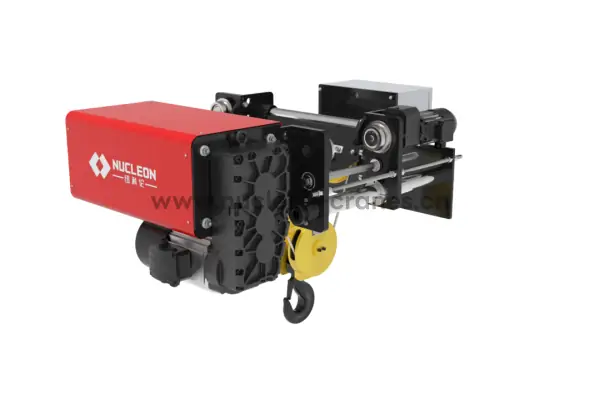
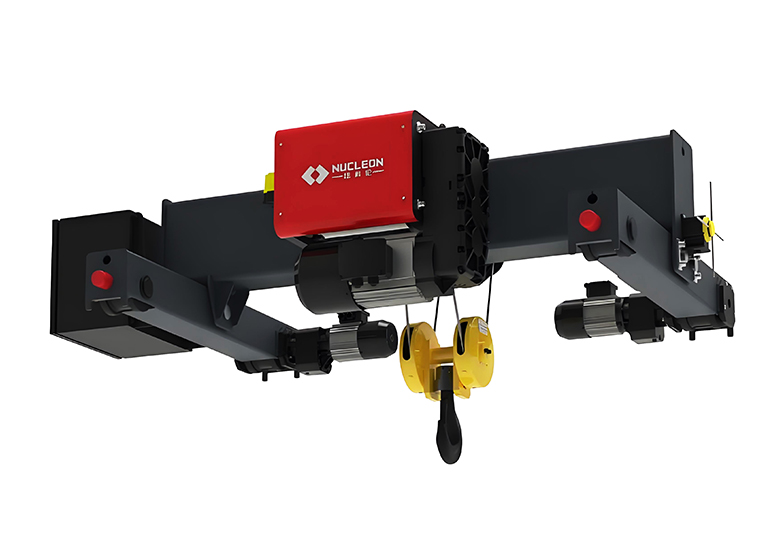
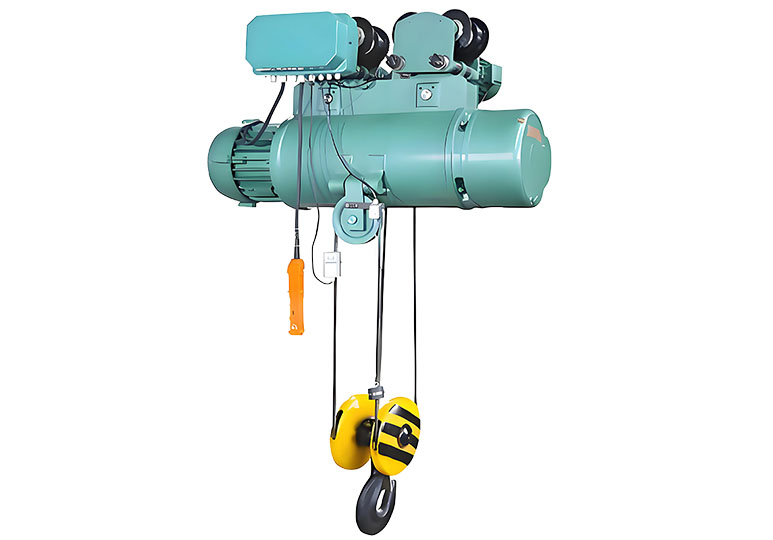
FEM Standard Electric Wire Rope Hoist
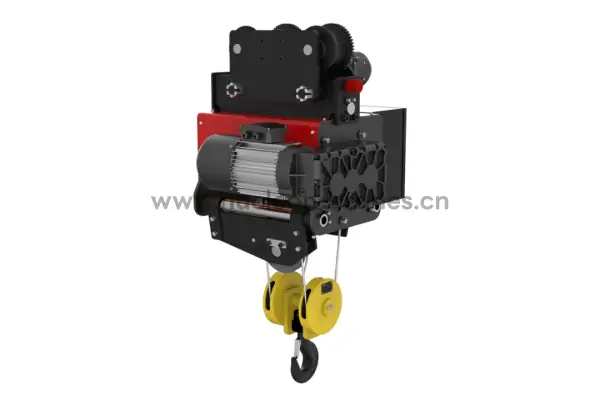
FEM Standard Low-headroom Electric Hoist
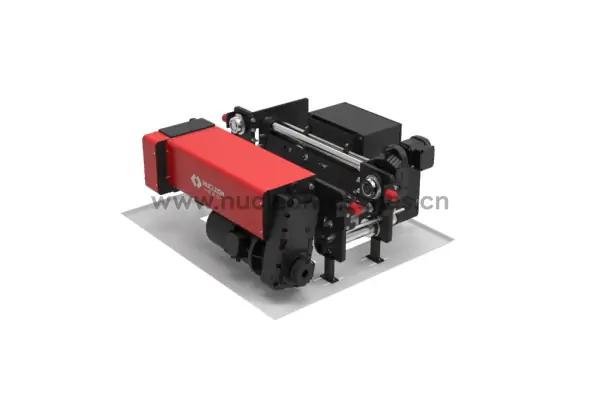
FEM Standard Metallurgical Hoist
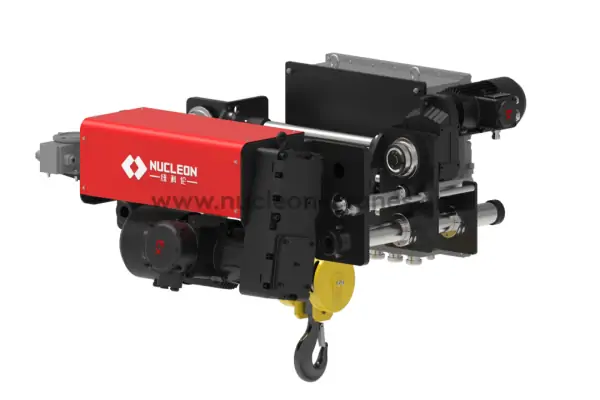
FEM Standard Explosion-proof Electric Hoist
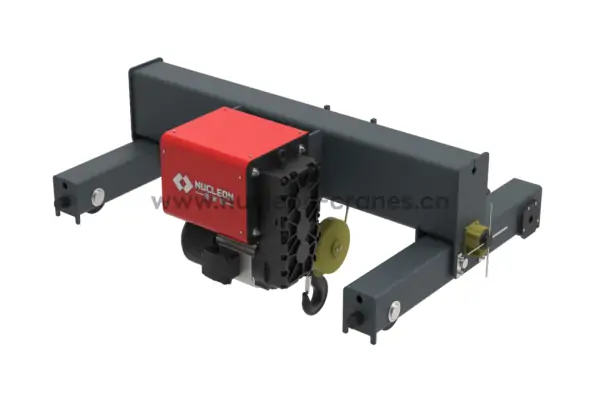
FEM Standard Electric Hoist Trolley
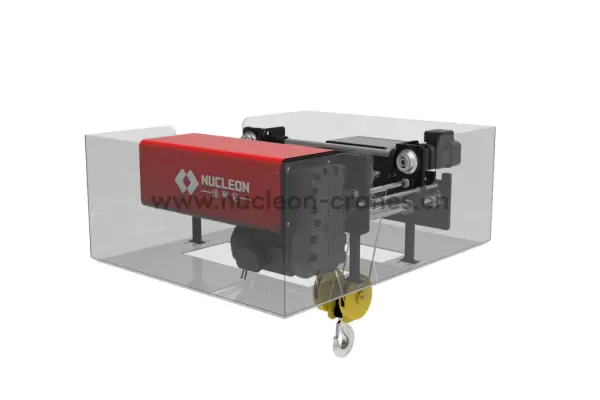
FEM Standard Electric Hoist Cleanroom
Automotive manufacturing: Assembly lines require hoists that perform thousands of cycles per shift across consistent load profiles. FEM M4–M5 class wire rope hoists are typical in body-in-white and powertrain assembly areas.
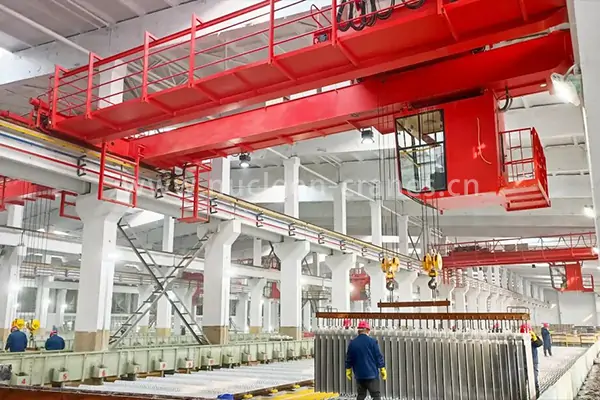
Steel and metals processing: This is among the most demanding environments for lifting equipment. Steel service centers and rolling mills often specify M6–M8 class hoists capable of handling coils, billets, and slabs at or near rated capacity across continuous operating schedules.
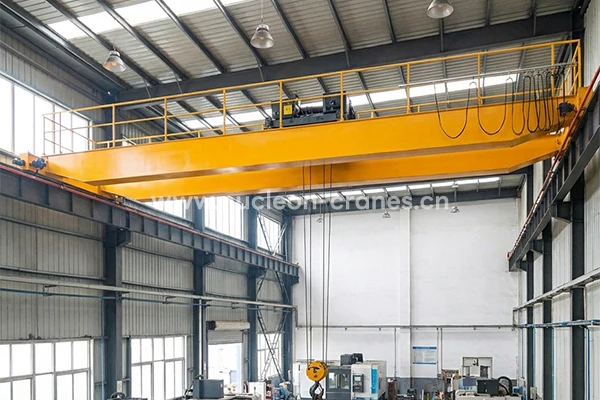
General engineering and fabrication: Workshops handling mixed loads at moderate frequency typically specify M3–M4 class chain hoists or wire rope hoists. These represent the broadest segment of FEM hoist installations globally.
Logistics and warehousing: For facilities using overhead cranes for loading dock operations or heavy pallet handling, M2–M3 class hoists are common. The relatively lower duty requirement reflects intermittent use patterns.
Energy and process industries: Power plants, chemical facilities, and offshore platforms often specify FEM-rated hoists for maintenance and construction support. The traceable duty classification supports safety case documentation in regulated environments.
FEM Standard vs CE Certification — What's the Connection?
A common point of confusion is the relationship between FEM standard compliance and CE marking. These are related but distinct concepts, and understanding the difference matters for procurement and compliance documentation.
CE marking is a legal requirement under the EU Machinery Directive (2006/42/EC) for machinery placed on the European market. It indicates that the manufacturer has declared conformity with applicable essential health and safety requirements. For electric hoists, CE marking is mandatory for sale in EU member states and several other countries that have adopted the directive.
FEM standards, by contrast, are voluntary technical standards. However, they are frequently used as part of the technical file that supports a CE declaration of conformity. When a manufacturer states that their hoist is designed and tested in accordance with FEM 9.511, they are providing evidence that the equipment meets a recognized technical benchmark — which in turn supports the CE marking process.
In short: CE marking is the legal label; FEM standard compliance is part of the technical foundation that makes that label credible. For buyers, a hoist that carries both CE marking and documented FEM classification is significantly better evidenced than one with CE marking alone.
Buyers operating outside the EU should also note that FEM-rated hoists are increasingly referenced in international project specifications, particularly in industries with European supply chain connections or where engineering contractors apply EU standards as their design basis.
How to Choose the Right FEM Standard Electric Hoist
Selecting the right FEM standard electric hoist involves matching equipment specification to actual operating conditions — not simply buying the hoist with the highest rated capacity available. Here is a practical selection framework.
Step 1 — Define the load profile
Document the range of loads the hoist will lift, not just the maximum. If 80% of lifts are at less than half the rated capacity, your load spectrum is lighter than if the hoist routinely works near its maximum. This directly influences the working class calculation.
Step 2 — Estimate annual operating hours
Consider how many hours per year the hoist will be running — not just how many shifts the facility operates. A hoist in a fabrication shop that is only active for a portion of each shift may accumulate far fewer operating hours than its shift schedule suggests.
Step 3 — Determine the required working class
Use the load spectrum and operating hours to identify the appropriate FEM mechanism group (M1–M8). When operating conditions are uncertain, move up one class. The cost differential between adjacent classes is typically modest.
Step 4 — Specify the hoist type
Wire rope hoists generally suit higher capacity and longer lift height requirements. Chain hoists are practical for lower capacities and where compact headroom is important. Both are available in FEM-rated configurations from major European hoist manufacturers.
Step 5 — Verify certifications and documentation
Confirm that the supplier can provide a Declaration of Conformity, CE marking documentation, and a technical file that references the relevant FEM standard. For regulated industries or large capital projects, independent verification of FEM classification may be appropriate.
Step 6 — Consider total cost of ownership
A higher-class hoist costs more upfront but typically delivers lower maintenance frequency and longer component life. For applications running two or three shifts per day, the payback on a correctly specified hoist can be measured in reduced downtime within the first two to three years of operation.
Summary
A FEM standard electric hoist is industrial lifting equipment engineered and rated according to the European FEM classification framework, which defines duty classes based on load spectrum and annual operating time. The system — ranging from M1 for light, infrequent use to M8 for continuous heavy-duty industrial applications — provides buyers with a reliable, documented basis for matching hoist specification to real operating conditions.
Key takeaways for procurement teams:
- FEM working class is determined by load spectrum and operating hours — not just lifting capacity.
- FEM compliance supports CE marking but is a separate, voluntary technical standard.
- FEM and DIN frameworks are often complementary; FEM covers the system, DIN covers components.
- Underspecifying working class is a common and costly mistake; when in doubt, go one class higher.
- Always request Declaration of Conformity documentation alongside FEM classification evidence.
For complex projects or high-duty applications, engaging a hoist manufacturer's technical team early in the specification process will yield better outcomes than selecting from a catalog alone.
Frequently Asked Questions
What does FEM stand for in hoist standards?
FEM stands for European Materials Handling Federation, the European federation for materials handling and lifting equipment. Within the FEM framework, Section I covers the design and classification of lifting appliances including electric hoists, wire rope hoists, and chain hoists. The FEM classification system defines working classes based on duty intensity — combining load spectrum and operating hours — to ensure hoists are correctly specified for their intended application. For buyers, "FEM standard" on a hoist datasheet indicates the equipment has been designed and rated according to this European framework, which is widely recognized across EU and international markets.
What is the difference between FEM and DIN hoist standards?
FEM and DIN are complementary rather than competing standards. FEM (European federation standard) addresses the hoist as a complete system, defining duty classifications (M1–M8) based on how intensively the equipment will be used over its service life. DIN (German national standards) traditionally focuses on component-level specifications — rope drives, hooks, sheaves — with detailed dimensional and material requirements. Many European hoist manufacturers design to both simultaneously: DIN governs individual components, FEM governs the overall duty rating of the assembled hoist. For most procurement purposes, the FEM working class on the datasheet is the more directly actionable specification for matching hoist to application.
How is FEM hoist working class determined?
FEM working class (M1 through M8) is determined by two factors: the load spectrum, which reflects how actual lifted loads compare to the hoist's rated capacity; and the total operating time in hours over the equipment's design life. Light load spectrum combined with few annual operating hours yields a lower class (M1–M3), suitable for workshops or maintenance use. Heavy load spectrum combined with high annual operating hours yields a higher class (M6–M8), appropriate for foundries, steel mills, and continuous industrial operations. Manufacturers calculate the working class during the design phase and publish it in the hoist's technical documentation.
Does a FEM standard hoist automatically meet EU safety requirements?
Not automatically, but FEM standard compliance is a strong supporting factor. The EU Machinery Directive (2006/42/EC) sets the legal safety requirements for machinery sold in European markets, and CE marking is the required conformity label. FEM standards are voluntary technical standards that manufacturers use to demonstrate their engineering approach meets recognized benchmarks — which in turn supports the CE marking declaration. A hoist with documented FEM compliance and CE marking has a well-evidenced safety basis. Buyers should always request the Declaration of Conformity and verify that it references specific applicable directives and standards.
What industries use FEM standard electric hoists most commonly?
FEM standard electric hoists are used across a broad range of industries wherever reliable, classifiable lifting equipment is required. The heaviest users include steel and metals processing (M6–M8 class), automotive manufacturing (M4–M5), general engineering and fabrication (M3–M4), energy and process industries (variable, typically M3–M5 for maintenance applications), and logistics and warehousing (M2–M3). The FEM classification system's range from light workshop duty through 24/7 heavy industrial use makes it applicable across essentially all sectors that use overhead crane and hoist systems for material handling.
Is FEM standard recognized globally?
FEM standards originated in Europe and remain the primary reference framework for the European market. However, they are widely recognized internationally, particularly in industries with European supply chain connections or where engineering contractors use EU standards as their design basis. In regions where ISO crane standards (ISO 4301) are the formal reference, FEM-classified equipment is generally considered equivalent for specification purposes, as the two frameworks share similar conceptual foundations. Major hoist manufacturers operating globally typically publish both FEM and ISO classifications in their technical literature to serve both markets.

 English
  العربية
  Español
  Français
  Português
  Русский