Choosing the wrong 120 ton crane can cost your operation hundreds of thousands of dollars — in lost productivity, unexpected maintenance, and costly re-procurement. Whether you are sourcing a 120 ton bridge crane for a steel fabrication shop, a 120 ton gantry crane for an outdoor yard, or a 120 ton port crane for container handling, the selection process is far more nuanced than simply matching a load number.
This guide cuts through the complexity. It gives procurement managers, project engineers, and operations directors a practical, data-backed framework for evaluating, comparing, and purchasing a 120 ton crane in 2026. You will find real technical parameters, verifiable price benchmarks, supplier assessment criteria, and common buying mistakes — all organized to support faster, more confident decisions.
Core conclusion up front: A 120 ton crane is not a commodity. The right choice depends on your duty cycle, span requirements, operating environment, and long-term maintenance capability. Read on to understand exactly how to match those factors to the right crane type and supplier.
Table of Contents
- 1. Understanding Your Application: Which 120 Ton Crane Type Do You Need?
- 2. Technical Specifications: What the Numbers Actually Mean
- 3. Price and Cost: What Does a 120 Ton Crane Actually Cost?
- 4. Supplier Evaluation: How to Qualify a 120 Ton Crane Manufacturer
- 5. Procurement Process: A Practical Step-by-Step Approach
- 6. Case Reference: Shipyard 120 Ton Bridge Crane Installation
- 7. Frequently Asked Questions (FAQ)
- Q1: What is the typical price of a 120 ton crane in 2025-2026?
- Q2: What certifications should a 120 ton crane manufacturer provide?
- Q3: What is the difference between a 120 ton bridge crane and a 120 ton gantry crane?
- Q4: How long does it take to receive a 120 ton crane after placing an order?
- Q5: Can I get financing options when I buy a 120 ton crane?
- Summary & Action Checklist
1. Understanding Your Application: Which 120 Ton Crane Type Do You Need?
Before evaluating any 120 ton crane for sale, you must define your application with precision. The three dominant crane types at this capacity — bridge cranes, gantry cranes, and port cranes — are not interchangeable. Each has structural, operational, and cost profiles suited to specific environments.
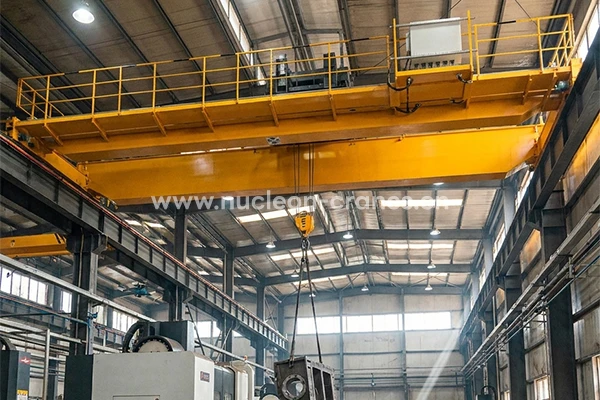
1.1 120 Ton Bridge Crane (Overhead Crane)
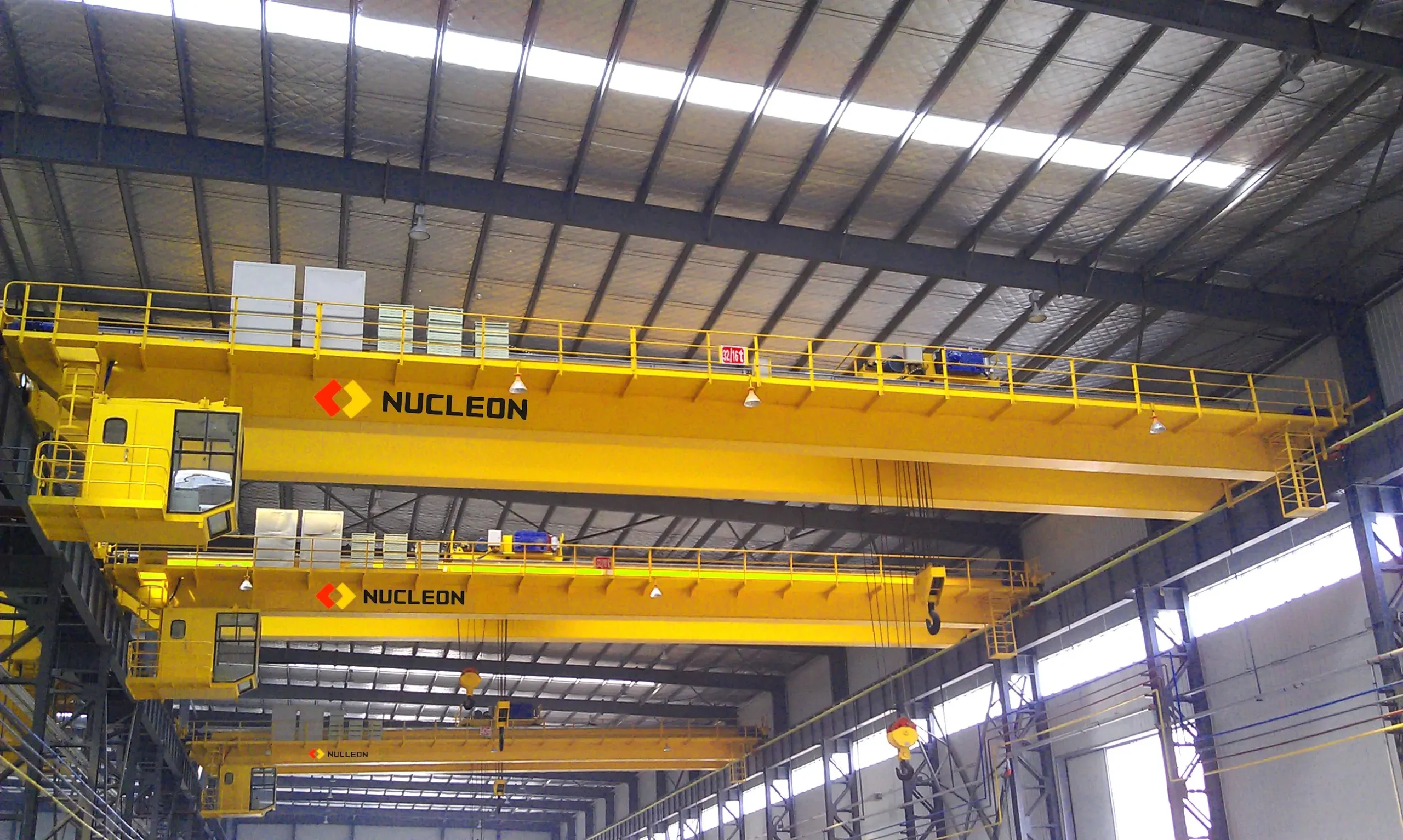
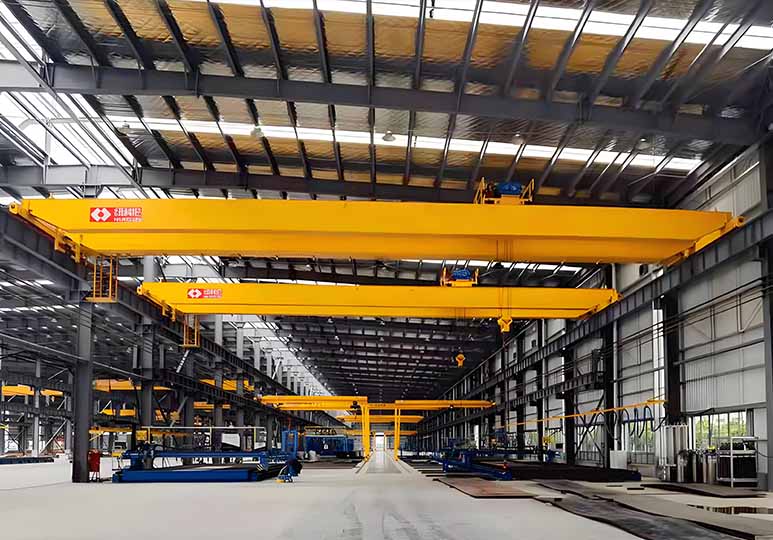
A 120 ton bridge crane, also called a 120 ton overhead crane, is mounted on elevated runway rails fixed to the building structure. It is the preferred solution for enclosed industrial facilities — steel plants, heavy machinery assembly shops, power generation equipment manufacturers, and shipbuilding indoor bays.
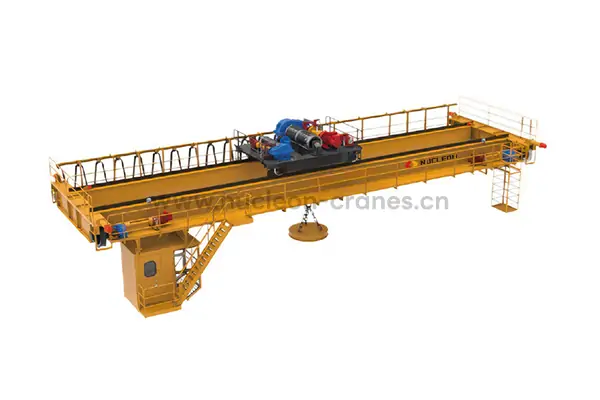
Double girder bridge crane configurations are standard at this capacity. Single girder designs are not structurally practical at 120 tons. The double girder layout provides the required rigidity, hook clearance, and hoist mounting flexibility for heavy-duty operation.
Key application signals: Indoor facility with structural capacity to support runway rails; duty cycle FEM/ISO M5-M8; required lifting height above 12 meters; span exceeding 20 meters.
1.2 120 Ton Gantry Crane
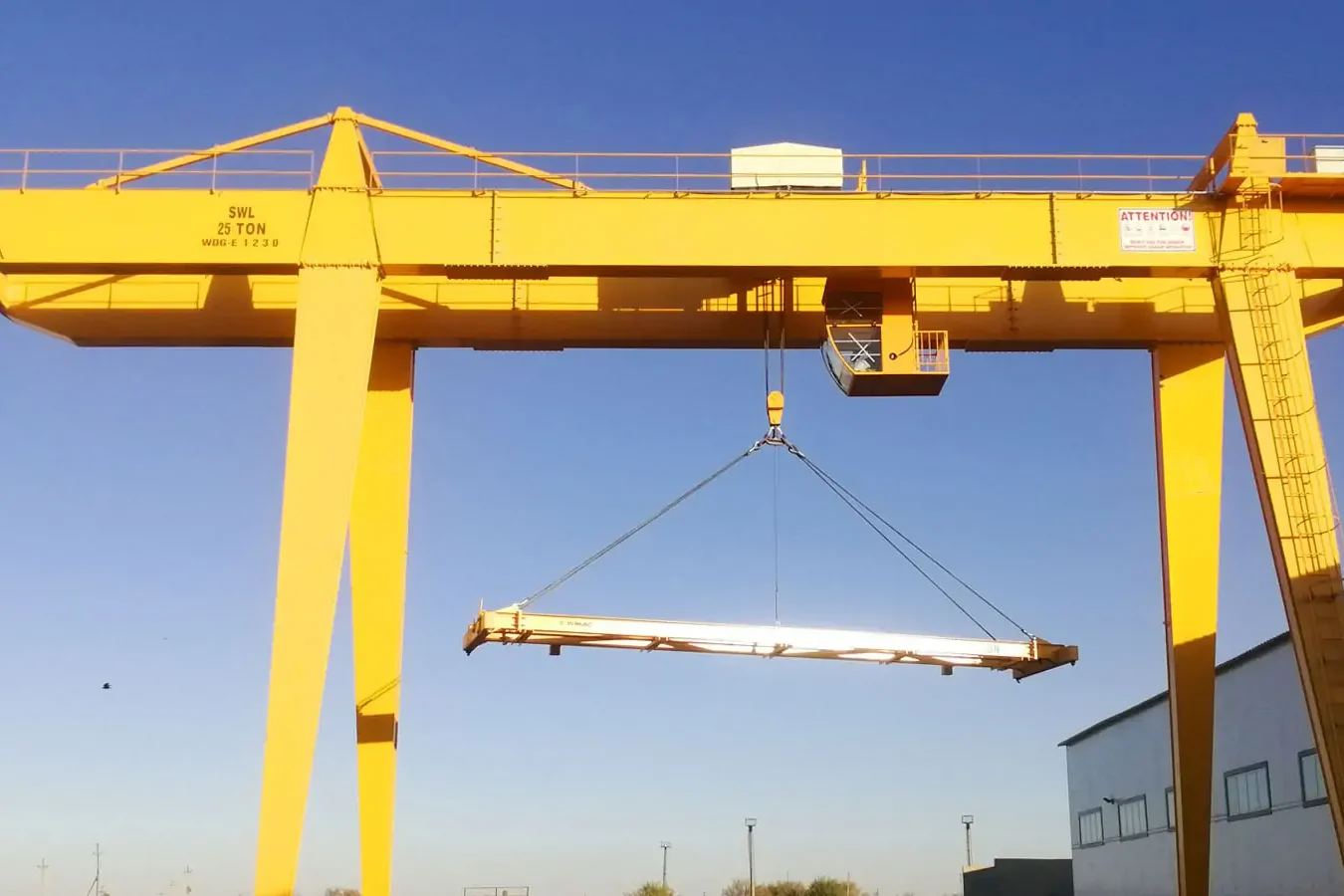
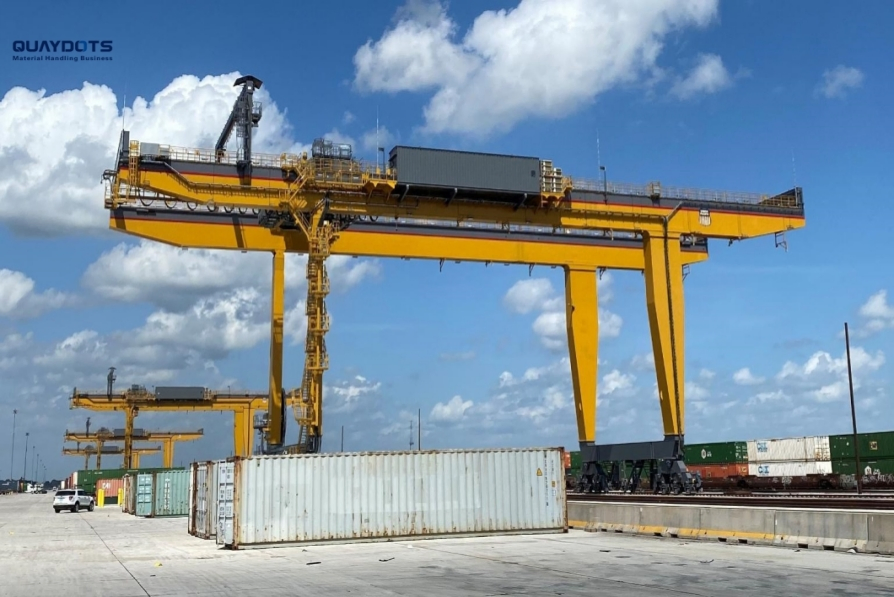
A 120 ton gantry crane is a self-supporting structure that travels on ground-level rails. It does not require a host building structure, making it the standard choice for open storage yards, prefabrication areas, shipyard blocks, and precast concrete facilities.
Double leg gantry and single leg (semi-gantry) configurations are both available at 120 tons. Double leg gantry cranes offer greater stability for outdoor environments. Single leg gantry cranes are used where one side of the structure must travel on an elevated runway inside a building while the other side operates outdoors.
Key application signals: Outdoor or semi-outdoor operation; no suitable building structure; span 18-35 meters; wind load design requirement; rail-mounted ground travel.
1.3 120 Ton Port Crane
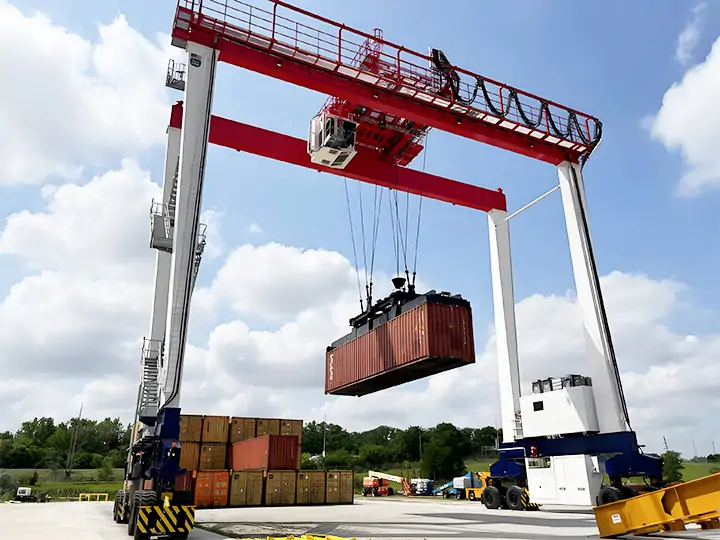
Port cranes at 120 tons serve marine and logistics environments. The category includes ship-to-shore (STS) cranes for container operations, rubber-tired gantry (RTG) cranes for container yard stacking, rail-mounted gantry (RMG) cranes for intermodal rail yards, and dockside cranes for bulk cargo and general cargo handling.
Key application signals: Container handling or bulk cargo; marine environment corrosion requirements; high-cycle duty (FEM M7-M8); 24/7 operational availability requirement; port authority compliance.
| Crane Type | Typical Span | Typical Lifting Height | Primary Environment | Duty Class (FEM) |
| 120T Bridge Crane | 10 – 35 m | 6 – 24 m | Indoor industrial | M5 – M8 |
| 120T Gantry Crane | 18 – 40 m | 8 – 20 m | Outdoor / semi-open | M5 – M7 |
| 120T Port Crane (STS/RMG) | 30 – 60 m+ | 15 – 40 m | Port / marine | M7 – M8 |
| 120T RTG Crane | 6+1 rows | 1 over 4 stack | Container yard | M7 – M8 |
Source: FEM 1.001 Heavy Lifting Equipment Standard (2021 revision); ISO 4301-1 Crane Classification; manufacturer technical specifications 2023-2025.
2. Technical Specifications: What the Numbers Actually Mean
A 120 ton crane specification sheet contains dozens of parameters. Procurement teams often focus exclusively on the rated capacity and overlook specifications that have a direct impact on operational efficiency and total cost of ownership.
2.1 Rated Capacity vs. Working Load Limit
The rated capacity of 120 tons refers to the maximum load the crane can safely lift under defined conditions — typically at the minimum working radius or at the center of the hook. Working load limit (WLL) applies a safety factor defined by ISO 4308-1 and is the figure that governs actual operation. Ensure your supplier's documentation distinguishes clearly between rated capacity, WLL, and load chart values at extended radii.
2.2 Span and Lift Height
Span determines how far apart your runway rails or gantry legs are positioned, and directly affects the crane's dead weight, girder design, and deflection under load. ISO 12488-1 specifies crane structural performance requirements including deflection limits — typically L/700 to L/1000 for the main girder under full load. Request certified deflection data from your supplier, not estimates.
Lifting height affects hoist drum design, wire rope length, and motor size. Specifying lifting height 10-15% above your actual operational need is a practical buffer that avoids operational restrictions as your facility evolves.
2.3 Hoist Speed, Travel Speed, and Duty Cycle
These three parameters determine your actual throughput. A crane with a 5 m/min hoist speed and a 120-meter runway will move significantly fewer tons per shift than the same crane at 15 m/min. Duty cycle classification (FEM M5 through M8) sets the design life in operating hours and load spectrum — specifying too low a duty class for your actual operation is one of the most common and costly procurement errors.
| Parameter | Typical Range (120T Bridge) | Typical Range (120T Gantry) | Standard Reference |
| Hoist Speed | 1 – 8 m/min | 1 – 6 m/min | ISO 4308-1 |
| Long Travel Speed | 10 – 40 m/min | 10 – 30 m/min | FEM 1.001 |
| Cross Travel Speed | 5 – 20 m/min | 5 – 15 m/min | FEM 1.001 |
| Girder Deflection Limit | ≤ L/800 (typical) | ≤ L/700 (typical) | ISO 12488-1 |
| Design Life (M6) | ~200,000 cycles | ~200,000 cycles | FEM 1.001 |
| Power Supply (typical) | 6 – 10 kW (hoist) | 8 – 15 kW (hoist) | IEC 60034 |
Source: ISO 4308-1 (2018), ISO 12488-1 (2012, confirmed 2022), FEM 1.001 4th Edition (2021), IEC 60034 Series. Values are indicative ranges for 120-ton class; project-specific designs may vary.
3. Price and Cost: What Does a 120 Ton Crane Actually Cost?
The 120 ton crane price varies substantially based on type, configuration, drive system, geographic origin, and supply chain conditions. This section provides realistic benchmarks sourced from market data and published industry reports — not marketing estimates.
3.1 Purchase Price Ranges (2024-2026 Market)
Chinese-manufactured 120 ton bridge cranes from established manufacturers (Nucleon, ZPMC sub-suppliers, Henan-based OEMs) typically range from USD 90,000 to USD 250,000 FOB, depending on span, lift height, duty class, and control system specification. European-manufactured equivalents from suppliers such as Konecranes or Demag range from USD 300,000 to USD 1,000,000 or above for similar configurations.
A 120 ton gantry crane for sale carries a price premium over an equivalent bridge crane, typically 15-25%, due to the structural steel requirements of the self-supporting legs and travel system.
Port cranes — STS, RMG, or RTG at 120-ton class — are full engineering projects. Indicative prices for RMG cranes start at USD 1,000,000 per unit. STS cranes can range from USD 4,000,000 to USD 12,000,000+ depending on outreach, automation level, and port specifications.
3.2 Total Cost of Ownership: Beyond the Purchase Price
Purchase price typically represents 30-45% of the total 10-year cost of ownership for a heavy-duty 120-ton crane. The remaining costs include installation, commissioning, operator training, scheduled maintenance, wear-part replacement (wire ropes, hoisting blocks, wheels, brakes), electrical system maintenance, and eventual refurbishment.
Wire rope replacement on a 120-ton crane is not a minor maintenance item. A single set of load-bearing ropes for a 120-ton hoist can cost USD 8,000-20,000, and replacement frequency depends directly on duty cycle and rope inspection practices conforming to ISO 4309.
| Crane Type | Purchase Price Range (FOB) | Est. Annual Maintenance Cost | Typical Design Life |
| 120T Bridge Crane (China OEM) | USD 100K – 350K | USD 4K – 10K/year | 20 – 30 years |
| 120T Bridge Crane (EU Brand) | USD 300K – 1.0M | USD 9K – 20K/year | 25 – 35 years |
| 120T Gantry Crane (China OEM) | USD 180K – 350K | USD 5K – 15K/year | 20 – 30 years |
| 120T RMG Port Crane | USD 1M – 4M+ | USD 40K – 100K/year | 25 – 40 years |
| 120T STS Port Crane | USD 4M – 15M+ | USD 150K – 400K/year | 30 – 40 years |
Source: ZPMC Annual Report 2023; ChinaHeavyLift Market Report 2024; Konecranes Annual Report 2023; industry procurement data compiled 2024-2025. Port crane figures are indicative; actual pricing subject to project specifications.
4. Supplier Evaluation: How to Qualify a 120 Ton Crane Manufacturer
The supplier you choose determines not just the crane you receive, but your parts availability, service response time, and safety risk exposure for the next 20-30 years. At 120 tons, supplier qualification is not optional — it is a risk management imperative.
4.1 Certifications and Standards Compliance
For export markets, verify CE marking (EU Machinery Directive 2006/42/EC) or equivalent national certification. ISO 9001 quality management certification is a baseline requirement, not a differentiator. For cranes operating in hazardous environments, ATEX certification is mandatory.
For port cranes, FEM and ISO compliance is insufficient — verify alignment with ASME B30 series (North America), EN 13001 series (Europe), or OSHA 1910.179 (US overhead cranes), depending on the destination country's regulatory framework.
4.2 Factory Audit and Reference Verification
Any credible 120 ton crane supplier should welcome a factory audit or provide a comprehensive audit package including production capacity data, welding procedure qualifications (ISO 15614-1), NDT test records, and load test documentation. Request references from at least three installed projects with similar capacity and application — and verify them by contacting the end users directly, not through the supplier.
4.3 After-Sales Support Structure
Spare parts availability at year 10 and year 20 is as important as crane quality at year 0. Establish contractually: spare parts availability commitment period (minimum 15 years recommended); response time for critical spare parts supply; local service representative or authorized service partner in your region; remote diagnostic capability.
5. Procurement Process: A Practical Step-by-Step Approach
Buying a 120 ton crane is a project, not a purchase order. Procurement teams that treat it as a commodity transaction typically pay 20-35% more over the crane's lifetime due to avoidable errors in specification, supplier selection, and contract structuring.
5.1 Define Your Technical Specification Before Contacting Suppliers
Prepare a formal technical specification document covering: rated capacity and duty class; span, lifting height, and travel distances; operating environment (indoor/outdoor, temperature range, altitude, seismic zone); power supply specification; control system requirements (cabin, remote, semi-automated); applicable standards and certifications. Share this document with all shortlisted suppliers. Vague inquiries produce non-comparable quotations.
5.2 Request for Quotation Structure
Structure your RFQ to require a technical compliance matrix — a table in which the supplier confirms compliance or states deviation for each technical requirement. This is the single most effective tool for comparing quotations that use different terminology and specification levels. Require that all quotations include: load test procedure and certification; installation and commissioning scope; training scope; warranty terms; spare parts list and pricing.
5.3 Contract Key Clauses
Include performance guarantees with measurable acceptance criteria (tested at load test, not theoretical). Define liquidated damages for delivery delay. Establish clear payment milestones tied to verified project milestones (design approval, factory acceptance test, delivery, site acceptance test). Retain 5-10% of contract value until site acceptance test completion.
6. Case Reference: Shipyard 120 Ton Bridge Crane Installation
Scenario type: Heavy industrial / shipbuilding. A South Korean shipyard expansion project required two 120-ton double girder bridge cranes with 32-meter span, 24-meter lift height, and FEM M7 duty class for block assembly operations. The procurement team shortlisted five manufacturers across China, South Korea, and Finland.
The final selection was a Chinese manufacturer (Nucleon Crane Group) on the basis of: CE-certified design; verifiable M7 duty class documentation; factory audit confirming welding qualification to ISO 15614-1; competitive lead time of 16 weeks vs. 28-36 weeks for European alternatives; price differential of approximately 45% below European quotations at equivalent specification.
The case is publicly referenced in Nucleon's project portfolio. Key lesson: At 120-ton capacity, Chinese manufacturers can now supply documentation and quality levels that meet international standards for many industrial applications. European suppliers retain an advantage in automated, high-cycle port applications and in markets with strict local certification requirements.
7. Frequently Asked Questions (FAQ)
Q1: What is the typical price of a 120 ton crane in 2025-2026?
A 120 ton bridge crane from a Chinese manufacturer typically costs between USD 90,000 and USD 250,000 FOB, depending on span (10-35 m), lifting height, duty class (M5-M8), and control system. Gantry crane configurations are 15-25% higher due to additional structural steel. European-manufactured cranes in the same capacity class start at approximately USD 150,000 and can exceed USD 1,000,000. Port cranes (RMG, STS) are full engineering projects priced from USD 1,000,000 to USD 15,000,000+. Always request a formal quotation based on your specific technical specification rather than relying on range estimates.
Q2: What certifications should a 120 ton crane manufacturer provide?
For European and international markets, CE certification to the EU Machinery Directive 2006/42/EC is the primary requirement. ISO 9001 quality management certification is a baseline expectation. For specific applications, additional certifications apply: ATEX for explosive environments, FEM and EN 13001 for structural design compliance, ISO 4309 for wire rope inspection requirements, and ASME B30 standards for North American operations. Always request test certificates for load testing, weld inspection (NDT records per EN ISO 9712), and electrical compliance (IEC standards). A supplier who cannot provide these documents in response to a documented request should be disqualified.
Q3: What is the difference between a 120 ton bridge crane and a 120 ton gantry crane?
A 120 ton bridge crane (overhead crane) is supported by and travels on runway rails attached to the building structure. It requires an adequately designed building with sufficient column spacing, height, and load-bearing capacity for the crane runway. A 120 ton gantry crane is a self-supporting structure on ground-level rails. It does not require a building for support. Bridge cranes typically offer better hook coverage area and lower headroom loss. Gantry cranes are better suited for outdoor operations and facilities without suitable building structures. Cost-wise, gantry cranes carry a 15-25% structural premium over equivalent bridge cranes due to leg construction.
Q4: How long does it take to receive a 120 ton crane after placing an order?
Lead time for a 120 ton crane varies significantly by type and manufacturer. Chinese manufacturers typically quote 12-20 weeks for standard bridge and gantry cranes, with complex configurations or larger spans extending to 24 weeks. European manufacturers typically require 28-40 weeks. Port cranes (STS, RMG, RTG) are engineered-to-order products with lead times of 12-24 months from order confirmation to delivery. These timelines assume all technical approvals are completed promptly. Factor in sea freight time (typically 3-6 weeks for Asia-to-destination) and installation time (2-6 weeks for bridge/gantry, several months for port cranes) in your project schedule.
Q5: Can I get financing options when I buy a 120 ton crane?
Yes. Financing options for a 120-ton crane include: China Export-Import Bank or commercial bank tools (LCs, deferred payment of 30–180 days), ECA-backed project financing for larger port cranes, equipment leasing, and lease-to-own structures. When comparing offers, assess total all-in cost—interest, insurance, currency risk, and bank fees—not just the interest rate.
Summary & Action Checklist
Buying a 120 ton crane is a long-term capital commitment. The decisions made at the specification and supplier selection stage determine operational performance for two to three decades. Use this checklist before issuing your purchase order:
- Choose crane type (bridge/gantry/port) for your environment
- Specify duty class (FEM M5–M8) based on actual use, not minimum
- Verify certifications: CE, ISO 9001, NDT records, load test docs
- Use a technical compliance matrix to compare bids
- Audit unfamiliar suppliers, or request a factory audit
- Check references—speak directly with users of similar cranes
- Include performance guarantees and liquidated damages
- Confirm spare parts availability for 15+ years
- Calculate total cost of ownership, not just purchase price
For complex or multi-crane projects, hire an independent crane engineer. On a $400,000 crane, the fee typically pays for itself in the first round of negotiation.

Equipment Specialist
Accomplished Crane Business Manager with extensive experience in heavy lift project management and operational oversight. Proven track record of driving revenue growth and ensuring safety compliance.



 English
  العربية
  Español
  Français
  Português
  Русский