

What Every Procurement Manager Needs to Know Before Placing an Order
If you are responsible for sourcing material handling equipment in 2026, the straddle carrier market is moving faster than most buyers expect. Unit prices have climbed, lead times remain stretched in certain regions, and the technology gap between entry-level and premium models has never been wider. Waiting for the market to "settle down" before making a decision is itself a decision — and often a costly one.
This article cuts through the noise and gives you a grounded view of where straddle carrier prices are heading, which regional markets are gaining momentum, what OEM manufacturers are doing to stay competitive, and how total cost of ownership (TCO) should anchor your selection process. Whether you manage a container terminal, a timber yard, or a large-scale distribution hub, the data and frameworks here will help you buy smarter in 2026.
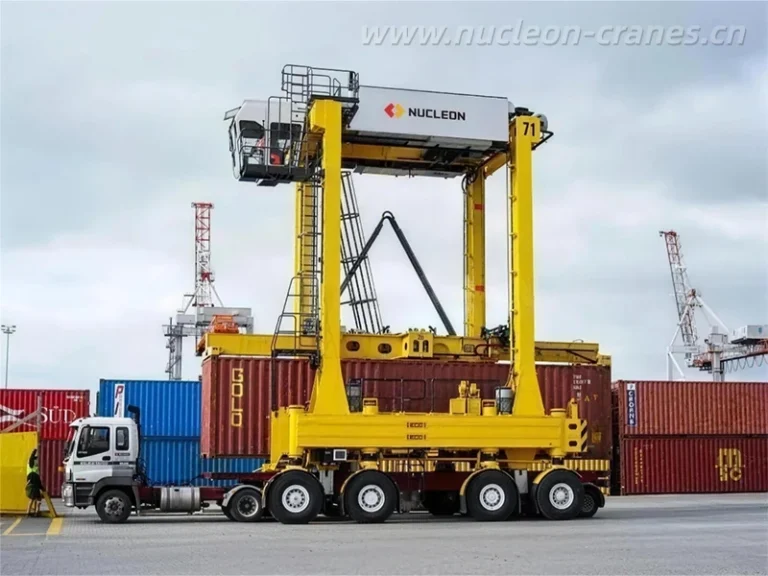
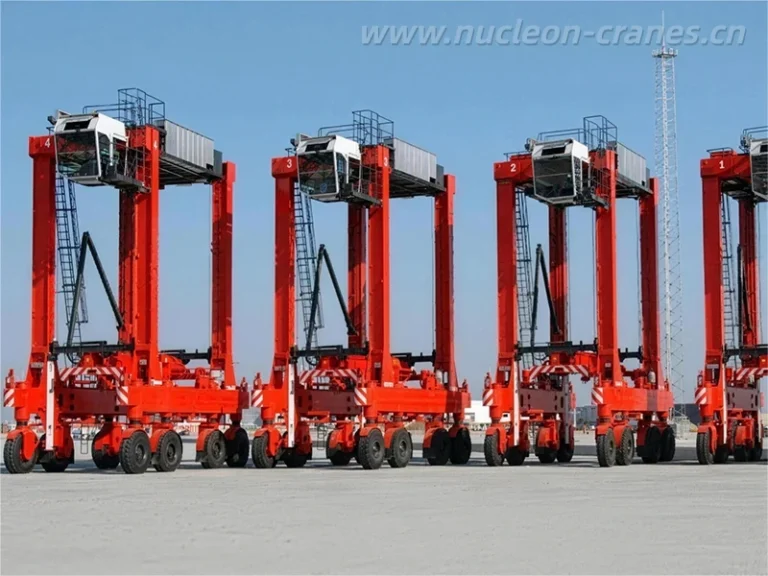
Table of Contents
1. Straddle Carrier Market Overview: Where the Industry Stands in 2026
The global straddle carrier market entered 2026 on a recovery-and-growth trajectory shaped by two forces pulling in opposite directions: surging demand for logistics automation and persistent pressure on supply chain resilience following years of global disruption. The result is a market that rewards prepared buyers and punishes those who rely on outdated pricing assumptions.
According to market intelligence published by industry research firms in 2024–2025, the global material handling equipment market — of which straddle carriers represent a significant segment — was valued at approximately USD 230 billion in 2024, with a projected compound annual growth rate (CAGR) of 5.5–6.2% through 2028 (Source: Grand View Research, Material Handling Equipment Market Report, 2024). Straddle carrier equipment, particularly heavy-duty and automated variants, is tracking above the broader segment average due to port infrastructure investment cycles in Asia-Pacific and Europe.
1.1 Key Demand Drivers in the Straddle Carrier Industry
Three structural factors are sustaining demand in 2026:
- Port modernization programs: Government-backed terminal upgrades across Southeast Asia, the Middle East, and Northern Europe are generating multi-unit procurement cycles, not one-off purchases.
- Intermodal freight growth: The shift toward rail-road-sea intermodal corridors increases the need for high-capacity straddle carriers capable of handling 40-foot and 45-foot containers.
- Replacement cycles: Equipment purchased during the 2010–2014 port expansion wave is now reaching end-of-service life, creating organic replacement demand independent of new capacity additions.
These drivers collectively support a stable to moderately growing order book for leading OEM manufacturers through at least mid-2027.
1.2 Supply-Side Constraints Affecting 2026 Pricing
On the supply side, the equipment manufacturers continue to navigate elevated steel costs, component lead times for electrification hardware, and skilled labor constraints in fabrication facilities. As of Q1 2025, steel plate prices — a major input for heavy-duty straddle carrier frames — remained approximately 18–22% above 2019 baseline levels in Europe and North America (Source: World Steel Association, Steel Statistical Yearbook, 2024). This cost pressure has not fully dissipated and is partially embedded in 2026 list prices.
2. 2026 Straddle Carrier Price Forecast: What to Budget
Straddle carrier pricing is not a single number — it is a range determined by capacity class, drive system, automation level, and regional delivery. The table below summarizes indicative price brackets for 2026, based on publicly available tender data, OEM list price movements, and industry analyst estimates.
Table 1: 2026 Straddle Carrier Price Ranges by Category
| Category | Lifting Capacity | Drive System | Indicative Price Range (USD) | Primary Application |
| Standard diesel straddle carrier | 30–40 t | Diesel-hydraulic | $200,000 – $350,000 | General container handling |
| Heavy-duty straddle carrier | 50–80 t | Diesel or hybrid | $400,000 – $60,0,000 | Timber, steel coil, heavy industrial |
| Hybrid / electric straddle carrier | 30–50 t | Hybrid or full electric | $350,000 – $600,000 | Ports with emissions mandates |
| Automated straddle carrier (ASC) | 30–45 t | Electric + autonomous | $600,000 – $1,000,000+ | Automated terminals, greenfield ports |
Sources: Indicative ranges compiled from Kalmar, Liebherr, and Terex published materials (2023–2025); port procurement tender summaries (2024); KION Group Annual Report 2024. Prices exclude site-specific installation, commissioning, and operator training. Confirm current pricing directly with OEM manufacturers.
2.1 Price Trend Direction: Stabilizing, Not Falling
The short answer to "will prices drop in 2026?" is: not meaningfully. Input costs for OEM manufacturers have not reversed sufficiently, and demand from Asia-Pacific and Middle East markets is absorbing available capacity. Buyers hoping for a significant market correction before committing to purchase are likely to face a higher total project cost, not a lower one, once delayed commissioning and escalation clauses are factored in.
The more relevant question is whether buyers can negotiate better terms on payment schedules, warranty extensions, or spare parts packages — areas where there is more flexibility than on base unit price.
2.2 Straddle Carrier TCO: The Number That Actually Matters
Purchase price represents approximately 35–45% of the 10-year total cost of ownership for a typical diesel straddle carrier. The remainder is driven by fuel or energy consumption, scheduled maintenance, unscheduled repairs, and spare parts pricing. For electric models, the TCO profile shifts: higher upfront cost is offset by lower per-cycle energy cost and reduced maintenance intervals for drivetrain components.
Table 2: 10-Year TCO Comparison — Diesel vs. Electric Straddle Carrier (indicative)
| Cost Category | Diesel (USD) | Electric (USD) | Notes |
| Unit purchase price | $350,000 | $450,000 | Based on 40 t capacity class |
| Fuel / energy (10 yr) | $240,000 | $80,000 | Diesel at $1.20/L avg; electricity at $0.09/kWh |
| Scheduled maintenance | $100,000 | $70,000 | Electric has fewer service intervals |
| Unscheduled repairs | $55,000 | $35,000 | Estimated; varies by operating environment |
| Total 10-Year TCO | $668,000 | $655,000 | Approximate breakeven around year 7–8 |
Source: TCO model based on methodology from Kalmar TCO Calculator guidance (2024) and Liebherr product lifecycle documentation. Actual figures vary by utilization rate, site conditions, and energy tariff.
3. Regional Market Analysis: Where Growth Is Concentrated
The straddle carrier market is not growing uniformly. Understanding regional dynamics helps procurement teams anticipate lead times, assess local OEM support infrastructure, and evaluate financing options.
3.1 Asia-Pacific Straddle Carrier Market
Asia-Pacific is the most active procurement region for straddle carrier equipment in 2026. Port capacity expansion programs in Vietnam, Indonesia, India, and Bangladesh — combined with ongoing upgrades in established hubs like Singapore and South Korea — are generating consistent order volumes. China remains a significant manufacturer and increasingly a buyer of automated straddle carriers for its newly constructed deep-water terminals.
India's Sagarmala port modernization initiative, which received continued government funding through 2025, has directly contributed to procurement activity for heavy-duty and high-capacity straddle carriers at major west coast terminals (Source: Ministry of Ports, Shipping and Waterways, India, Sagarmala Programme Progress Report, 2024).
3.2 Europe Straddle Carrier Demand
European demand is shaped by two overlapping pressures: decarbonization mandates and infrastructure renewal. The EU's Fit for 55 framework has accelerated terminal operators' interest in electric and hybrid straddle carriers. Rotterdam, Hamburg, and Antwerp — three of the world's busiest container ports — have all announced or are implementing low-emission equipment policies that effectively phase out new diesel-only straddle carriers on their premises by the late 2020s.
This regulatory push is translating into stronger order volumes for electric straddle carrier variants among European buyers, and is influencing OEM product roadmaps globally.
3.3 North America Straddle Carrier Sales
North America presents a more measured growth picture. While the US Bipartisan Infrastructure Law allocated significant funding for port modernization, the procurement cycle for large material handling equipment moves slowly through public procurement processes. The more active buyers in 2025–2026 have been private terminal operators and inland intermodal facilities investing in capacity ahead of anticipated nearshoring-driven freight volume increases.
4. Technology Trends Reshaping the Straddle Carrier Equipment Market
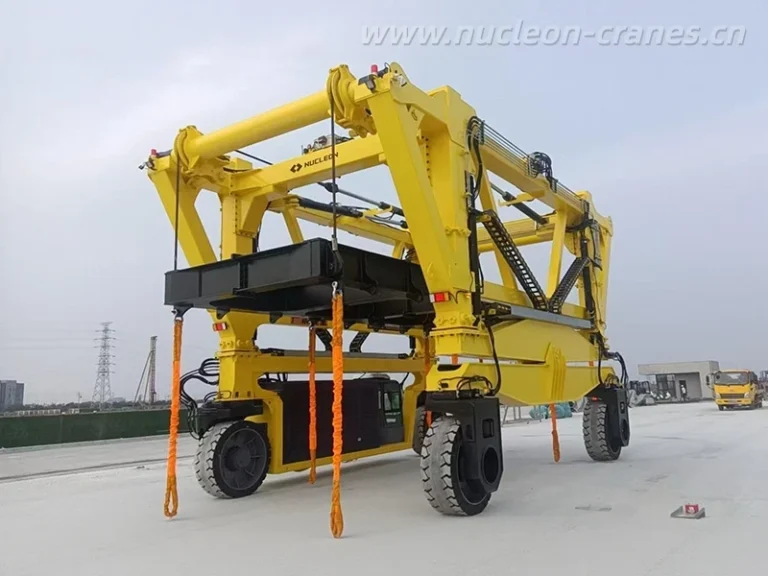
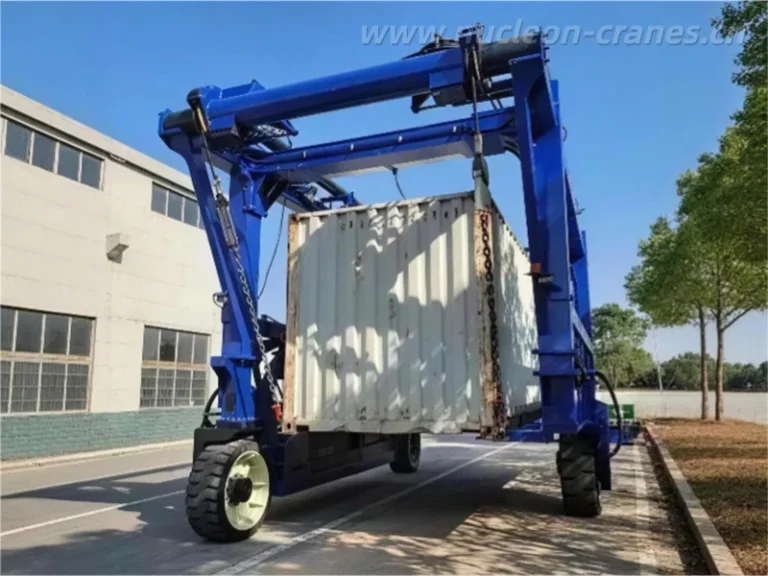
The technology profile of the straddle carrier market is changing at a pace that directly affects procurement decisions. Equipment specified today will operate for 12–18 years; buying a technologically obsolete unit now carries real lifecycle risk.
4.1 Logistics Automation and Automated Straddle Carriers
Automated straddle carriers (ASCs) are no longer experimental. Deployments at terminals including the Port of Brisbane (Patrick Terminals) and APM Terminals in Europe demonstrate that fully automated operations are commercially viable at scale. The technology stack for ASCs has matured: laser-based container recognition, real-time position tracking, and fleet management software are all available from major OEM manufacturers as integrated packages.
For buyers considering automated material handling at greenfield or brownfield sites, the decision framework has shifted from "is this technology ready?" to "what is the ROI justification at our throughput level?"
4.2 IoT-Enabled Straddle Carriers and Digital Twin Logistics
IoT-enabled straddle carriers — equipped with onboard telematics, condition monitoring sensors, and predictive maintenance algorithms — are becoming standard on mid-to-premium product lines from major OEM manufacturers. The practical benefit for procurement teams is a measurable reduction in unscheduled downtime: industry data suggests that predictive maintenance programs reduce unplanned maintenance events by 20–35% compared to time-based service schedules (Source: McKinsey & Company, Predictive Maintenance in Industrial Equipment, 2023).
Digital twin logistics integration — where a virtual model of each unit mirrors real-time operational data — is an emerging capability offered by manufacturers including Kalmar and Liebherr. This technology supports both fleet planning and operator training, and is particularly relevant for large terminal operators managing 10+ unit fleets.
4.3 Energy-Efficient Straddle Carriers and Green Logistics Equipment
Energy efficiency is no longer a secondary consideration — it is a procurement criterion. For buyers operating in jurisdictions with carbon pricing or emissions reporting requirements, the energy-efficient straddle carrier segment offers a direct path to compliance cost reduction. Beyond regulation, fuel and energy account for a substantial share of operating cost; a 15% improvement in energy efficiency on a unit operating 4,000 hours per year translates to meaningful annual savings over its service life.
5. Selecting OEM Manufacturers: What to Evaluate Beyond Price
The top straddle carrier OEM manufacturers — including Kalmar (Cargotec), Liebherr, Terex Port Solutions, and Konecranes — compete on more dimensions than unit price. For buyers placing significant orders, the evaluation framework should extend to:
5.1 After-Sales Support and Spare Parts Pricing
Straddle carrier maintenance cost over a 10-year lifecycle is substantially influenced by the availability and pricing of spare parts. Buyers should request a spare parts price list for high-wear components (tyres, hoist ropes, hydraulic seals, brake assemblies) as part of the tender process. Lifecycle cost of straddle carrier operation varies significantly between OEMs with local parts depots and those relying on cross-continental shipping for components.
5.2 Local Service Network and Technician Availability
An OEM supplier list that looks attractive on paper may underperform in practice if the nearest certified service center is several days away from your operating site. Particularly in emerging market locations, buyers should verify the density and capacity of the manufacturer's authorized service network before finalizing supplier selection.
5.3 Warranty Terms and Performance Guarantees
Standard warranty periods for straddle carrier equipment typically range from 12 to 24 months. Some OEM manufacturers offer extended warranty packages as part of a negotiated purchase agreement. For high-utilization environments, a performance-based service agreement (linking payment to agreed uptime levels) may offer more protection than a standard warranty.
6. Supply Chain Resilience and the Role of Straddle Carriers in 2026 Logistics Strategy
The post-pandemic emphasis on supply chain resilience has reshaped how logistics infrastructure managers think about material handling equipment investment. Straddle carriers sit at a critical node in intermodal supply chains: their availability directly determines throughput at container yards, timber handling facilities, and heavy industrial logistics hubs.
Investing in high-quality, well-maintained straddle carrier equipment — with adequate spare parts inventory and service contracts — is increasingly viewed as a supply chain resilience measure, not merely a capital expenditure. Operators who experienced equipment downtime during the 2021–2022 supply chain disruption period have generally shifted toward longer service contracts and larger parts buffer stocks as a direct operational lesson.
Future Outlook: What to Expect in 2027 and Beyond
Looking beyond 2026, the next-generation straddle carrier market is likely to be defined by three converging developments: broader adoption of hydrogen fuel cell drive systems (currently in pilot stage at select European terminals), deeper integration of AI-based fleet optimization software, and continued pressure from port authorities on noise and emissions standards.
For procurement teams planning capital expenditure cycles that extend into 2027–2029, it is worth engaging with OEM manufacturers now on product roadmap transparency — specifically, what software and hardware upgrade paths are available for equipment purchased in 2026, and what the lifecycle cost of straddle carrier operation looks like under future emissions scenarios.
Summary and Action Recommendations
The 2026 straddle carrier market rewards buyers who approach procurement with a total-cost-of-ownership mindset, a clear understanding of regional supply dynamics, and a realistic view of technology trajectories. Key takeaways:
- Prices are not falling — budget for 2025–2026 list prices as your baseline, and focus negotiation energy on TCO-related terms (warranty, spare parts, service agreements).
- Electric and hybrid models have crossed the TCO breakeven threshold in many operating environments — evaluate them seriously, not just for compliance reasons.
- Asia-Pacific and European market demand will continue to absorb OEM production capacity, which means lead times for specialized or large-capacity units may extend into 2025 order books.
- IoT and digital twin capabilities are available now and deliver measurable maintenance cost reductions — include them in your specification rather than treating them as optional extras.
- Validate your supplier's service network before signing — the cheapest unit from the most distant service center is rarely the lowest-cost choice over a 10-year operating period.
FAQ
Q1: What is the typical straddle carrier payload for container handling, and how does it affect price?
Standard container-handling straddle carriers are rated at 30–45 tonnes lifting capacity, which covers the vast majority of ISO container weights in typical port operations. Heavy-duty straddle carriers in the 50–80 tonne class are designed for industrial applications such as timber, steel coil, and large fabricated components. Payload capacity is one of the primary pricing drivers: moving from a 35 t to a 60 t unit typically increases purchase price by 40–70%, depending on the drive system and OEM manufacturer. Before specifying capacity, buyers should model their actual load distribution — many facilities over-specify capacity and pay a price premium that generates no operational benefit.
Q2: How should I evaluate straddle carrier ROI for an automated terminal project?
Straddle carrier ROI for automated terminal deployments depends on three variables: labor cost in your jurisdiction, throughput volume, and the cost of capital. In high-labor-cost markets such as Northern Europe or Australia, automated straddle carriers typically achieve financial payback within 5–8 years at throughput volumes above 300,000 TEU per annum. In lower-labor-cost markets, the payback period extends, but the case often still holds when operational consistency (24/7 operation, reduced human error) is factored in. Request case study data from OEM manufacturers on comparable deployments, and cross-reference with publicly available terminal operator annual reports for independent throughput and cost data.
Q3: What maintenance cost should I budget annually for a diesel straddle carrier?
As a planning benchmark, budget approximately 3–5% of the unit purchase price per year for scheduled maintenance on a diesel straddle carrier operating 3,000–4,500 hours annually. This figure covers planned service intervals, wear parts (tyres, brakes, filters), and routine hydraulic system maintenance. Unscheduled repair costs add a further 1–2% on average, though this figure is highly variable depending on operating environment, operator skill level, and spare parts availability. Operators using predictive maintenance systems enabled by IoT telematics typically report 15–25% lower total maintenance expenditure compared to time-based maintenance programs.
Q4: Which straddle carrier OEM manufacturers offer the best after-sales support globally?
Kalmar (part of Cargotec), Liebherr, Konecranes, and Terex Port Solutions are the most widely referenced names in global port and heavy industrial procurement processes. Each has strengths in different segments: Kalmar has strong coverage in automated straddle carrier systems; Liebherr is frequently cited for heavy-duty and high-lifting-capacity configurations; Konecranes has a broad service network particularly relevant for European buyers. The "best" OEM for after-sales support depends heavily on your geographic location — a manufacturer with strong factory support in Europe may have limited technician availability in Southeast Asia. Always verify the local service network before finalizing supplier selection.
Q5: How does the 2026 logistics automation trend affect straddle carrier specifications?
Logistics automation trends in 2026 are influencing straddle carrier specifications in several ways. Terminal operators planning for automation within a 3–5 year horizon should specify units with automation-ready hardware interfaces (GNSS positioning, onboard sensor mounts, standardized data communication protocols) even if full automation is not immediately planned. Retrofitting automation hardware onto standard units after delivery is technically possible but typically costs 25–40% more than specifying it at the factory. OEM manufacturers including Kalmar and Konecranes offer modular automation upgrade paths; request documentation on these roadmaps as part of the procurement evaluation process.

 English
  العربية
  Español
  Français
  Português
  Русский