

If your straddle carrier goes down unexpectedly, it doesn't just cost you repair time — it stalls container flow, delays vessel turnaround, and puts pressure on your entire terminal operation. Yet in many facilities, straddle carrier maintenance is still treated reactively: fix it when it breaks, rather than preventing the break in the first place.
This guide changes that. Whether you manage a single machine or a fleet of twenty, you'll find a structured straddle carrier service guide covering everything from daily pre-shift checks to annual overhaul benchmarks. We'll walk through lubrication schedules, hydraulic fault diagnosis, wear parts replacement timelines, and real-world best practices drawn from container terminal operations. By the end, you'll have a complete framework for reducing unplanned downtime, extending equipment lifespan, and building an ROI-positive straddle carrier upkeep program.
Table of Contents
1. Why Straddle Carrier Preventive Maintenance Pays Off
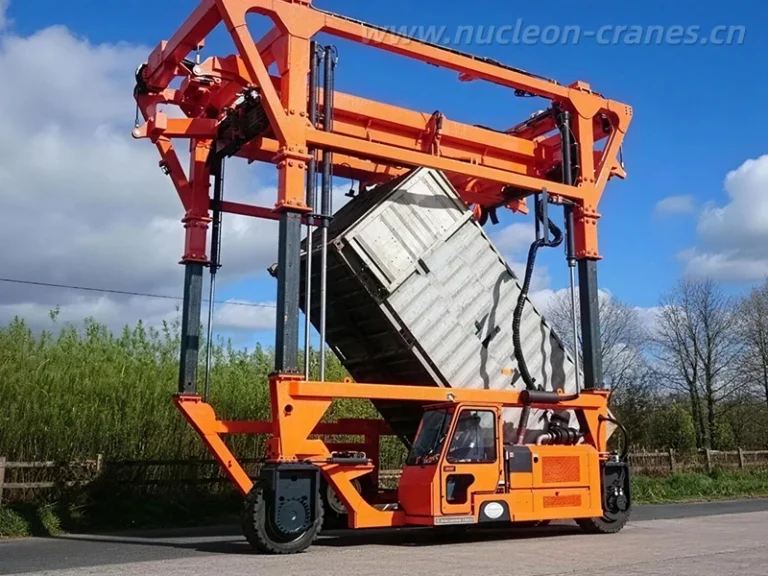
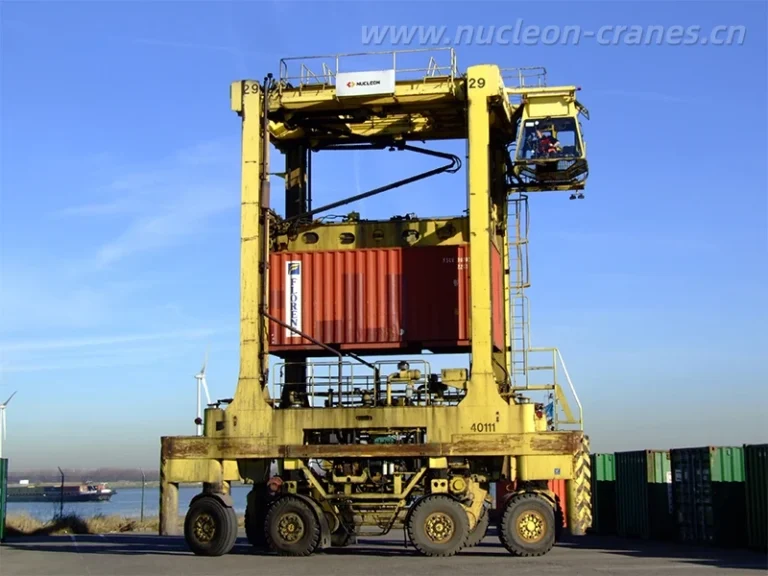
Reactive maintenance costs more than most operators realize. According to a 2023 analysis by the International Association of Ports and Harbors (IAPH), unplanned equipment downtime in container terminals costs an average of USD 2,200–4,800 per hour depending on terminal throughput. For a straddle carrier fleet, even a 10% reduction in unscheduled stops can translate into six-figure annual savings.
Straddle carrier preventive maintenance flips that equation. By investing in scheduled inspections, timely lubrication, and component replacement before failure, facilities consistently achieve:
- 15–25% lower total maintenance cost over a 5-year equipment lifecycle
- Longer tire and drivetrain life — often extending tire service intervals by 20–30%
- Improved operator safety through earlier detection of structural and hydraulic faults
- Better compliance with ISO 9001 quality management and ISO 45001 occupational health standards
The core principle is straightforward: spend a little consistently so you don't spend a lot suddenly. The sections below show you exactly how.
2. Straddle Carrier Maintenance Schedule: Daily, Weekly, Monthly & Annual
A well-structured straddle carrier maintenance schedule is the foundation of any upkeep program. Think of it as a layered system — each tier builds on the one before it.
2.1 Daily Pre-Operation Safety Check
Before every shift, the operator should complete a pre-operation safety check for straddle carriers. This takes 10–15 minutes and covers the most failure-prone systems. Key items include:
| Check Item | Acceptance Criterion | Action if Failed |
| Engine oil level | Within dipstick min/max range | Top up; check for leaks |
| Hydraulic fluid level | Above minimum sight glass mark | Top up; inspect for external leaks |
| Coolant level | Reservoir within operating range | Top up; inspect hoses and cap |
| Tire pressure (all 4–8 positions) | Per OEM specification (typically 8–10 bar for solid tires) | Investigate; do not operate |
| Spreader lock pins | Full engagement, no deformation | Remove from service |
| Warning lights & alarms | No active fault codes | Log and report before operation |
| Braking system | Effective response on test application | Remove from service immediately |
| Structural integrity (visible cracks, corrosion) | None | Flag for engineering review |
Source: Derived from Konecranes and Kalmar OEM pre-operation checklists; ISO 12117-2:2021 (mobile cranes – safety and maintenance)
Operators should document results on a signed daily log. Digital logging via onboard terminal or mobile app improves traceability and simplifies audit compliance.
2.2 Weekly Straddle Carrier Inspection Checklist
The weekly inspection checklist goes deeper than the daily walk-around. A qualified maintenance technician should perform this check, not solely the operator. Focus areas:
- Lubrication points: Check all grease nipples — spreader pivot pins, lifting cylinder pins, wheel hub bearings. Apply grease per OEM specification (typically NLGI Grade 2 EP grease).
- Hydraulic hoses: Inspect for abrasion, bulging, chafing, or coupling weeping. Replace hoses showing outer jacket damage.
- Electrical connections: Check junction boxes, cable tracks, and connectors for moisture ingress or loose terminals.
- Brake wear indicators: Measure pad thickness; replace when below OEM minimum (commonly 3–4mm).
- Spreader twist-lock mechanism: Function test all four corners under no-load. Check for wear on lock cams.
- Safety devices: Verify overload protection, anti-collision sensors, and camera systems are operational.
Document all findings with photos where abnormalities are observed. This record supports both warranty claims and lifecycle cost analysis.
2.3 Monthly Straddle Carrier Service Routine
The monthly service routine moves into system-level checks that weekly inspections don't catch. Key tasks:
- Oil change for straddle carrier (check interval): Verify engine oil condition via sample testing; if contaminated or past interval, change. Many OEMs recommend engine oil intervals of 250–500 operating hours, typically aligning with monthly service for high-use machines.
- Filter replacement on straddle carriers: Hydraulic return filter, fuel filter, and air filter elements should be replaced per OEM interval or condition. Blocked filters are a leading cause of hydraulic pump cavitation.
- Straddle carrier lubrication points – full cycle: Complete a full lubrication map including all grease points not covered in weekly service, such as slewing ring bearings and steering cylinder pins.
- Cooling system check: Inspect radiator fins for blockage (particularly important in dusty port environments), check belt tension and fan blade condition.
- Fastener torque check: Re-torque critical structural and drivetrain bolts per torque specifications for straddle carrier bolts as listed in the manufacturer's service manual. Vibration working loose fasteners is common in high-cycle applications.
| Service Item | Typical Interval | OEM Reference Standard |
| Engine oil & filter | 250–500 hrs / monthly | ISO 11358 (oil analysis) |
| Hydraulic return filter | 500 hrs / monthly | ISO 4406 (fluid cleanliness) |
| Air filter element | Monthly or per condition | OEM specification |
| Fuel filter | 250–500 hrs | OEM specification |
| Full lubrication map | Monthly | ISO 6743-9 (lubricant classification) |
Source: Kalmar TLS service manual guidelines; Konecranes SMV maintenance documentation, 2022–2024
2.4 Annual Straddle Carrier Overhaul
The annual overhaul is the deepest level of planned maintenance. At this interval, the machine is typically taken out of service for 3–5 days for a comprehensive structural, mechanical, and electrical evaluation.
Key annual overhaul tasks include:
- Structural NDT (non-destructive testing): Magnetic particle or dye penetrant inspection of main frame welds, lifting beams, and corner posts. Any crack indication requires engineering assessment before return to service.
- Hydraulic cylinder seal replacement: Even if leaks aren't visible, cylinder seals degrade over 12 months of high-cycle operation. Proactive replacement avoids mid-shift failures.
- Complete drivetrain inspection: Check gearbox oil condition, inspect axle mounting, and evaluate motor coupling wear.
- Control system diagnostic: Full PLC and CAN bus diagnostic scan, firmware updates per OEM recommendation.
- Straddle carrier tire replacement assessment: Measure tread depth and sidewall condition against OEM limits. Replacing tires at scheduled intervals rather than at failure is safer and often more economical.
3. Straddle Carrier Lubrication: The Detail That Extends Equipment Life
Lubrication is one of the most cost-effective elements of straddle carrier upkeep — and one of the most commonly neglected. Insufficient greasing of straddle carrier bearings leads to accelerated wear, increased component replacement frequency, and, in extreme cases, catastrophic joint failure.
3.1 Identifying All Straddle Carrier Lubrication Points
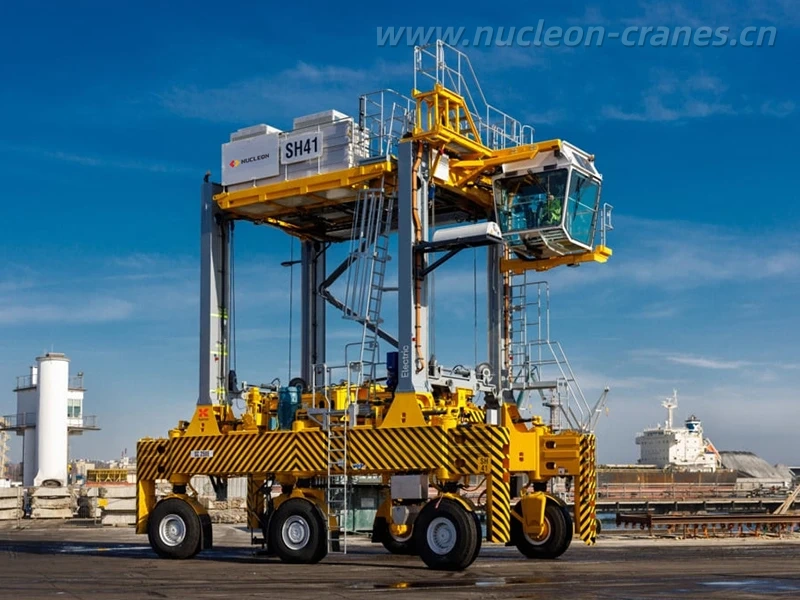
A typical spreader-type straddle carrier has 28–45 grease points depending on the configuration (4-wheel vs. 8-wheel, fixed vs. telescoping spreader). Technicians should work from the OEM lubrication diagram — not from memory. Key greasing points include:
- Spreader headblock pivot pins (high-frequency greasing required — typically weekly)
- Lifting cylinder upper and lower pins
- Wheel hub bearing seals (monthly, or per condition)
- Steering cylinder rod end and base pins
- Slewing ring (where fitted — typically monthly, NLGI Grade 2)
- Twistlock actuator pivot points
Using automatic lubrication systems (ALS) on high-cycle machines significantly improves consistency. Fleets using ALS on spreader pins typically see 30–40% longer pin and bush service life compared to manual-only programs (Perma-Tec, fleet study data, 2023).
3.2 Lubricant Selection
Matching lubricant specification to operating conditions matters. In marine port environments, moisture and salt spray are constant factors:
| Application | Recommended Lubricant Type | Key Property |
| Spreader pins & bushings | NLGI Grade 2 EP grease, water-resistant | High load, moisture protection |
| Slewing ring | Open gear compound or NLGI 1 EP | Adhesive, extreme pressure |
| Wheel hub bearings | NLGI Grade 2 or 3 | High temperature stability |
| Hydraulic system | ISO VG 46 or 68 hydraulic oil | Cleanliness ISO 16/14/11 or better |
| Engine | OEM-specified SAE grade (typically 10W-40 or 15W-40) | API CK-4 or CI-4 |
Source: ISO 6743-9:2003 (lubricant classification); manufacturer service bulletins (Kalmar, Konecranes, 2022–2024)
4. Straddle Carrier Troubleshooting Guide: Common Faults & Diagnosis
Even with excellent preventive maintenance, faults occur. A structured straddle carrier troubleshooting guide reduces mean time to repair (MTTR) by helping technicians move directly to root cause rather than trial-and-error parts replacement.
4.1 Straddle Carrier Hydraulic Leak Diagnosis
Hydraulic leaks are among the most frequently reported straddle carrier problems. Before condemning a component, systematically narrow the source:
- Identify leak location: Is it at a hose, a cylinder rod seal, a fitting, or from a pump/motor casing?
- Check fluid condition: Milky hydraulic oil indicates water contamination (check breather cap seal). Dark or burnt-smelling oil suggests overheating.
- Measure system pressure: Using a calibrated gauge at the test port, compare to OEM specifications. Low pressure with no visible leak suggests internal bypass in a cylinder or valve.
- Cylinder rod seal leaks: Typically indicated by oil tracking down the cylinder barrel. Replace seal kit per OEM procedure; inspect rod for scoring before reassembly.
- Hose failure: Replace with hose meeting SAE 100R2 or EN 853 2SN specification at minimum. Always replace both ends of a crimped hose — do not use reusable fittings on high-pressure lines.
4.2 Straddle Carrier Electric Motor Fault Detection
Electric-drive straddle carriers (increasingly common as terminals pursue decarbonization) present different fault patterns than diesel-hydraulic machines:
| Fault Symptom | Likely Cause | Diagnostic Step |
| Motor overheating | Overload, blocked cooling, bearing failure | Thermal camera inspection; current draw measurement |
| Intermittent power loss | Loose power cable connection, failing contactor | Check terminal torques; inspect contactor contacts |
| Abnormal vibration | Bearing wear, rotor imbalance | Vibration analysis (ISO 10816 limits) |
| Fault code (overcurrent) | Mechanical binding in drivetrain | Free-run motor uncoupled; check gearbox |
| Insulation resistance low | Moisture ingress into winding | Megger test per IEC 60034-27; dry out or rewind |
Source: IEC 60034-1:2022 (rotating electrical machines); Siemens drive systems maintenance guide, 2023
4.3 Common Straddle Carrier Problems: Quick Reference
| Problem | Most Common Cause | First Corrective Action |
| Spreader won't lock | Worn twistlock cam / sensor misalignment | Inspect cam profile; recalibrate sensor |
| Machine won't lift rated load | Hydraulic pressure below set point | Check relief valve setting and pump output |
| Steering wanders | Low hydraulic pressure, worn steering cylinder | Check pressure; inspect cylinder seals |
| Excessive tire wear | Misalignment, over/under inflation | Laser alignment check; inflate per OEM spec |
| Engine overheating | Blocked radiator, thermostat failure | Clean fins; replace thermostat |
| CAN bus communication fault | Corroded connector, damaged harness | Inspect all junction boxes; check for chafing |
5. Straddle Carrier Wear Parts Replacement: Timelines and Cost Management
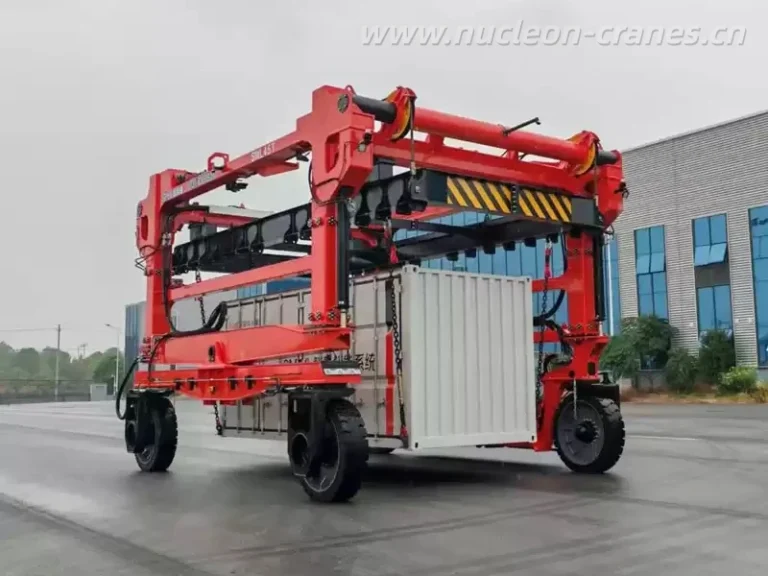
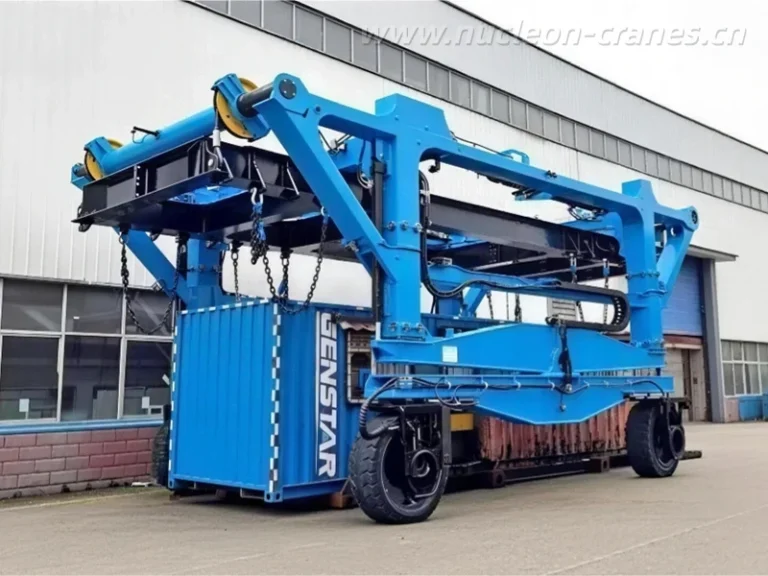
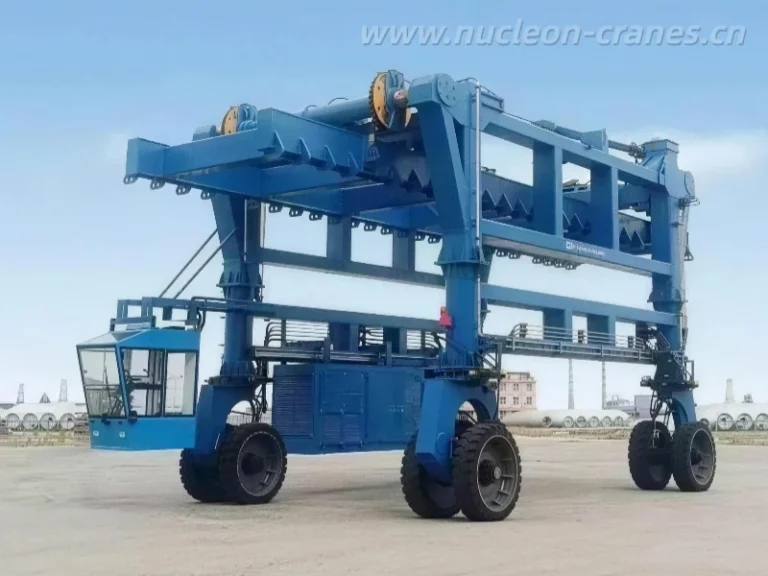
Proactive straddle carrier wear parts replacement is one of the clearest levers for cost-effective straddle carrier maintenance. Replacing parts at scheduled intervals avoids the cascading damage that occurs when worn components are allowed to run to destruction.
5.1 Straddle Carrier Tire Replacement
Tires represent one of the largest consumable costs in straddle carrier operation. Straddle carrier tire replacement decisions should be based on:
- Tread depth: Most OEMs recommend replacement at 20–25% remaining tread depth
- Sidewall condition: Any cracking, bulging, or cord exposure requires immediate removal
- Straddle carrier tire pressure check: Under-inflated tires heat up faster and wear unevenly. Check pressure at cold start, every shift for solid polyurethane-filled tires, verify fill condition annually.
Typical tire service life in port applications ranges from 3,000–6,000 operating hours, depending on surface conditions, load cycles, and average travel speed. Running on damaged or poorly maintained hardstand accelerates wear significantly.
5.2 Key Wear Part Replacement Intervals
| Component | Typical Service Life | Replacement Trigger |
| Spreader twistlock cam | 80,000–120,000 cycles | Cam profile below OEM wear limit |
| Lifting cylinder seals | 12 months / 4,000 hrs | Visible leak or scheduled annual OH |
| Hydraulic pump | 8,000–12,000 hrs | Flow/pressure testing below spec |
| Wheel bearings | 5,000–8,000 hrs | Noise, heat, or play detected |
| Brake pads/discs | 2,000–4,000 hrs | Wear indicator minimum reached |
| Air filter element | Monthly or per condition | Restriction indicator triggered |
| V-belts / serpentine belts | 2,000 hrs or annually | Cracking, glazing, or tension loss |
Source: Konecranes and Kalmar published maintenance manuals, 2022–2024; ISO 12117-2:2021
5.3 Spare Parts Strategy
Carrying the right spare parts for straddle carriers on-site reduces repair lead time dramatically. Recommended minimum on-site stock for a fleet of 5+ machines:
- Hydraulic hose assemblies (common lengths and end fittings)
- Spreader twistlock seal kits and cam sets
- Oil and filter kits (engine, hydraulic, fuel, air)
- Complete lifting cylinder seal kits
- Wheel bearing sets (front and rear)
- Electrical fuses, contactors, and connector repair kits
Work with your OEM or authorized dealer to establish a consignment stock agreement for fast-moving parts — this keeps your capital investment low while maintaining parts availability.
6. Safety, Compliance & Environmental Standards
6.1 Straddle Carrier Safety Inspection Checklist
The straddle carrier safety inspection checklist is not just an operational tool — it's a legal and regulatory requirement in most jurisdictions. Key regulatory frameworks:
- OSHA 1910.179 (USA): Overhead and gantry cranes inspection requirements
- EN 15011:2011+A1:2014 (EU): Cranes — bridge and gantry cranes
- ISO 9927-1:2013: Cranes — inspections — general requirements
At minimum, a formal safety inspection should be conducted:
- Daily: By the operator (pre-operation check)
- Monthly: By a qualified technician
- Annually: By a competent person, with full load test where structurally relevant
Inspection records must be retained for a minimum of 3 years in most regulatory regimes.
6.2 ISO Maintenance Standards for Straddle Carriers
Facilities pursuing ISO 9001:2015 (quality management) or ISO 55001:2014 (asset management) certification will need to demonstrate that their straddle carrier service documentation meets documented procedures and evidence requirements. Key compliance actions:
- Maintain signed maintenance records with technician ID and date
- Document all defects found and corrective actions taken
- Track mean time between failures (MTBF) and mean time to repair (MTTR) by machine
- Retain OEM maintenance manuals and service bulletins on-site
6.3 Environmental Maintenance Standards
Straddle carrier environmental maintenance obligations are increasing as port regulators tighten emissions and waste standards. Practical compliance steps:
- Use biodegradable hydraulic fluids (ISO VG 46 HETG type) in machines operating near waterways where applicable
- Ensure used oil and filter disposal follows local hazardous waste regulations (Basel Convention framework for cross-border shipments)
- For electric straddle carriers: battery maintenance and disposal must comply with relevant EU Battery Regulation (2023/1542) or equivalent national regulation
- Record and report refrigerant use if machines are air-conditioned
7. Building a Fleet-Wide Straddle Carrier Maintenance Program
Scaling from single-machine upkeep to a fleet-wide straddle carrier maintenance program requires systems and structure, not just good intentions.
7.1 Computerized Maintenance Management Systems (CMMS)
A CMMS platform (such as IBM Maximo, SAP PM, or sector-specific tools like Navis Maintenance Management) centralizes work orders, parts inventory, labor tracking, and compliance records. For fleets of 5 or more straddle carriers, a CMMS typically pays back implementation cost within 18–24 months through reduced emergency repair spend and improved parts procurement efficiency.
7.2 Condition-Based Monitoring (CBM)
Leading terminals are moving beyond fixed intervals toward condition-based monitoring using onboard sensors and telematics. CBM enables:
- Real-time oil contamination monitoring (particle counters on hydraulic circuits)
- Vibration trend analysis for early bearing fault detection
- Engine ECU data logging for fuel consumption and fault history
- Spreader cycle counting for automated wear part scheduling
Real-world case study — Port of Gothenburg (Sweden): Following implementation of a structured preventive maintenance and CBM program across their straddle carrier fleet, the port reported a 32% reduction in unplanned downtime over three years and an average tire life extension of 18%. (Source: Port of Gothenburg Annual Sustainability Report, 2023 — publicly available at www.portofgothenburg.com)
7.3 Technician Training & Competency
Even the best maintenance plan fails without competent people to execute it. Ensure your maintenance team has:
- OEM-certified training for each machine model in the fleet
- Refresher training every 2 years, or following major model updates
- Access to current OEM straddle carrier maintenance manuals and service bulletins
- Competency in using diagnostic equipment for straddle carriers (hydraulic pressure gauges, CAN bus diagnostic tools, thermal cameras, vibration meters)
Summary & Action Steps
Effective straddle carrier maintenance isn't about doing more — it's about doing the right things at the right intervals, with documentation to prove it. Here's your action checklist:
- Implement a four-tier service schedule: daily operator checks, weekly technician inspections, monthly service routines, and annual overhauls.
- Map all lubrication points from the OEM manual; consider automatic lubrication for high-cycle grease points.
- Build a troubleshooting framework so technicians move to root cause quickly rather than replacing parts by guess.
- Set proactive wear part replacement intervals for tires, seals, brake components, and filters.
- Maintain compliant safety inspection records per applicable regulatory standards (ISO, OSHA, EN).
- Invest in a CMMS once your fleet exceeds 4–5 machines to manage scheduling and parts inventory at scale.
- Evaluate CBM technology if reducing unplanned downtime is a priority business objective.
A well-maintained straddle carrier fleet is a competitive asset. The terminals that sustain the highest availability rates are consistently those with the most disciplined maintenance programs — not the ones with the newest equipment.
FAQ
Q1: How often should I perform a straddle carrier maintenance service?
At a minimum, straddle carriers require a daily pre-operation safety check by the operator, a weekly inspection by a qualified technician, a monthly service routine covering lubrication, filters, and fluid levels, and a full annual overhaul. High-cycle machines (operating 3+ shifts per day) may require compressed intervals — for example, bi-weekly instead of monthly service for filter changes. Always defer to the manufacturer recommended maintenance intervals in the OEM straddle carrier maintenance manual, and adjust based on actual operating hours rather than calendar time alone. A machine running 400+ hours per month will reach service milestones faster than one running 150 hours.
Q2: What are the most common straddle carrier problems and how can I prevent them?
The most frequently reported issues include hydraulic leaks (hose fatigue and cylinder seal wear), spreader twistlock malfunctions (worn cam profiles and sensor drift), tire wear (typically from surface conditions or inflation management failures), and electrical faults (moisture ingress into connectors in marine environments). The most effective preventive actions are consistent lubrication, proactive seal replacement at scheduled intervals, straddle carrier tire pressure checks every shift, and regular cleaning and inspection of electrical enclosures. A structured weekly straddle carrier inspection checklist catches the majority of developing faults before they cause operational disruption.
Q3: How can I reduce straddle carrier downtime and extend equipment lifespan?
Reducing downtime of straddle carriers comes down to three pillars: (1) scheduled preventive maintenance that addresses wear before failure; (2) fast, accurate diagnosis when faults do occur — using a straddle carrier troubleshooting guide rather than trial-and-error; and (3) strategic spare parts inventory so the right parts are available immediately. Extending straddle carrier lifespan beyond the typical 15–20 year design life is achievable with consistent structural inspection (annual NDT), good lubrication practice, and operating within rated capacity. Machines operated above rated load or on damaged hardstand surfaces consistently show shortened lifespans.
Q4: What diagnostic equipment do I need for straddle carrier maintenance?
A well-equipped maintenance team should have: a calibrated hydraulic pressure gauge set (0–400 bar range) for system pressure testing; a CAN bus / OBD diagnostic interface compatible with the machine's control system; a digital megohmmeter (for electric motor insulation resistance testing on electric-drive machines); a thermal imaging camera (for detecting hot bearings, electrical faults, and hydraulic overheating); a vibration meter with ISO 10816 reference values; and torque wrenches covering the torque specifications for straddle carrier bolts (typically 20–2,000 Nm range across a full fleet). For fleets with hydraulic oil analysis programs, a portable particle counter adds significant value in trending fluid cleanliness.
Q5: What does an annual straddle carrier overhaul cost, and what ROI can I expect?
Annual overhaul costs vary by machine size, age, and scope — but a typical full annual overhaul for a mid-range straddle carrier (45–60 tonne capacity) runs USD 18,000–35,000 in labor and consumables, excluding major component replacements. Facilities with structured preventive maintenance programs consistently report 20–35% lower 5-year total cost of ownership compared to reactive maintenance strategies, based on published data from terminal operators and OEM service studies (Kalmar customer case studies, 2022–2024). The clearest ROI driver is avoided unplanned downtime: at USD 4,000–7,000 per downtime hour, preventing even two or three unplanned stoppages per year typically covers the full annual overhaul cost.

 English
  العربية
  Español
  Français
  Português
  Русский