Choosing the wrong container crane is an expensive mistake. Whether you're managing a port terminal, a rail freight yard, or an industrial logistics hub, the type of container crane you select directly affects throughput, operational cost, and long-term ROI.
This guide breaks down every major type of container crane, explains what each does best, and highlights the innovation trends reshaping the industry. If you're in the process of evaluating equipment options, this is the starting point.
Why Choosing the Right Container Crane Is More Important Than Ever
With global container throughput continuing to grow, port operators, logistics companies, and industrial facilities face increasing pressure to move more containers faster while reducing error rates and operational costs.
Selecting a container crane is no longer just a procurement decision; it has become part of a strategic decision-making process.
Choosing the wrong type can lead to capacity bottlenecks, skyrocketing maintenance costs, and safety hazards. Choosing the right equipment, however, will make it a core asset for your long-term operations.
Before making a final decision, understanding the differences between various types of container cranes is the most important first step.
Major Types of Container Cranes and Their Applications
1. Ship-to-Shore (STS) Cranes
Ship-to-shore cranes — also called quayside cranes or portainer cranes — are the giants of container handling. They are installed at port terminals and used to load and unload containers directly from vessels.
Key characteristics:
- Lifting capacity: typically 40–65 tonnes (twin-lift configurations available)
- Outreach: 50–70 meters to reach across the widest mega-vessels
- Rail-mounted, moving parallel to the quay
STS cranes are purpose-built for high-volume seaport operations. They are not relocatable and require significant civil infrastructure investment. For buyers operating a dedicated port terminal, they remain the benchmark for productivity.


2. Rubber-Tyred Gantry (RTG) Cranes
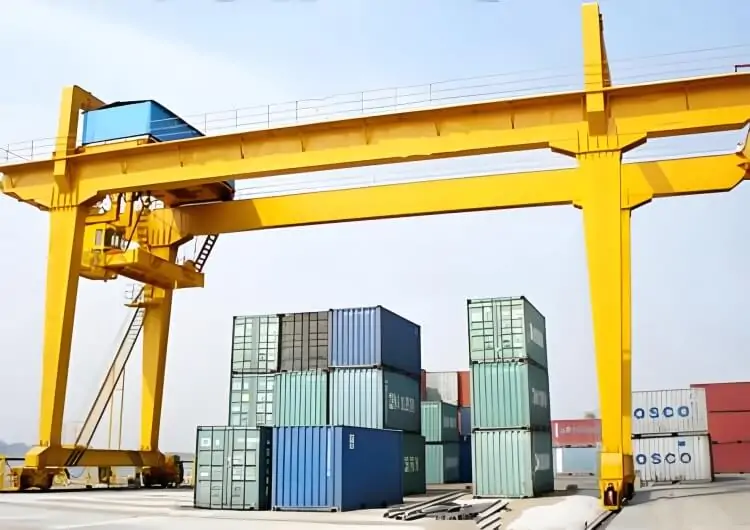
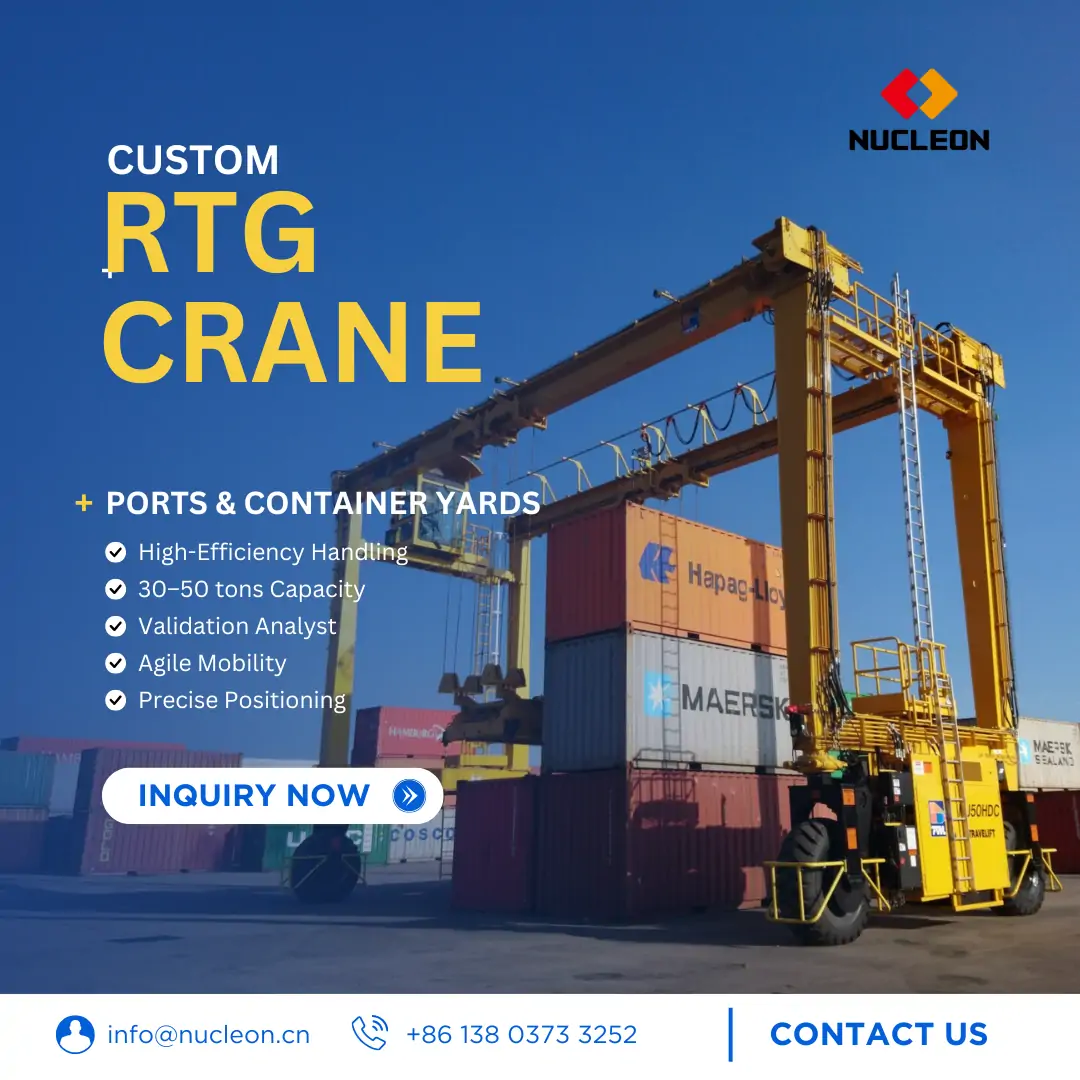
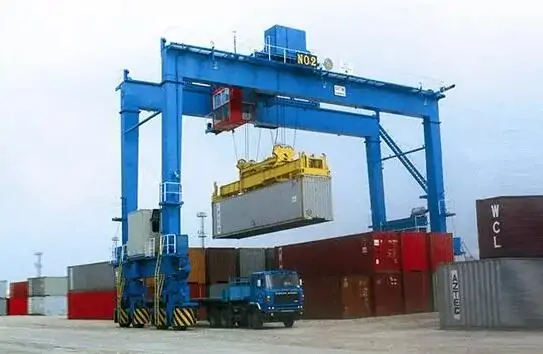
RTG cranes are among the most commonly used container cranes in port yards and inland depots. They move on rubber tyres, which gives them significant flexibility in stacking yard operations.
Key characteristics:
- Typically stack containers 5–6 high and span 6–8 rows
- Powered by diesel-electric or fully electric drive systems
- Capable of repositioning between container blocks without fixed rails
RTGs offer a strong balance between flexibility and productivity. Modern RTG designs increasingly incorporate electric power and energy recovery systems, significantly reducing fuel consumption and emissions. For buyers evaluating sustainable operations, the shift to full-electric RTG is a critical decision point.
Nucleon offers customized RTG configurations designed for both port yards and heavy-industrial container handling environments.


3. Rail-Mounted Gantry (RMG) Cranes
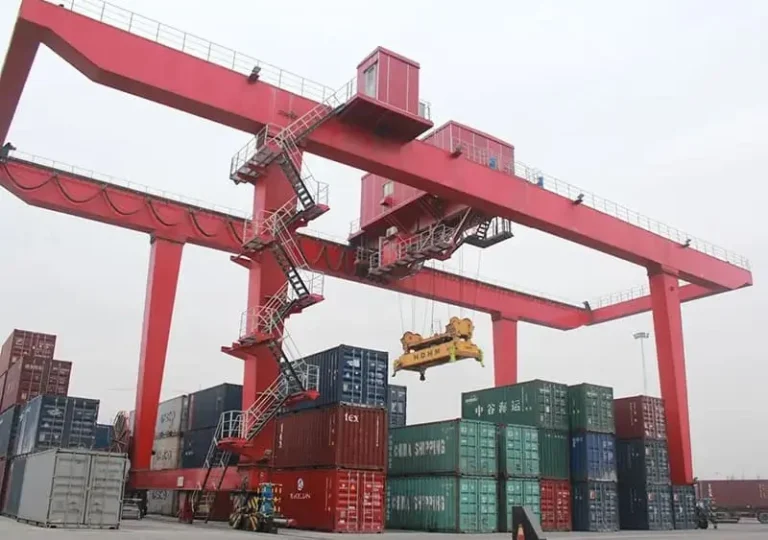
RMG cranes operate on fixed rails and are widely used in automated container terminals and intermodal rail yards. They offer higher precision and are easier to integrate with automation systems compared to RTGs.
Key characteristics:
- Higher stacking density than RTG configurations
- Lower lifecycle operating cost due to electric-only operation
- Ideal for high-automation terminal designs
RMGs are the preferred choice for greenfield terminal projects where automation is a design priority from day one. Their fixed path makes them compatible with automated guided vehicles (AGVs) and terminal operating systems (TOS).
As terminal automation accelerates, RMG adoption rates are rising. According to industry analysis from HHLA and DP World operational data, automated RMG terminals achieve 20–30% higher land utilization compared to conventional RTG yards.
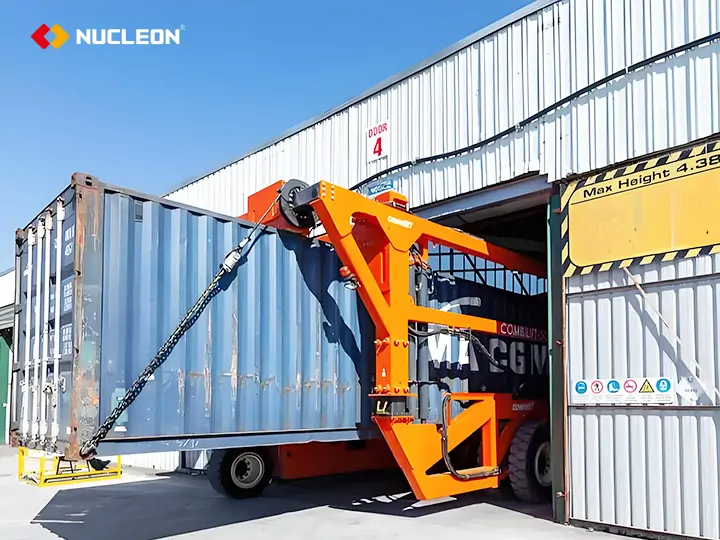
4. Straddle Carriers
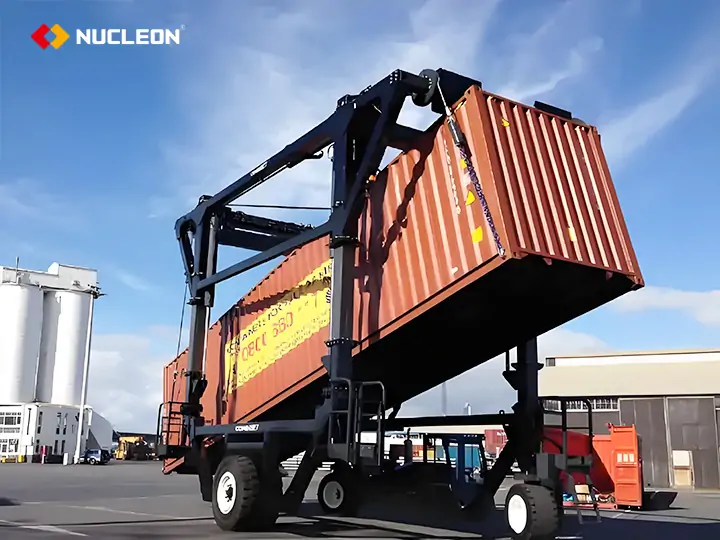
Straddle carriers are mobile, self-propelled machines that pick up containers from below and transport them within a terminal. They are not gantry cranes in the traditional sense, but are part of the container handling ecosystem.
Key characteristics:
- Can stack containers 2–3 high
- Highly flexible, no fixed infrastructure required
- Higher unit cost per machine compared to gantry systems
Straddle carriers work best in medium-throughput terminals that prioritize flexibility over density. They are commonly paired with STS cranes in major seaports.
Innovation Trends Shaping Container Crane Technology
The container crane industry is changing rapidly. Buyers evaluating equipment today need to understand the direction the market is heading.
Electrification and Zero-Emission Operations
Major ports and industrial zones are phasing out diesel-powered cranes. Tender specifications now mandate electric RTGs, battery-hybrid systems, and shore-power integration as standard. Nucleon designs its RTG and overhead crane lines around full-electric drive architectures, actively supporting customers' carbon-neutral facility targets.
Automation and Remote Operation
Terminal operators are investing heavily in automated crane systems. Remote-operated RTGs and semi-automated STS cranes reduce labor dependency and improve cycle consistency. Integration with AI-based terminal management systems is moving from pilot stage to mainstream deployment.
Smart Monitoring and Predictive Maintenance
Modern container cranes from leading manufacturers — including Nucleon — incorporate IoT sensor systems for real-time structural health monitoring, load data logging, and predictive maintenance alerts. This reduces unplanned downtime and extends equipment service life. ISO 9927 and FEM standards provide the technical baseline for crane inspection and condition monitoring requirements.
Anti-Sway and Precision Positioning Systems
Container handling accuracy directly impacts cycle time and damage rates. Advanced anti-sway systems using closed-loop control algorithms and laser positioning now achieve landing accuracy within ±25mm, improving productivity and reducing container and cargo damage.
Comparison Table: Container Crane Types at a Glance
| Crane Type | Mobility | Typical Capacity | Best Application | Automation Potential |
| Ship-to-Shore (STS) | Rail (fixed) | 40–65T | Seaport quayside | High |
| RTG | Rubber tyre | 35–50T | Port yard / depot | Medium–High |
| RMG | Rail (fixed) | 35–50T | Automated terminal / rail yard | Very High |
| Straddle Carrier | Self-propelled | 30–45T | Flexible terminal operations | Medium |
| Overhead (Industrial) | Fixed structure | 20–100T+ | Industrial / logistics parks | Medium–High |
How to Choose the Right Container Crane
Start with these four questions:
- What is your throughput target? High-volume seaports need STS or automated RMG. Medium-volume depots typically suit RTG or straddle carriers.
- What are the conditions of the existing or potential infrastructure? Rail-mounted cranes require civil works. RTGs and straddle carriers offer faster deployment.
- What are your automation ambitions? RMG and advanced RTG systems offer the clearest path to full automation.
- What are your sustainability commitments? Full-electric drive systems are now the industry direction. Diesel options carry increasing regulatory and reputational risk.
Working with an experienced manufacturer early in the planning process makes a measurable difference. Nucleon Crane Group offers pre-purchase technical consultation, helping buyers align crane specifications with operational requirements and site conditions before a purchase order is placed.
Conclusion
Only by thoroughly understanding the distinctions between STS cranes, RTGs, RMGs, and straddle carriers can equipment be made to serve the workflow—rather than the workflow having to accommodate the equipment.
Innovation is accelerating. Electrification, automation, and intelligent monitoring are no longer futuristic concepts; they are now practical evaluation criteria within current procurement specifications. Buyers who incorporate these dimensions into their equipment selection framework today will build operational systems capable of remaining competitive for the next 15 to 20 years.
If you are currently in the early stages of selecting container-handling equipment, we invite you to contact Nucleon Crane for a technical consultation. Serving clients across the port, railway, and industrial sectors, their engineering team is dedicated to delivering precise solutions right from the inception of a project.

Equipment Specialist
Accomplished Crane Business Manager with extensive experience in heavy lift project management and operational oversight. Proven track record of driving revenue growth and ensuring safety compliance.
Frequently Asked Questions (FAQ)
Q1: What is the most common type of container crane found in ports?
RTGs (Rubber-Tyred Gantry Cranes) are among the most widely deployed types in container yards globally; they are highly favored for their flexibility and the fact that they do not require fixed rails.
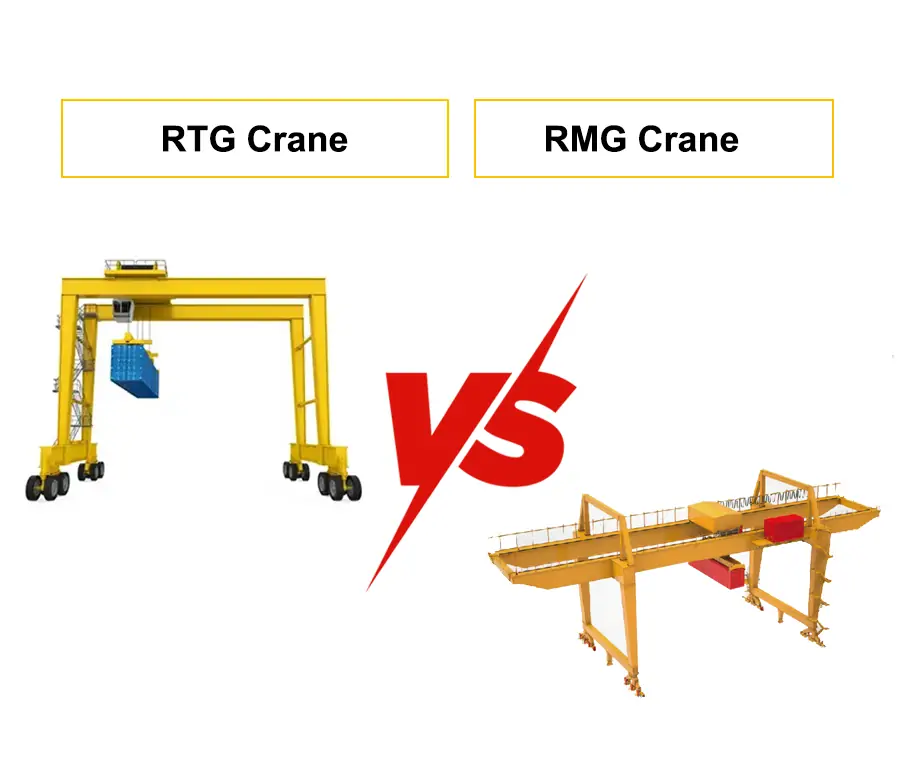
Q2: What is the difference between RTG and RMG cranes?
RTGs move on rubber tires and can be freely repositioned within the yard; RMGs operate on fixed rails, offering greater potential for automation and lower long-term operating costs, though they require dedicated rail infrastructure.
Q3: What certifications should container cranes possess?
Key certifications to look for include CE Marking (European Conformity), ISO 9001 Quality Management System certification, and compliance with FEM (European Materials Handling Federation) design standards. Entry into CIS markets also requires EAC certification.
Q4: What is the typical design service life of a container crane?
With proper maintenance, a container crane has a designed service life of 20–25 years. Realizing the crane's full lifecycle value requires regular inspections and the replacement of critical components—strictly following ISO 9927 standards.
Q5: Can all-electric RTGs meet the demands of continuous, 24-hour port operations?
Yes. Numerous high-intensity port operations worldwide have proven modern all-electric RTGs, which completely eliminate diesel fuel costs, reduce maintenance frequency, and help terminals achieve zero-emission certification.

 English
  العربية
  Español
  Français
  Português
  Русский