

An overhead crane typically costs from about $1,800 for a 1-ton single girder crane to well over $100,000 for a heavy-duty, European-standard double girder crane. For the two most common sizes, published China-built supplier price lists put a 10-ton single girder crane at roughly $3,900–$12,000 and a 20-ton single girder crane at roughly $7,100–$18,300. Within each capacity, the spread comes mainly from span, lifting height and duty class, not from tonnage alone.
Those figures cover the crane itself. Runway beams, installation, freight, import duties and inspection are budgeted separately, and they are where many quotes quietly differ. This guide shows the reference ranges, what moves the price, and how to compare quotes on equal terms.
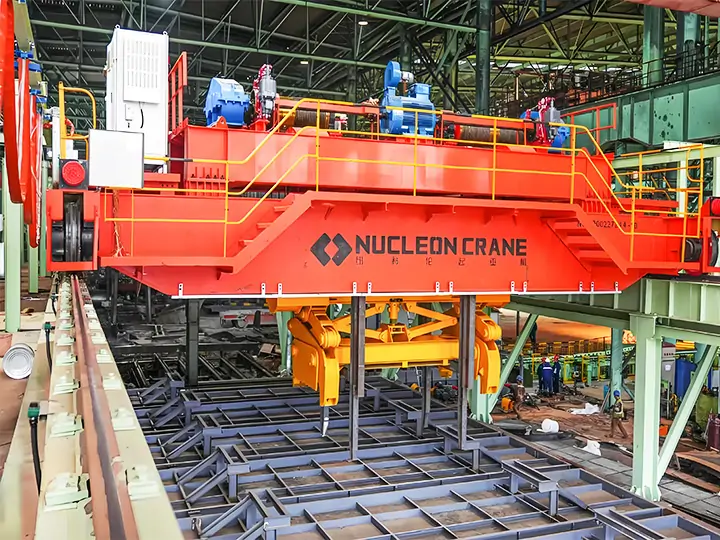
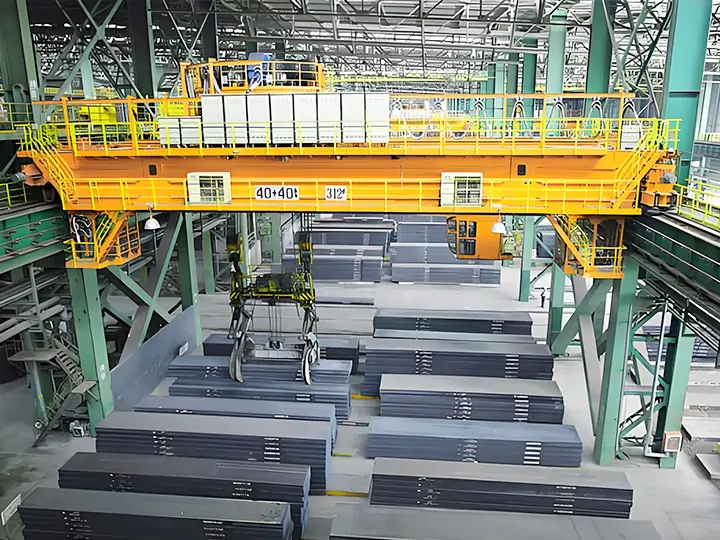
Table des matières
Overhead Crane Price at a Glance
The table below collects published list-price ranges for China-built single girder overhead cranes. These are market reference ranges from supplier price lists, not a quotation. They cover the crane only, for spans of roughly 7.5–31.5 m and lifting heights of 6–30 m.
| Crane type and capacity | Reference price range (USD) | Main driver of the spread |
| 1-ton single girder | $1,830–$5,100 | Span (7.5–28.5 m) |
| 2-ton single girder | $2,000–$5,900 | Span, lifting height |
| 3-ton single girder | $2,130–$7,680 | Span, lifting height |
| 10-ton single girder | $3,890–$12,000 | Span, duty class |
| 10-ton low-headroom single girder | $4,085–$12,600 | Span, headroom design |
| 16-ton FEM/DIN-standard single girder | $11,700–$22,800 | Design standard, components |
| 20-ton single girder | $7,100–$18,300 | Span, duty class |
| 20-ton low-headroom single girder | $7,500–$19,300 | Span, headroom design |
| 20-ton offset-trolley single girder | $11,360–$32,940 | Span, trolley design |
A 5-ton crane sits between the 3-ton and 10-ton rows. Within one capacity, the top of the range is about 2.6–3.1 times the bottom (for example, $3,890 to $12,000 for 10 tons), and that gap is mostly span and lifting height.
For double girder cranes, price lists are less uniform because most are built to order. Published project cases from Chinese suppliers show how widely they vary:
| Double girder project example | Published price (USD) |
| 10-ton top-running double girder, wire rope hoist, 22.5 m span | about $20,700 |
| 50-ton QD heavy-duty double girder, open winch trolley | about $53,000 |
| 32-ton + 16-ton European heavy-duty, open winch trolley | about $107,000 |
| 100-ton QE double trolley | about $331,000 |
The 50-ton and 32-ton rows are not like-for-like, since spans and specifications differ. They still illustrate how far design standard, duty class and components move the price: a heavier European-standard crane can cost twice as much as a larger domestic-standard one.
What the Crane Price Includes (and What It Usually Does Not)
When a supplier quotes an "overhead crane price," it normally includes:
- Main girder(s) and end carriages (end trucks)
- Hoist and trolley, or winch trolley on heavier cranes
- Electrical system: motors, controls, pendant or remote control, limit switches
- Standard paint and a basic set of safety devices
It usually does not include:
- Runway beams, rails and brackets. If the building has no runway, this is a separate steel package. If it does, the existing columns and corbels must be checked for the new wheel loads (see our warehouse crane guide for SMEs).
- Power supply to the crane, such as a conductor bar or festoon cable system.
- Installation, commissioning and load testing, on site.
- Freight and insurance. Long girders may need flat-rack or open-top containers.
- Import duty, VAT and local taxes, which depend on the destination country.
- Third-party inspection, certification and operator training required locally.
Always ask the supplier to confirm line by line which of these are inside the quoted price.
Price by Crane Type
Ponts roulants à poutre unique
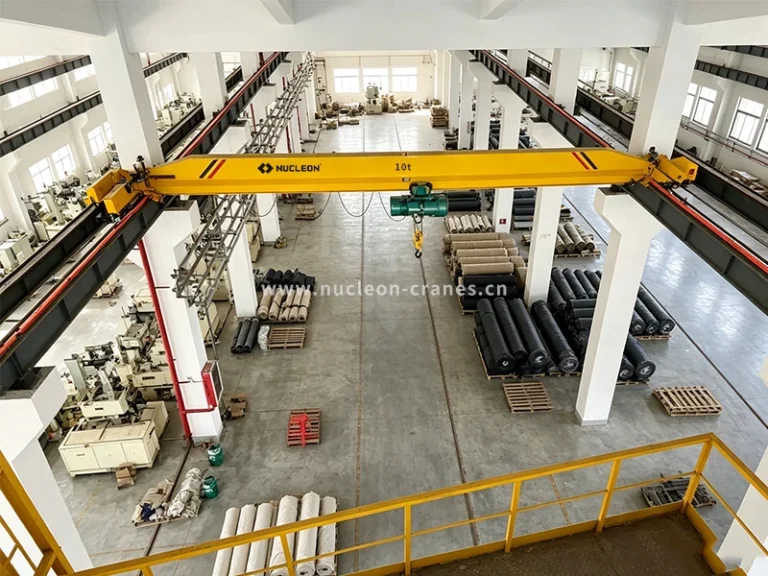
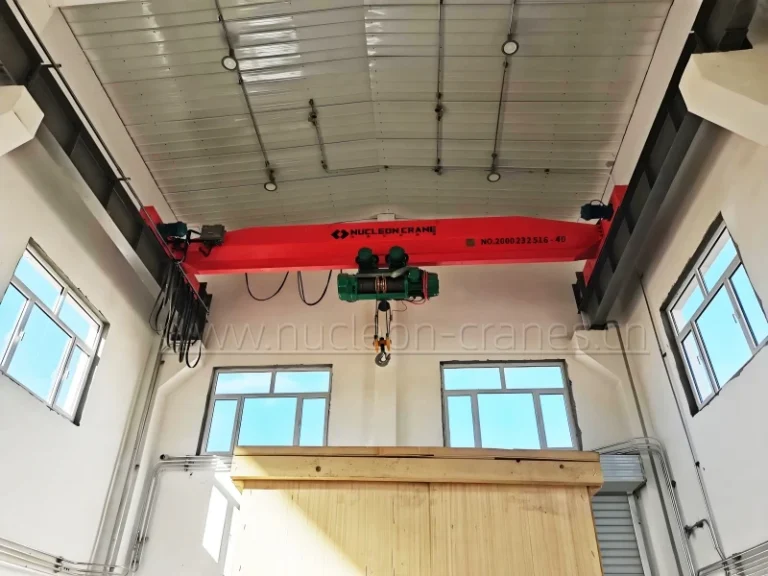
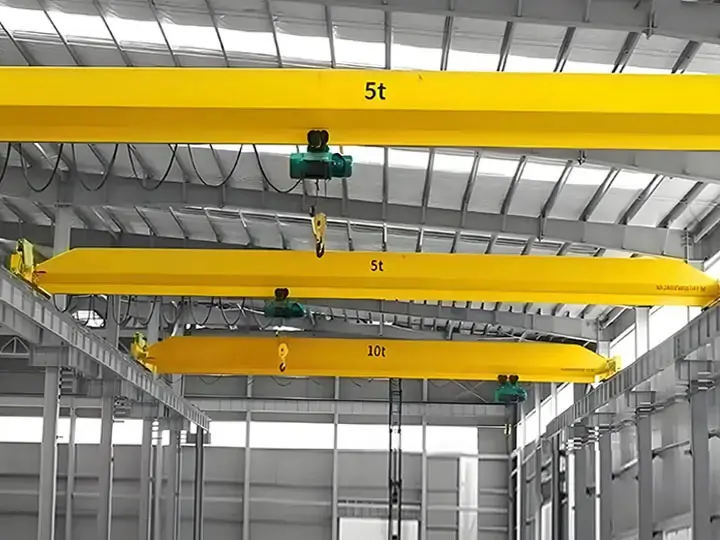
A single girder crane carries the hoist under one main beam. It is the lowest-cost option and the standard choice for light to medium duty, typically up to about 20 tons and moderate spans. Prices in the table above reflect this type. See our pont roulant monopoutre range for specifications.
Low-headroom and European-standard single girder cranes

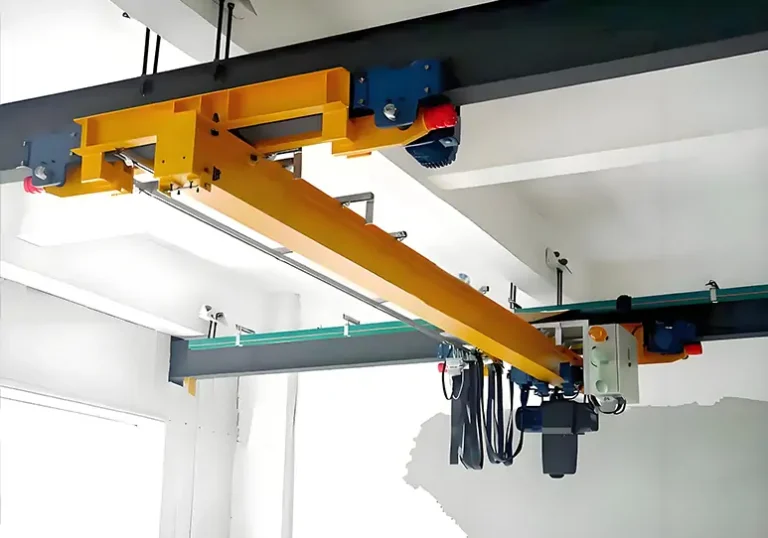
Low-headroom designs fit the hoist alongside or between the beams to gain hook height in a low building. European (FEM/DIN-style) designs use lighter, more compact structures with higher-grade components and smoother speed control. Both cost more than a standard crane of the same capacity. The 16-ton FEM/DIN range ($11,700–$22,800) overlaps with and exceeds the standard 20-ton range ($7,100–$18,300) even though the capacity is lower, which shows how much the design standard, not capacity, drives that price.
Ponts roulants bipoutres
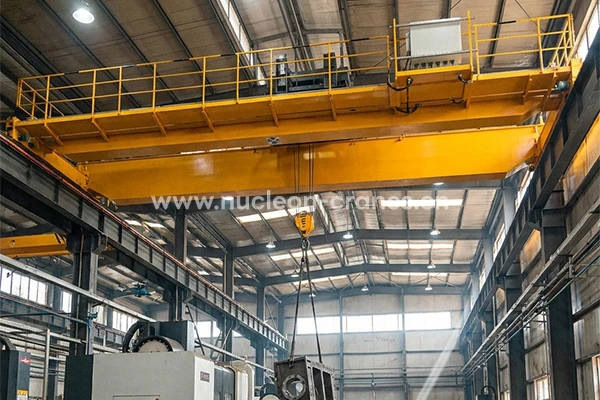
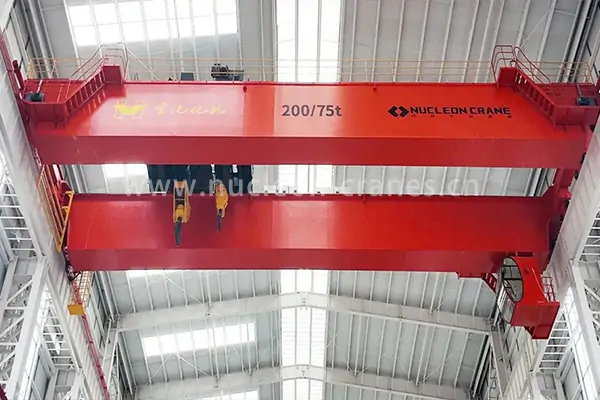
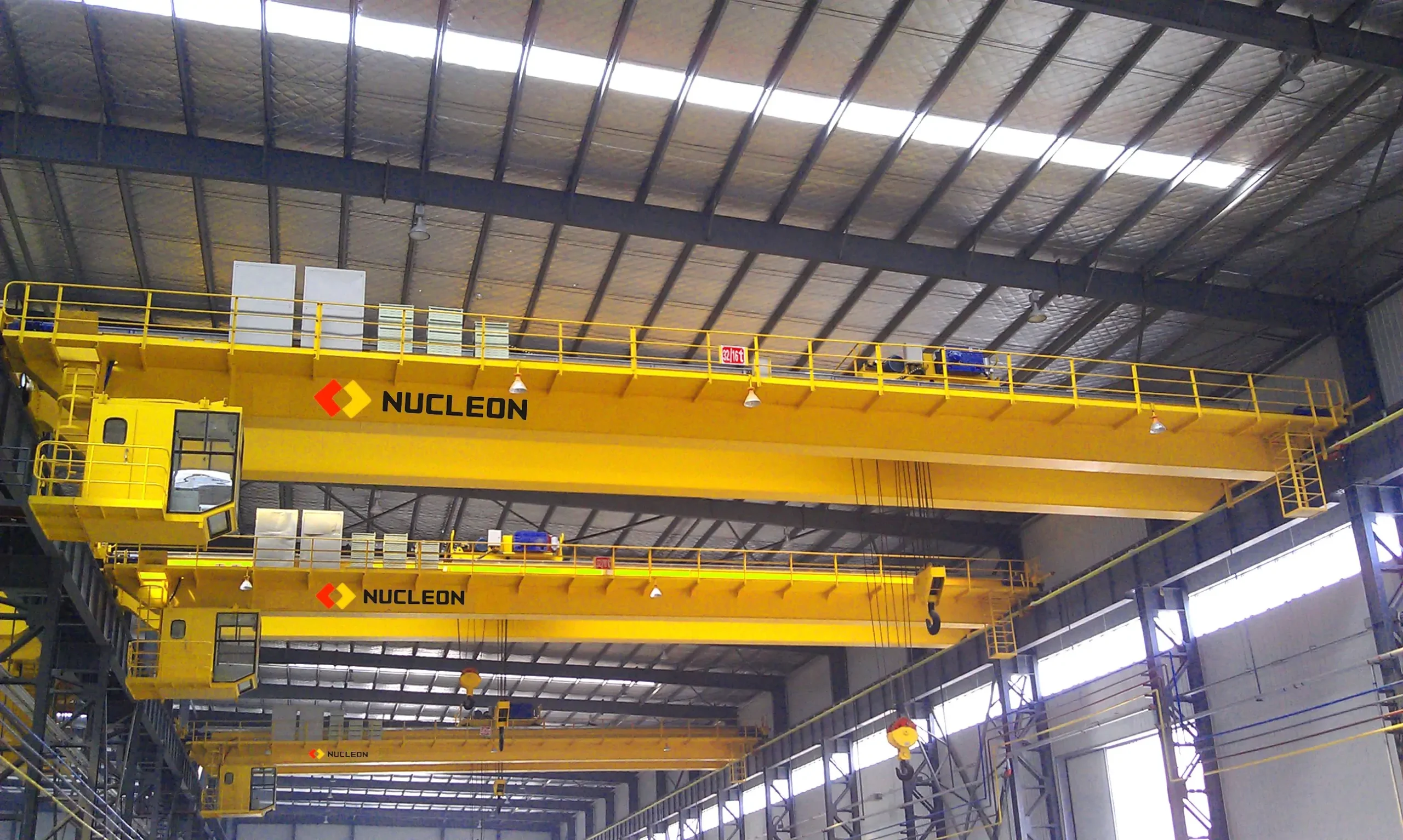
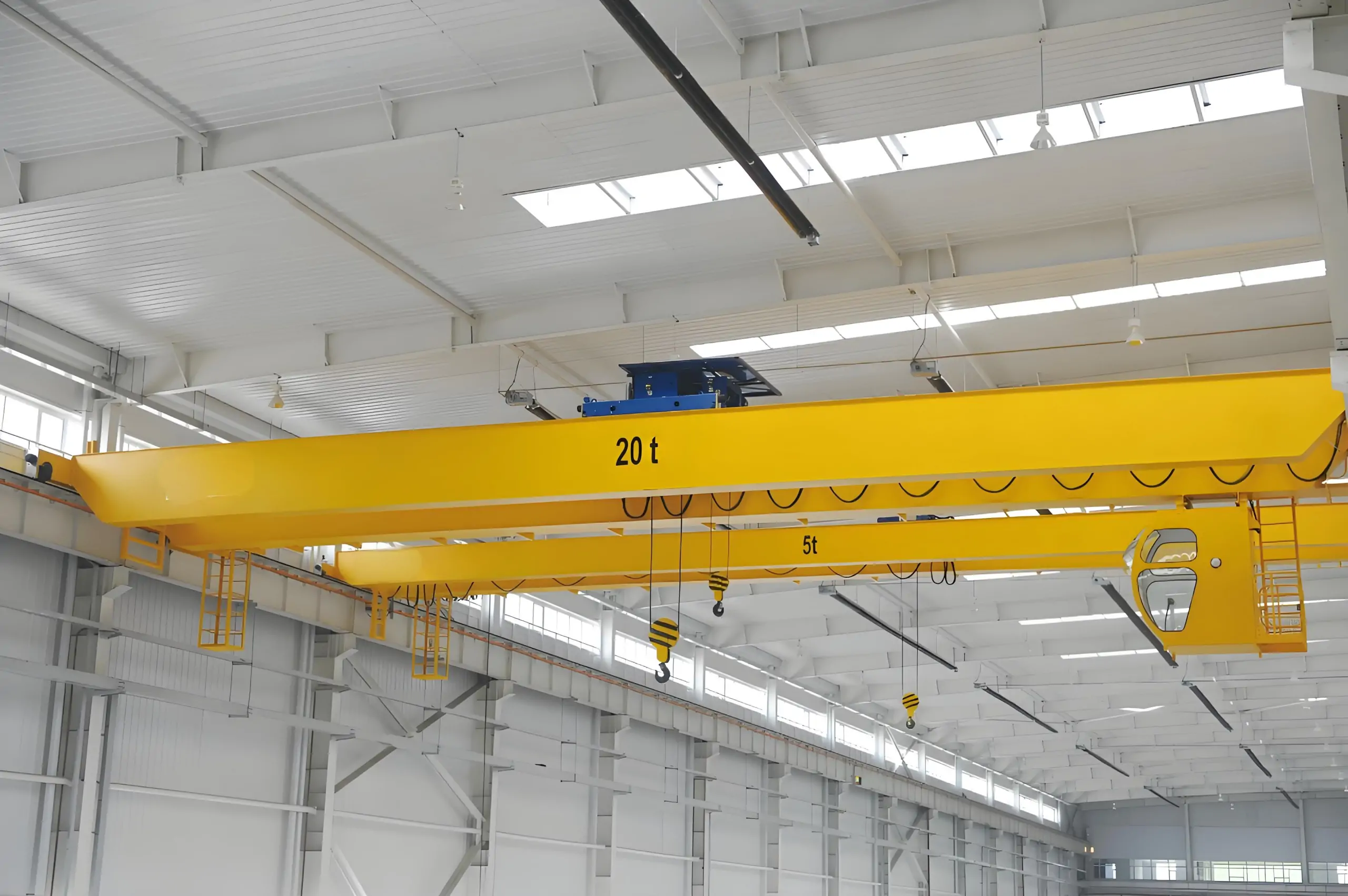
Two girders carry a heavier hoist trolley or winch trolley, allow higher capacity and longer spans, and give more hook height. They cost more because of the second girder, heavier end carriages and a larger trolley, and they are specified for heavy-duty or continuous operation. Read ponts roulants à poutre unique vs ponts roulants à double poutre for when the extra cost is justified, or browse our pont roulant bipoutre range.
The Six Factors That Move the Price Most
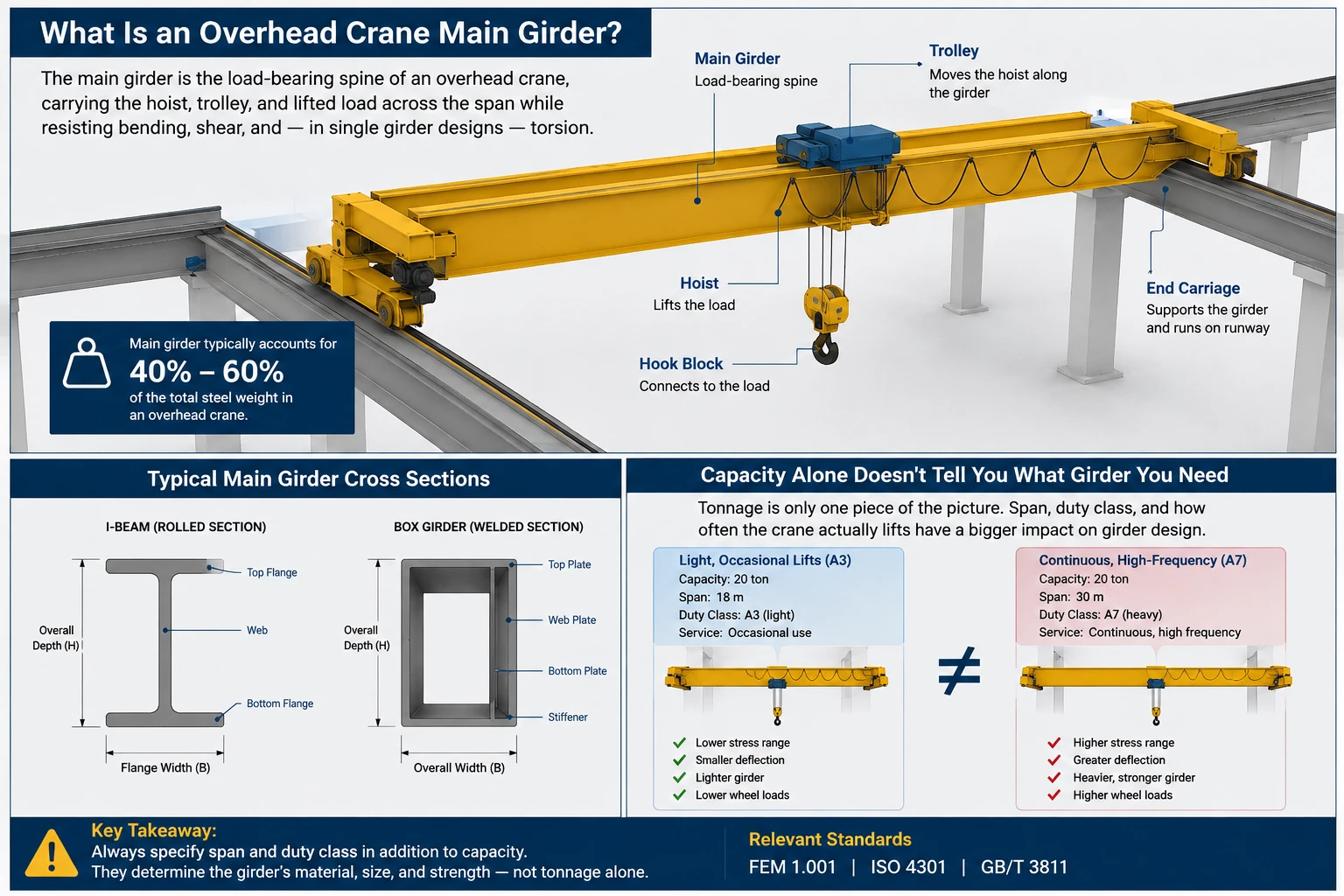
- Capacity. Higher capacity needs a larger hoist, deeper girder section, bigger wheels and a stronger end carriage.
- Span. Longer spans need longer, heavier girders and stricter deflection control. Span and lifting height together explain most of the gap between the low and high end of each capacity band. See overhead crane span and lifting height to measure yours correctly.
- Duty class. A crane working a few lifts per shift (A3–A4) is built lighter than one working repeated production cycles (A5–A6 or above). Higher duty needs stronger motors, gearboxes, brakes and structure. Understating duty gives a lower quote and a shorter service life. See crane duty class explained et LD vs HD overhead cranes.
- Design standard and components. European-style designs and branded electrical parts, hoists and variable-frequency drives raise the price, and they also reduce maintenance and improve load control.
- Lifting height, speeds and control. Higher lift, faster speeds, variable-speed drives, radio remote control or a cabin all add cost.
- Environment and special features. Outdoor use, hot or corrosive areas, explosion-proof requirements and extra safety systems each add engineering and parts cost. Our overhead crane safety devices guide shows which protections are worth specifying.
Total Project Cost: Budget Beyond the Crane
For planning, think in layers rather than a single number:
| Cost layer | What to confirm |
| Crane (supplier quote) | Capacity, span, lifting height, duty class, standard |
| Runway and rails | Existing building or new steel; column and corbel check |
| Power and controls | Voltage and frequency, supply method, remote control |
| Freight and insurance | Incoterm (FOB, CIF, etc.), container type, destination port |
| Import duties and taxes | Customs code, local taxes, who pays |
| Installation et mise en service | Who supplies labour, lifting equipment and supervision |
| Inspection and certification | Local rules, test load, operator training |
Two cranes with the same headline price can have very different total costs once these layers are added. A low quote that leaves out the runway, power supply or installation is the most common reason for budget overruns. We see the same pattern in jib crane quotes, and the same checks apply here.
How to Compare Overhead Crane Quotes Fairly
Before you compare prices, make sure each quote is built on the same assumptions:
| Check | Why it matters |
| Duty class stated (A3, A4, A5...) | Different duty classes mean different structure and life |
| Hoist model and brand | Hoist type drives speed, headroom and maintenance |
| Motor protection and insulation class | Affects life in heat, dust and humidity |
| Speed control (single speed, two speed, variable frequency) | Determines positioning accuracy and shock loads |
| Safety devices included | Overload limiter, limit switches, buffers, anti-collision |
| Girder steel and structure | Material and fabrication quality are hard to see in a quote |
| Paint specification | Matters outdoors and in humid or coastal sites |
| Runway, rails, power supply | Included or excluded |
| Installation et mise en service | Included or excluded |
| Warranty and spare parts | Duration, coverage and parts availability |
| Quote validity | Steel prices and exchange rates move |
When one quote is far below the rest, the gap is almost always in one of the first five rows. Our overhead crane inspection guide for buyers and exporters explains which documents to request so the crane passes acceptance later.
How to Lower the Overhead Crane Price Without Cutting Safety
- Specify duty honestly. Matching A3–A4 to light, intermittent use avoids paying for A5–A6 structure you will not use. Do not under-specify heavy production use.
- Choose single girder where capacity and span allow. Move to double girder only when capacity, span or hook height requires it.
- Measure span and lifting height precisely. Paying for 3 m of unnecessary span adds girder weight and wheel load.
- Use standard components. Standard hoists and drives are cheaper to buy and to service than custom parts.
- Check the building first. Reinforcing columns and runway after purchase is far more expensive than designing the crane around the building.
- Plan shipping early. Consolidating cranes, runway steel and spare parts in fewer containers reduces freight cost.
- Do not cut safety devices. Overload protection and two-stage travel limits cost little compared with downtime and repair.
What to Send to Get an Accurate Quote
A reliable price needs these details:
- Rated capacity and the heaviest real load, including lifting attachments
- Span (rail centre to rail centre) and required lifting height
- Duty pattern: lifts per hour, hours per day, load spectrum
- Voltage, frequency and phase of the site power supply
- Working environment: indoor or outdoor, temperature, dust, humidity, corrosive or explosive atmosphere
- Runway length and whether the runway already exists
- Building drawings or photos, if possible
- Destination country and port, for freight and import costs
With these, an engineer can propose the right configuration and a quote you can compare.
Foire aux questions
How much does a 5 ton overhead crane cost?
A 5-ton single girder overhead crane falls between the published 3-ton ($2,130–$7,680) and 10-ton ($3,890–$12,000) reference ranges for China-built cranes, with span and lifting height deciding where it lands. Runway, installation, freight and taxes are extra.
How much does a 10 ton overhead crane cost?
Published price lists put a standard 10-ton single girder crane at about $3,890–$12,000, and a low-headroom version at about $4,085–$12,600. A 10-ton double girder crane at a 22.5 m span appears in one supplier case at about $20,700.
How much does a 20 ton overhead crane cost?
A standard 20-ton single girder crane lists at about $7,100–$18,300, and a low-headroom version at about $7,500–$19,300. Offset-trolley single girder designs list higher, at about $11,360–$32,940. Heavy-duty double girder cranes cost more.
Why is a double girder crane more expensive than a single girder crane?
It has two main girders, heavier end carriages and a larger trolley or winch, and it is designed for higher capacity, longer spans or heavier duty. The extra cost buys capacity, hook height and service life that a single girder crane cannot provide.
Does the crane price include installation?
Usually not. Most supplier quotes cover the crane only. Installation, commissioning, runway, power supply, freight and taxes are normally quoted separately or left to the buyer. Always ask for the inclusion list in writing.
Why are prices from different suppliers so different?
The usual causes are different duty classes, hoist and electrical brands, girder structure, and what is included in the price. Compare quotes line by line using the checklist above before judging by the headline number.
How can I check a quote is realistic?
Compare it with the reference ranges above for the same capacity, span and duty class, and confirm the quote states the duty class, hoist model, safety devices and inclusions. A quote far below the range usually leaves something out.
Get an Overhead Crane Quote from Nucleon
Send us your capacity, span, lifting height, duty pattern and site conditions, and our engineers will recommend a configuration and quote it with a clear inclusion list. Contact us through the Nucleon Crane contact page or browse our overhead crane range. For related budgets, see our gantry crane price guide, truss gantry crane price guide et electric hoist price and capacity guide.

Spécialiste en équipement
Chef d'entreprise expérimenté dans le domaine des grues, avec une vaste expérience en gestion de projets de levage lourd et en supervision opérationnelle. Antécédents avérés en matière de croissance du chiffre d'affaires et de respect des normes de sécurité.

 English
 العربية
 Español
 Français
 Português
 Русский