

Tabla de contenidos
Operating an overhead crane is more than just pressing a button. Proper overhead crane operation requires a combination of technical knowledge, safety awareness, and practical skills. This guide provides step-by-step instructions for using bridge cranes, enabling efficient operation while maintaining workplace safety standards.
Whether you are a novice operator or supervising crane operations, understanding the correct procedures can prevent accidents and extend equipment life. Research by the Occupational Safety and Health Administration (OSHA) shows that proper training can reduce overhead crane-related accidents by up to 70%. Let's delve into the core essentials of overhead crane operation.
What is an Overhead Crane?
An overhead crane is a type of lifting device that moves materials horizontally along overhead rails. The system consists of parallel rails and a moving bridge spanning the gaps. An electric hoist moves along the bridge, lifting and positioning loads throughout the working area.
Overhead Crane Core Components and Configuration
A typical overhead crane comprises several integrated systems. The bridge travels perpendicular to the rails. The trolley moves along the bridge. The hoist vertically lifts and lowers the load. This configuration allows movement in three directions: up and down, left and right, and forward and backward.
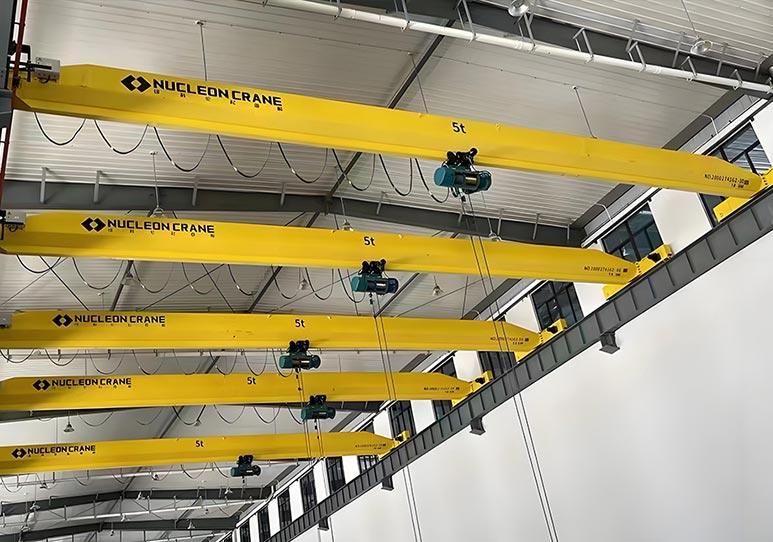
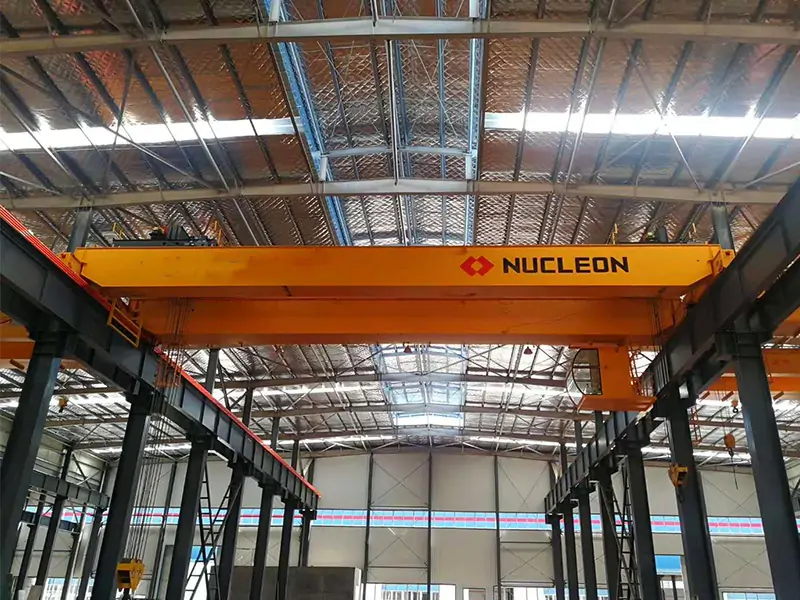
Most industrial facilities use top-running cranes, where the bridge runs on rails above the track beam. Under-running cranes are suspended from the lower flange of the track beam. This configuration is suitable for facilities with low ceiling heights or limited headroom requirements.
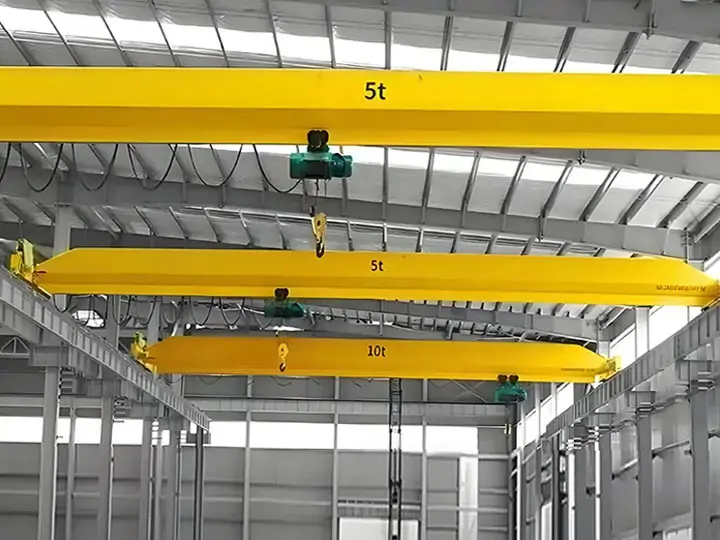
Top Running Crane
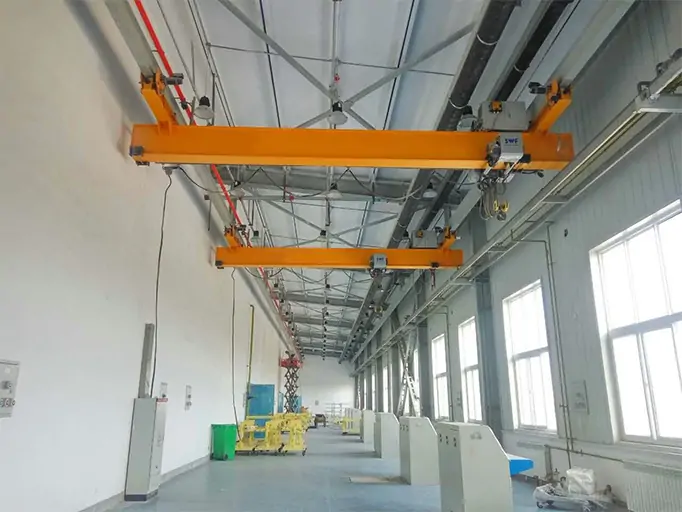
Under Running Crane
Common Applications of Overhead Crane
Plantas de fabricación use overhead cranes to move materials between workstations. Steel mills use them to handle raw materials and finished products. Warehouses utilize bridge cranes for inventory management and transportation operations. This versatility makes overhead cranes an essential piece of equipment in modern industrial environments.
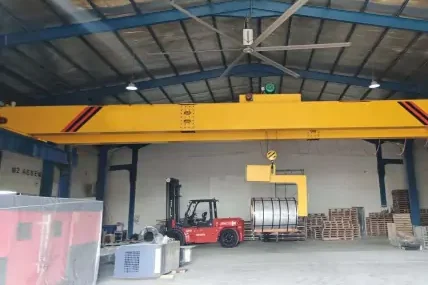

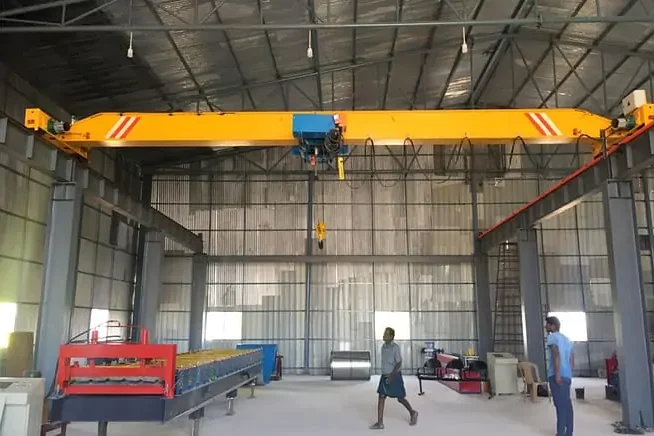
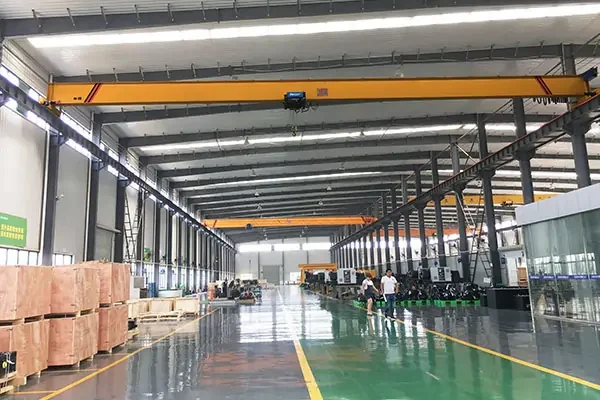
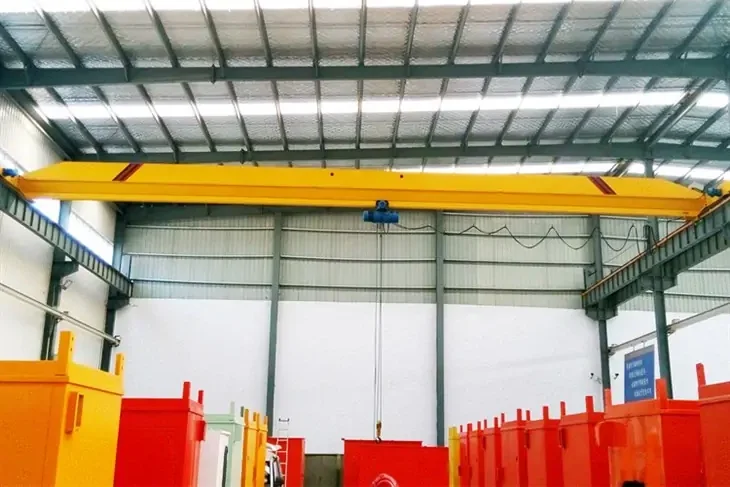
Obras de construcción use overhead crane systems to meet temporary lifting needs. Power generation facilities use dedicated bridge cranes to configure and maintain heavy-duty turbines and generators. Nucleón provides customized overhead crane solutions for various industries, covering a wide range of industrial needs, from light-duty workshop applications to heavy-duty steel smelting. Each overhead crane application requires specific operating methods based on load characteristics and environmental conditions.
What are the parts of an overhead crane?
Understanding the components of an overhead crane will help you operate it effectively. Each component plays a specific role in the safe handling of materials.

Structural Components
The bridge frame forms the main horizontal structure spanning the width of the span. The track beams support the entire crane system and distribute the load to the building columns. End beams contain wheels and drive mechanisms, allowing the bridge frame to move along the tracks.
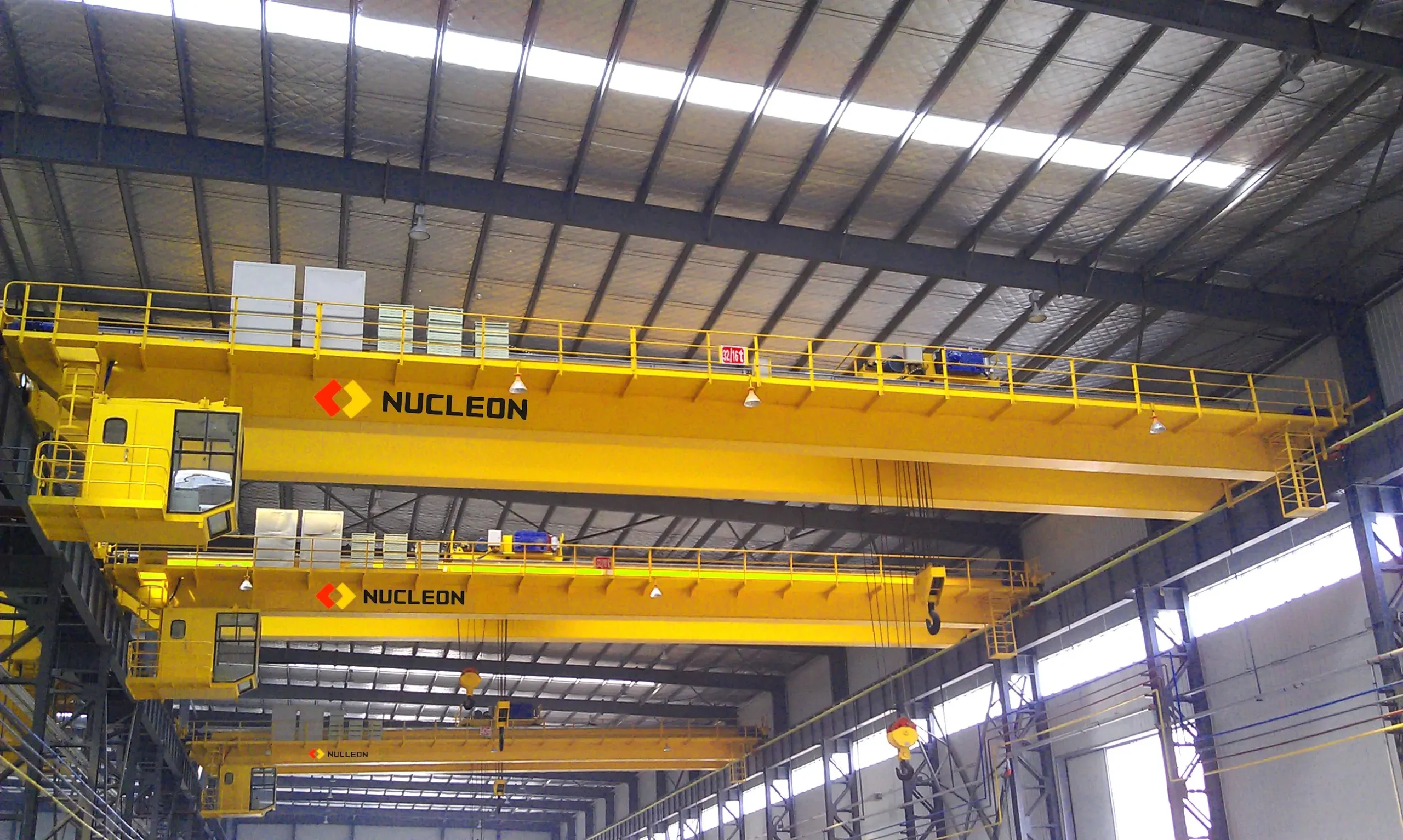
The main beams constitute the bridge frame structure itself. Single-girder cranes use one main beam. Double-girder configurations use two parallel beams to meet greater tonnage requirements. The main beam design directly affects lifting capacity and operating characteristics.
Mechanical System
The hoist mechanism performs the actual lifting work; it includes a motor, wire rope, and hook assembly. An electric motor drives the wire rope to raise or lower the load.
The trolley carries the hoist across the bridge frame. The trolley wheels run on tracks mounted on the bridge frame's main beams. The drive system allows the trolley to move smoothly along the bridge frame tracks.
Control and Safety Systems
Ground-mounted controllers allow operators to direct the movement of the overhead crane while remaining near the ground. Wireless remote controls provide wireless operation from various locations. Some applications require cab-mounted controllers for better visibility during complex operations.
Safety features include limit switches to prevent overtravel. Overload sensors warn when approaching weight limits. An emergency stop button allows for immediate shutdown in case of problems.
Electrical Distribution Components
A conductor rail or cable trolley system supplies power to the moving parts. This system maintains a reliable power supply throughout the entire range of motion of the overhead crane. Regular inspection of electrical connections ensures safe and consistent performance.
Pre-Operation Safety Check
Performing a system check at the start of each work period prevents accidents and equipment damage. A thorough pre-operation check takes approximately 10-15 minutes but can prevent costly downtime.
Visual Inspection Procedure
- Inspect the hook for cracks, deformation, or wear. Check that the safety latch is functioning properly and fully closed. Inspect the wire rope for broken strands, kinks, or a diameter reduction exceeding the manufacturer's specifications.
- Inspect all visible structural components for damage or abnormal wear patterns. Look for loose bolts, weld cracks, or corrosion at critical connections. Record any abnormalities and report them immediately to maintenance personnel.
Functional Testing Sequence
- Test all controllers before lifting any load. Verify that the up, down, and travel movements respond correctly. Check that the crane stops smoothly when the controller is released.
- Trial the emergency stop system to confirm normal operation. Test the limit switches by slowly approaching their activation points. Test warning signals such as horns or lights. Ensure all safety systems function as designed.
Work Area Preparation
- Survey the path you will take to move the load. Identify obstacles, personnel, or other equipment in the work area. Ensure sufficient clearance above, below, and around the planned load movement.
- Check that the ground area can support your load. Check for overhead obstacles, including lighting fixtures, ductwork, and ventilation systems. Clear communication with ground personnel can prevent accidents during crane operation.
Step-by-Step Operating Procedures
Following consistent procedures ensures safe operation and extends equipment life. These steps apply to most bridge crane operations.
1.Preparing to Lift
Position the crane directly above the load. This alignment prevents dangerous lateral forces on the equipment. Use appropriate lifting attachments suitable for the load weight. Connect the rigging to the load's balance point whenever possible. An unbalanced load will sway during movement, creating a safety hazard. Carefully inspect all connections before lifting.
2.Lifting Process
Slowly tighten the slack until it becomes taut. Pause to verify that all connections are secure and the load is well balanced. Raise the load approximately 15 cm and stop to test stability.
If the load tilts excessively or sways, lower it and adjust the rigging. Once stable, continue lifting at a controlled speed to the desired height. Move smoothly, avoiding sudden starts or stops.
3.Horizontal Movement
Move the load at a steady speed appropriate to the surrounding environment. Start and stop gradually to minimize load sway. Keep the load as low as possible while maintaining clearance above obstacles.
Never move the load over personnel, even in the presence of obstacles. Maintain clear visibility to the destination. Stop immediately if visibility is impaired.
4.Landing and Placement
Precisely position the overhead crane above the target point. Lower the load slowly as it approaches the landing surface. Stop when the load contacts the surface but the rigging maintains slight tension.
Verify stable placement before fully releasing the rigging tension. Remove the rigging only after confirming that the load will not shift or fall. Return the hook to a safe height after completion.
Advanced Operating Techniques
Experienced operators develop skills that go beyond basic procedures. These techniques improve efficiency while maintaining safety standards.
Controlling Load Movement
Predict load sway caused by acceleration and deceleration. Skilled operators predict and respond to movement. This skill reduces positioning time and improves placement accuracy.
In outdoor environments, wind has a significant impact on suspended loads. Delay operations when wind speeds exceed safe limits. When operating in moderate winds, approach the final position as far downwind as possible.
Dual-Crane Lifting Operations
Some loads require multiple cranes to operate simultaneously. Dual-crane lifting requires precise coordination between operators. Designate one person as the lifting supervisor to synchronize all movements.
Carefully calculate load distribution to prevent overloading of either crane. Use load monitoring equipment when available. Practice lifting without an actual load to verify procedures and communication.
Handling Different Load Types
Long or irregularly shaped items require special attention to balance and clearance. Distributing attachment points helps evenly distribute weight. Carefully plan the route according to the shape and size of the load.
Fragile materials require extra care during all movements. Reduce speed and acceleration below normal operating parameters. Add padding at rigging contact points to prevent surface damage.
Mantenimiento y cuidado
Operators play a critical role in the lifespan of the crane. Routine observation and basic maintenance prevent major failures.
Operator-Level Maintenance
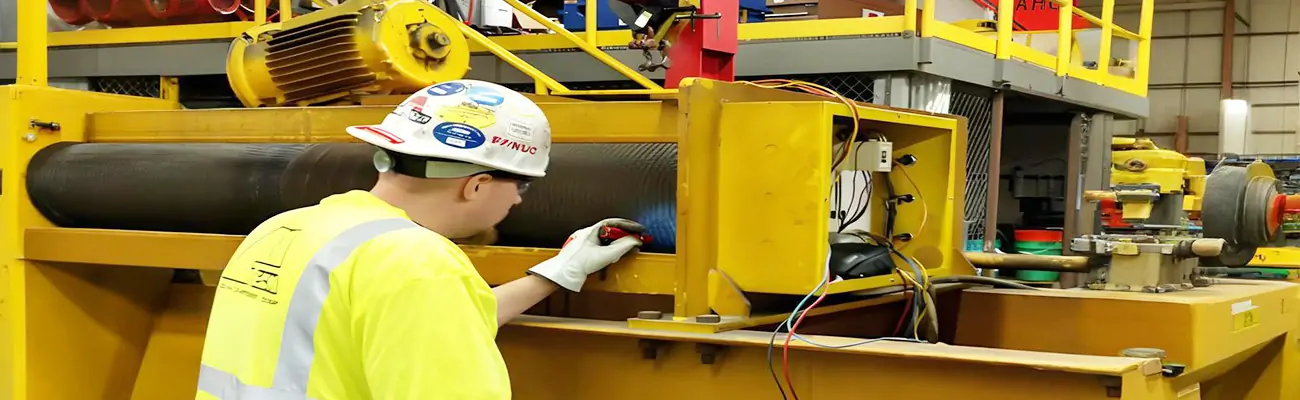
Lubricate accessible points according to the manufacturer's schedule. Report any unusual noise, vibration, or resistance during operation. Keep controls clean and functional.
Pay attention to changes in wire rope condition. Early problem detection allows for planned repairs rather than emergency failures. Your observation helps maintenance personnel keep equipment running safely.
Professional Service Requirements
Qualified technicians must conduct annual inspections in accordance with OSHA regulations. These comprehensive inspections include non-destructive testing of critical components. Inspection documentation meets regulatory requirements and insurance policies.
Major repairs require expertise in bridge crane systems. Attempting complex repairs without proper training can lead to liability and safety issues. Partnering with a certified service provider like Newcoron for all critical maintenance ensures repairs meet manufacturer standards and safety specifications. Newcoron provides comprehensive after-sales service and technical support to help customers keep their equipment in optimal operating condition.
Common Operational Errors to Avoid
Learning from common errors improves safety and efficiency. These errors occur frequently but are preventable through awareness and discipline.
1.Overloading
Never exceed the rated capacity, including the weight of the rigging. Damage from overloading may not be immediately apparent but will eventually lead to failure.
Moving loads generates forces exceeding their static weight. Consider this when planning lifts near capacity limits. If in doubt, use a crane with a higher capacity.
2.Lateral Loading
Keep the hoist rope vertical during lifting. Tilted ropes create dangerous lateral forces that can damage equipment. Always position the overhead crane directly above the load before lifting. Never drag a suspended load horizontally. This practice can damage the floor, load, and crane components. Lower the load onto a wheeled trolley for horizontal movement.
3.Inadequate Communication
Establish clear signals before commencing operations. Misunderstood commands can lead to accidents and equipment damage. Use standardized hand signals or radio procedures.
Verify that everyone understands the planned movement. If communication becomes unclear, stop immediately. A clear understanding can prevent most operational accidents.
Conclusión
Mastering the correct bridge crane operating skills is crucial for ensuring workplace safety and improving productivity. This guide covers a comprehensive range of knowledge, from basic component recognition to advanced operating techniques, helping operators build a solid foundation for safe operation. By following these proven procedures and best practices, you can significantly reduce the risk of accidents, extend equipment life, and optimize material handling efficiency.
Nucleon-China's Leading Bridge Crane Manufacturer
Nucleón always prioritizes user safety and ease of operation. We not only provide high-quality bridge cranes but also dedicate ourselves to providing comprehensive technical support and training services. Every Nucleon bridge crane undergoes rigorous quality testing and is equipped with advanced safety protection systems to ensure stable and reliable operation in various industrial environments.
If you are considering purchasing a new bridge crane or upgrading existing equipment, Nucleon's professional team is ready to provide customized solutions. From equipment selection, installation and commissioning to operation training and after-sales service, Nucleon will provide comprehensive support to ensure your investment yields maximum value.

Preguntas frecuentes
What training is needed for crane operators?
Operators need classroom instruction and practical training. Employers must verify that operators demonstrate competence on specific equipment. Training certifications need to be renewed every three years. Some regions have additional licensing requirements.
How heavy can a typical bridge crane lift?
Capacity ranges from 1 ton for light applications to over 500 tons for heavy industrial use. Most industrial applications use cranes with capacities of 5-25 tons. The crane's nameplate shows the exact capacity rating. Never exceed these limits, including the weight of the rigging.
How fast should a bridge crane move loads?
Speed depends on load characteristics, surrounding conditions, and operator visibility. Typical bridge crane speeds range from 15-60 meters per minute. Hoist speeds vary from 3-18 meters per minute depending on capacity and application. Reduce speed when handling unstable loads, working near personnel, or operating in conditions of limited visibility.
What should you do if the crane stops working during operation?
If you suspect mechanical failure, stop immediately. Contact maintenance personnel and cordon off any area under suspended loads. Follow the facility lockout and tagging procedure before anyone attempts repairs. Document the fault and situation for investigation.
How often should a crane be inspected?
Daily inspections are performed before each shift. Monthly inspections are conducted by designated personnel, focusing on critical components. Annual inspections by qualified professionals include a comprehensive inspection and testing. Harsh working conditions may require more frequent inspections.
Can a bridge crane be operated outdoors?
Outdoor cranes require weather protection and additional structural considerations. Wind loads affect design capacity and operational limitations. Many facilities establish wind speed limits, prohibiting operation during storms. Corrosion protection is critical for outdoor installations. Equipment expected to be exposed to weather requires increased maintenance.
What causes bridge crane wire rope failure?
Overloading causes most premature rope failures. Lack of lubrication accelerates internal wear. Damage caused by improper use weakens the rope structure. Regular inspections and timely replacement prevent most failures.
How to calculate the center of gravity of irregular loads?
Simple shapes reveal a clear geometric center. Complex loads may require engineering analysis. Perform a short test lift to check balance before full lifting. Adjust the rigging if the load is tilted. Consult load drawings or manufacturer specifications when available.
Do experienced operators need further training?
OSHA requires assessments at least every three years. Additional training is required when operators demonstrate inadequacy or after an incident. New equipment types or configurations require specific familiarity. Updated safety regulations may necessitate supplementary training courses.


 English
  العربية
  Español
  Français
  Português
  Русский