

Factory and warehouse managers across Nigeria and Kenya are importing overhead cranes at a rapidly increasing pace —Nigerian imports from China alone jumped from 86 to 266 units between 2024 and 2025 , and Kenya recorded 26 overhead travelling crane imports in 2023 with the trend continuing upward. That demand is real, but so is the risk of choosing the wrong configuration. Get the crane type, duty class, or span wrong, and you are either over-spending on capacity you do not use or under-specifying a unit that will fail under your actual workload.
This guide helps procurement managers in both markets cut through the noise. We compare the main overhead crane types Nucleon supplies, give market-reference price ranges, explain the duty class decision that most buyers skip, and lay out the certification documents you need to demand from any supplier before signing a purchase order.
Across Nigeria's manufacturing, oil & gas, cement, and food processing sectors, and Kenya's growing machinery, logistics, and precast construction industries, the selection logic is largely the same — with a few operational differences worth knowing.
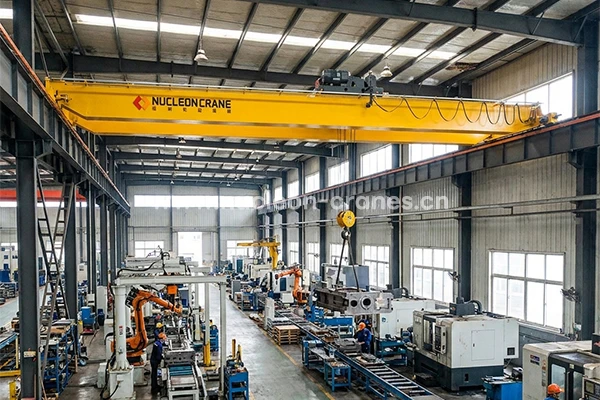
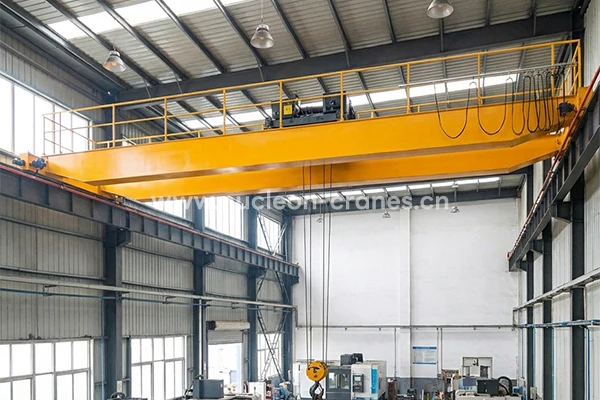
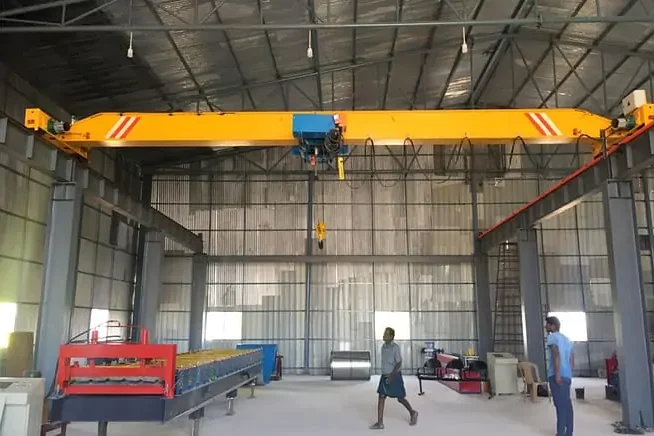
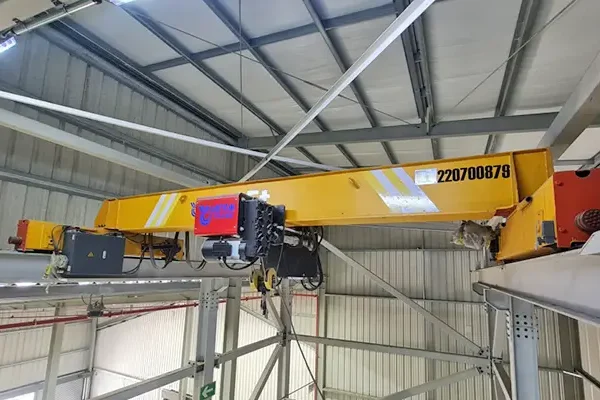
Quick Reference: Overhead Crane Types & Price Ranges
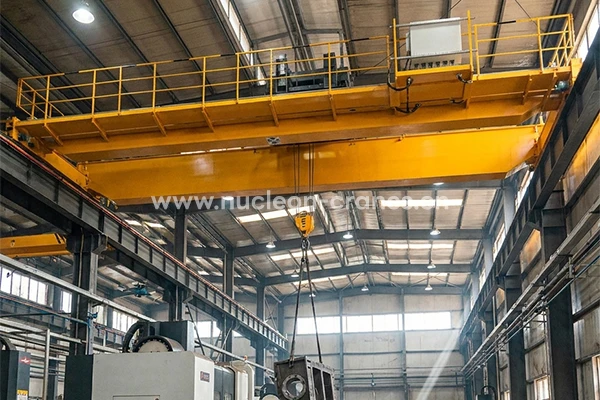
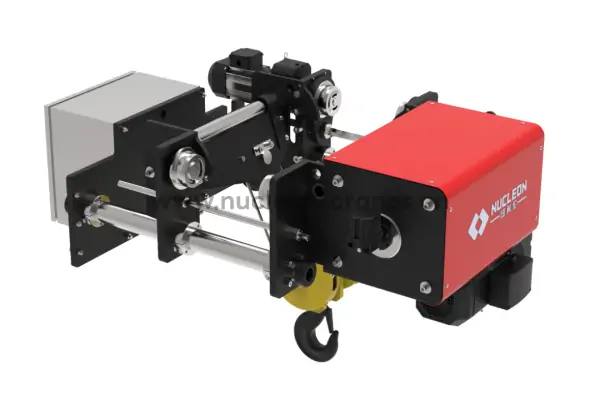
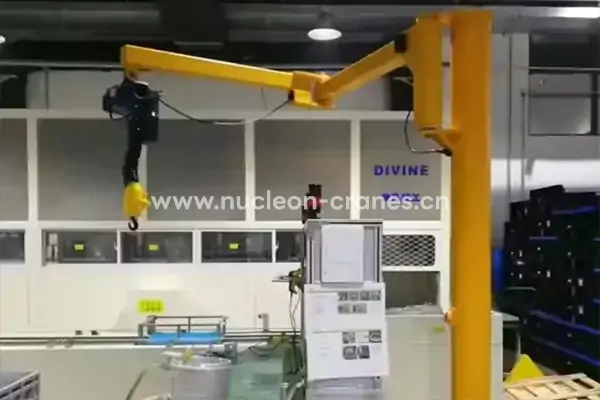
| Tipo de grúa | Capacidad típica | Precio de referencia de mercado | Mejor ajuste |
| Single Girder Overhead Crane (LD) | 1–32 t | $4,000–$18,000 | Light-to-medium duty workshops, warehouses |
| European Single Girder (HD) | 1–20 t | $6,000–$22,000 | Frequent cycling, tight headroom, higher precision |
| Double Girder Overhead Crane (QD) | 5–450 t | $15,000–$60,000+ | Heavy industrial, steel, oil & gas, cement |
| Electric Hoist (wire rope) | 1–32 t | $800–$7,000 | Standalone lift or crane upgrade component |
| Jib Crane (floor or wall) | 0.5–10 t | $1800–$9,000 | Workstation lifting, loading bays, maintenance cells |
Prices are market reference figures for China-manufactured equipment, CIF to Lagos or Mombasa port. Final landed cost includes shipping, customs duty, and installation — budget an additional 15–30% depending on destination and complexity.
Obtener cotización de soluciónTypes of Overhead Cranes: What Each One Actually Does
Single Girder vs Double Girder: The Decision That Drives Everything Else
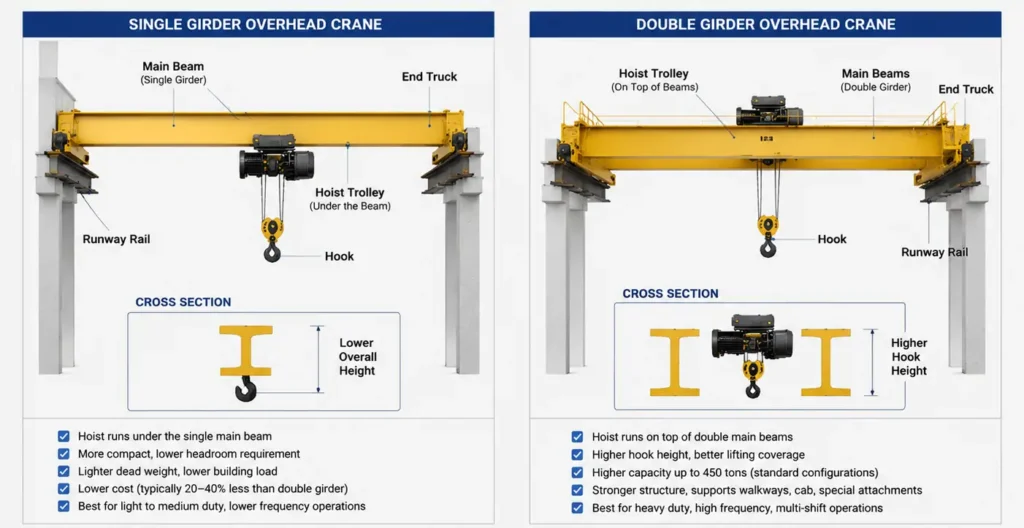
The single-vs-double girder choice is the most consequential decision in the selection process, yet most buyers treat it as a budget question alone. It is actually a duty cycle and capacity question first — the budget follows from there.
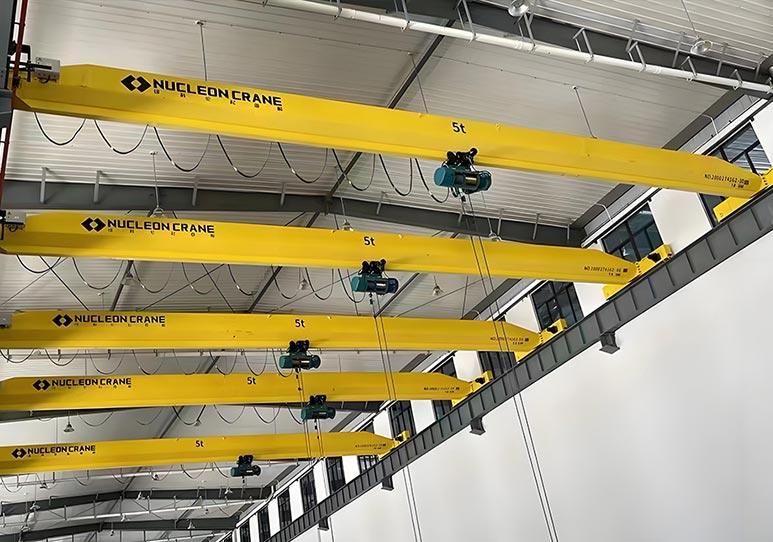
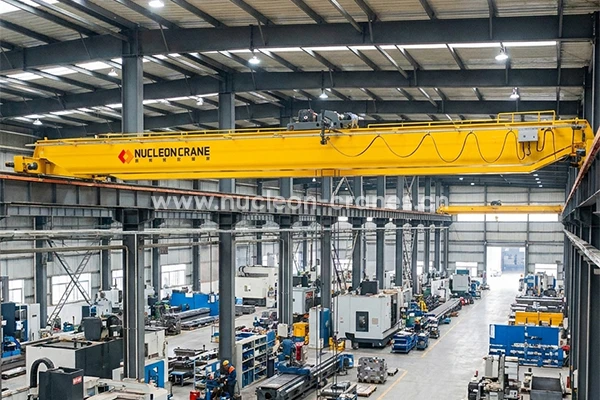
A single girder overhead crane carries one main beam spanning the runway rails, with the hoist running along the bottom flange. This design is compact, lighter on the building structure, and typically 20–40% less expensive than an equivalent-tonnage double girder unit. For facilities lifting loads under roughly 20 tons at moderate frequency — say, fewer than 30–40 cycles per shift — a single girder crane in work duty class A3 or A4 is usually the correct choice and the better value.
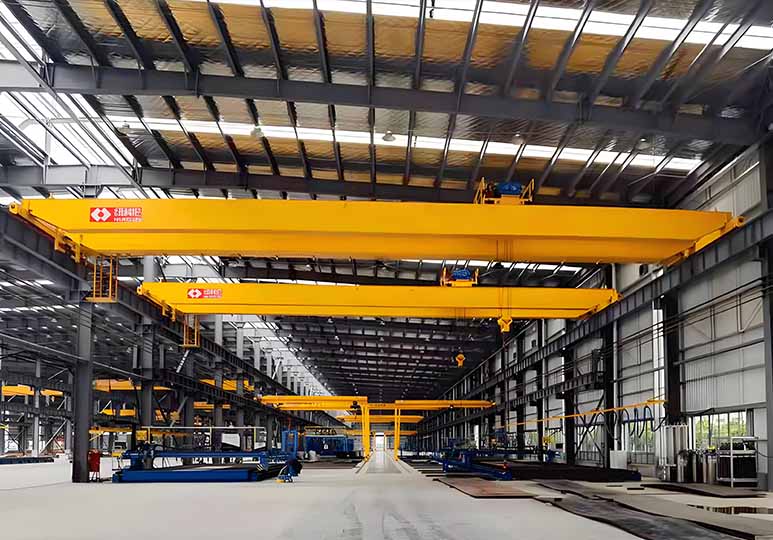
A double girder overhead crane places the hoist trolley on top of two parallel main beams, which delivers several concrete advantages: greater hook height (the trolley sits above the beams rather than below them), higher capacity headroom — typically up to 450 tons for standard configurations — and the structural rigidity to support walkways, maintenance platforms, and cabs. If your operation runs two or more shifts, handles loads consistently above 20 tons, or operates in a metallurgical or oil & gas environment that demands specialized crane configurations (grab buckets, electromagnetic attachments, explosion-proof components), the double girder is the engineering-correct answer, not a luxury.
The most common miscalculation in West and East African factories: buying a single girder crane at the rated maximum of 20 tons and running it at near-full load for eight-plus hours a day. A crane rated at 20 tons is not designed to lift 18–20 tons repeatedly at high frequency. The duty class — not the nameplate tonnage — determines how hard a crane can work. Buyers who skip the duty class conversation typically see accelerated wear on the hoist and drive mechanisms within 18–24 months, followed by repair costs that erase the original savings.
Single Girder Overhead Cranes: LD Type and HD European Type
Nucleon's Grúa puente eléctrica monorraíl tipo LD covers capacities from 1 to 32 tons with spans from 7 to 31.5 meters. It runs at work duty class A3–A4, which corresponds to light-to-moderate use: intermittent lifts, loads that are often well below the rated maximum, and no more than one or two shifts of operation per day. This is the right baseline crane for general assembly workshops, spare-parts warehouses, precast concrete yards, and light manufacturing operations across Lagos, Abuja, Nairobi, and Mombasa.
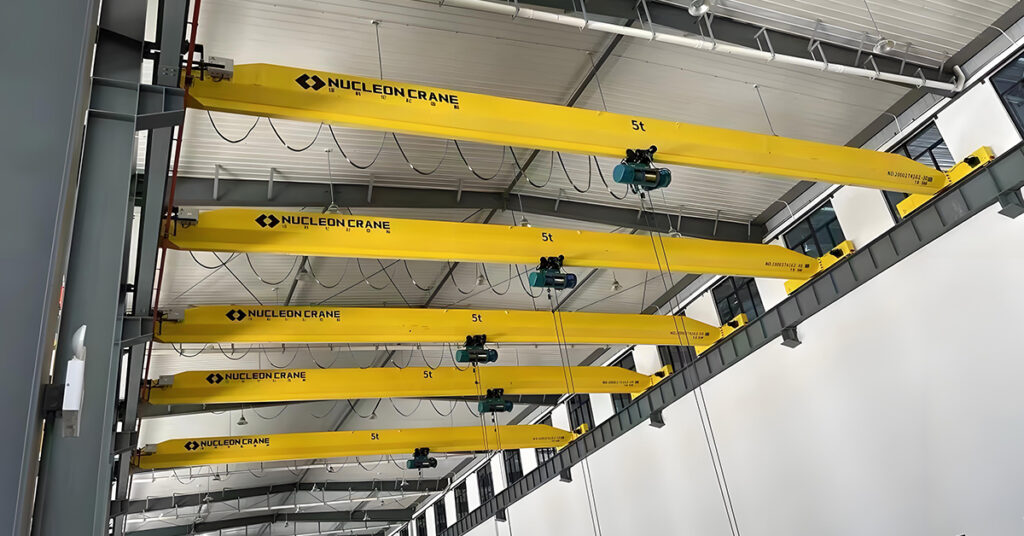
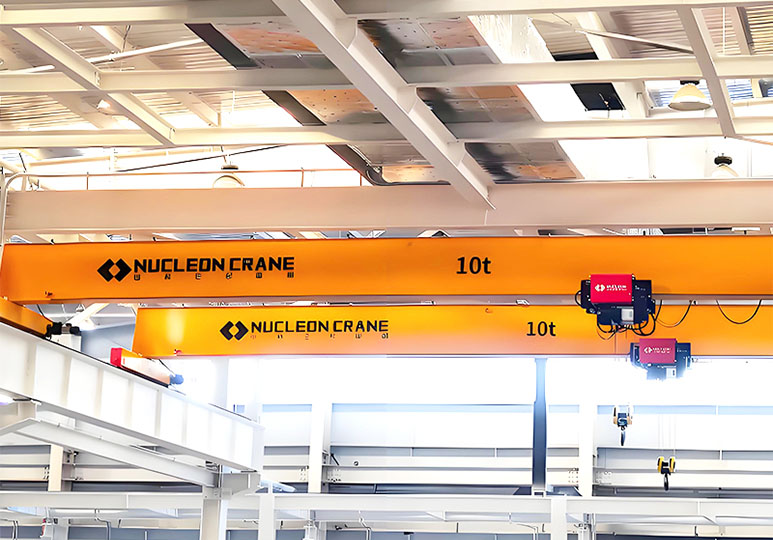
En Puente grúa monorraíl europeo tipo HD is the upgrade path within the single girder family. At work duty class A5 — meaning more frequent cycling, loads closer to the rated maximum, and more demanding operating patterns — the HD crane uses frequency-conversion drives, a lighter and more compact structure, and lower wheel pressure on the runway. For Nigerian food processing plants, Kenyan machinery manufacturing workshops, or any application where the crane is moving several times per hour across a standard shift, the additional upfront cost of the HD variant typically pays back within two to three years through lower energy consumption, reduced runway wear, and longer component life.
Double Girder Overhead Cranes: QD Type
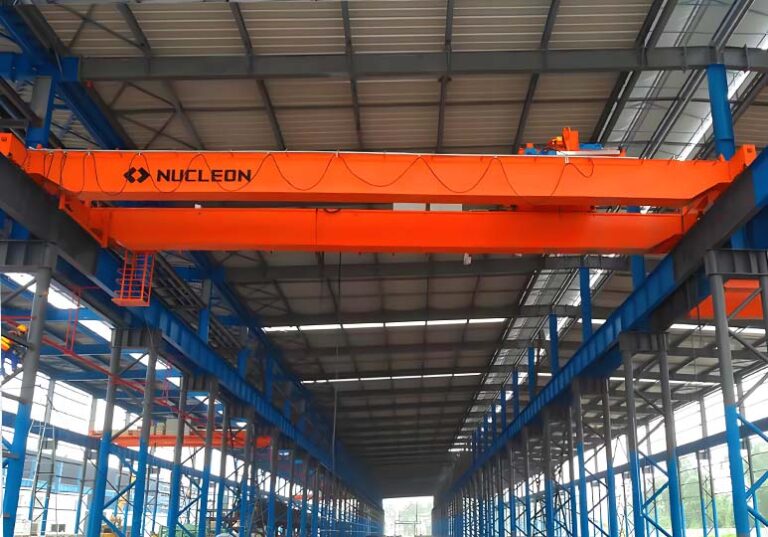
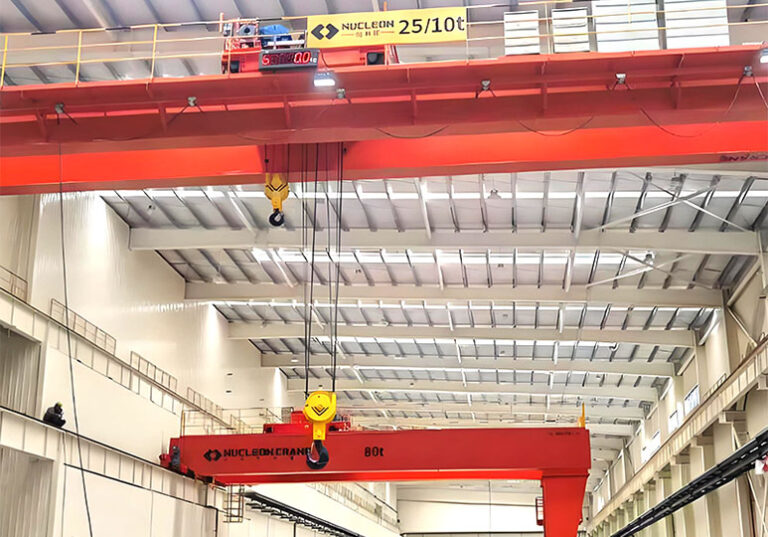
En QD Type Double Girder Overhead Crane spans capacities from 5 to 450 tons and work duties from A3 through A7 — the highest standard duty classes used in continuous industrial production. In Nigeria, this is the crane of choice for cement manufacturing facilities, steel mills, petrochemical plants, and heavy fabrication workshops. In Kenya, it sees growing use in precast concrete production, railway maintenance yards, and port handling facilities.
Two specifications that buyers often underestimate at the inquiry stage: durar y altura de elevación. Both need to be measured at the actual installation site, not estimated. A 2-meter error in span measurement can require a full structural rework of the end beams and runway. For double girder cranes destined for Nigerian or Kenyan sites, it is standard practice to request that Nucleon's engineers review a building drawing or site photograph before finalizing the structural parameters — this catches geometry mismatches before manufacturing begins.
Jib Cranes: For Workstations Where an Overhead Crane Is Overkill
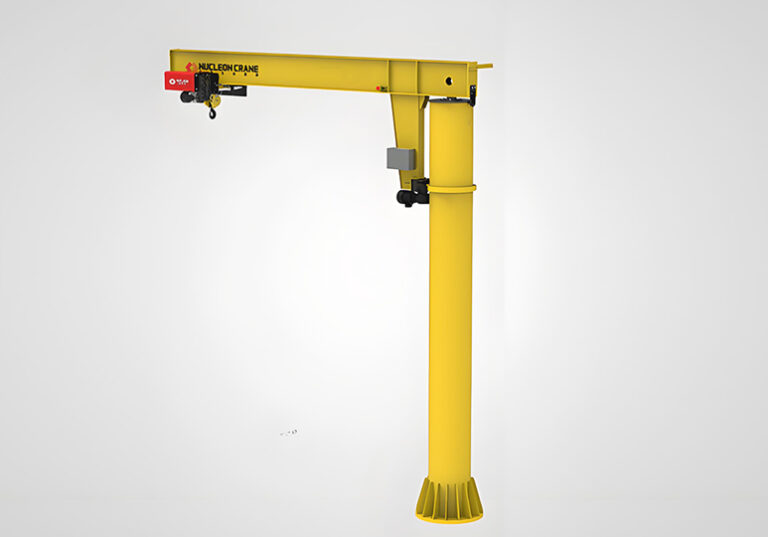
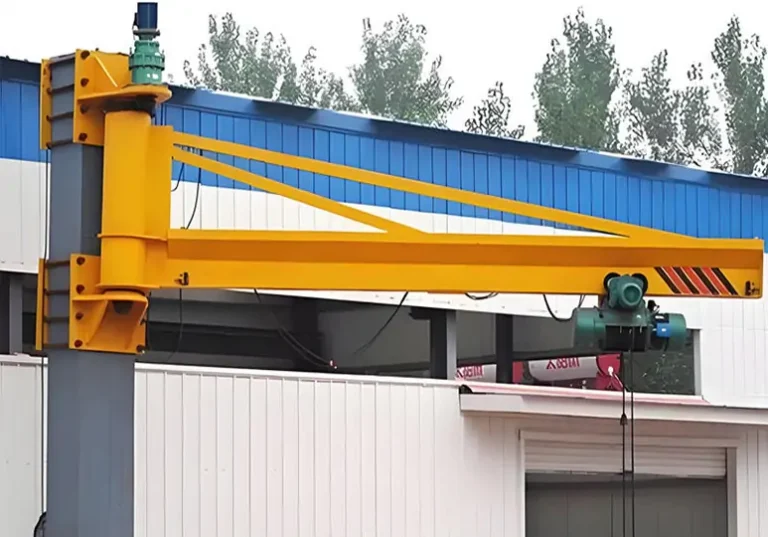
Nucleon supplies both floor-mounted slewing jib cranes (0.5–10 tons, typically used at individual workstations, loading bays, or machinery maintenance cells) and wall-mounted cantilever jib cranes (0.5–1 ton, suited to lighter repetitive tasks where floor space is constrained). In African manufacturing environments, jib cranes are frequently underused because buyers focus entirely on the main overhead crane when planning a facility. A jib crane at a CNC machine station or at a truck loading door eliminates the need to travel the overhead crane across the full bay for every small lift — this protects the overhead crane's duty life and measurably increases throughput.
Selecting the Right Crane for Nigeria and Kenya: Four Decisions That Matter
Duty Class: The Specification Most Buyers Skip
Duty class — defined under ISO 4301 and the FEM classification system — describes how intensively a crane is designed to work across its service life. It combines the number of lifting cycles, the ratio of actual loads to rated capacity, and total operating hours into a single class designation from A1 (very light, infrequent) to A8 (very heavy, continuous).
For most Nigerian and Kenyan industrial buyers, the relevant range is A3 to A6. A3 and A4 are appropriate for workshops where the crane is used a few times per hour or less, with loads that vary widely and are often well below the rated maximum. A5 and A6 are correct for production lines, shift-based manufacturing operations, and any environment where the crane is moving at least once every few minutes with loads that are consistently near the rated maximum.
Why does this matter so much in West and East African contexts specifically? Because grid power in both countries is subject to fluctuations and outages that cause sudden restarts of electrical equipment. Frequent cold-starts add mechanical stress to hoist motors and braking systems in ways that are not captured by the raw number of lifting cycles. Cranes operating under these conditions should be specified at a slightly higher duty class than a pure-cycle calculation would suggest — A4 for what might otherwise be an A3 environment, for example — to account for this additional stress. This is a design conversation worth having with Nucleon's engineering team before confirming the specification.
Span and Building Structure: Measure Twice
Overhead crane span is measured from rail centerline to rail centerline, not from wall to wall. In many Nigerian and Kenyan industrial facilities built over the past two decades, the column spacing and roof-truss design were not originally intended to accommodate a crane runway. Retrofitting a runway into an existing building requires a structural assessment to confirm that the columns can take the additional wheel loads — particularly for double girder cranes above 20 tons, where wheel loads are substantial.
Nucleon provides load data for its cranes (wheel pressure, end buffer force, runway rail specification) as part of the quotation package. Buyers should pass this data to a local civil or structural engineer for review before proceeding with the runway design. Skipping this step is one of the most common causes of project delays and cost overruns in African crane installations.
Power Supply: Confirm the Local Standard Before Ordering
Nigeria operates on 240V / 415V, 50 Hz three-phase supply. Kenya operates on 240V / 415V, 50 Hz as well, though actual site voltage often varies. Nucleon's cranes are configurable for these supply parameters, but the configuration must be confirmed at the order stage — not during commissioning. The electrical panel, hoist motor, and travel drives are all specified to the stated supply voltage at the time of manufacturing. Arriving on-site with a crane built for the wrong voltage is an expensive and time-consuming problem to fix.
Explosion-Proof Requirements for Oil & Gas and Chemical Applications
Nigeria's oil and gas sector — and the growing petrochemical processing presence in both countries — frequently requires explosion-proof crane classifications for environments with flammable gases or vapors. Standard LD or QD overhead cranes are not rated for these environments. If your facility falls under hazardous area classifications, the crane specification must include explosion-proof motors, braking systems, and electrical components. Nucleon supplies explosion-proof crane configurations; this requirement must be stated at the inquiry stage to ensure the correct engineering design and certification documentation.
Certifications and Compliance: What to Demand from Any Supplier
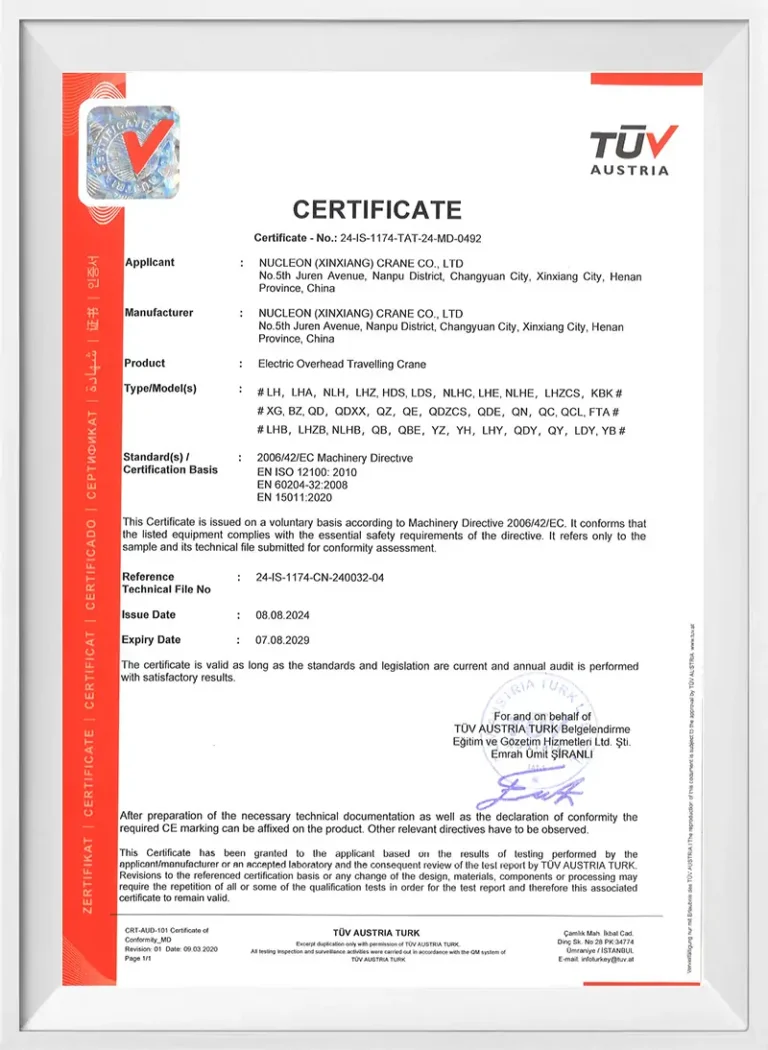
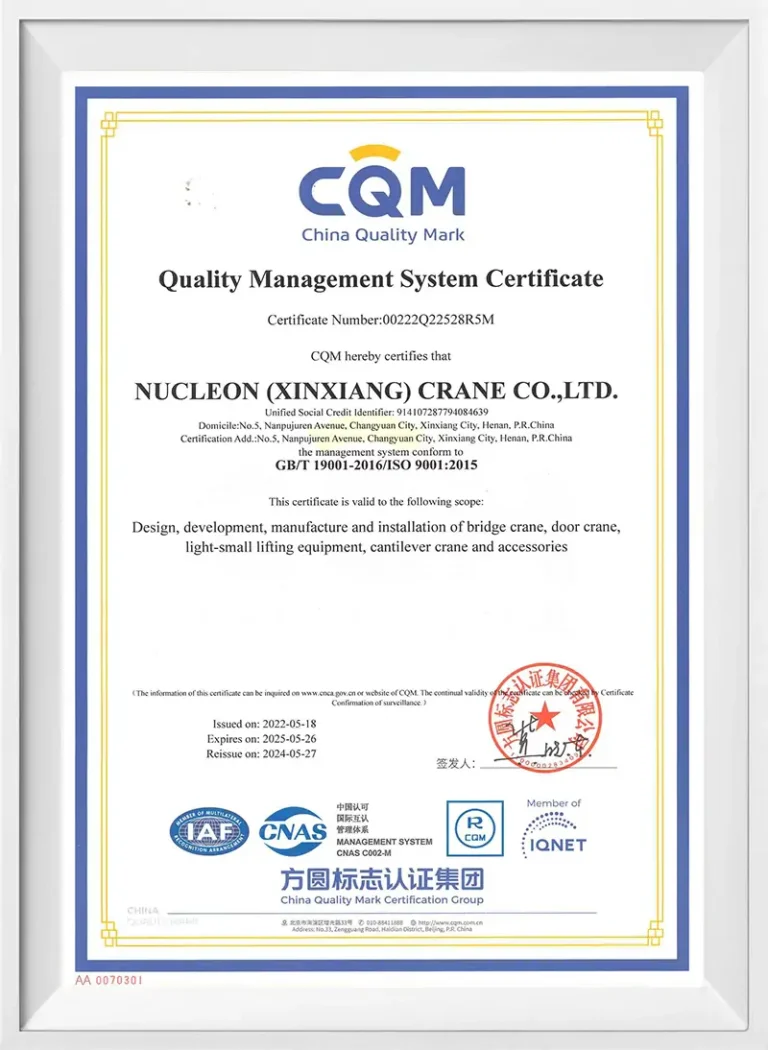
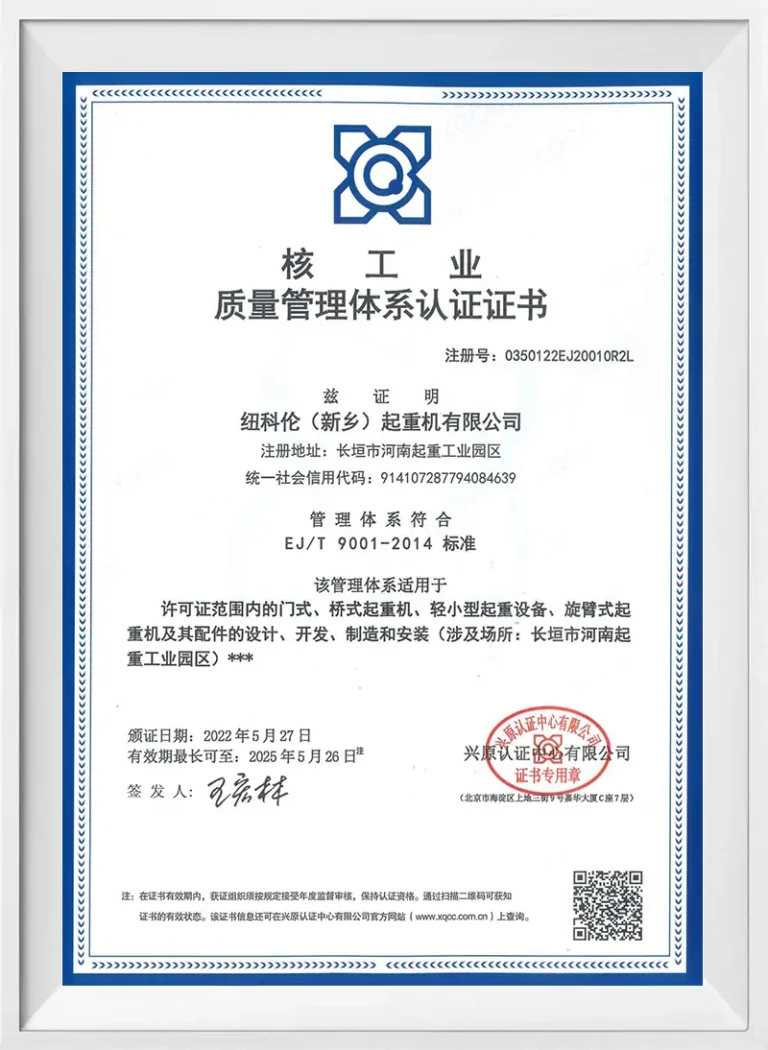
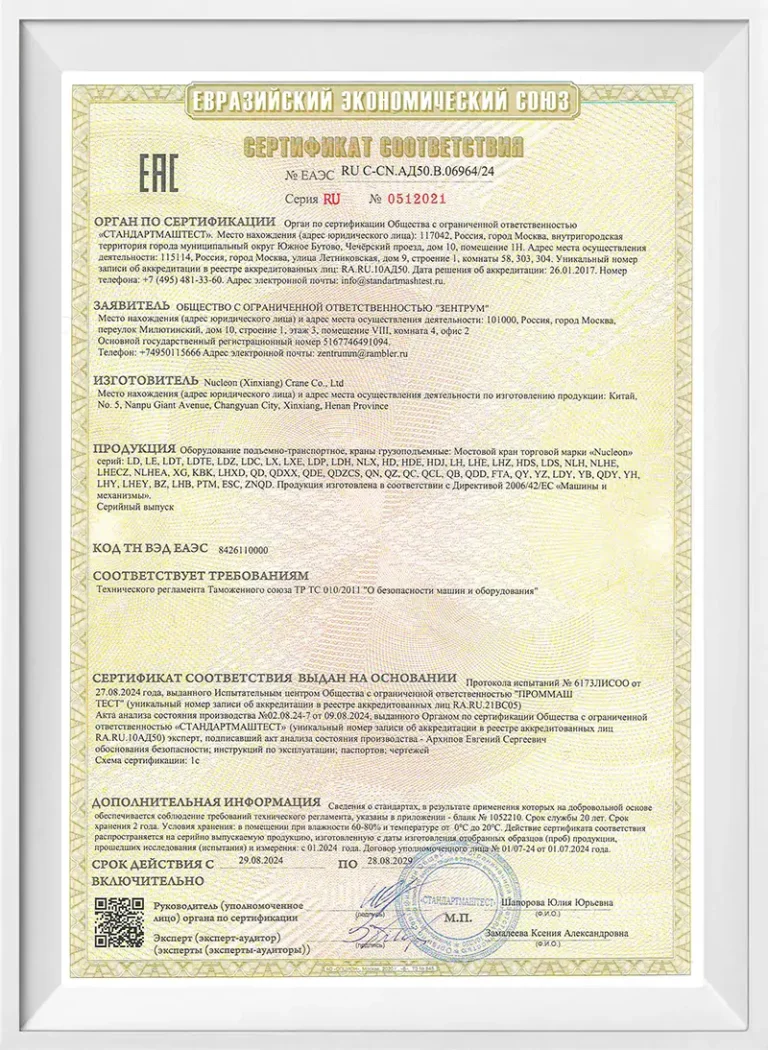
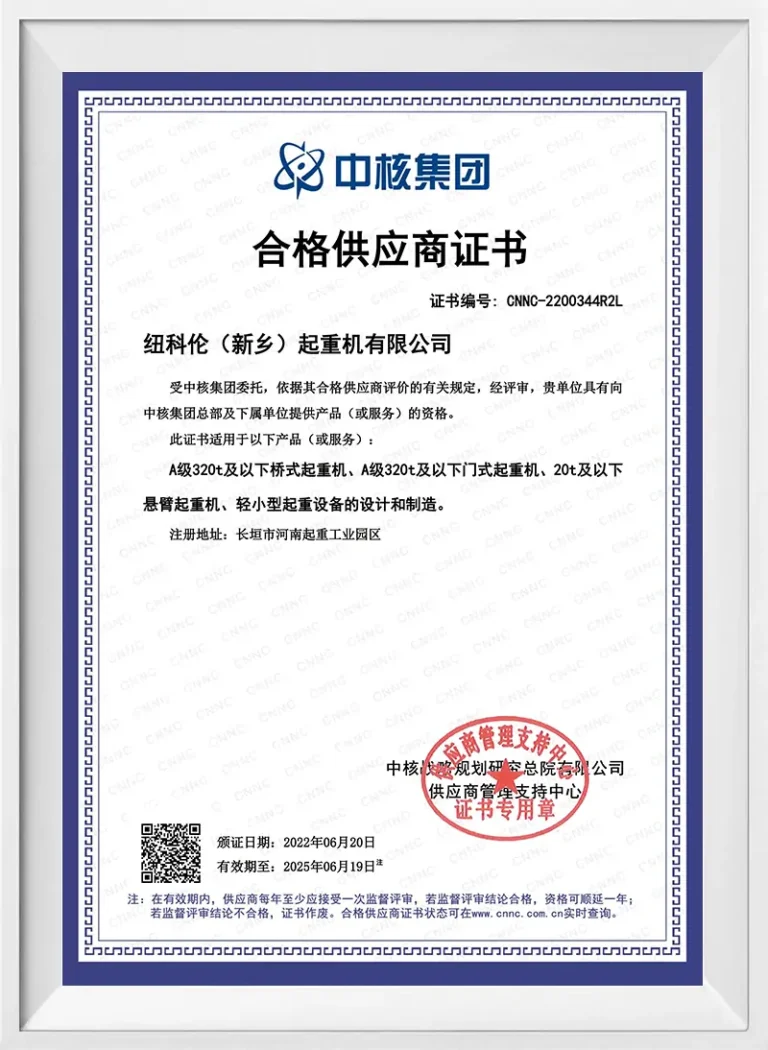
This section is where many African importers lose money or encounter delays — because they accept verbal assurances rather than documents. Overhead cranes are safety-critical lifting equipment. If a crane fails and injures someone, the first question from an insurer or regulator is: what certification did the equipment carry, and can you produce the documents?
CE Marking and the EU Machinery Directive
Any overhead crane destined for professional industrial use should carry a CE mark issued under the EU Machinery Directive (2006/42/EC). This does not mean the crane was sold in Europe — it means the manufacturer has self-declared that the crane meets the essential health and safety requirements of the Directive, and has the technical file to support that declaration. Nigeria and Kenya do not require CE marking under domestic law, but CE is the most widely recognized international benchmark for crane design and manufacturing quality. It is also required by most major insurance underwriters and multinational companies operating in both countries.
Ask Nucleon — or any supplier — for the EC Declaration of Conformity document. This should state the Directive, the harmonized standards applied (typically EN 14492-2 for electric wire rope hoists and ISO 4301 for crane classification), the model, and the authorized signatory. If a supplier cannot produce this document, do not proceed.
ISO 9001 Quality Management System
ISO 9001 certification for the manufacturing facility is the baseline quality credential for a crane supplier. It means that the factory has an audited quality management system covering design, procurement, production, and inspection. Nucleon holds ISO 9001 certification. Request a current, valid certificate with an expiry date and issuing body clearly stated — not just a logo on a website.
Load Testing and Overload Protection Documentation
Every overhead crane should undergo a static and dynamic load test before shipment. The load test certificate should state the test load applied (typically 125% of rated capacity for the static test), the date of testing, and the test authority. In addition, confirm that the crane includes:
- Overload protection device (load limiter that prevents lifts above rated capacity)
- End-of-travel limit switches for both hoist and travel motions
- Emergency stop accessible to the operator
These are not optional safety features — they are baseline requirements under EN 14492-2 and under OSHA standards referenced by multinational operators in both Nigeria and Kenya. Ask for the load test certificate as a condition of the purchase order, not as an afterthought at delivery.
Practical Verification Step
When you receive a quotation from any supplier, send back these four requests in writing: (1) EC Declaration of Conformity, (2) current ISO 9001 certificate, (3) load test procedure and certificate template, (4) wiring diagram showing overload protection integration. A credible supplier will provide all four without hesitation. Delays or deflections on any of these are a meaningful signal about the supplier's quality infrastructure.
Importing Overhead Cranes to Nigeria and Kenya: What to Budget Beyond the Ex-Works Price
The ex-works price of a crane is the starting point, not the full cost. For buyers in Nigeria and Kenya, the following additional costs are real and should be budgeted explicitly:
Freight and Import Duties
Ocean freight from Qingdao or Shanghai to Lagos (Apapa or Tin Can Island Port) typically adds $2,000–$4,000 for a single girder crane, and $4,000–$10,000+ for a large double girder unit, depending on volume and current shipping rates. Nigeria applies import duty on cranes under HS code 8426 — the applicable rate should be confirmed with a licensed customs agent before finalizing the landed cost estimate. Kenya similarly applies import duty under the East African Community Common External Tariff; consult a local clearing agent for the current applicable rate.
Runway and Civil Works
Unless you are buying a crane kit for an existing, crane-ready runway, budget separately for the runway beam fabrication and installation, column reinforcement (if required by the structural assessment), and electrical supply to the runway conductors. In Nigerian and Kenyan markets, this civil and structural work is typically handled by local contractors using materials sourced locally — Nucleon can provide the required load specifications to guide the runway designer.
Commissioning and Training
For single girder cranes below 10 tons, remote commissioning guidance (video, electrical diagrams, online support) is generally sufficient if the buyer has a competent electrical and mechanical team on-site. For double girder cranes above 20 tons, or for any crane in a hazardous area application, on-site commissioning by a qualified engineer is strongly recommended. Nucleon offers both options; the cost of on-site commissioning should be discussed and agreed in the commercial terms before shipment.
Conclusión
For factory and warehouse managers in Nigeria and Kenya evaluating overhead cranes, the single most important insight is this: duty class and actual operating pattern matter more than nameplate tonnage. A 10-ton crane running at the correct duty class for your shift pattern will outlast and outperform a 20-ton crane selected purely on budget — and the reverse is equally true. Get the duty class right, confirm the power supply parameters, demand the CE Declaration of Conformity and ISO 9001 certificate before signing, and budget the full landed cost including freight, duties, runway, and commissioning.
Nucleon supplies single girder (LD and HD European type), double girder (QD type), jib cranes, and electric hoists across the full capacity range relevant to Nigerian and Kenyan industrial buyers. Price references start from around $4,000 for a light-duty single girder unit and scale to $60,000+ for heavy double girder configurations. Every crane ships with a load test certificate and the documentation required for CE compliance verification.
To get a quotation tailored to your facility — span, height, duty class, and power supply — contact the Nucleon engineering team directly:

Especialista en Equipos
Gerente de Negocios de Grúas con experiencia y amplia trayectoria en gestión de proyectos de elevación pesada y supervisión operativa. Historial comprobado de impulso del crecimiento de los ingresos y garantía del cumplimiento de las normas de seguridad.
Preguntas frecuentes
Q1: What is the typical price of an overhead crane in Nigeria or Kenya?
Single girder overhead cranes for light-to-medium duty applications typically start from around $4,000–$6,000 for smaller capacities (1–5 tons), rising to $15,000–$25,000 for the upper single girder range. Double girder cranes for heavy industrial use generally range from $15,000 to $60,000 or more, depending on capacity, span, and duty class. These are market reference figures for China-manufactured equipment; the full landed cost to Lagos or Mombasa will be 15–30% higher after freight, duties, and installation.
Q2: What duty class should I specify for a Nigerian or Kenyan workshop?
For most general manufacturing or warehouse applications running one shift per day with varied loads, duty class A3 or A4 is the correct starting point. For production lines operating two shifts or cycling several times per hour, specify A5. In Nigeria and Kenya specifically, grid power instability means frequent cold-starts add mechanical stress beyond what pure cycle counts reflect — so it is generally prudent to specify one duty class higher than a European operation with the same lifting pattern would require.
Q3: Does an overhead crane imported into Nigeria or Kenya need CE certification?
CE marking is not a legal requirement under Nigerian or Kenyan domestic law, but it is the most widely accepted international safety benchmark and is required by most multinational operators and insurance underwriters in both countries. When importing from China, request the EC Declaration of Conformity, the ISO 9001 certificate, and the load test certificate as contractual conditions of the purchase order — not as optional documents after delivery.
Q4: What is the difference between a single girder and double girder overhead crane?
A single girder crane has one main beam with the hoist running along the bottom flange — lighter, more compact, lower cost, suited to capacities up to around 20 tons at moderate duty. A double girder crane places the hoist trolley on top of two parallel beams — higher hook height, greater capacity range (up to 450 tons), stronger structure for demanding duty classes, and the ability to support walkways and cabs. The choice depends on your actual lifting frequency and load pattern, not just on the maximum weight you need to lift.
Q5: How long does it take to import an overhead crane from China to Nigeria or Kenya?
Manufacturing lead time for a standard single girder crane is typically 15–25 days; for custom or large double girder units, allow 30–45 days. Ocean transit from a Chinese port to Lagos (Apapa) is approximately 30–40 days; to Mombasa it is approximately 25–35 days. Total time from order confirmation to crane on-site is typically 8–14 weeks depending on crane complexity, port clearance speed, and local transport to the installation site.
Artículos relacionados
- Guía de averías comunes y reparación de grúas puente: ¿Qué causa realmente las averías (y qué comprobar primero)?
- Cumplimiento de las normas OSHA vs. CE para grúas puente: una lista de verificación práctica para compradores y exportadores (2026)
- Grúas puente en Brasil: Demanda del mercado, cumplimiento normativo y guía para proveedores (2026)
- ¿Qué es una grúa de pluma? Tipos, estructura y cómo elegir una.
- Inspección de grúas puente: Normas oficiales, recursos y enlaces rápidos

 English
  العربية
  Español
  Français
  Português
  Русский