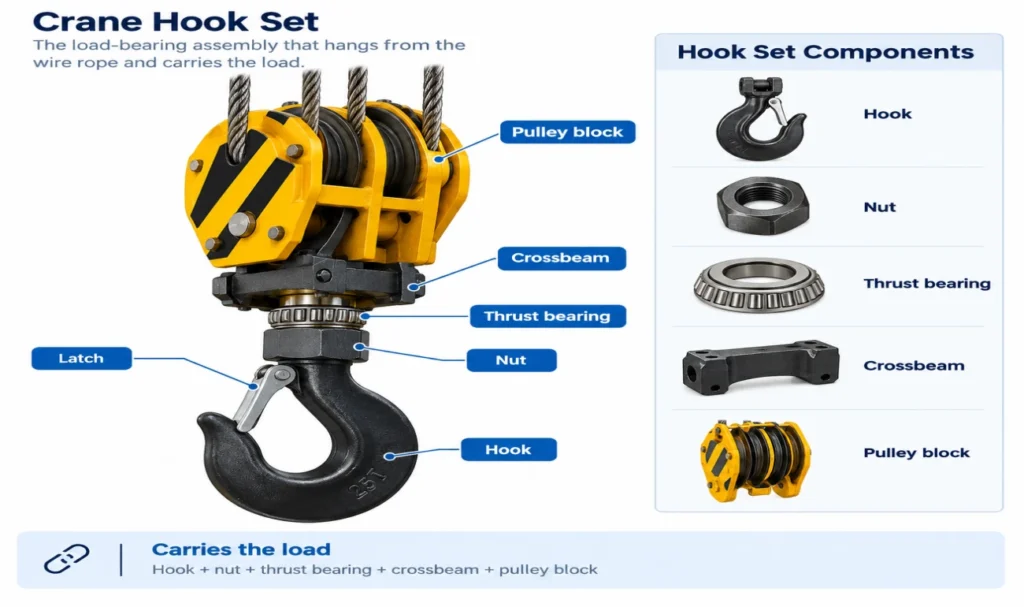
A crane hook set is the load-bearing assembly — hook, nut, thrust bearing, crossbeam, and pulley block — that hangs from a crane's wire rope and carries the load. Selecting one by crane tonnage alone is the single most common procurement mistake, because the correct hook set is defined by rated capacity, hook type, reeving configuration, and duty class together, not tonnage in isolation.
Buyers usually reach this page for one of two reasons: they're specifying a hook set for a new crane or hoist, or they've found deformation, wear, or a cracked hook on an existing one and need to know whether it can still be used. Both questions come down to the same three things — what the hook is rated for, what to check during inspection, and when the numbers say it's time to stop using it.
This guide walks through crane hook types and hook block configuration, how safe working load (SWL) is actually determined, what to measure during inspection, and the discard criteria that decide whether a hook gets replaced or repaired. It also covers where procurement teams most often get this wrong — starting with the tonnage-only mistake above.
جدول المحتويات
What Is a Crane Hook Set?
A crane hook set is the complete load-hanging assembly that connects a crane's lifting mechanism to the load, consisting of the hook body, safety latch, nut, bearing, crossbeam, and — on wire rope systems — a pulley block.
The hook itself is a forged, heat-treated component (commonly alloy steel such as AISI 4140), designed to standards like ASME B30.10 (hooks) or the FEM/DIN framework used on European-style equipment. On its own, a bare hook only tells part of the story — how it performs under load depends on the full assembly around it: the pulley system that distributes rope tension, the thrust bearing that lets the hook rotate under load without binding, and the safety latch that keeps rigging from slipping off during slack periods.
Types of Crane Hooks and Hook Blocks
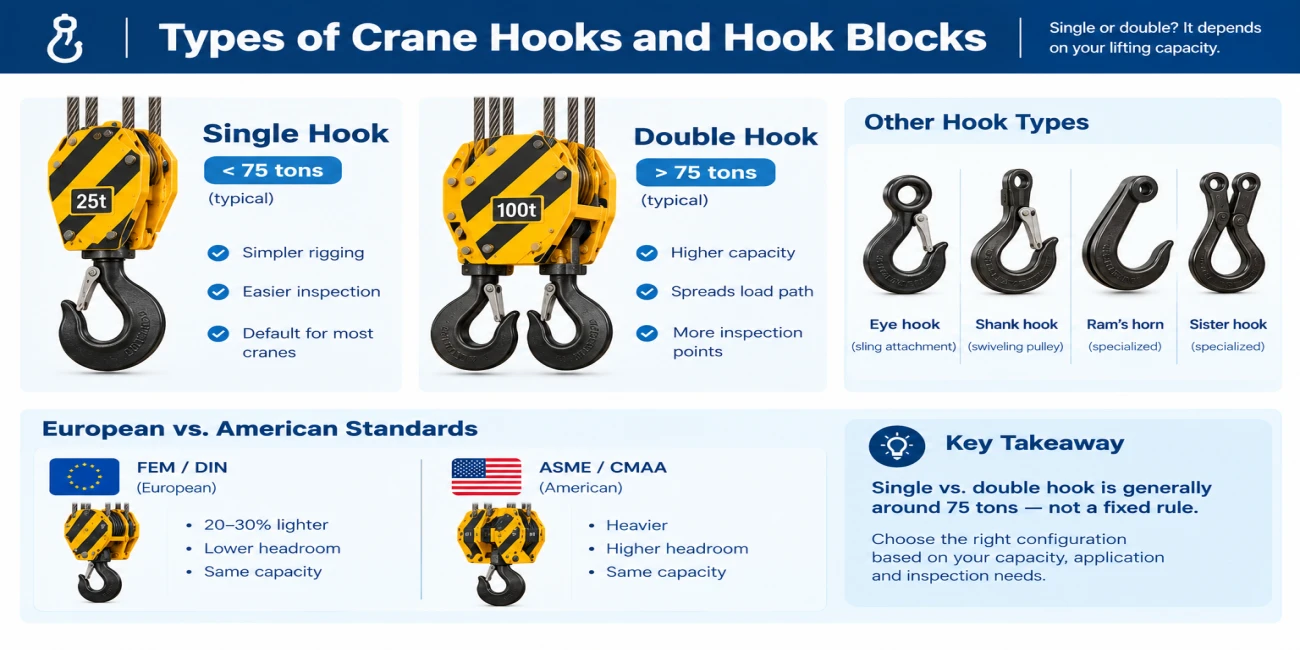
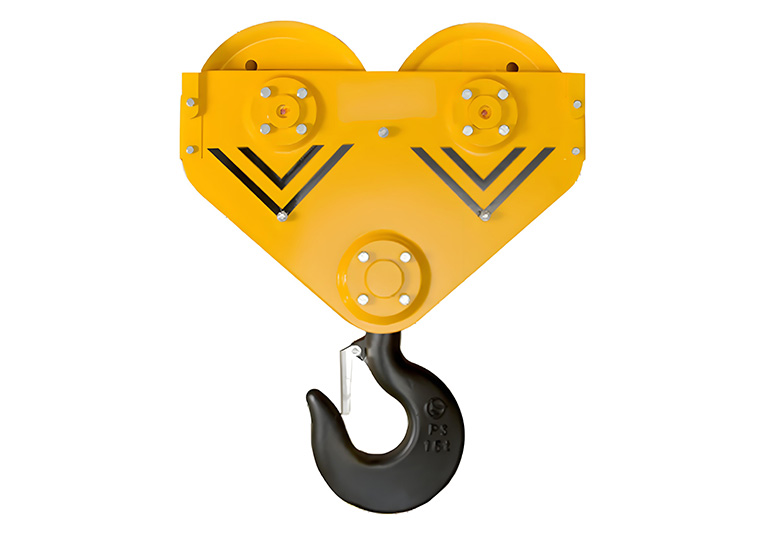
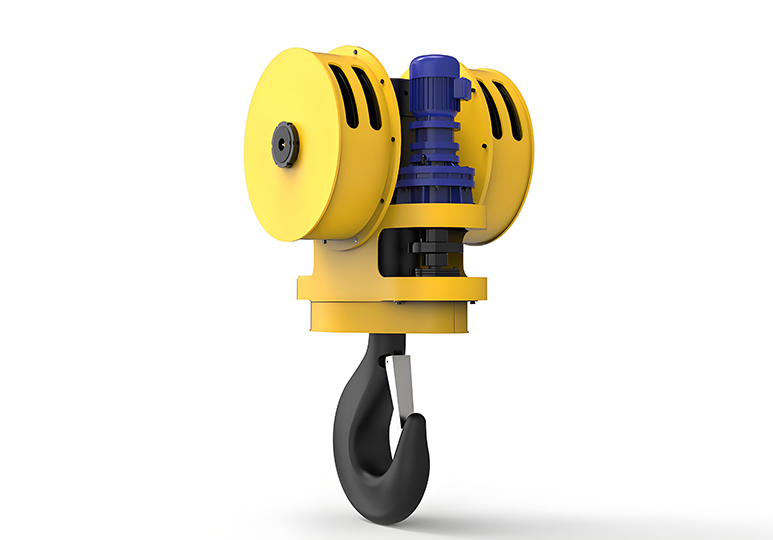
Hook blocks split into single-hook and double-hook configurations, and the dividing line is generally around 75 tons of lifting load, not a fixed rule. Below that threshold, a single hook is simpler to rig and inspect, and it's the default choice for the large majority of overhead and gantry crane applications. Above it, a double hook spreads the load path across two hook bodies, which increases rated capacity without requiring a single oversized forging — but it also doubles the number of latches, bearings, and wear points that need inspecting.
Beyond the single/double split, hooks vary by shape and application: eye hooks (for direct sling attachment), shank hooks (for mounting into a swiveling pulley assembly), and specialized profiles like ram's horn or sister hooks for specific rigging needs. European-style (FEM/DIN) hook sets differ from their American (ASME/CMAA) counterparts mainly in weight and headroom — FEM-standard sets typically run 20-30% lighter than a traditional hook group of the same tonnage, because reducing dead weight on the hook block directly increases the crane's usable capacity and lift height.
Key Components of a Hook Block
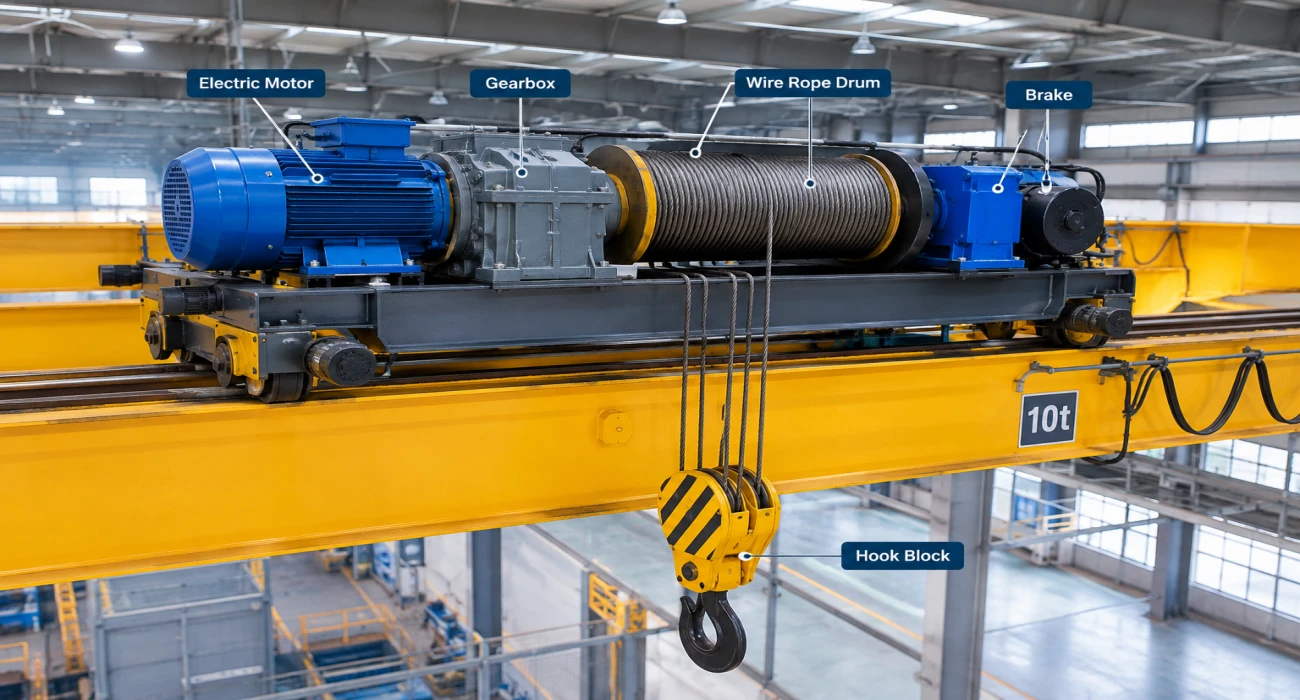
A hook block's safety margin depends as much on its secondary components as on the hook itself — the latch, bearing, and connectors carry real functional load, not just the forged hook body. The safety latch (tongue) prevents slings from unhooking during slack; the thrust bearing allows free rotation under load without binding the rope; and the hook nut and crossbeam connectors are torque-calculated to prevent loosening under cyclic loading. On higher-duty hook sets, some manufacturers add overload sensors that monitor real-time weight — useful, but not a substitute for correct SWL specification in the first place, which is the next question buyers need to answer.
How to Determine Crane Hook Safe Working Load (SWL)
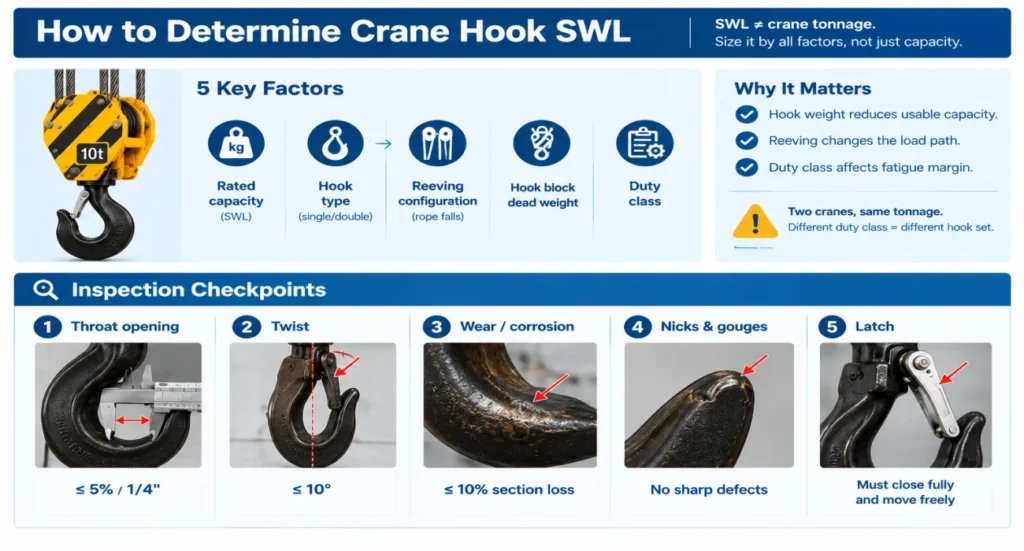
A crane hook's SWL is not the same number as the crane's rated tonnage — it must be sized to the rated capacity, hook type, reeving configuration, hook block dead weight, and duty class together. This is the single most common source of over- or under-specification in hook procurement.
SWL Isn't Just Crane Tonnage
Buyers commonly assume "20-ton crane → order a 20-ton hook" and stop there. In practice, the hook set has to account for more than the nominal crane capacity: the weight of the hook block assembly itself subtracts from usable lifting capacity; the reeving configuration (how many rope falls run through the pulley system) determines how load is actually distributed onto the hook shank; and the crane's duty class — how many lift cycles it performs and at what fraction of maximum load — determines how much margin the hook needs against fatigue, not just static overload. Two cranes rated at the same tonnage but operating at different duty classes (for example, ISO 4301 class A3 versus A7) do not need the same hook set, even though the nameplate capacity is identical.
How Reeving and Duty Class Affect Hook Selection
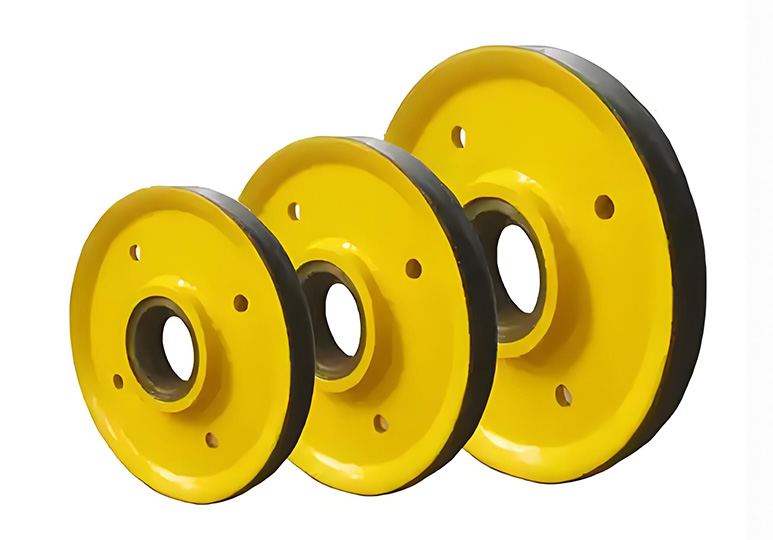
For multi-fall wire rope reeving (double or multi-part lines running through several sheaves), the hook block, sheaves, and rope path all have to be checked together, because the load path through a multi-fall system isn't a simple division of total load by the number of parts — sheave friction and rope angle both affect what the hook shank actually experiences. This is why hook set specification, particularly on higher-duty or frequently-cycled cranes, should reference the crane's duty class rating alongside its rated load — a spec sheet that lists tonnage without duty class is missing half the information needed to size the hook correctly.
Crane Hook Inspection: What to Measure
Crane hooks require two distinct levels of inspection — a frequent (pre-operational) visual check and a documented periodic inspection — and mixing up which one applies to your equipment is a common compliance gap.
Frequent vs Periodic Inspection
Frequent inspections are the daily-to-shift-start visual checks operators perform before lifting — no written record is required, but they catch obvious problems before a load goes on the hook. Periodic inspections are documented, dated, and signed, and the interval depends on how hard the equipment is worked: equipment used under 65% of rated load and less than 15% of the time is typically inspected annually; heavier use pushes that to every six months; and severe conditions — high or low temperature, outdoor or saltwater exposure, caustic environments — call for quarterly inspection. These service-based intervals (not a flat calendar schedule) are the basis most manufacturers and inspection standards use to set periodic inspection frequency.
Deformation, Wear, Nicks and Latches — What to Check
Under ASME B30.10, hook inspection covers several specific checkpoints, each with its own discard threshold:
| Checkpoint | What it indicates | General discard threshold |
| Throat opening | Deformation from overload, side loading, or improper rigging | Manufacturer's original dimension is the reference; ASME B30.10-based guidance commonly cites no more than ~5% or 1/4 inch deviation, while OSHA 29 CFR 1910.179 (for top-running cranes) sets a separate regulatory limit of 15% excess opening |
| Twist | Side loading or improper rigging | OSHA 1910.179 sets 10° twist from the unbent plane as a discard criterion for covered equipment |
| Wear/corrosion | Section loss reducing load-bearing area | Commonly cited at 10% of the original section dimension of the hook or load pin |
| Nicks and gouges | Stress concentration points that can initiate cracking | Rule-of-thumb: if a fingernail catches in it, remove from service |
| Latch | Rigging retention during slack | Must bridge the throat fully and operate freely when closed |
These thresholds are not interchangeable across standards, and this is worth flagging explicitly: OSHA's 15%/10° figures apply specifically to equipment covered under 29 CFR 1910.179, while separately sourced hook-inspection guidance built on ASME B30.10 has cited tighter throat-opening allowances (around 5% or 1/4 inch) for pre-operational checks. In practice, the manufacturer's original dimension and discard criteria — not a single borrowed percentage — should govern the actual replace/keep decision, with the applicable regulatory standard checked separately for compliance purposes.
When Should a Crane Hook Be Replaced?
There is no universal fixed replacement interval for crane hooks — a "replace every 3-5 years" rule doesn't hold up, because hook life is governed by load cycles, duty class, environment, and manufacturer limits, not calendar time.
Discard Criteria: OSHA vs Manufacturer Limits
A hook gets removed from service when it fails any of the inspection checkpoints above — visible deformation, excess throat opening or twist beyond the applicable standard, wear past the section-loss threshold, disqualifying nicks or gouges, or a latch that no longer bridges the throat. Under OSHA 1910.179, hooks with cracks or with more than 15% excess throat opening or more than 10° twist must be discarded outright.
Why Fatigue Failure Doesn't Give Warning
The inspection checkpoints above catch visible damage — but the more dangerous failure mode is cumulative fatigue, and it usually isn't visible at all. Hooks most often fail from a fatigue crack originating in the hook shank, the section that transfers load into the hook block through a rotate bearing and other components not visible without full disassembly. Because fatigue failure depends on cumulative load/stress level and total lifting cycles rather than a single overload event, the crane operator typically gets no advance warning before a fatigue-driven failure — which is why non-destructive testing methods (dye penetrant, magnetic particle, magnetic rubber) exist specifically to detect subsurface cracking that a standard visual inspection cannot catch. For hooks on high-cycle or high-duty-class cranes, this is the argument for periodic NDT-based assessment on a schedule tied to actual usage history, not just visual inspection alone.
Repair is generally not the answer once a hook fails inspection. Welding or heat treatment can alter the strength and load rating of a forged hook, so under both OSHA 1910.179(l)(3)(iii)(A) and ASME B30.10, hook repair by welding or reshaping is either discouraged outright or restricted to competent supervision with mandatory load testing afterward — and field welding of attachments to a finished hook is specifically prohibited under ASME B30.10. A damaged or broken hook is often itself evidence the hoist was overloaded, which means the rest of the lifting system needs inspecting too, not just the hook.
Crane Hook Replacement: Common Procurement Mistakes & How to Specify a Set
The two most expensive mistakes in hook set procurement are buying by tonnage alone and replacing a damaged hook without checking what caused the damage.
The Tonnage-Only Buying Mistake
As covered above, matching a replacement hook to crane tonnage without checking rated capacity, hook type, reeving, hook block weight, and duty class is the most common specification error — and it's just as common on replacement orders as on new-build specs, because buyers reordering a "like-for-like" hook often skip re-checking whether the original spec was even correct for the application.
Why a Deformed Hook Often Means More Than a New Hook
A deformed hook is frequently evidence of overload or side loading rather than a standalone component failure. Replacing only the hook — without inspecting the hook block, shank-bearing assembly, retaining nut, sheaves, wire rope, and reeving — risks putting a new hook back onto a system that's still misaligned or was still overloaded, which tends to produce a second failure faster than the first one. Any time a hook is found deformed, cracked, or worn past limits, the inspection scope should extend to the full bottom-block assembly before a replacement goes back into service.
How to Specify a Replacement Crane Hook Set
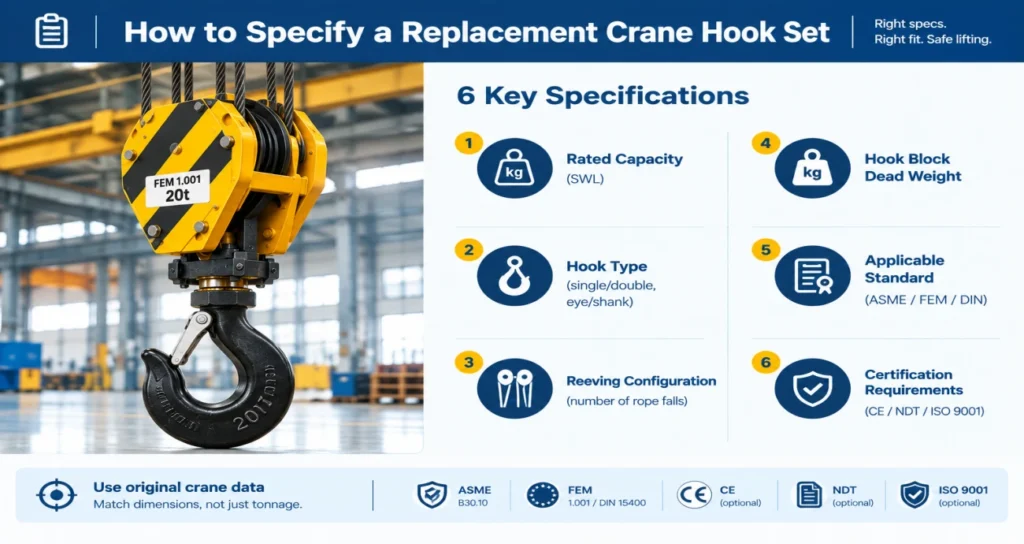
A complete hook set order should specify: rated capacity (SWL) at the applicable duty class, hook type (single/double, eye/shank), reeving configuration and number of rope falls, hook block dead weight, applicable standard (ASME B30.10, FEM 1.001/DIN 15400, or equivalent), and certification requirements (CE, NDT certificate, ISO 9001). Where the original crane manufacturer's dimensional data is available, it should take priority over generic catalog figures — a replacement hook matched only by tonnage, without matching the original throat opening, shank diameter, and bearing interface, can create a fit or load-path mismatch even when the rated capacity looks correct on paper.
خاتمة
A crane hook set earns its safety margin through the whole assembly, not the hook alone — rated capacity, hook type, reeving, and duty class all factor into a correct crane hook set specification, and inspection has to cover deformation, wear, nicks, and latch function on a frequent-versus-periodic schedule matched to actual service conditions. Replacement decisions should follow documented inspection findings and manufacturer discard criteria rather than a fixed time interval, and any deformed or damaged hook is a signal to inspect the full bottom-block assembly, not just the hook itself.
يجب أن يتم تأكيد اختيار المعدات النهائية من قبل مهندس معتمد وأن تتوافق مع لوائح معدات الرفع المحلية.

أخصائي معدات
مدير أعمال الرافعة الناجح الذي يتمتع بخبرة واسعة في إدارة مشاريع الرفع الثقيل والإشراف التشغيلي. سجل حافل في قيادة نمو الإيرادات وضمان الامتثال لقواعد السلامة.
التعليمات
Q1: What is the safe working load of a crane hook?
A crane hook's SWL is not simply the crane's rated tonnage — it depends on rated capacity, hook type, reeving configuration, and duty class together. A hook rated for a given tonnage under light duty class may be undersized for the same tonnage under a high-cycle duty class, so SWL should always be confirmed against the full crane specification, not the nameplate number alone.
Q2: How often should a crane hook be inspected?
Crane hooks need frequent (pre-operational, typically shift-start) visual checks with no formal record required, plus documented periodic inspections at intervals set by service level — commonly annual for normal service, every six months for heavy service, and quarterly for severe environments. The correct interval depends on actual load and cycle history, not a flat calendar rule.
Q3: When should a crane hook be replaced instead of repaired?
A hook should be replaced once it shows cracks, throat opening or twist beyond the applicable standard's discard limit, wear exceeding roughly 10% of original section dimension, disqualifying nicks/gouges, or a non-functioning latch. Welding or heat-treatment repairs are generally discouraged because they can alter the hook's strength rating; most standards either prohibit field repair outright or require load testing under competent supervision afterward.
Q4: Why does a deformed crane hook need more than just hook replacement?
Deformation typically indicates overload, side loading, or improper rigging — meaning the hook is usually a symptom, not an isolated failure. Replacing only the hook without inspecting the hook block, bearing, sheaves, wire rope, and reeving risks reinstalling a new hook onto a system that caused the original damage, which often leads to a faster repeat failure.
Q5: How much does a crane hook set cost?
Crane hook set pricing varies significantly by capacity, hook type (single vs double), standard (ASME vs FEM/DIN), and certification requirements (CE, NDT documentation), so market reference pricing should be requested against a specific rated capacity and duty class rather than a general figure — a 5-ton single-hook set and a 75-ton-plus double-hook set for high-duty service are priced on entirely different scales.
مقالات ذات صلة
- Winch vs Hoist: What’s the Real Difference and Which One Do You Need?
- What Is a Crane Winch? Types, Structure & Selection Guide
- Grab Bucket for Overhead & Gantry Cranes: Types, Capacity & Price Guide
- Crane End Truck & Wheel Maintenance Guide: Inspection, Wear, Alignment & Replacement
- Crane Gearbox/Reducer Selection Guide: How to Choose the Right Ratio, Torque and Duty Rating

 English
  العربية
  Español
  Français
  Português
  Русский