

An explosion-proof ponte rolante is a lifting system engineered and certified to eliminate ignition sources — sparks, excess heat, uncontrolled static discharge — in areas where flammable gas, vapor, or combustible dust may be present in the air. It is not a standard crane with an upgraded motor; the entire system, from electrical enclosures down to the wheel material, must be designed and certified together under standards such as ATEX, IECEx, or NEC.
If you're reading this, you're probably not asking "what is it" — you're asking whether your facility actually needs one, or whether a standard crane with a few precautions is enough. That's the harder question, and it's the one most manufacturer guides skip past on their way to a product pitch.
This guide focuses on three things you won't find fully answered elsewhere: exactly where the line sits between "needs a certified explosion-proof crane" and "doesn't," the procurement mistakes that get facilities into trouble even after they decide to buy one, and the real cost structure — including the parts of the invoice that show up after the PO is signed.
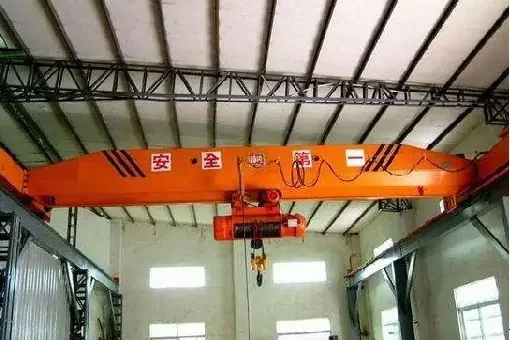
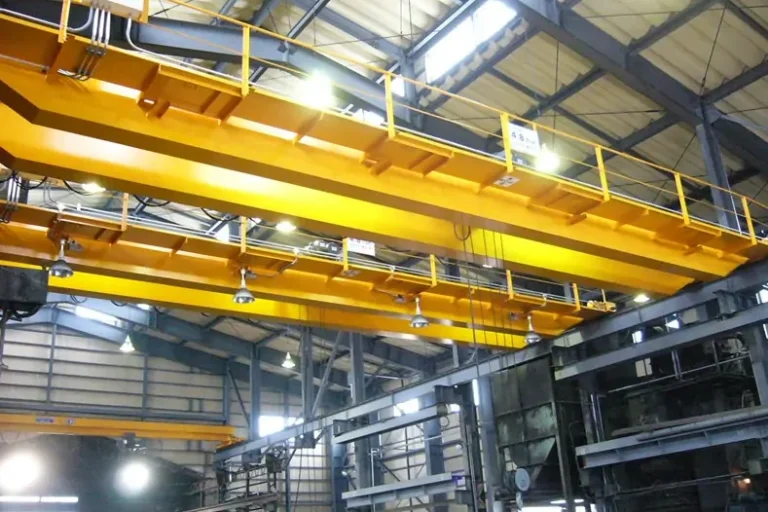
Índice
What Is an Explosion-Proof Overhead Crane?
An explosion-proof overhead crane is a fully certified lifting system, not a standard crane with an "Ex" label bolted on.
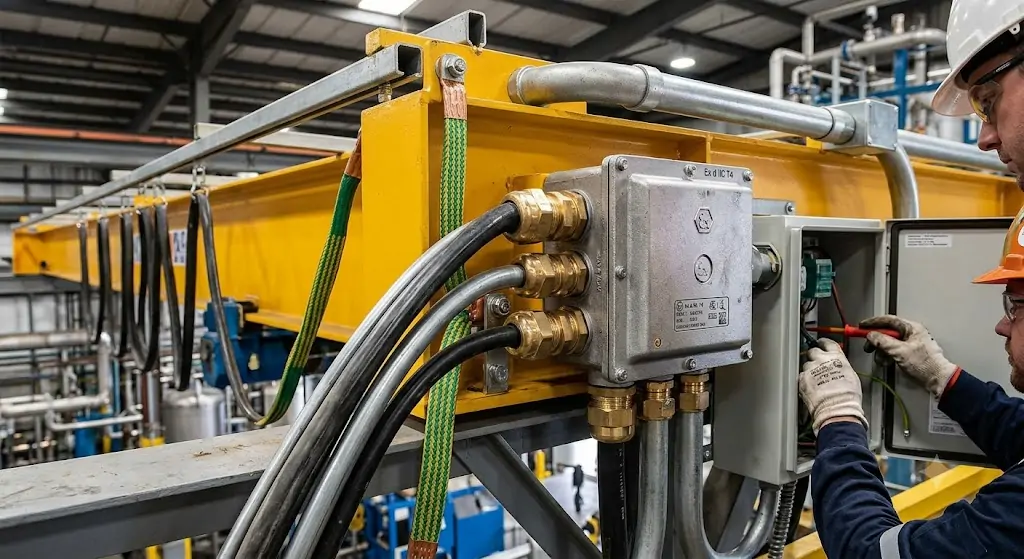
The distinction matters because ignition sources on a crane aren't limited to the motor. Limit switches, pendant controls, cable entries, brake mechanisms, travel wheels, and static buildup on the hoist rope or bridge rail can all generate a spark or enough heat to ignite a hazardous atmosphere. A genuinely explosion-proof crane addresses all of these together: sealed Ex d (flameproof) or Ex e (increased safety) electrical enclosures, intrinsically safe (Ex ia/ib) control circuits, non-sparking materials such as bronze, brass, or austenitic stainless steel for wheels and hooks, and continuous bonding/grounding through the runway.
Governing standards differ by region, but the underlying logic is the same. In the EU, the ATEX Directive 2014/34/EU sets the legal requirement. Internationally, IECEx (built on the IEC 60079 series) is recognized in over 30 countries and offers the broadest cross-border acceptance for export buyers. In North America, the NEC (NFPA 70) uses a Class/Division system instead of zones. In China, GB 3836 applies. A crane certified only to one system does not automatically satisfy another — this becomes important later when we cover certificate mismatches.
The Decision Boundary — When You Actually Need One
The trigger for needing a certified explosion-proof crane is the official hazardous-area classification of your site, not the general presence of a flammable material. "We sometimes use solvents" or "there's occasionally dust in the air" is not, on its own, a specification. What matters is whether your process-safety study or hazardous-area drawing formally classifies the crane's working zone.
Hazardous Area Classification Table
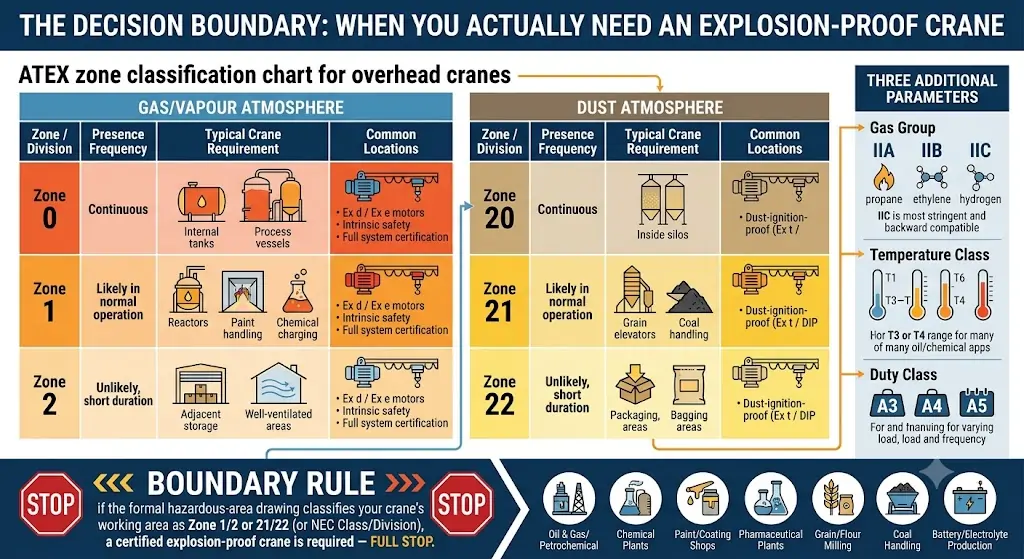
| Atmosphere | Zone / Division | Presence Frequency | Typical Crane Requirement | Common Locations |
| Gas/Vapour | Zone 0 / Div 1 (high) | Continuous or long periods | Extremely rare for cranes; pneumatic/hydraulic equipment preferred, or keep the crane outside Zone 0 | Inside tanks, process vessels |
| Gas/Vapour | Zone 1 / Div 1 | Likely in normal operation | Category 2 (Ex d / Ex e motors, intrinsic safety for controls, full system certification) | Reactor areas, paint booths, solvent handling, chemical charging |
| Gas/Vapour | Zone 2 / Div 2 | Unlikely, short duration | Category 3 (Ex nA / Ex ec often sufficient) | Adjacent storage, well-ventilated areas with occasional leaks |
| Dust | Zone 20 | Continuous | Rare for cranes | Inside silos |
| Dust | Zone 21 | Likely in normal operation | Dust-ignition-proof (Ex t / DIP) | Grain elevators, coal handling, powder processing |
| Dust | Zone 22 | Unlikely, short duration | Lower protection level | Packaging, bagging areas |
Reading a table like this only gets you halfway — three additional parameters must match your actual site conditions before a quote means anything.
Gas group determines how demanding the certification needs to be: IIA (propane and similar), IIB (ethylene), or IIC (hydrogen, acetylene). IIC is the most stringent, and equipment certified for IIC automatically covers IIA and IIB — but the reverse is not true. Temperature class (T1–T6) caps the maximum surface temperature the crane's components may reach; most chemical and oil-industry applications specify T3 or T4 (generally at or below 135°C), and the correct class depends on the auto-ignition temperature of the specific substance on site, not a generic industry assumption. Duty class typically runs A3–A5 for light-to-medium hazardous-area service, though continuous process plants can require higher.
Boundary rule: if the formal hazardous-area drawing classifies your crane's working area as Zone 1/2 or 21/22 (or the equivalent NEC Class/Division), a certified explosion-proof crane is required — full stop. Typical industries where this applies include oil & gas and petrochemical facilities, chemical plants, paint and coating shops, pharmaceutical plants handling solvents or powders, grain and flour milling, coal handling, and battery/electrolyte production areas.
Common Procurement Mistakes to Avoid
Most explosion-proof crane problems don't happen at the design stage — they happen during procurement, when parameters get simplified or assumed rather than specified.
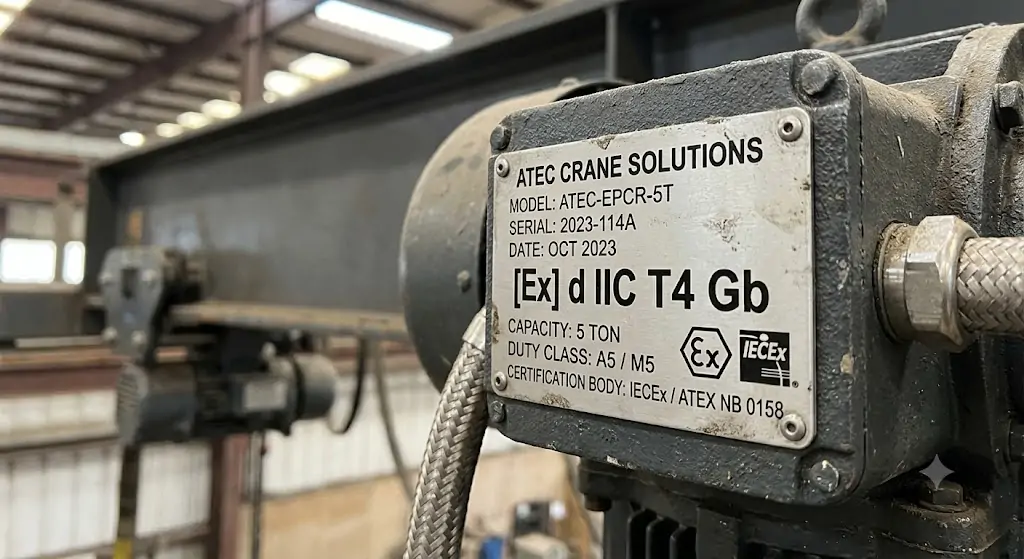
Treating It as a Component Upgrade
Buying a standard crane and simply adding an "Ex hoist" or Ex-rated motors is the single most common mistake. Ignition sources exist throughout the system — limit switches, pendant controls, cable entries, brakes, wheels, and static discharge points — not just in the motor housing. The electrical and mechanical anti-spark measures must be engineered and certified as one integrated system, which is why a full crane-system certificate, not just a motor datasheet, is what actually protects you.
Mis-Specifying Zone, Group, or Temperature Class
Requesting only "explosion-proof" without locking down Zone 1 vs Zone 2, gas group IIB vs IIC, and the correct T-class leaves the door open for a supplier to quote whatever compliant-looking option is cheapest. A Zone 2 / IIB-rated crane installed in a Zone 1 / IIC environment is both non-compliant and genuinely dangerous — and the nameplate alone won't tell an inspector that mismatch has happened; it has to be caught before the PO.
Duty-Cycle Mismatch
Specifying a light-intermittent duty class like A3 for what is actually continuous reactor-feed or high-cycle operation leads to premature mechanical failure — and in a hazardous area, an unplanned failure is both a safety event and an expensive one to fix. Duty class needs to reflect real cycles-per-hour, not a rounded-down estimate from the RFQ template.
Certificate vs. Reality
Accepting a component certificate — or a generic "Ex" nameplate — instead of a full crane-system certificate that matches your exact zone, gas group, and temperature class is a paperwork gap that only surfaces during an audit or, worse, after an incident. Demand the specific documentation, matched to your parameters, before the PO is issued, not after delivery.
One more point worth flagging directly: ATEX, IECEx, and NEC requirements differ by market, so a certificate valid in one region does not automatically transfer to another. If the equipment will be exported or used across multiple sites in different jurisdictions, dual listing or the correct regional mark is often required — assuming one certificate "covers everything" is its own procurement mistake.
The Hidden Costs Buyers Often Miss
The purchase price on a quote is only the starting point — explosion-proof cranes carry several cost layers that standard-crane budgeting doesn't anticipate.
As a market reference, the purchase premium over a comparable standard crane typically runs around 30–50% for Zone 2, e roughly 80–120% for Zone 1 — sometimes more where IIC gas-group certification is required, since IIC itself can add another 25–40% on top of the base explosion-proof premium. These figures move with capacity, span, and supplier, so treat them as a planning range rather than a quote.
Beyond the sticker price, three categories consistently catch buyers off guard:
Certification and documentation. Notified-body involvement, type testing, and a complete technical file take both money and lead time — budget for this as a separate line item, not something folded silently into "the crane."
Installation and long-term maintenance access. Explosion-proof projects need special cable glands, sealed conduits, bonding systems, and certified commissioning — sometimes runway or building modifications too. After installation, explosion-proof enclosures are heavier and more complex to service; replacement motors, brakes, or limit switches cost significantly more than standard-crane equivalents and can carry long lead times. A crane designed with poor maintenance access turns a routine check into a major shutdown once it's sitting in a live hazardous zone.
The retrofit trap. Upgrading a standard crane after the fact is almost always more expensive and less reliable than specifying the correct unit from day one — and many regulatory authorities will not accept field conversions at all, regardless of what components are swapped in. If there's any chance your operation will expand into a classified area, that possibility belongs in the initial spec, not in a future retrofit budget.
Weighed against all of this, an under-specified crane is usually the more expensive choice in the end: it fails earlier, and repairing or replacing equipment inside a live Zone 1 area brings hot-work permits, production stoppage, and safety reviews that dwarf the original savings.
How to Move Forward — Decision Checklist
Before requesting a quote, five inputs turn a vague "we might need an explosion-proof crane" into a specification a supplier can actually price correctly.
- Obtain the formal hazardous-area classification drawing (zone/division, gas or dust group, temperature class) — this is the document that settles the question, not a verbal description of the process.
- Confirm which regulatory framework applies to your site and export destination: ATEX, IECEx, NEC, or GB 3836.
- Define the real duty cycle, capacity, span, and ambient conditions — not a rounded estimate.
- Require full-system certification documentation that matches your exact parameters, not a component certificate.
- Evaluate maintenance access and long-term spare-parts strategy alongside purchase price, since that's where the total cost of ownership is actually decided.
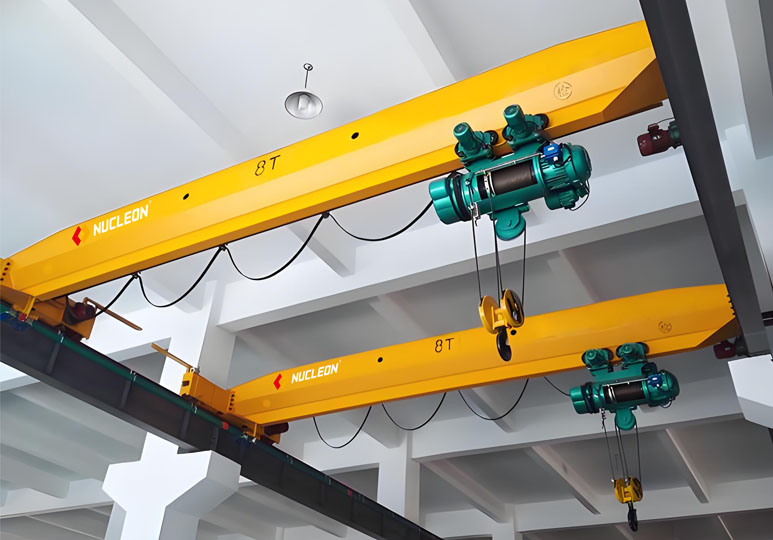
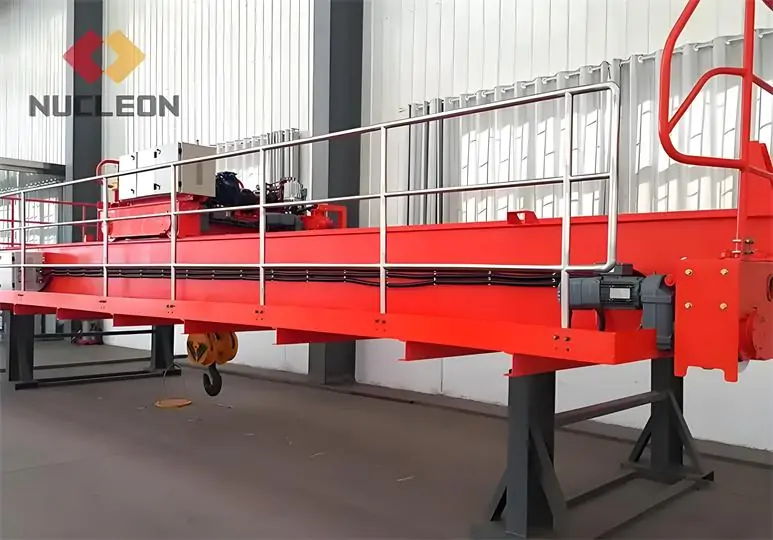
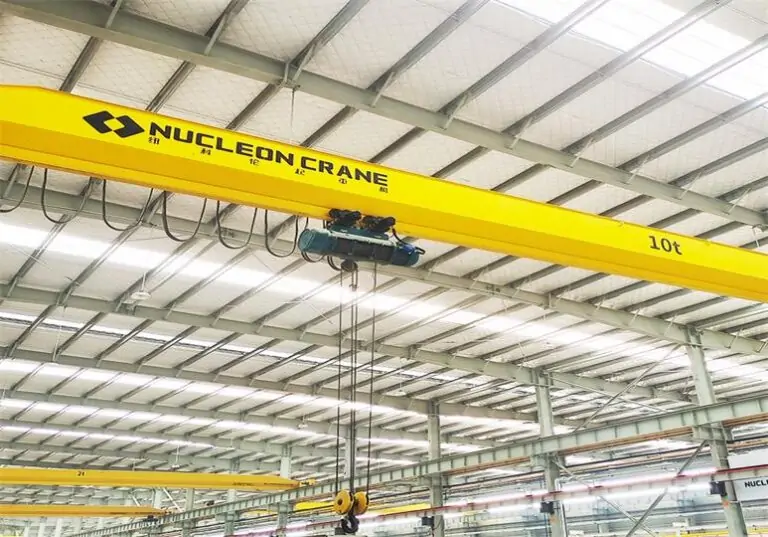
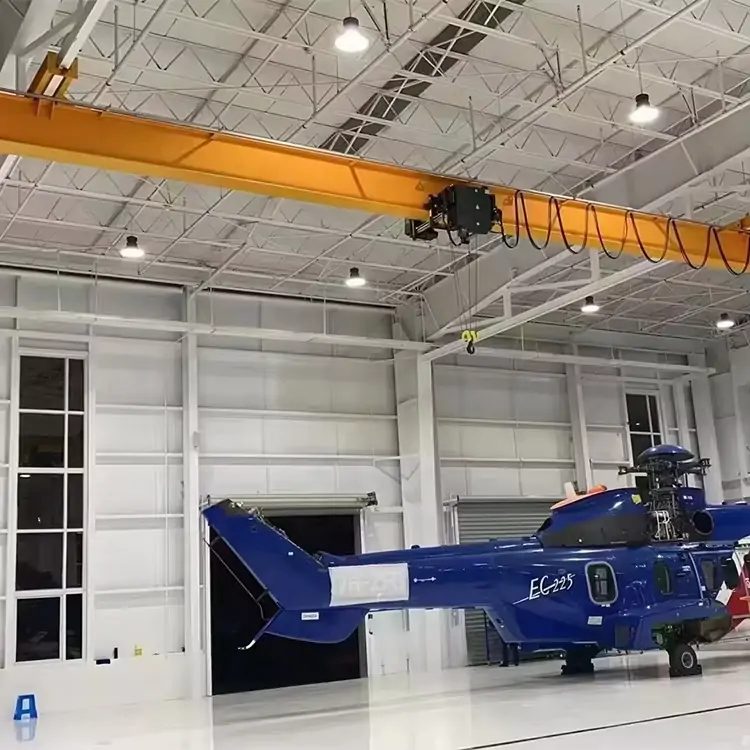
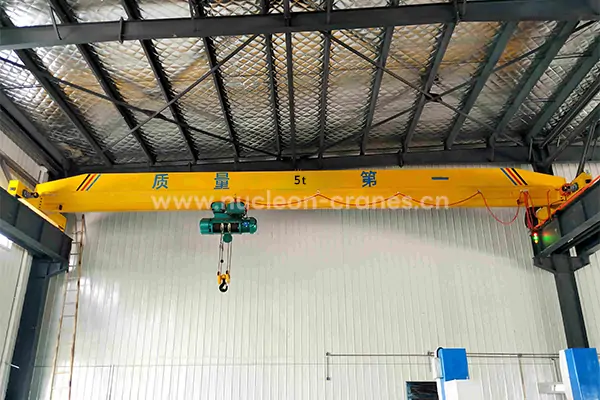
An explosion-proof overhead crane built around these five inputs gives you a specification a supplier's engineering team can quote accurately on the first pass, instead of a back-and-forth that eats weeks of lead time. For heavier oil & gas and chemical-plant service, that typically means a double-girder configuration such as the QB Type Explosion-Proof Overhead Crane (5–100 ton); for lighter workshop or lab-scale hazardous areas, a single-girder unit like the LB Type Explosion-Proof Bridge Crane (1–20 ton) is usually the better fit — either way, the zone/group/T-class parameters above are what the engineering team needs from you to quote correctly.
Conclusão
Whether you need a certified explosion-proof overhead crane comes down to one document — your hazardous-area classification — not a general sense of risk. Once that's confirmed, the real work is locking the zone, gas group, temperature class, and duty cycle before you request quotes, insisting on full-system certification rather than component paperwork, and budgeting for certification, installation, and maintenance access alongside the purchase premium. Get those right up front, and an explosion-proof overhead crane is a straightforward, predictable purchase rather than a source of compliance or cost surprises later.
A seleção final do equipamento deve ser confirmada por um engenheiro certificado e estar em conformidade com as normas locais para equipamentos de elevação.

Especialista de Equipamento
Gestor de Negócios de Gruas com vasta experiência em gestão de projetos de elevação pesada e supervisão operacional. Histórico comprovado na promoção do crescimento da receita e na garantia da conformidade com as normas de segurança.
FAQ
Q1: What zone classification requires an explosion-proof overhead crane?
Any area formally classified as Zone 1, Zone 2, Zone 21, or Zone 22 (or the equivalent NEC Class I/II Division 1 or 2) requires a certified explosion-proof crane. Zone 0/20 is rare for cranes at all — pneumatic or hydraulic equipment is usually preferred there, or the crane is positioned outside that zone entirely.
Q2: Can a standard overhead crane be converted to explosion-proof later?
Generally no. Ignition sources exist throughout the crane — motors, controls, wheels, brakes — so the whole system must be designed and certified together from the start. Many regulatory authorities will not accept field conversions of a standard crane, making this a costlier and less reliable path than specifying correctly up front.
Q3: How much more does an explosion-proof crane cost than a standard crane?
As a market reference, Zone 2 cranes typically run about 30–50% above a comparable standard crane, and Zone 1 cranes roughly 80–120% more, with IIC gas-group certification adding a further 25–40% on top. Actual pricing depends on capacity, span, and supplier — confirm current figures with the manufacturer.
Q4: What's the difference between IIA, IIB, and IIC gas groups?
These groups reflect how easily a gas ignites, from IIA (propane and similar, least stringent) to IIC (hydrogen and acetylene, most stringent). Equipment certified for IIC automatically covers IIB and IIA requirements, but IIB-certified equipment does not cover IIC — this is a common specification error.
Q5: Is ATEX or IECEx certification sufficient for a crane exported to another region?
Not automatically. ATEX is legally required within the EU/EEA; IECEx is internationally recognized in over 30 countries but isn't universally binding, and NEC governs the US separately. For export or multi-site use, confirm whether dual certification or a regional-specific mark is needed before ordering.
Artigos relacionados
- Pontes rolantes no México: aplicações industriais, conformidade e guia de fornecedores
- Inspeção de pontes rolantes: normas OSHA vs CE vs GB — O que compradores e exportadores realmente precisam saber
- Ponte rolante leve versus ponte rolante pesada: qual escolher?
- Diferenças entre pontes rolantes de viga única e de viga dupla
- Quando fazer a manutenção do ponte rolante?

 English
  العربية
  Español
  Français
  Português
  Русский