

The Wrong Crane Choice Can Cost You More Than the Equipment Itself
Selecting a crane for container handling is one of the highest-stakes procurement decisions a terminal operator makes. Get it right, and your yard runs at peak throughput for decades. Get it wrong, and you're looking at operational bottlenecks, premature equipment replacement, and capital write-offs that can reach tens of millions of dollars.
The challenge is that container port cranes are not interchangeable. An RTG crane that performs flawlessly in a mid-size transshipment hub may be entirely wrong for a greenfield inland terminal. An RMG crane that delivers excellent automation ROI at a major gateway port may be oversized and over-engineered for a feeder terminal handling 200,000 TEU per year.
This guide cuts through the technical complexity. This guide clearly breaks down the main container crane types used in modern terminals. It offers a direct comparison between RTG and RMG cranes. It also provides practical guidance on crane capacity and span selection. Finally, it gives you a decision framework you can apply to your specific operation. You can use this framework whether you are evaluating an upgrade, planning a new terminal, or benchmarking your current setup.
Core takeaway: the right container terminal crane is the one that matches your throughput target, yard layout, automation roadmap, and total cost of ownership — not simply the one with the highest lifting capacity on paper.
Table of Contents
- The Wrong Crane Choice Can Cost You More Than the Equipment Itself
- What Crane Is Used in Container Ports? The Three Core Systems
- RTG vs RMG Crane: A Direct Comparison
- Automated Container Crane Systems: What You Need to Know Before Committing
- Container Terminal Crane Selection : A Practical Decision Framework
- Summary: Key Takeaways for Terminal Decision-Makers
- FAQ
- Q1: What is the difference between an RTG crane and an RMG crane for container terminals?
- Q2: How do I determine the right crane capacity and span for my container terminal?
- Q3: What does an automated container crane system involve, and when does automation make sense?
- Q4: How long is the typical service life of a container port crane, and what drives maintenance costs?
- Q5: What are the key questions to ask crane manufacturers or suppliers during the RFQ process?
What Crane Is Used in Container Ports? The Three Core Systems
Container port crane selection typically comes down to three primary system types, each serving a distinct function in the terminal workflow.
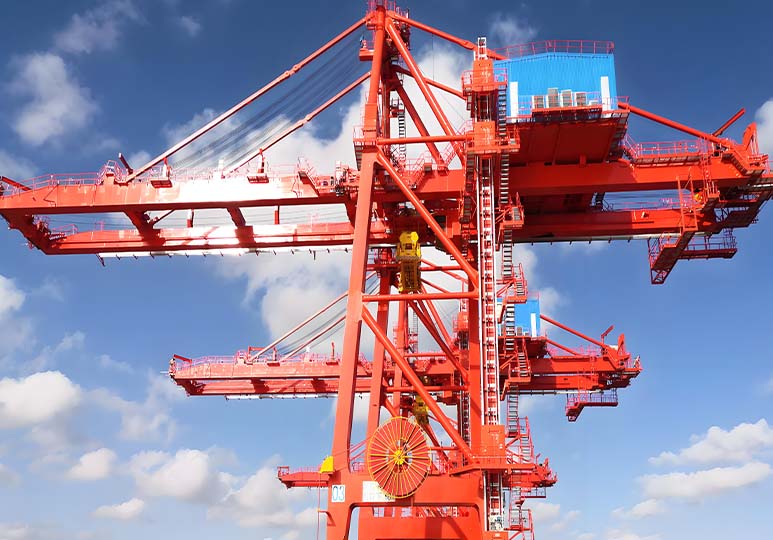
Ship-to-Shore (STS) Cranes: The Gateway Machines
STS cranes — also called quay cranes or ship-to-shore gantry cranes — handle container transfers between vessel and quayside. They operate on rails along the quay wall and are the first point of contact for inbound cargo. Modern STS cranes typically feature outreach spans of 60–72 metres to cover the beam of ultra-large container vessels (ULCVs), with safe working loads (SWL) of 65–85 tonnes under hook.
STS cranes are not a choice so much as a requirement for any deep-water terminal receiving ocean-going vessels. The selection decision here centres on outreach, hoisting speed, and whether to specify twin-lift or tandem-lift capability for higher productivity. For terminals expecting ULCV calls, specifying a minimum outreach of 65 metres is becoming standard practice.
RTG Cranes: The Flexible Workhorse of Container Yards
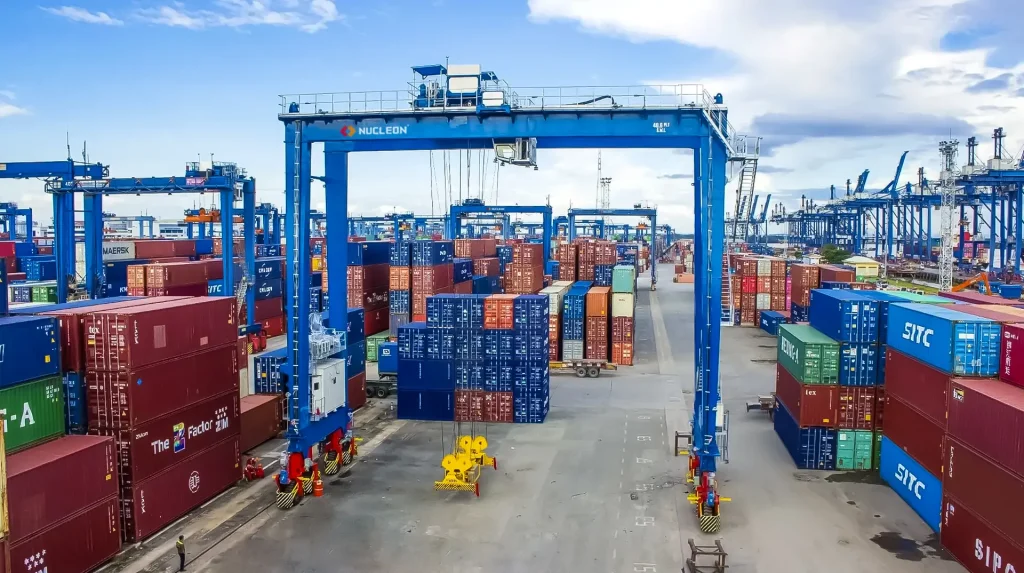
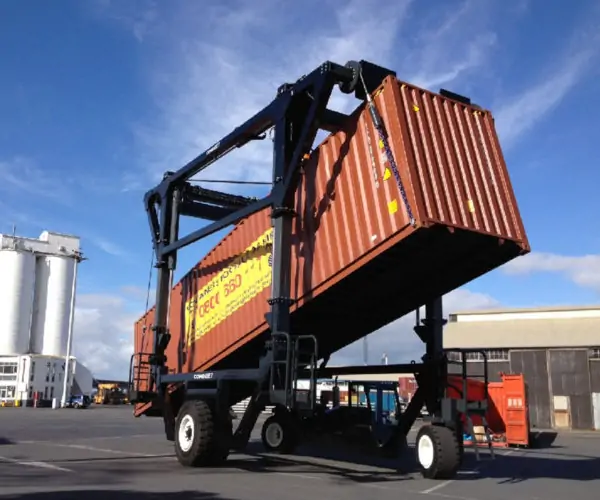
Rubber Tyred Gantry (RTG) cranes are the dominant crane type for container yard operations globally. They run on rubber tyres, which gives them the ability to travel between stacking rows and relocate across the yard without rail infrastructure. A standard RTG crane configuration handles stacking widths of 6+1 containers (six lanes plus a truck lane) and stack heights of 4–6 containers high.
RTG cranes particularly suit terminals where the yard layout may evolve over time, throughput volumes vary, or the capital budget for civil infrastructure faces constraints. However, they come with a trade-off: they consume more fuel than electrified alternatives. Modern hybrid and electric RTG variants significantly close this gap.
RMG Cranes: High-Density, High-Efficiency Stack Operations
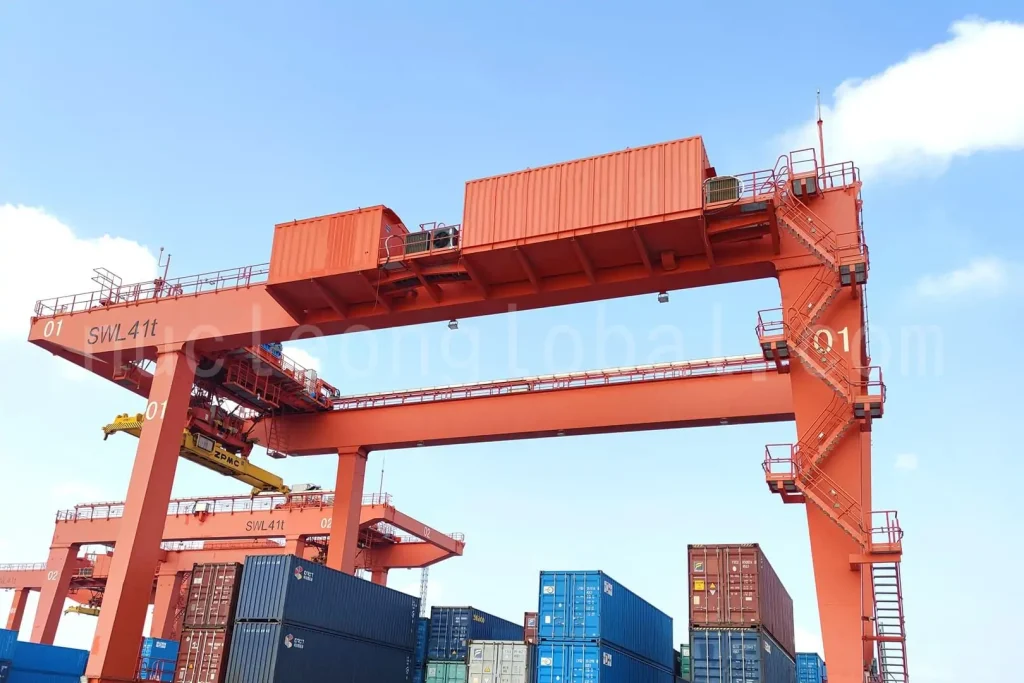
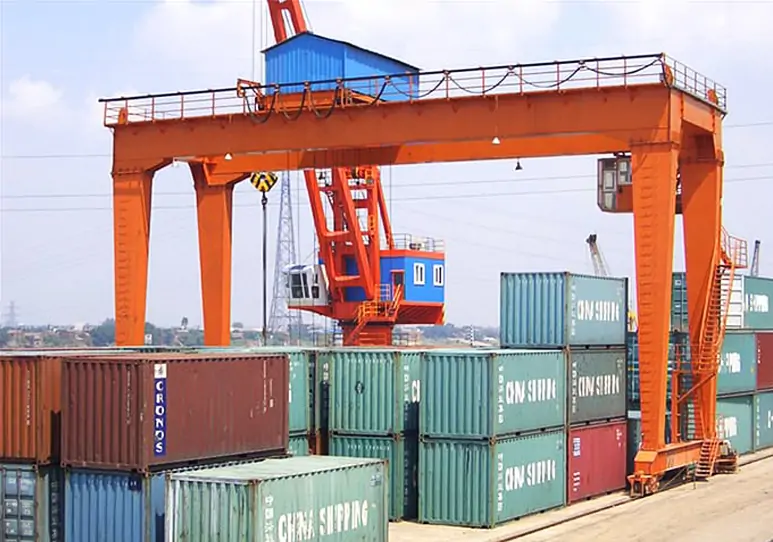
Rail Mounted Gantry (RMG) cranes operate on fixed steel rails embedded in the yard pavement. This fixed-path operation makes them ideal for high-density container stacking and automation integration. RMG cranes can handle stacking widths of up to 10+1 containers and heights of 6+ tiers, making them the preferred choice for terminals targeting maximum ground utilisation.
The fixed-rail constraint that limits RMG flexibility also enables their key advantage: they integrate more cleanly with Automated Stacking Crane (ASC) systems, automated guided vehicles (AGVs), and terminal operating system (TOS) platforms. For terminals planning automation upgrades, specifying RMG or ASC-ready infrastructure from the outset avoids costly retrofitting later.
RTG vs RMG Crane: A Direct Comparison
The RTG vs RMG decision is the most common container crane selection question for yard equipment procurement. The right answer depends on four factors: throughput volume, yard geometry, automation plans, and capital structure.
Performance and Operational Comparison
| Parameter | RTG Crane | RMG Crane |
| Mobility | High — moves between rows | Fixed to rail |
| Typical stack width | 6+1 containers | Up to 10+1 containers |
| Typical stack height | 4–5 tiers | 5–6 tiers |
| Power source | Diesel, hybrid, or electric | Electric (rail-powered) |
| Automation compatibility | Moderate (semi-auto available) | High (full ASC automation) |
| Civil infrastructure cost | Lower | Higher (rail + foundation) |
| Operational flexibility | High | Low |
| Long-term energy cost | Higher (diesel variants) | Lower |
| Typical purchase price | USD 3–6M per unit | USD 5–12M per unit |
Sources: UNCTAD Port Management Series (2023); Konecranes Technical Specifications (2024); Liebherr Container Cranes Product Data (2023)
When to Choose RTG
RTG cranes make more sense when your terminal handles under 1 million TEU annually, your yard layout is irregular or subject to future reconfiguration, and you need the operational flexibility to redeploy equipment. They are also the right choice when you need to minimise civil engineering costs. RTG operations require less heavy pavement preparation than RMG rail systems.
When to Choose RMG
RMG cranes deliver better lifecycle economics above roughly 800,000–1,000,000 TEU per year, particularly when you pair them with automation. The higher upfront infrastructure investment offsets itself through lower energy costs, reduced labour requirements, and better throughput density per square metre of yard.For greenfield terminals designed with automation as a core requirement from day one, RMG or full ASC systems are typically the logical path.
Container Crane Capacity and Span: Getting the Numbers Right
Misspecifying crane capacity or span is a common and expensive procurement error. Over-specifying drives unnecessary capital cost; under-specifying creates operational constraints that are difficult to remedy without replacing equipment.
Understanding SWL, Outreach, and Span
For STS cranes, the two critical parameters are Safe Working Load (SWL) and outreach. SWL should be specified based on the heaviest container type you expect to handle — ISO 1496-1 defines a maximum gross mass of 36 tonnes for a 20-foot container, but twin-lift and spreader weight add to the hook load. Most modern STS cranes are specified at 65–85 tonnes SWL. Outreach must cover the widest vessel class expected to call at your berth; for ULCV-capable berths, 65–72 metres is now the standard range.
For RTG and RMG cranes, span and lift height drive the specification. Span determines how many container rows the crane can service in a single pass. Standard RTG configurations cover 6 container lanes (approximately 23–26 metres span); wider RMG systems can reach 35 metres or more for 10-wide stacking blocks.
Container Crane Capacity Reference
| Crane Type | SWL (Under Spreader) | Typical Span | Max Stack Height | Hoisting Speed (laden) |
| STS (Post-Panamax) | 65–75 t | 50–60 m outreach | — | 60–90 m/min |
| STS (ULCV-capable) | 75–85 t | 65–72 m outreach | — | 90–120 m/min |
| RTG (Standard) | 40–50 t | 23–26 m (6+1) | 4–5 tiers | 25–35 m/min |
| RMG/ASC (Standard) | 40–55 t | 28–35 m (8–10+1) | 5–6 tiers | 30–50 m/min |
Sources: ISO 8686-3 (Cranes — Load combinations, 2018); PEMA Information Paper on ASC Technology (2022); Manufacturer specifications: Liebherr, Konecranes, ZPMC (2023–2024)
Automated Container Crane Systems: What You Need to Know Before Committing
Automation is now a central consideration in container crane procurement, even for terminals that are not planning to automate immediately. Specifying automation-ready infrastructure at the outset costs significantly less than retrofitting later.
Levels of Crane Automation
Container yard crane automation exists on a spectrum. Semi-automated RTG systems (A-RTG) use automated stacking cycles with manual trailer positioning; they can improve productivity by 15–25% compared to fully manual operations while retaining operational flexibility. Full Automated Stacking Cranes (ASC), which are RMG-based, remove the operator from routine stacking decisions entirely and integrate directly with TOS and AGV systems.
The decision to automate — and at what level — should be driven by labour cost structure, throughput target, and service level requirements. Automation typically delivers ROI above 600,000–800,000 TEU/year in high-labour-cost markets; in lower labour cost environments, the breakeven point shifts upward.
Case Reference: Rotterdam Maasvlakte II (APM Terminals)
APM Terminals' Maasvlakte II facility in Rotterdam is a widely referenced implementation of fully automated ASC-based container handling. The terminal uses automated quay cranes, AGVs, and ASC systems integrated through a unified TOS. Published throughput data indicates design capacity of approximately 2.7 million TEU/year across 2.7 km of quay. The facility is frequently cited in PEMA and UNCTAD publications as a benchmark for greenfield automated terminal design.
Note: Detailed operational KPIs are proprietary; publicly available data is sourced from APM Terminals press releases and UNCTAD Port Development Reports.
Container Terminal Crane Selection: A Practical Decision Framework
Rather than approaching crane selection as a pure technical specification exercise, experienced procurement teams work through a structured decision sequence that connects operational requirements to equipment choices.
1.Define throughput targets and growth trajectory. Design-year throughput (typically 10–15 years out) drives crane count and type. Do not size for current throughput alone.
2.Establish yard geometry constraints. Block length, width, and number of rows determine whether RTG flexibility or RMG density is more advantageous. Irregular or constrained yards favour RTG; regular, long blocks favour RMG/ASC.
3.Determine automation roadmap. If full automation is a 5–10 year target, specify RMG-compatible civil infrastructure now. If automation is not planned, RTG with semi-auto capability may offer the best balance.
4.Calculate total cost of ownership, not just purchase price. Energy, maintenance, labour, and infrastructure costs over a 15–20 year lifecycle often differ more between crane types than the initial purchase price.
5.Verify manufacturer service capability in your region. Lead times for major components (spreaders, wheels, motors) and availability of trained service engineers vary significantly by geography — a frequently underweighted factor.
Summary: Key Takeaways for Terminal Decision-Makers
Choosing the right container port crane system is not about finding the most technically advanced option — it's about matching equipment to your specific operational context. STS cranes are determined by vessel class; the real selection decision is in the yard. RTG cranes offer flexibility and lower infrastructure cost, making them the right fit for many mid-size and growing terminals. RMG and ASC systems deliver density and automation integration, justifying their higher investment at scale and in high-labour-cost markets.
Before finalising any container crane procurement, validate your throughput projections, confirm your automation roadmap, and complete a full lifecycle cost analysis that includes energy, maintenance, and civil infrastructure — not just equipment price.
If you're in the early stages of terminal planning or crane replacement evaluation, consider engaging an independent port equipment consultant to benchmark specifications against comparable operations before issuing RFQs.
FAQ
Q1: What is the difference between an RTG crane and an RMG crane for container terminals?
RTG (Rubber Tyred Gantry) cranes run on rubber tyres and can move freely between stacking rows, offering high operational flexibility. RMG (Rail Mounted Gantry) cranes run on fixed steel rails, enabling higher stacking density, better automation integration, and lower long-term energy costs. RTG cranes are typically preferred for terminals with irregular yard layouts or variable throughput. RMG cranes are better suited to high-volume terminals with regular block geometry and automation plans. The upfront infrastructure cost for RMG is substantially higher, but lifecycle economics often favour RMG above roughly 800,000–1,000,000 TEU/year in high-labour-cost markets.
Q2: How do I determine the right crane capacity and span for my container terminal?
Start with your design-year throughput and block configuration. Crane span should cover your intended stacking width — standard RTG configurations handle 6+1 container lanes; RMG systems can reach 8–10+1. SWL should be specified based on the heaviest containers you expect to handle, including spreader weight and any twin-lift requirements. For STS cranes, outreach must cover the widest vessel class expected at your berth. Always size for your projected 10–15 year throughput target, not current volumes, to avoid early equipment replacement.
Q3: What does an automated container crane system involve, and when does automation make sense?
Automated container crane systems range from semi-automated RTG configurations (A-RTG) to fully automated ASC systems that integrate with AGVs and terminal operating systems. Automation typically delivers measurable ROI in high-labour-cost markets above approximately 600,000–800,000 TEU/year throughput. The key preparation step is specifying automation-compatible civil infrastructure at initial construction — retrofitting later is significantly more expensive.
Q4: How long is the typical service life of a container port crane, and what drives maintenance costs?
Modern STS and RTG/RMG cranes are designed for service lives of 20–25 years with proper maintenance programs. The main cost drivers are wire rope and sheave replacement (every 3–5 years depending on cycle counts), spreader maintenance, wheel and rail wear (RMG), and electrical/drive system servicing. Preventive maintenance programs aligned with manufacturer schedules and OEM spare parts availability in your region are the most significant factors in achieving full design life.
Q5: What are the key questions to ask crane manufacturers or suppliers during the RFQ process?
Key questions include:
- What is the guaranteed cycle time (lifts per hour) under your specified operating conditions?
- What is the power consumption per lift cycle?
- What civil infrastructure preparation is required, and is this included in scope?
- What is the lead time for delivery and commissioning?
- What training and documentation are included?
- What is the standard warranty period?
- What is your nearest regional service centre and typical spare parts lead time for critical components?
- Can you provide references from comparable terminal operations using this equipment model?


 English
  العربية
  Español
  Français
  Português
  Русский