

If you're sourcing a container gantry crane, the number you see on a supplier's quote sheet is not your project cost — it is the starting point. A rail-mounted gantry (RMG) crane quoted at $200,000 can easily become a $300,000–$400,000 capital commitment once track foundations, power supply infrastructure, and commissioning are included. Knowing that gap before you issue an RFQ is the difference between a budget that holds and one that doesn't.
This guide gives procurement managers and equipment directors a complete picture: market price ranges by crane type (RTG, RMG, STS), the cost factors that actually explain price variation within each type, what the quote typically omits, and a supplier evaluation checklist before you commit.
Table of Contents
Quick Reference: Container Gantry Crane Price Ranges by Type
The table below reflects market reference price levels from Chinese manufacturers — which represent the primary supply source for most import procurement. Project-specific factors (automation level, span, power system, site requirements) significantly affect final cost.
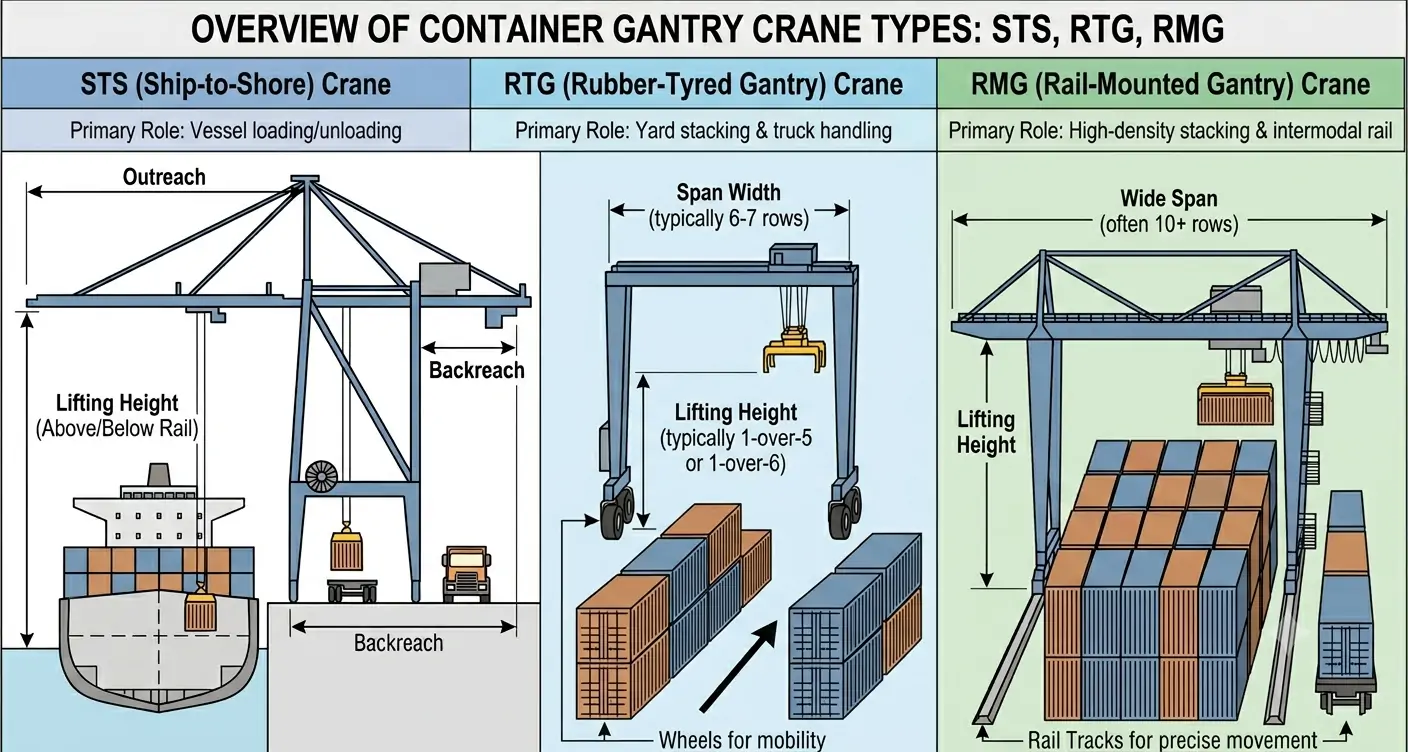
| Type | Typical Use | Market Price Reference | Stack Height | Automation Readiness |
| RTG (Rubber-Tired Gantry) | Flexible container yards | $150,000 – $800,000 | 4–6 containers | Semi / Remote |
| RMG (Rail-Mounted Gantry) | Fixed yards, automated terminals | $130,000 – $250,000+ (equipment only) | 6–8 containers | Full automation capable |
| STS (Ship-to-Shore) | Quayside vessel loading | $1,000,000 – $6,000,000+ | N/A | Semi / Full |
The single most important number missing from every RFQ: for RMG systems, total project cost including civil works typically runs 35–50% above the equipment quote. Budget accordingly before comparing RMG to RTG on price.
Get Solution QuoteRTG Cranes: Price Drivers and When the Economics Work
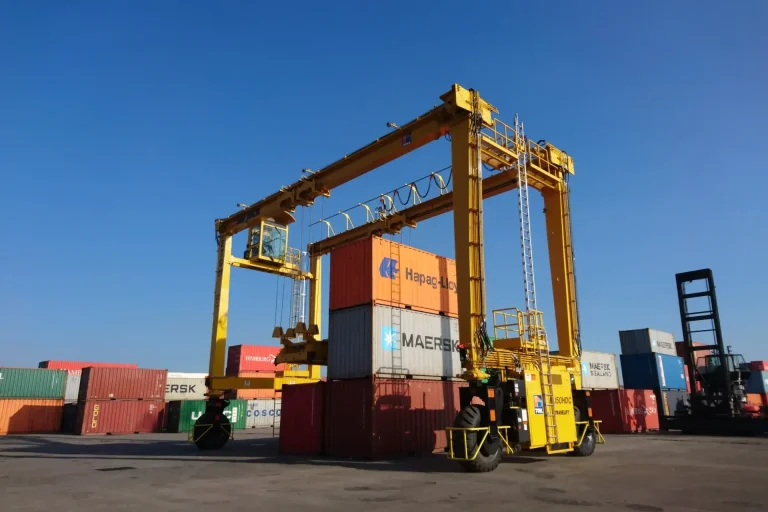
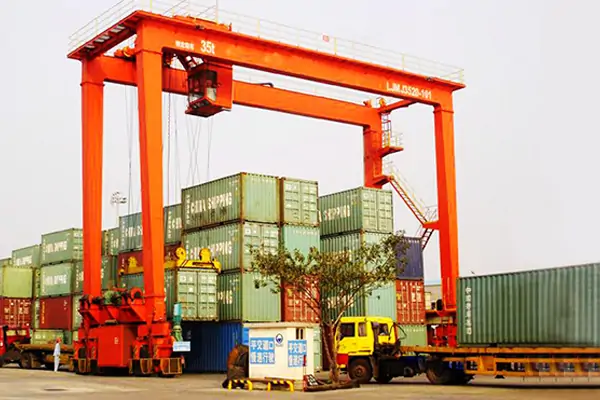
RTG price range is wide because power system choice is the single largest cost variable
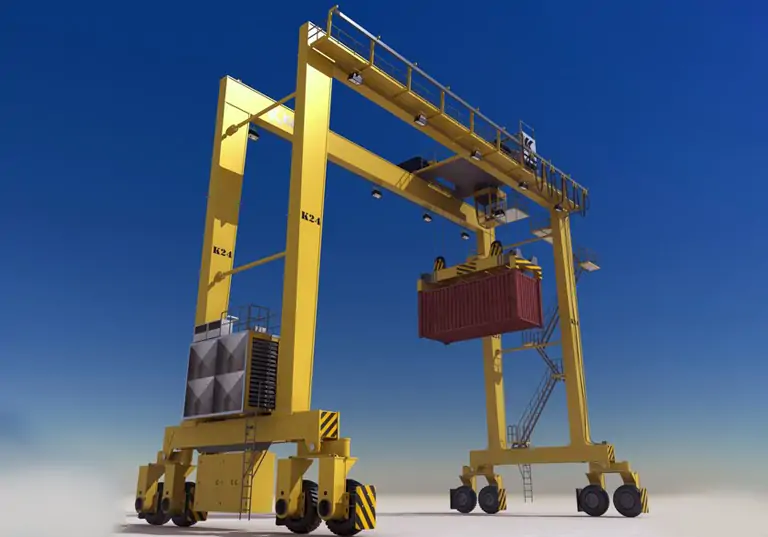
A standard diesel-only RTG in the 35–41 ton capacity range starts from around $150,000–$250,000 per unit at the equipment level. The same crane with a diesel-hybrid powertrain (energy storage buffer) typically adds $40,000–$70,000 per unit. A full electric RTG (cable reel or conductor rail powered) pushes the unit price toward $400,000–$700,000 depending on configuration, but eliminates diesel fuel and reduces maintenance overhead over a 15–20 year service life.
The economic logic: if your RTG is running 20+ moves per hour for two or more shifts per day, the payback on hybrid or electric is measurable within a few years. At lighter utilization — say a smaller inland terminal doing 8–10 moves per hour on one shift — the payback timeline stretches significantly and diesel may remain the rational choice. Don't let a sustainability preference override the utilization math before you run the numbers.
What the RTG quote typically excludes
Standard RTG quotations from Chinese suppliers generally cover: the crane structure, hoist and trolley mechanism, spreader (telescopic), cab, and PLC control system. What is frequently not included, and must be confirmed explicitly:
- Spare parts package (first 2 years recommended minimum)
- Anti-collision and anti-sway systems (sometimes quoted as options)
- Remote control or semi-automation upgrades
- Commissioning and operator training at your site
- Sea freight and in-country import handling
The spreader specification also deserves attention: confirm whether the spreader is a basic fixed-size unit or a telescopic unit covering 20 ft / 40 ft / 45 ft containers. This affects day-to-day operational versatility more than most buyers realize until the crane arrives on site.
RMG Cranes: Equipment Price vs. True Project Cost
The equipment quote covers roughly 60–65% of what you will actually spend
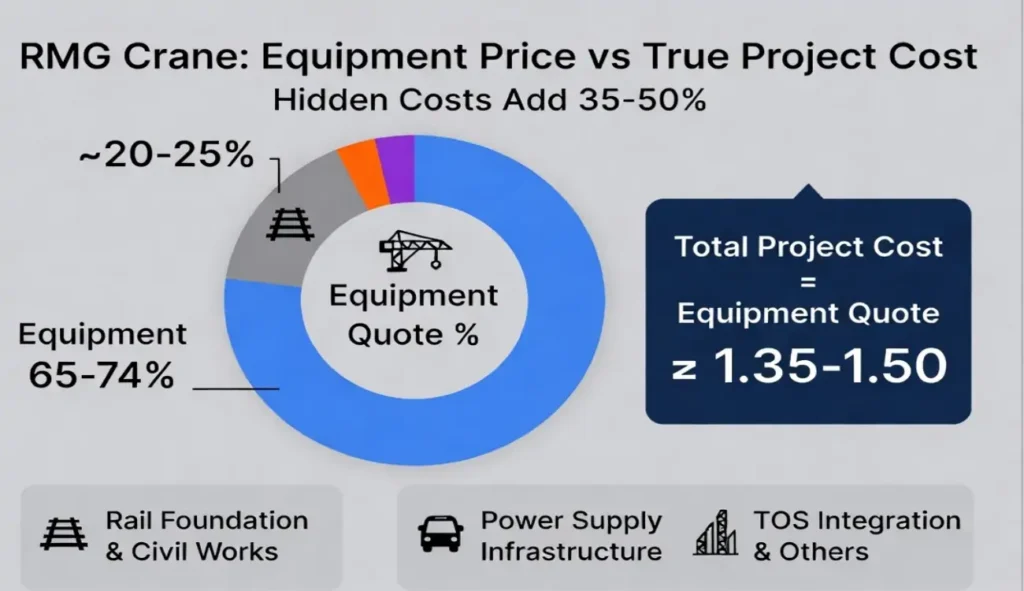
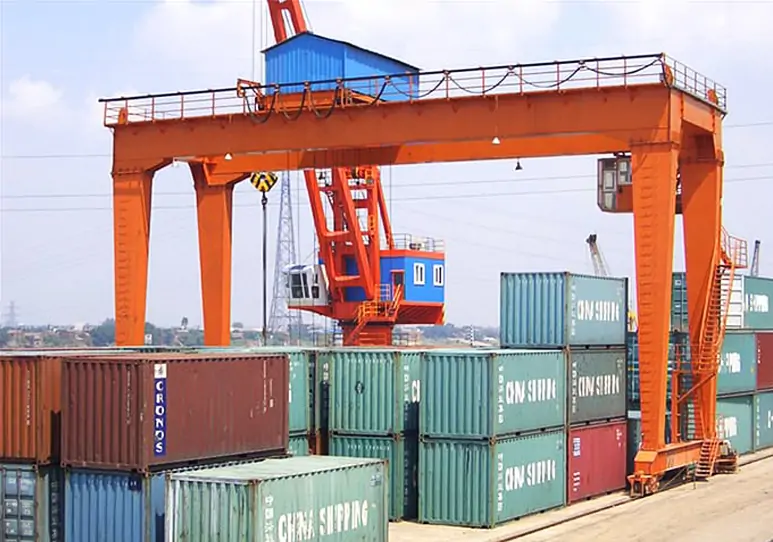
This is the most common and most expensive oversight in RMG procurement. An RMG crane for a 30–50 ton container yard, spanning 22–32 m, typically quotes in the $130,000–$240,000 range at the equipment level. That figure is real — but it omits the civil and electrical infrastructure that is mandatory before the crane can operate.
A realistic RMG project budget includes:
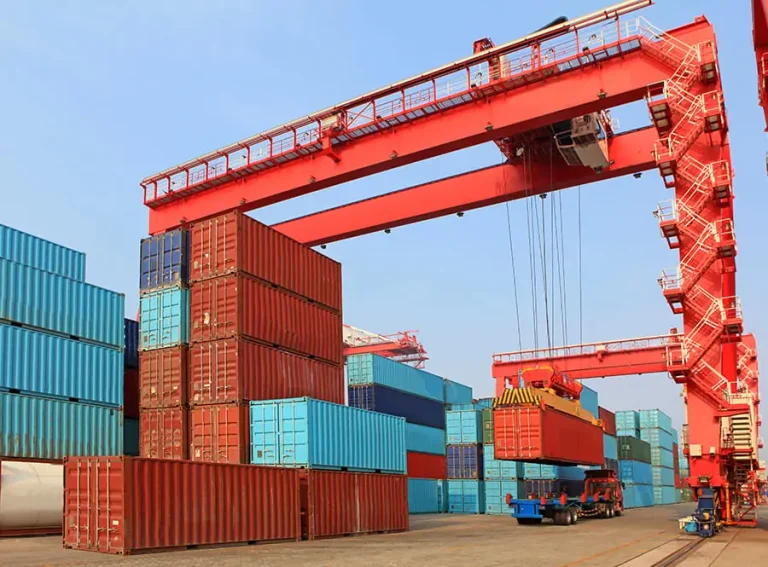
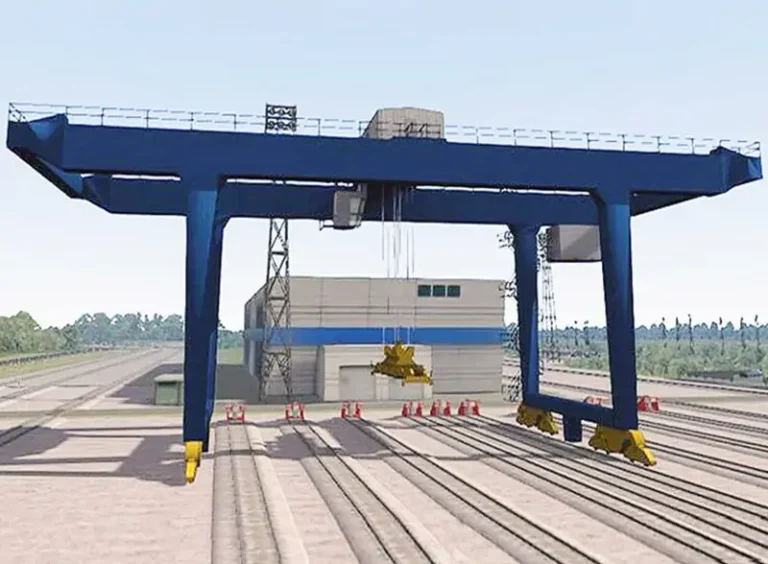
- Rail foundation civil works: engineered concrete beams to rail specification, including soil study and load design. Cost depends heavily on ground conditions; soft or variable soil dramatically increases this line item.
- Power supply infrastructure: busbar or festoon cable system along the full rail run, plus the terminal electrical connection (RMGs typically require 380–660 V three-phase, with transformer capacity to handle simultaneous crane loads).
- Installation and commissioning: factory-trained commissioning engineers, typically billed per day plus travel. Allow 2–4 weeks for a standard installation.
- TOS integration (if automated): Terminal Operating System interface development, sensor calibration, and AGV handoff testing if the yard is moving toward automation.
When these are added, total installed project cost for a single RMG system in a standard yard configuration typically lands 35–50% above the equipment quote. We have seen procurement teams budget for the equipment price, receive the civil works estimate mid-project, and face a funding gap that delays commissioning by 3–6 months. Document all of this in your initial capex model — not as a contingency, but as a planned line item.
Where RMG earns its cost premium over RTG
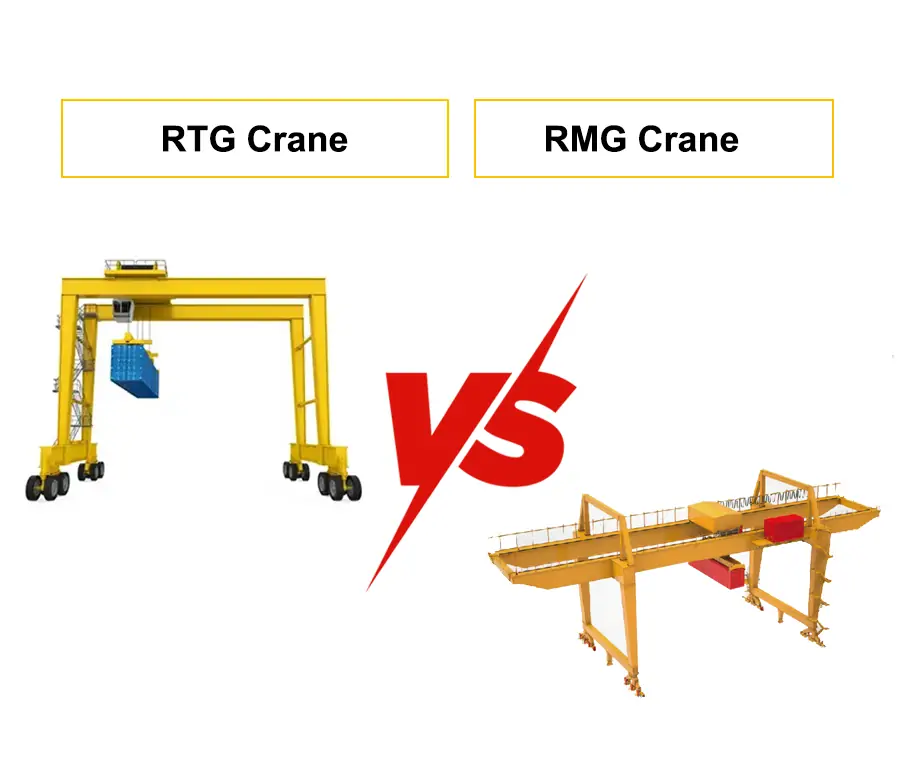
For an established yard layout committed to automation, RMG delivers consistent positioning repeatability (typically ±20–30 mm vs. the wider tolerance of tire-steered RTG), higher stacking density (6–8 containers high vs. 5–6 for RTG), lower per-move energy cost on electric power, and 24/7 unmanned operation capability when integrated with a TOS. For a terminal processing high volumes continuously, these advantages compound over the crane's 20–25 year service life. For a terminal with an evolving layout or moderate throughput, they may not justify the infrastructure lock-in.
STS Cranes: Investment Scale and What Determines the Price
STS cranes span a 6× price range — outreach and vessel class are the primary drivers


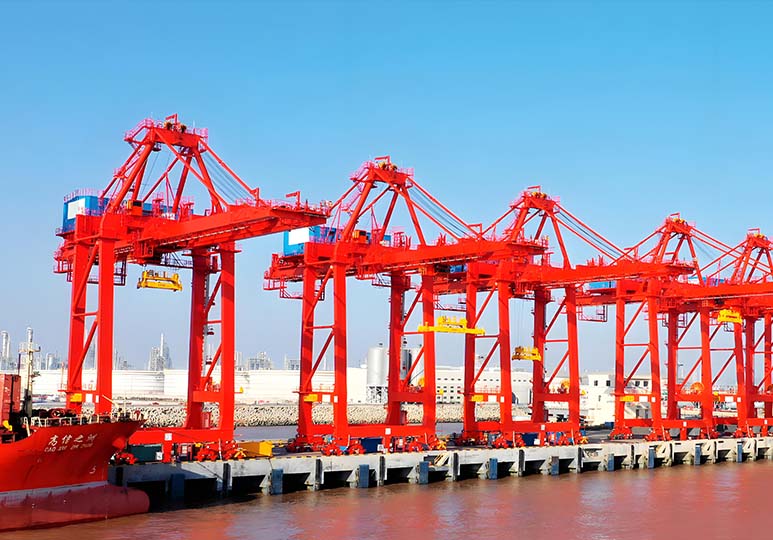
Ship-to-Shore cranes represent a fundamentally different scale of investment: market reference pricing ranges from approximately $1,000,000 for smaller Panamax-class units to $4,000,000–$6,000,000+ for ultra-large vessel (ULCV) configurations capable of serving 24-row-wide vessels. The main variables are:
- Outreach: extending the boom from ~40 m (Panamax) to 65 m+ (ULCV) increases structural steel weight dramatically and changes the engineering category entirely
- Lift height under spreader: determined by the tallest vessel deck height at your berth; under-specifying here prevents loading the top container tiers
- Cycle time (moves per hour): higher hoisting and trolley speeds require more powerful drives, larger motor frames, and more robust wire rope systems
- Automation level: semi-automated trolley control is increasingly standard; fully automated STS remains technically complex due to ship movement dynamics
STS cranes are essentially permanent infrastructure. The vessel size ceiling you set at procurement — defined by outreach — becomes your terminal's commercial ceiling for 25–30 years. If your port's strategy anticipates vessel growth beyond Panamax within the next decade, specifying for Post-Panamax or ULCV outreach at initial procurement is almost always more economical than replacing cranes later.
The Specification Checklist Before You Issue Any RFQ
Confirming these eight parameters prevents the most common procurement errors
Before contacting suppliers, document your requirements against the following — this becomes the technical basis of your RFQ and prevents apples-to-oranges quote comparisons:
- Container types handled: 20 ft / 40 ft / 45 ft, and whether tandem (two 20 ft simultaneous) lifting is required
- Maximum gross container weight: standard ISO maximum is 30.48 t for 20 ft; confirm if your cargo mix includes overweight units
- Required stack height: determines lift height under spreader, which affects leg height and structural weight
- Expected moves per hour and shifts per day: this maps to FEM duty class (A1–A8 per FEM 1.001); require suppliers to confirm the duty class match explicitly
- Span: number of container lanes to straddle, plus truck lane clearance dimension
- Power supply availability: grid connection capacity and voltage at the site (affects RTG power system choice and RMG power infrastructure cost)
- Automation target: current operation mode vs. 5–10 year automation intent (affects control system specification)
- Wind zone and seismic classification: your structural engineer provides this; it directly affects gantry frame design and cost
Any supplier who quotes without requesting items 3–8 above is providing a budget estimate, not a technical proposal. Treat those quotes accordingly.
Evaluating Suppliers: What Matters Beyond the Price Sheet
The lowest quote is rarely from the supplier who costs least over a 20-year service life
Container gantry cranes operate for 20–30 years. Over that period, the supplier relationship — spare parts availability, technical support responsiveness, software updates for control systems — contributes more to your total cost of ownership than the initial unit price difference between credible suppliers.
When evaluating suppliers, confirm:
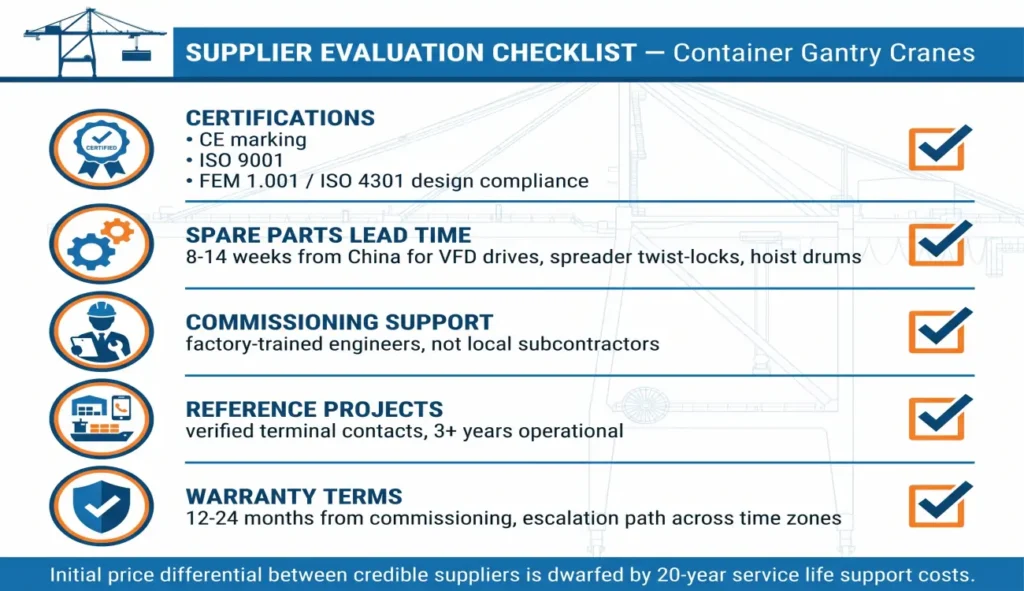
- Certifications applicable to your market: CE marking for European import; ISO 9001 for quality management systems; design compliance with FEM 1.001 / ISO 4301 for crane classification. Require copies of certificates, not just claims.
- Spare parts lead time: for components like VFD drives, spreader twist-lock mechanisms, and hoist drums, what is the quoted delivery time after order? Suppliers without regional inventory typically quote 8–14 weeks from China, which means a major component failure becomes a multi-month downtime event.
- Commissioning support: on-site commissioning by factory-trained engineers (not local subcontractors) is the standard for major container crane projects. Confirm who physically commissions the crane and what their technical authority is.
- Reference projects: request verified reference terminal contacts — not just project photos. Speaking with an operations manager at a facility running the same crane model for 3+ years gives you information that no specification sheet provides.
- Warranty terms: standard range is 12–24 months from commissioning. Confirm what is and is not covered, and what the escalation path is for warranty claims when you are across time zones from the manufacturer.
Conclusion
A container gantry crane purchase is a 20–30 year infrastructure commitment, and the right evaluation framework treats it that way. For most terminals in the evaluation phase, the most productive first step is not requesting quotes — it is completing the eight-parameter specification checklist above and mapping your expected cycle rate to FEM duty class. That groundwork makes every subsequent supplier conversation more precise and every quote more comparable.
If you are weighing RTG vs. RMG, start with total installed project cost rather than equipment price. If you are considering STS, define your 10-year vessel strategy before setting outreach specification. And in every case, require suppliers to confirm duty class mapping in writing before signing a purchase agreement.
Looking to compare container gantry crane options for your terminal? Contact us for a project-specific cost breakdown — equipment, civil works, and commissioning included.

Equipment Specialist
Accomplished Crane Business Manager with extensive experience in heavy lift project management and operational oversight. Proven track record of driving revenue growth and ensuring safety compliance.
FAQ
Q1: What is the price of a container gantry crane?
Price varies significantly by type and configuration. RTG cranes for container yards typically range from $150,000 to $700,000 per unit depending on capacity and power system. RMG cranes quote in the $130,000–$250,000+ range for equipment only — but total installed project cost including rail foundations and electrical infrastructure runs 35–50% higher. STS cranes for quayside vessel operations start around $1,000,000 and exceed $5,000,000 for ultra-large vessel configurations.
Q2: What is the difference between RTG and RMG container gantry cranes for a buyer?
RTG cranes travel on rubber tires and require no rail infrastructure, making them faster to deploy and more flexible for evolving yard layouts. RMG cranes run on fixed rails, enabling tighter positioning accuracy and full automation compatibility — but they require significant civil and electrical infrastructure investment before commissioning. RTG suits terminals with variable throughput or developing layouts; RMG suits high-volume established yards committed to automation. Evaluate total installed cost, not equipment price alone.
Q3: What certifications should a container gantry crane have?
For import procurement, confirm CE marking (mandatory for European market operation) and ISO 9001 quality management certification at minimum. Crane classification should comply with FEM 1.001 and ISO 4301 duty class requirements matched to your operating cycle profile. Require original certificate copies from suppliers, not scanned marketing documents.
Q4: What does a container gantry crane quote typically not include?
Most equipment-level quotes from Chinese suppliers exclude: rail foundation civil works (for RMG), electrical supply infrastructure, installation and commissioning fees, sea freight, import duties, spare parts package, and operator training. For RMG projects, these excluded items collectively represent 35–50% of total project cost. Always request a full project cost breakdown, not just an equipment price.
Q5: How long does a container gantry crane last?
Container gantry cranes are designed for 20–30 year service lives under rated duty class conditions (FEM 1.001). Service life is directly tied to whether the crane's duty class was correctly matched to actual operating cycles at procurement. A crane specified at too low a duty class for high-throughput operation will require major structural inspection and component replacement well ahead of its nominal design life — often within 8–12 years. Confirm duty class in writing before purchase.


 English
  العربية
  Español
  Français
  Português
  Русский