

A grúa pórtico de celosía Se trata de un sistema de elevación aérea cuyo puente está construido con una estructura triangular de elementos de acero en lugar de una viga cajón maciza. La geometría de la celosía distribuye la carga entre muchos elementos pequeños en lugar de uno grande, por lo que el puente soporta un peso considerable sin superar el peso de un diseño equivalente con viga cajón.
Si está especificando una grúa para un edificio con soporte de vía limitado, un tramo largo o exposición a la intemperie, la pregunta no es solo "¿qué es una grúa pórtico de celosía?", sino si las ventajas y desventajas que implica (estructura más ligera, pero mayor altura libre requerida) se ajustan realmente a sus instalaciones. Las páginas de productos genéricas responden a la primera pregunta y omiten la segunda, que es la que realmente afecta a su pedido.
Esta guía abarca la estructura y clasificación de las grúas pórtico de celosía, la capacidad y los rangos de alcance que se pueden esperar de forma realista, un marco de evaluación para determinar cuándo una grúa de celosía supera a una grúa pórtico estándar (y cuándo no), y los errores de adquisición que aparecen después del presupuesto, no en él.
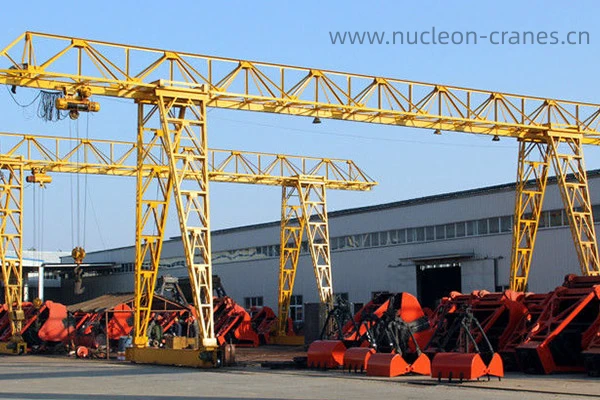
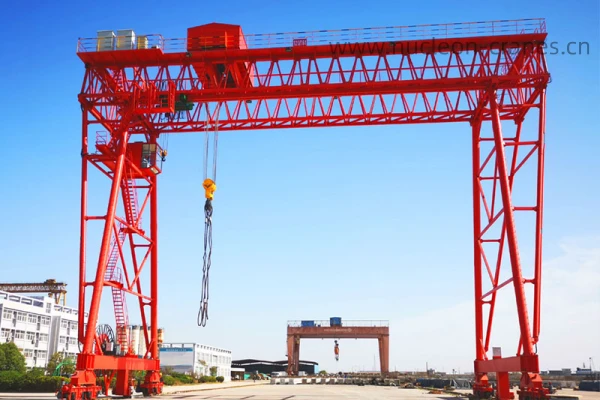
Tabla de contenidos
¿Qué es una grúa pórtico de celosía y en qué se diferencia de una grúa pórtico estándar?
Una grúa pórtico de celosía reemplaza el puente de viga cajón sólida de una grúa pórtico convencional con una estructura de celosía triangulada, reduciendo el peso del puente sin comprometer la capacidad de carga., según se clasifican bajo las normas generales de grúas aéreas, tales como ASME B30.2 y la norma ISO 4301.
La lógica mecánica es sencilla: una viga cajón resiste la flexión como una sola placa de acero continua, por lo que la mayor parte de su material se concentra en el centro de la viga, realizando muy poco trabajo estructural. Una cercha distribuye la misma carga a través de cordones superiores e inferiores triangulados, conectados por elementos diagonales, de modo que casi todos los elementos están sometidos a tracción o compresión puras, la forma más eficiente de soportar una carga. Por eso, un puente de cerchas de la misma capacidad y luz suele utilizar mucho menos acero que una viga cajón equivalente, y por eso también los rieles de rodadura y las columnas de soporte a menudo pueden dimensionarse con menor precisión que los necesarios para una grúa de viga cajón de la misma capacidad.
La desventaja radica en la altura libre. Dado que el polipasto y el carro se desplazan entre dos cerchas paralelas en lugar de sobre o dentro de una sola viga, una grúa de cerchas suele requerir mayor altura libre para alcanzar la misma altura de gancho que una grúa de viga cajón comparable. En edificios con techos bajos, este suele ser el factor decisivo para descartar un diseño de cerchas, independientemente de lo ventajoso que parezca el ahorro de peso sobre el papel.
Grúa pórtico de celosía frente a grúa pórtico de viga cajón
Grúa pórtico de viga cajón
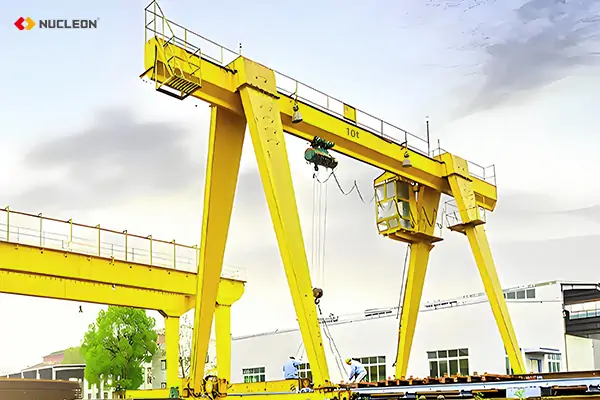
Una grúa de viga cajón destaca por su altura libre y simplicidad; una grúa pórtico de celosía destaca por su envergadura, peso estructural y resistencia al viento. Las vigas cajón son la opción predeterminada para tramos interiores estándar (aproximadamente de 18 a 21 metros) donde la altura del techo no está limitada, debido a su mayor facilidad de fabricación e instalación. Las grúas pórtico de celosía justifican su precio superior en tres condiciones específicas: tramos lo suficientemente largos como para que el propio peso de una viga cajón comience a ser un factor negativo, edificios donde la estructura de acero existente no puede soportar la carga adicional de la vía de rodadura, e instalaciones exteriores o semi-exteriores donde la carga del viento sobre una viga de alma maciza se convierte en un factor estructural importante. Fuera de estas condiciones, la complejidad adicional de ingeniería y fabricación de una grúa de celosía generalmente no compensa.
Componentes básicos de un Grúa pórtico de celosía
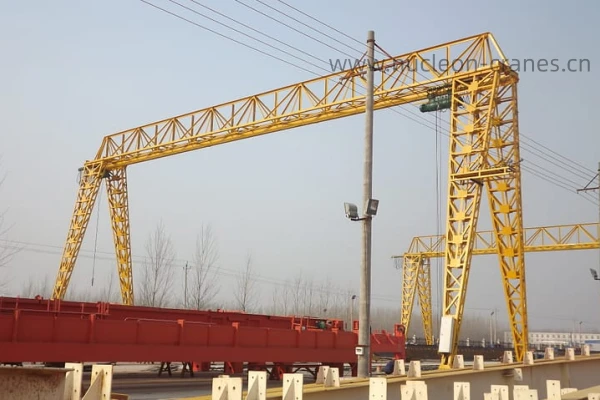
Un puente grúa de celosía consta de dos celosías paralelas, cordones superior e inferior, elementos diagonales de la alma y carros en los extremos, con el polipasto/carro desplazándose entre las celosías en lugar de sobre una sola viga. Cada cercha está fabricada con acero perfilado (ángulo, tubo o canal) soldado formando un patrón triangular repetitivo a lo largo de su longitud. Las dos cerchas están unidas mediante arriostramientos transversales para resistir cargas laterales y el viento, y terminan en carros que transportan todo el conjunto sobre el riel de la vía. Dado que el carro se desplaza en el espacio entre las dos cerchas en lugar de sobre una sola brida superior, las grúas de cercha casi siempre se construyen como sistemas de doble viga en lo que respecta al montaje del carro, aunque la "viga" en sí sea una cercha y no una viga maciza.
Cómo se clasifican las grúas de celosía
Las grúas de celosía se agrupan según la configuración de la viga y la clase de servicio, y confundir estas dos clasificaciones es una de las fuentes de confusión más comunes al comparar presupuestos de diferentes proveedores.
Configuraciones de cerchas de viga simple frente a viga doble

Grúa Pórtico de Celosía de Una Viga MH
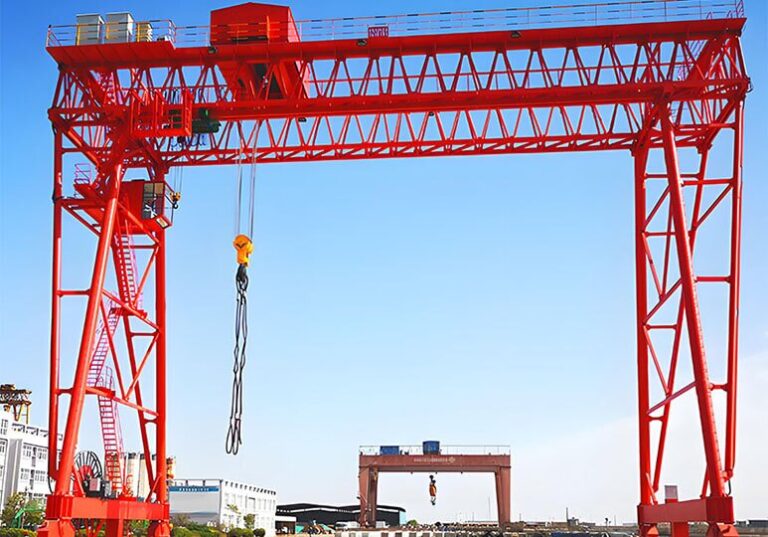
Grúa pórtico de celosía de doble viga
La mayoría de las grúas pórtico de celosía se construyen como un puente de un solo par de celosías, funcionalmente similar a una grúa de cajón de doble viga, porque el carro necesita desplazarse entre las dos almas de la celosía para mantener la ventaja de la gran altura libre del gancho. Un pequeño número de diseños más ligeros utilizan una sola cercha que soporta un polipasto/carro suspendido, sacrificando algo de capacidad de carga y luz a cambio de una estructura más simple y económica. La configuración de doble cercha es la que conviene especificar cuando la aplicación requiere toda la luz y capacidad para la que está diseñado el tipo de cercha; la versión suspendida de una sola cercha es realmente un nicho de uso ligero, más adecuada para el izaje a escala de estación de trabajo que para el caso de uso de gran luz y carga pesada que justifica la elección de una grúa de cercha en primer lugar.
Clase de servicio: por qué importa más que el tonelaje.
La clase de servicio (nivel de trabajo) de una grúa, y no su tonelaje nominal, es lo que realmente determina su vida útil por fatiga, y es la especificación que con mayor frecuencia se pasa por alto en los presupuestos de grúas de celosía. Sistemas de clases de servicio como ISO 4301, FEM 1.001, y sus equivalentes suelen dividir el uso de grúas en categorías ligera, media y pesada según la frecuencia con la que la grúa levanta cerca de su capacidad nominal, no solo en cuanto a la cantidad de peso que pesa. Dos grúas de celosía con clasificaciones idénticas de 10 toneladas y luces idénticas pueden tener tolerancias de fatiga estructural muy diferentes si una se especifica para elevación ligera y ocasional y la otra para ciclos de carga continuos, cercanos a la nominal; la versión de clase de servicio más pesada utilizará secciones de cuerda y alma más gruesas, aunque la capacidad de la placa de características parezca la misma. Comparar presupuestos basándose únicamente en el tonelaje, sin comprobar que la clase de servicio se ajuste a su patrón de uso real, es una forma común en la que los compradores terminan pagando de más por una capacidad que no necesitan o especificando una vida útil de fatiga estructural insuficiente para un patrón de turnos para el que la grúa no fue construida.
Cuándo es la grúa pórtico de celosía la opción correcta y cuándo no lo es.
Capacidad y rangos de alcance típicos
Las grúas de celosía generalmente cubren capacidades de entre 1 y 20 toneladas aproximadamente y vanos de hasta unos 125 pies, aunque estas cifras varían según el fabricante y la clase de servicio. Estas cifras son rangos de referencia típicos del sector, no una garantía para ningún modelo específico. Las curvas reales de capacidad frente a la longitud dependen de la clase de servicio, la profundidad de la estructura y el tipo de acero que utilice el fabricante, por lo que conviene considerar cualquier cifra aquí mencionada como un punto de partida para una conversación con el equipo de ingeniería del proveedor, en lugar de una especificación que se pueda incluir directamente en una orden de compra.
Caso de estudio sobre la envergadura y la exposición al viento de una grúa pórtico de celosía
Una grúa de celosía comienza a tener sentido estructural una vez que el tramo supera aproximadamente los 60-70 pies o la instalación es al aire libre o semiabierta, porque es ahí donde el peso propio de la viga cajón y la carga del viento comienzan a dominar el diseño. A medida que una viga cajón se alarga, una proporción cada vez mayor de su resistencia se destina a soportar su propio peso en lugar de la carga útil. A partir de cierto tramo, añadir más acero a una viga cajón para contrarrestar esto resulta estructuralmente ineficiente, que es precisamente el problema que se busca solucionar con una geometría de celosía. En exteriores, una viga cajón de alma maciza también presenta una superficie plana mucho mayor expuesta al viento lateral que una celosía abierta, razón por la cual los astilleros, las zonas de almacenamiento de madera y los emplazamientos exteriores polvorientos o arenosos suelen especificar diseños de celosía: la geometría de alma abierta permite que el viento pase a través de la estructura en lugar de cargarla.
Cuando una grúa pórtico de viga cajón estándar es en realidad la mejor opción
Para la mayoría de los tramos interiores de menos de unos 18 metros con una altura de techo adecuada, una grúa de viga cajón es más sencilla de fabricar, instalar y mantener, y la ventaja de ahorro de peso de una grúa de celosía no compensa su coste de ingeniería adicional. La fabricación de cerchas implica muchas más uniones soldadas que una viga cajón de la misma longitud, y cada unión representa un punto potencial de fatiga que requiere inspección durante la vida útil de la grúa. Si su edificio ya cuenta con suficiente altura libre y la luz no supone un problema para la eficiencia de una viga cajón, elegir una grúa de cerchas principalmente por su reputación de "tecnología avanzada" —en lugar de porque la luz, la estructura o el entorno realmente lo requieran— generalmente solo aumenta el costo y la complejidad del mantenimiento sin un beneficio correspondiente.
Errores comunes en las compras y costes ocultos
Comparación de presupuestos basados únicamente en tonelaje y longitud.
El error más común al adquirir grúas pórtico de celosía es comparar los presupuestos de los proveedores basándose únicamente en el tonelaje nominal y la luz, sin tener en cuenta si el acero de la vía de soporte está incluido en el precio. El menor peso del puente de una grúa de celosía se suele promocionar como una forma de reducir los requisitos de acero para las vías y columnas; sin embargo, "puede reducir" no es lo mismo que "se adaptará a su estructura existente". Si las vigas o columnas de las vías existentes de su instalación se dimensionaron para una carga diferente, o si aún no existen, el costo de reforzar o agregar ese acero de soporte puede resultar en un gasto mayor que el de la propia grúa, y con frecuencia los proveedores que compiten en precio de grúa lo cotizan por separado (o ni siquiera lo cotizan). Antes de comparar dos cotizaciones, confirme si ambas incluyen una evaluación estructural de la estructura de acero existente de su edificio, y no solo el paquete de la grúa.
Discrepancia en la clase de servicio entre las cotizaciones
Dos cotizaciones con el mismo tonelaje y número de tramos pueden representar productos estructuralmente diferentes si sus clases de servicio no coinciden, por lo que la clase de servicio debe confirmarse línea por línea, no darse por sentada. Un proveedor que ofrece un precio más bajo para una grúa de celosía de "10 toneladas y 30 metros de luz" podría estar simplemente cotizando una clase de servicio menor que la de la competencia. Esto es una opción válida si su uso es realmente ligero y ocasional, pero un error costoso si su operación alcanza la carga nominal varias veces por turno. Solicite a cada proveedor que indique explícitamente la clase de servicio (según ISO 4301, FEM 1.001 o su equivalente) en la cotización y compruébela comparándola con el número real de elevaciones diarias previstas y la relación carga-capacidad promedio antes de comparar precios.
Subestimar los factores ambientales y del exterior
Las grúas pórtico de celosía para exteriores o semi-exteriores necesitan que se confirmen de antemano las especificaciones de resistencia al viento y protección contra la corrosión, ya que adaptarlas posteriormente resulta mucho más caro que especificarlas correctamente desde el principio. La geometría abierta de una estructura de celosía facilita la resistencia al viento en comparación con una viga cajón, pero la grúa aún necesita una clasificación de resistencia al viento, tanto en servicio como en reposo, adecuada para el emplazamiento, además de protección contra la corrosión (galvanización, recubrimientos o componentes de acero inoxidable) apropiada para el entorno: los emplazamientos arenosos, costeros o con ambientes químicamente agresivos requieren diferentes niveles de protección. Si bien esto incrementa el costo en la etapa de cotización, resulta mucho más económico que la instalación de protección contra la corrosión en una estructura ya instalada después de unos años de servicio.
Conclusión
Una grúa de celosía se justifica cuando la luz, los límites de carga estructural o la exposición al viento exterior hacen que una grúa de viga cajón estándar sea estructural o económicamente ineficiente; no por defecto, ni solo porque parezca la opción más avanzada. Antes de solicitar presupuestos: confirme las medidas reales de luz y altura libre con respecto a su edificio, pida a cada proveedor que indique explícitamente la clase de servicio en lugar de solo el tonelaje, y obtenga una respuesta clara sobre si el acero de soporte/vías de rodadura está incluido en el precio. Aclarar estos tres puntos antes de comparar presupuestos es lo que diferencia la compra de una grúa de celosía que se ajuste a su operación de una que genere modificaciones a los seis meses.
Preguntas frecuentes
P1: ¿Para qué se utiliza una grúa pórtico de celosía?
Una grúa de celosía se utiliza para el izamiento de cargas en altura en instalaciones con grandes luces, soporte de vía limitado o expuestas a la intemperie o a la intemperie. Su ligero puente triangular reduce la carga sobre la estructura de acero de soporte y resiste mejor el viento que una viga de alma maciza, por lo que es común en aserraderos, grandes almacenes y edificios con estructuras preexistentes restrictivas.
P2: ¿En qué se diferencia una grúa pórtico de celosía de una grúa de doble viga?
La diferencia radica en la estructura del puente, no en la disposición del carro. Una grúa de doble viga utiliza dos vigas cajón macizas; una grúa de celosía, en cambio, utiliza dos estructuras de celosía trianguladas. Ambas suelen desplazar el carro entre los dos elementos del puente, pero el diseño de celosía resulta más ligero para la misma luz y capacidad.
P3: ¿Qué capacidad puede soportar una grúa pórtico de celosía?
Las grúas de celosía suelen manejar capacidades de entre 1 y 20 toneladas y luces de hasta aproximadamente 38 metros (125 pies), aunque los límites exactos varían según el fabricante, la clase de servicio y la profundidad de la celosía. Confirme las combinaciones precisas de capacidad y luz con el equipo de ingeniería del proveedor para su aplicación específica.
P4: ¿Es una grúa pórtico de celosía más cara que una grúa pórtico estándar?
Depende de la aplicación. Una grúa de celosía suele ser más cara de fabricar debido a su mayor número de uniones, pero puede reducir el coste total del proyecto en tramos largos o edificios con estructuras débiles al disminuir los requisitos de acero para la vía y los soportes. Para tramos cortos estándar en interiores, una grúa de viga cajón suele ser la opción más rentable.
P5: ¿Se puede utilizar una grúa pórtico de celosía en exteriores?
Sí, las grúas de celosía se utilizan habitualmente en exteriores porque su estructura de alma abierta resiste mejor la carga del viento que una viga cajón maciza. Para instalaciones exteriores, se debe especificar una resistencia al viento tanto en condiciones de trabajo como de reposo, además de la protección anticorrosión adecuada (galvanizado, recubrimientos) para el entorno del lugar.
Artículos relacionados
- Grúa Pórtico de una viga vs. Grúa Pórtico de doble viga
- Piezas de grúa pórtico
- Venta De Grúas De Pórtico: Encontrar la solución perfecta para sus necesidades
- Grúa pórtico de celosía: tipos, rangos de precios y cómo comparar presupuestos de proveedores
- Fabricante de grúas pórtico de celosía: especificaciones, certificación y cómo realizar un pedido.
- Grúa pórtico de celosía Nucleon Crane: búsqueda de modelos, certificaciones y soporte.


 English
  العربية
  Español
  Français
  Português
  Русский