

Buying directly from a truss gantry crane manufacturer means confirming three things before you send a deposit: the exact type-code spec that matches your job, proof the factory holds real design certification, and a clear order process with no vague clauses. Skip any one of these and the risk shifts from "which supplier is cheapest" to "will the crane that arrives match what was quoted."
If you've already decided a truss gantry crane is the right equipment for your site, the remaining work is verification, not education — confirming you're ordering from an actual factory, not a trading company reselling someone else's fabrication, and locking down the spec sheet so the quote you accept is the crane you receive.
This page gives you the MH/MG type-code spec table to check against any quote, the certification and factory checks worth doing before a deposit, and the order steps from inquiry to delivery — including the two stages where most project delays actually start.
جدول المحتويات
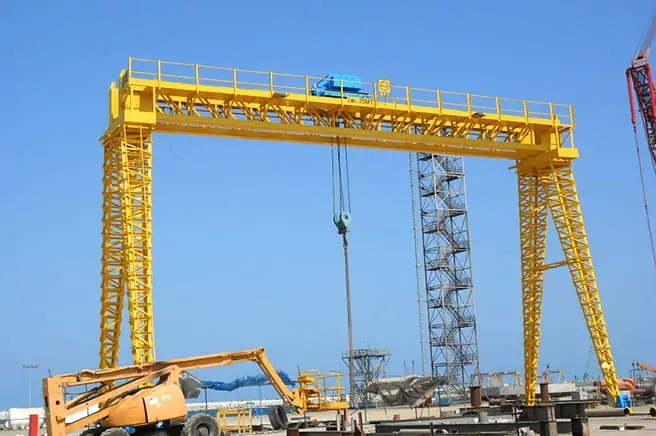
Truss Gantry Crane Quick Spec Reference (MH & MG Type)
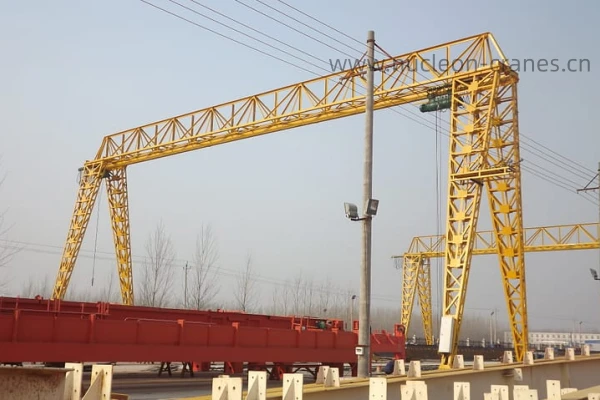
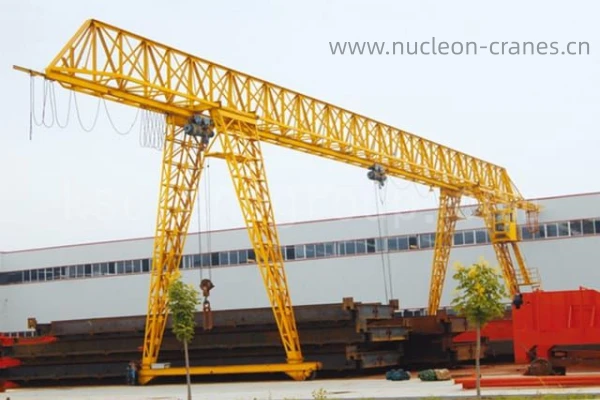
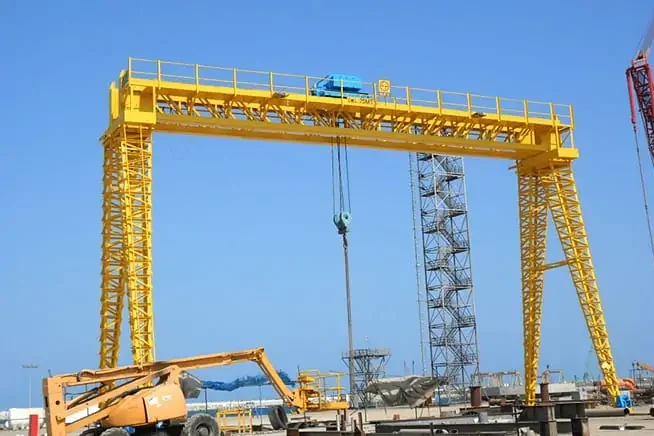
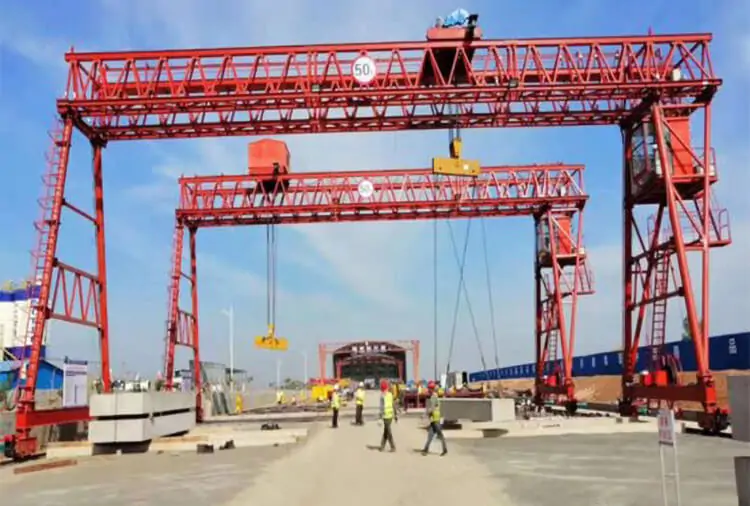
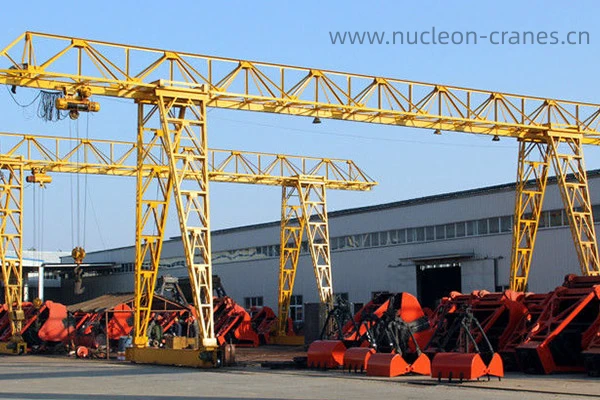
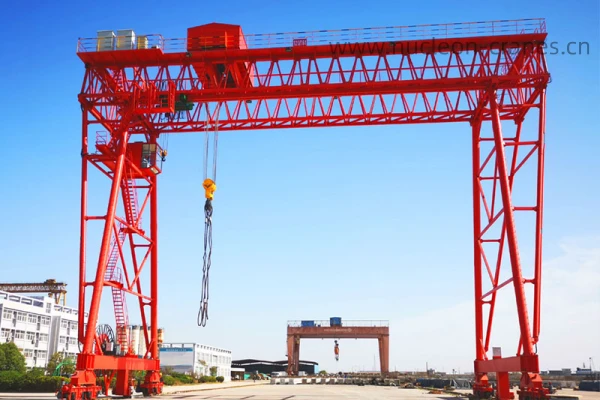
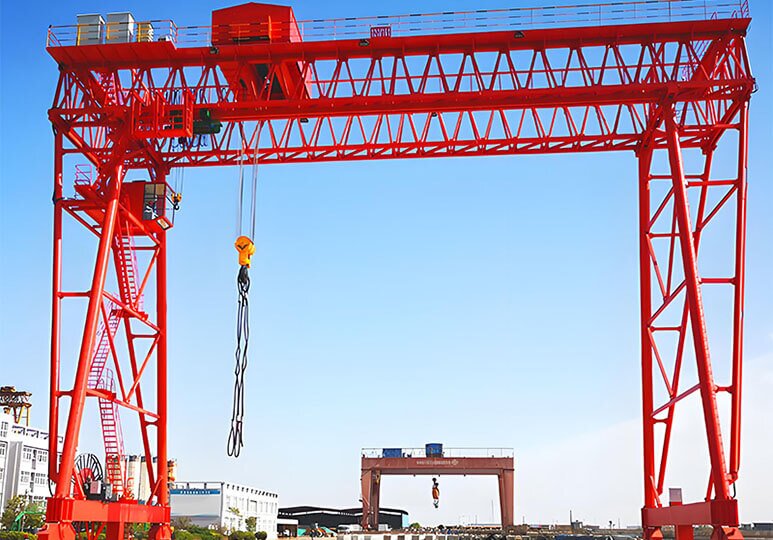
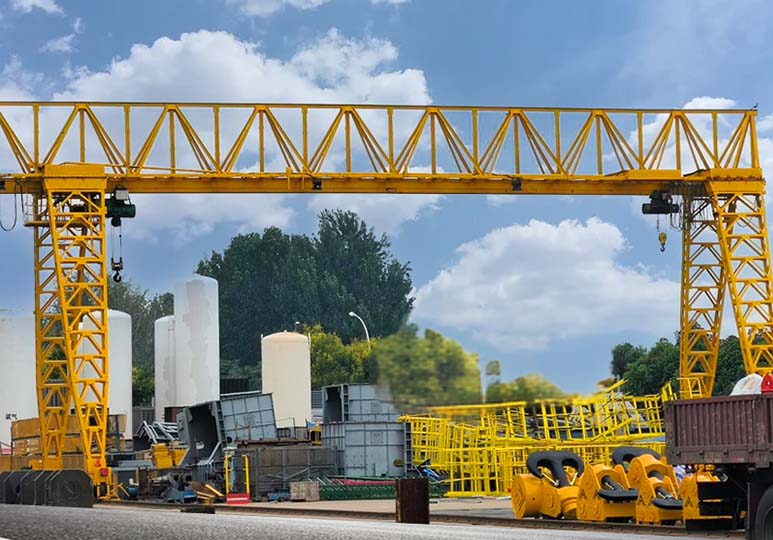
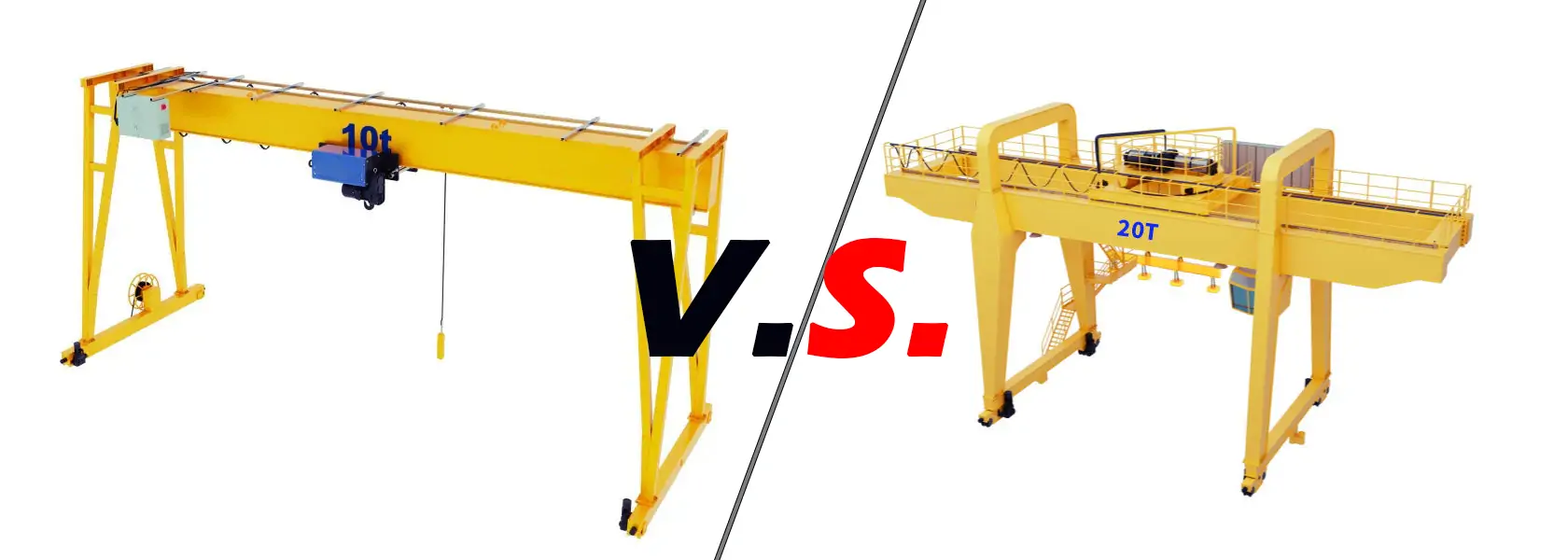
MH-type single-girder truss cranes cover roughly 1–15 tons and 7.5–30 m span; MG-type double-girder truss cranes cover roughly 5–50 tons standard (higher on custom order) and up to about 40 m span — matching your job to the right type code before requesting a quote avoids a round of respec'ing later.
| Type Code | بناء | سعة | فترة | ارتفاع الرفع | Market Reference Price* |
| MH (single-girder truss) | Single main truss beam, hoist trolley underneath | 1–15 tons | 7.5–30 m | 6–15 m | $3,000–$18,000 |
| MG (double-girder truss) | Twin parallel truss girders, trolley runs between them | 5–50 tons (custom orders higher) | Up to ~40 m | Up to ~18 m | $10,000–$80,000+ |
*Market reference range for standard duty class and electrics; span, duty class, and site conditions move the final number. Send your specs for a factory quote →
احصل على عرض أسعار الحلولConfirm Your Specification Before Ordering
A quote is only as accurate as the specification behind it — rated capacity, span, lifting height, duty class, and power supply are the five items every manufacturer needs before they can commit to a firm price. Sending an inquiry with only "truss gantry crane, 10 tons" forces the factory to guess at the rest, and whatever they guess becomes the baseline for your first quote — which then needs revising once real details surface, adding days to your timeline.
Before contacting a manufacturer, have these ready:
- Rated capacity (based on your heaviest realistic single lift, not an average load)
- Span — the clear distance between rails
- Lifting height, measured from ground or pit to maximum hook height
- Duty class (ISO 4301 or FEM 1.001 rating, and how often the crane will lift near rated load)
- Site condition — indoor or outdoor, and outdoor wind exposure if applicable
- Power supply voltage and phase available at your site
- Rail/foundation status — existing rails to reuse, or new foundation needed
- Accessories needed — remote control, cab, grab, magnet, or other end-effectors
Get help finalizing your spec sheet — talk to an engineer →
Certification & Factory Verification
Confirming a supplier is an actual manufacturer — not a trading company reselling a third party's fabrication — is worth doing before a deposit, because it determines who stands behind the welds and the warranty. A trading company can quote a lower price by outsourcing fabrication, but if a structural issue shows up two years in, there's no factory quality record to reference and no direct line to whoever actually built the crane.
What to Ask For Before You Commit
Request the manufacturer's business license, factory address (and offer to video-call the workshop), and design standard compliance — ISO 4301, فيم 1.001, EN 13001, ASME B30.2, ، أو GB/T 3811 depending on your market — plus CE documentation if the crane is headed to a CE-regulated country. A real factory has no hesitation showing a live video walkthrough of fabrication in progress; a supplier who deflects this request or only offers stock photos is worth a second look. It's also worth checking whether welding is certified to a recognized standard (such as EN ISO or AWS welder qualification) — weld quality at the truss chord joints is the single structural detail most likely to cause long-term problems if it's substandard.
Reading a Certificate List Correctly
A long list of ISO certificates (9001, 14001, 45001) speaks to the factory's management system, not necessarily to this specific crane's structural design compliance — the two are different things and both matter. ISO 9001/14001/45001 tell you the factory has a documented quality, environmental, and safety management process; ISO 4301 or FEM 1.001 tell you the crane itself was engineered to a recognized duty-class standard. A manufacturer that can show both is a stronger bet than one leaning only on the management-system certificates, which say nothing about how the crane was actually designed.
How to Place Your Order: Step by Step
A standard truss gantry crane order runs through five stages — inquiry and spec confirmation, drawing approval, deposit, fabrication, and pre-shipment inspection — and two of these stages are where most project delays actually begin. Knowing where the risk sits lets you push for clarity at the right moment instead of after the fact.
The Five Stages
- Inquiry and spec confirmation — you provide the checklist above; the manufacturer confirms feasibility and issues a formal quote.
- Drawing approval — the manufacturer sends general arrangement and rail-layout drawings for sign-off before production starts.
- Deposit — typically 30–50% of contract value, paid once drawings are approved.
- Fabrication — commonly 30–45 days for standard specs; longer for large spans or heavy custom duty class.
- Pre-shipment inspection and shipping — a load test and inspection report before the crane ships, followed by ocean freight and, if included, an installation supervisor to site.
Where Delays Actually Start
Rail and foundation drawings that get locked in after the purchase order is signed — instead of before — are behind a large share of truss gantry crane project delays, because the crane's undercarriage design depends on the rail layout, not the other way around. If your rail foundation isn't finalized before drawing approval, expect a revision cycle once real-world rail dimensions come back from your civil contractor, and build that time into your project schedule rather than assuming the manufacturer's stated fabrication time is the full timeline.
The other frequent friction point is an "installation included" line item with no detail behind it. Before signing, ask the manufacturer to specify exactly how many installer man-days are included, whether the load test and any local operating-permit paperwork are covered, and what happens (and at what added cost) if installation runs longer than planned — a vague inclusion here is one of the most common sources of unexpected on-site cost.
Payment Terms and Warranty
Standard terms are typically a 30–50% deposit with balance due before shipment or against shipping documents, and most manufacturers offer a one-year structural and mechanical warranty with electrical components sometimes covered separately. Confirm in writing what the warranty covers (structure, hoist mechanism, electrics), what voids it (unauthorized modification, exceeding rated duty class), and how spare parts are sourced after the warranty period — a manufacturer who can't answer the spare-parts question clearly may be harder to support once the crane is in service for several years.
خاتمة
Ordering a truss gantry crane comes down to matching the right MH or MG type-code spec to your job, confirming the manufacturer's design certification alongside its management-system certificates, and locking down rail drawings and installation scope before signing — not after. Ready to move forward? Send your capacity, span, and site details for a factory-direct quote, and we'll confirm type code, duty class, and lead time before you commit to anything.
يجب أن يتم تأكيد اختيار المعدات النهائية من قبل مهندس معتمد وأن تتوافق مع لوائح معدات الرفع المحلية.
Request Your Factory Quote
Our engineering team confirms type code, duty class, and certification before you sign — no vague line items.

أخصائي معدات
مدير أعمال الرافعة الناجح الذي يتمتع بخبرة واسعة في إدارة مشاريع الرفع الثقيل والإشراف التشغيلي. سجل حافل في قيادة نمو الإيرادات وضمان الامتثال لقواعد السلامة.
التعليمات
Q1: What's the price difference between MH and MG type truss gantry cranes?
MH single-girder truss cranes (1–15 tons) typically run $3,000–$18,000, while MG double-girder truss cranes (5–50 tons standard) typically run $10,000–$80,000+. The gap widens with span and duty class, not just tonnage.
Q2: How do I confirm a supplier is a real manufacturer and not a trading company?
Ask for the business license, factory address, and a live video walkthrough of the workshop, and confirm which design standard (ISO 4301, FEM 1.001, GB/T 3811, etc.) the crane is engineered to. A genuine factory will show fabrication in progress without hesitation.
Q3: What are typical payment terms for a truss gantry crane order?
Most manufacturers require a 30–50% deposit after drawing approval, with the balance due before shipment or against shipping documents. Confirm warranty coverage and spare-parts support in writing before paying the deposit.
Q4: How long does it take from order to delivery?
Fabrication typically takes 30–45 days after deposit and drawing approval, with total lead time to site — including ocean freight — commonly 8–14 weeks. Rail and foundation drawings finalized after the PO is signed are a common cause of delay beyond this estimate.
Q5: What does the warranty typically cover?
Most manufacturers offer a one-year structural and mechanical warranty, sometimes with electrical components covered separately. Confirm in writing what voids the warranty (such as exceeding rated duty class) and how spare parts are sourced afterward.
مقالات ذات صلة
- ما هي رافعة الجسر الشبكية؟ هيكلها، أنواعها، ومتى يتم اختيارها
- Truss Gantry Crane: Types, Price Ranges & How to Compare Supplier Quotes
- رافعة جسرية أحادية العارضة مقابل رافعة جسرية مزدوجة العارضة
- قائمة أسعار رافعات الجسور والرافعات الجسرية ورافعات الموانئ سعة 120 طنًا لعام 2026
- رافعة جسرية من نوع Nucleon Crane Truss: البحث عن الطراز، والشهادات، والدعم

 English
  العربية
  Español
  Français
  Português
  Русский