
Buying a 120 ton crane is rarely straightforward. Whether you're sourcing a bridge crane for a heavy manufacturing facility, a gantry crane for an open yard, or a port crane to handle container throughput, one question surfaces early: what should this actually cost? Price lists are scarce, supplier quotes vary widely, and by the time you've factored in delivery, installation, and long-term maintenance, the initial figure on a quotation sheet can look very different from what you end up spending.
This guide cuts through that uncertainty. It compiles realistic 2026 price ranges for 120 ton bridge cranes (overhead/EOT), gantry cranes (including RTG variants), and port crane types—based on publicly available market data and industry benchmark ranges. It also breaks down the key cost drivers that explain why two cranes with the same rated capacity can differ by hundreds of thousands of dollars, and walks through how to calculate total cost of ownership (TCO) before you commit to a purchase.
If you're a procurement manager, operations director, or capital equipment buyer comparing options at the 120-tonne capacity range, this reference is built for you.
120 Ton Bridge Crane Price: Overhead & EOT Crane Cost in 2026
What Does a 120 Ton رافعة الجسر Cost?
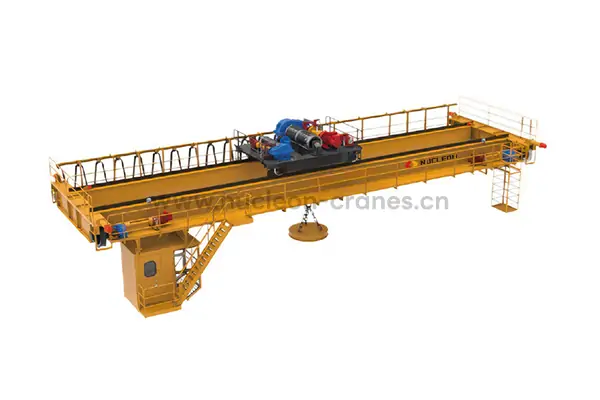
A 120 ton bridge crane—also referred to as an overhead crane or EOT (Electric Overhead Travelling) crane—typically falls in the $140,000 to $350,000 USD range for a new unit as of 2026. That wide spread reflects real-world variation in configuration, span width, lift height, duty cycle, and origin of manufacture. A standard double girder configuration with moderate span and basic controls sits at the lower end; a custom-engineered unit with extended span, Class D or E duty classification, and advanced automation will push toward or beyond the upper bound.
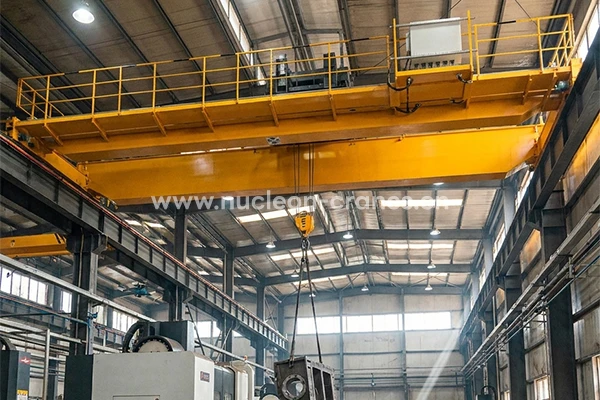
Price Breakdown by Configuration
| إعدادات | سعة | Estimated Price Range (USD) | ملحوظات |
| Standard double girder EOT | 120 T | $140,000 – $200,000 | Spans up to 28m, Class C duty |
| Heavy-duty double girder | 120 T | $200,000 – $250,000 | Spans 28–35m, Class D/E |
| Explosion-proof / special environment | 120 T | $240,000 – $450,000 | ATEX or custom enclosures |
| Automated / semi-automated EOT | 120 T | $250,000 – $450,000+ | PLC-driven, anti-sway, positioning |
Price ranges are indicative benchmarks based on industry tender data and supplier quotations (2024–2026). Source: industry procurement benchmarks, FEM/ISO classification standards.
What Drives 120 Ton رافعة علوية Cost?
Span is the single biggest lever. Every meter of additional girder length adds structural steel, increases deflection requirements under ISO 4301, and raises freight cost. Duty classification matters almost as much: a Class E crane built for continuous industrial use requires heavier components throughout—hoisting mechanism, end carriages, runway girders—compared with a Class B or C unit designed for intermittent lifts. Control system sophistication is a growing cost factor; buyers increasingly specify anti-sway, load cell integration, and PLC-based diagnostics, each of which adds meaningfully to the base price.
Country of manufacture remains relevant. European and North American-built units carry a price premium of 25–45% over comparable Chinese-manufactured cranes, though this gap narrows when you account for local certification, after-sales service infrastructure, and spare parts availability over a 20-year asset life.
120 Ton Gantry Crane Price: RTG, Rubber Tyre & Container Variants
رافعة جسرية Price Ranges for 120 Tonne Capacity
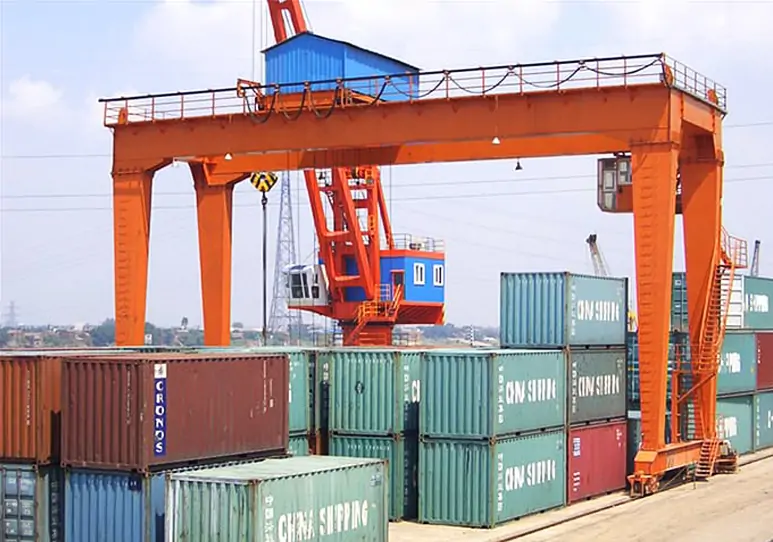
A 120 ton gantry crane—used in shipyards, precast yards, rail facilities, and intermodal terminals—spans a broader price range than its overhead counterpart due to the diversity of configurations. Fixed-leg rail-mounted gantries differ substantially in cost from rubber-tyred gantry (RTG) cranes designed for container handling mobility.
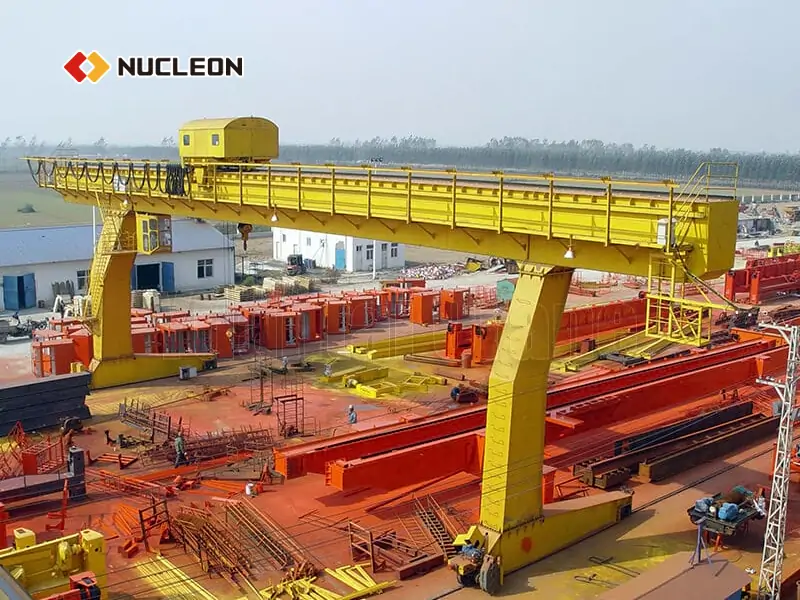
| يكتب | سعة | Estimated Price Range (USD) | التطبيق النموذجي |
| Fixed-leg rail-mounted gantry | 120 T | $160,000 – $350,000 | Precast, fabrication yards |
| Semi-gantry (one leg, one runway) | 120 T | $140,000 – $250,000 | Mixed indoor/outdoor facilities |
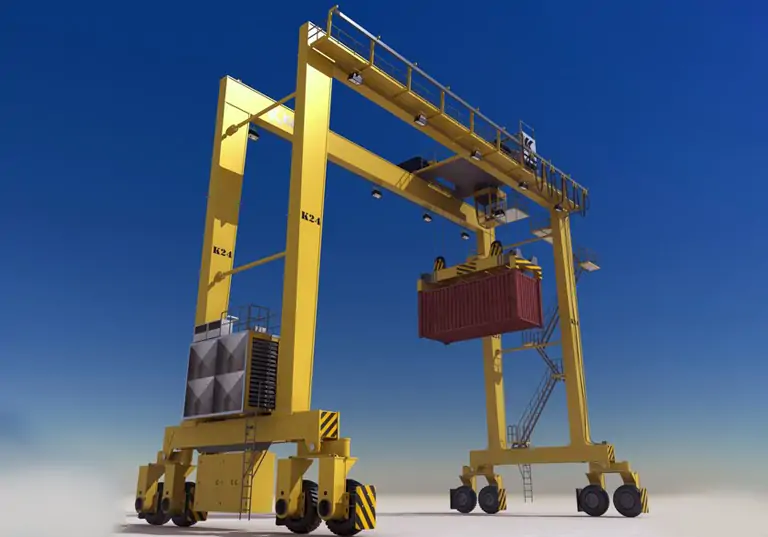
| Rubber tyre gantry (RTG) crane | 120 T | $600,000 – $1,200,000 | Container terminals |
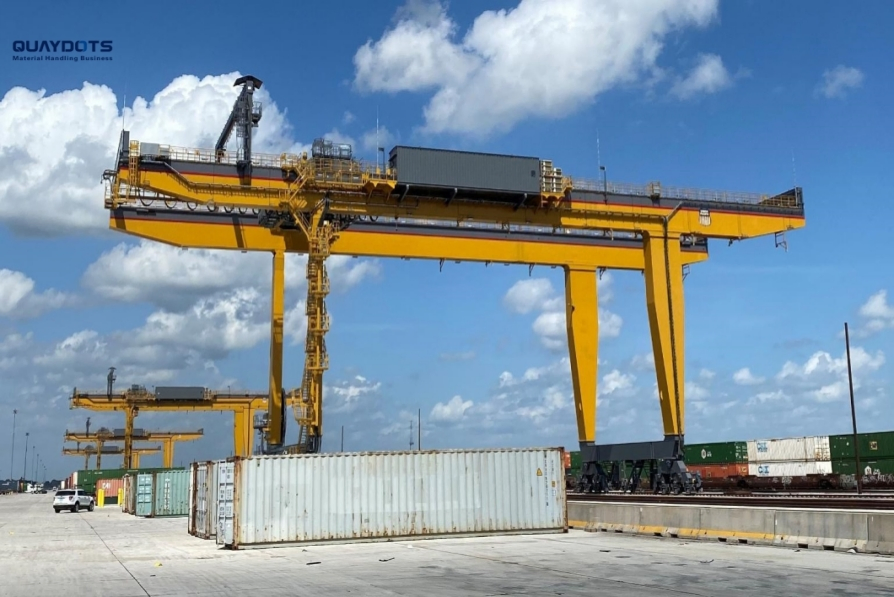
| Container gantry crane (rail-mounted) | 120 T | $400,000 – $1,000,000 | Port and intermodal facilities |
Benchmark ranges based on global port equipment procurement data and publicly reported terminal contracts (2023–2026). RTG pricing reflects fully equipped units with diesel-electric or hybrid drive systems.
Why RTG Cranes Cost Significantly More
The 120 ton rubber tyre gantry crane price sits in a different tier from standard gantry units. RTG cranes are purpose-built for container terminal operations: they need diesel-electric or hybrid powertrains for on-yard mobility, sophisticated stacking automation, spreader systems rated for 20' and 40' containers, and anti-collision sensor arrays—all on top of the structural requirements for a 120 tonne rated lift. When buyers compare a 120 ton RTG crane price against a simpler fixed-leg unit, they're comparing fundamentally different machines with different operational roles.
ل container gantry crane price comparisons, buyers should also account for terminal interface systems—truck lane automation, RFID integration, and TOS (Terminal Operating System) compatibility—which can add $80,000–$200,000 per unit on top of the crane itself.
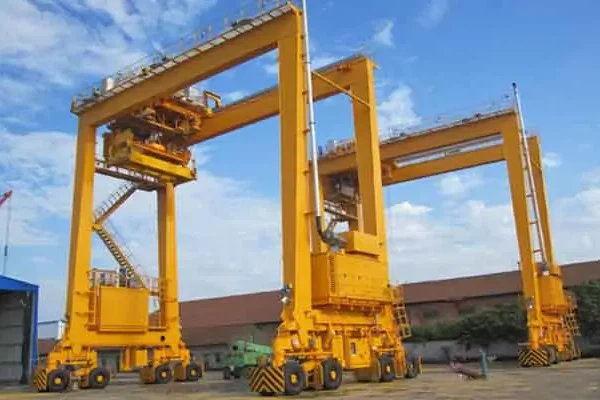
120 Ton Port Crane Price: STS, Harbor & Mobile Variants
Port Crane Pricing at 120 Tonne Capacity


رافعات الميناء at 120 tonnes encompass several distinct types. Ship-to-Shore (STS) cranes operate on fixed rail systems along the quay; mobile harbor cranes offer flexible deployment across berths; and purpose-built harbor cranes serve bulk, breakbulk, or project cargo operations. Each carries a different price profile.
| يكتب | سعة | Estimated Price Range (USD) | ملحوظات |
| Ship-to-Shore (STS) crane | 120 T | $4,000,000 – $8,000,000 | Full quayside unit, includes outreach |
| Mobile harbor crane | 120 T | $1,200,000 – $2,500,000 | Diesel or electric, 360° rotation |
| Level-luffing harbor crane | 120 T | $1,000,000 – $2,200,000 | Bulk/breakbulk terminals |
| Floating crane (pontoon-mounted) | 120 T | $2,000,000 – $4,000,000 | Project cargo, offshore |
STS crane pricing reflects base equipment cost without quay civil works or electrical shore power infrastructure. Source: publicly reported port procurement tenders and manufacturer pricing (2023–2026), including Liebherr, Konecranes, and ZPMC public contract disclosures.
Mobile Harbor Crane vs. Fixed Port Crane: Price Considerations
The 120 ton mobile harbor crane price is significantly lower than a fixed STS crane—but the comparison is only meaningful when operational requirements are clear. Mobile harbor cranes offer berth flexibility and faster commissioning timelines (typically 8–14 months from order vs. 18–30 months for STS units). For mid-size terminals handling multiple cargo types, a mobile unit may deliver better capital efficiency per lift than a fixed crane optimized for a single operation.
Port crane cost at the STS level is heavily influenced by outreach requirements. A crane serving Panamax vessels needs roughly 42m of outreach; post-Panamax STS cranes extending to 65m or beyond cost proportionally more due to structural complexity and the counterweight systems required to maintain stability.
What Affects 120 Ton Crane Price: Key Cost Drivers
The Six Factors That Move the Needle Most
Understanding crane cost factors helps procurement teams negotiate more effectively and build realistic capital budgets. For 120 tonne capacity equipment, six variables consistently account for the largest price differentials across supplier quotes.
| Cost Factor | Typical Price Impact | Detail |
| Span / outreach | +5–12% per additional meter | Structural steel, deflection limits |
| Duty classification (FEM/ISO) | +15–30% from Class C to Class E | Heavier components throughout |
| Country of manufacture | +25–45% for EU/NA vs. China | Certification, lead time, service network |
| Control system level | +$40,000–$200,000 | Basic pendant to full automation |
| Special environment requirements | +20–60% | ATEX, marine-grade, high-temp exposure |
| Delivery and installation | +8–18% of equipment cost | Site-specific logistics and civil works |
FEM classification per FEM 1.001 (4th edition). ISO duty classification per ISO 4301-1.
Hidden Crane Costs Buyers Often Underestimate
Beyond the purchase price, several costs frequently go unbudgeted until late in the procurement process. Runway and structural reinforcement is one of the most common surprises: existing building structures often require upgrades to support a 120 tonne crane, adding $25,000–$150,000 in civil works depending on the facility. Electrical supply upgrades—particularly for large port cranes requiring shore power or dedicated feeder circuits—represent another frequently missed line item.
Crane maintenance cost is the other major hidden factor. A 120 ton bridge or gantry crane operating under Class D duty will typically require $15,000–$30,000 annually in planned maintenance, spare parts, and inspections, depending on utilization hours. Buyers who focus exclusively on acquisition price often find that a lower-cost unit with limited local service support generates higher total expenditure over a 15–20 year asset life.
Budgeting for a 120 Ton Crane: TCO and New vs. Used Price Comparison
How to Build a Realistic Crane Budget
Crane TCO—total cost of ownership—provides a more accurate basis for capital decisions than purchase price alone. For a 120 ton overhead or gantry crane with a 20-year operational life, the framework typically breaks down as follows:
| فئات التكلفة | Estimated Share of 20-Year TCO |
| Equipment acquisition (new) | 35–45% |
| Installation and commissioning | 5–10% |
| Planned maintenance and inspection | 20–30% |
| Spare parts and consumables | 10–15% |
| Unplanned downtime and repairs | 5–15% |
| End-of-life decommissioning | 2–5% |
TCO model per ISO 15686-5 (Service life planning – Life cycle costing).
Understanding how to budget for a crane means projecting across all cost categories before vendor selection—not after. A unit that costs $40,000 less upfront but carries a 30% higher annual maintenance burden due to non-standard components will typically be the more expensive choice by year six or seven.
New vs. Used 120 Ton Crane: Price and Risk Trade-Offs
Used 120 ton crane prices vary significantly depending on age, duty history, and inspection status. A well-maintained unit with documented service records, typically five to ten years old, may be available at 40–65% of new price. However, buying used at this capacity class introduces risks that buyers should price into the decision.
| Factor | New Crane | Used Crane (5–10 years) |
| Typical price vs. new | 100% | 40–65% |
| Warranty coverage | Full OEM warranty | Limited or none |
| Remaining service life | 20–25 years (design life) | 10–18 years (estimated) |
| Inspection requirement | Factory FAT | Third-party structural and electrical audit |
| Lead time | 6–24 months | 1–6 months (if in stock) |
Third-party inspection is non-negotiable for used heavy cranes. For a 120-tonne unit, a credible structural and electrical assessment typically costs $4,000–$10,000—a modest investment against the total transaction value, and one that can surface fatigue cracks, worn rope drums, or substandard past repairs before they become operational liabilities.
الأسئلة الشائعة
How much does a 120 ton bridge crane cost in 2026?
A new 120 ton bridge crane (double girder EOT configuration) typically ranges from $140,000 to $300,000 USD in 2026, depending on span, duty classification, and origin of manufacture. Heavy-duty or automated configurations can exceed $350,000. European or North American-built units carry a 25–45% premium over comparable Chinese-manufactured equipment. These figures cover the crane itself; buyers should separately budget for runway upgrades, electrical supply, installation, and commissioning, which commonly add 15–25% to the total project cost.
What is the price difference between a 120 ton bridge crane and a 120 ton gantry crane?
For standard industrial configurations, 120 ton bridge cranes and fixed-leg gantry cranes fall in similar price ranges—roughly $140,000 to $380,000 new. The significant divergence occurs with rubber-tyred gantry (RTG) cranes and container gantry variants, which start at $400,000 and commonly exceed $1,000,000 due to their mobility systems, spreader equipment, and terminal integration requirements. If both crane types can serve your operational needs, the bridge crane is typically lower cost, provided your facility has an existing or buildable runway structure.
What factors affect 120 ton crane price most significantly?
The six factors with the greatest impact on 120 ton crane pricing are: span or outreach length (adding 5–12% per meter), duty classification under FEM or ISO standards (15–30% difference between light and heavy duty), country of manufacture (25–45% premium for European/North American builds), control system sophistication, special environment requirements such as ATEX or marine-grade specifications, and delivery and installation logistics. Of these, duty classification and span are most frequently underestimated by buyers who compare quotes without aligning the underlying specifications.
Should I buy a new or used 120 ton crane?
Used 120 ton cranes can offer 35–60% cost savings versus new, but the decision should rest on total cost of ownership rather than acquisition price alone. Key considerations include remaining service life, spare parts availability for the specific model, proximity of qualified service technicians, and the quality of maintenance documentation. A third-party structural and electrical inspection is essential before purchasing any used crane at this capacity. If the crane will run high duty cycles in a critical process, new equipment with full OEM warranty typically reduces operational risk over a 10–15 year horizon.
What is typically included—and excluded—in a 120 ton crane quotation?
Most supplier quotations for a 120 ton crane include the crane structure, hoist mechanism, end carriages, electrical panels, and basic pendant or radio control. Commonly excluded are: runway rails and fixings, electrical supply from the mains panel, installation and commissioning labor, operator training, and any building structural reinforcement. For port cranes, STS quotations typically exclude quay civil works, shore power infrastructure, and TOS integration. Issuing a detailed scope-of-supply checklist to all vendors is the most reliable way to ensure quotes are genuinely comparable before selection.


 English
  العربية
  Español
  Français
  Português
  Русский