

Choosing the wrong overhead crane manufacturer is one of the most costly decision-making mistakes for factory managers and purchasing engineers. The losses come not only from the price of the equipment itself, but also from the risks of safety accidents, unplanned downtime, and accumulated maintenance costs over the equipment's 20-year lifespan.
This article outlines 7 core criteria for evaluating overhead crane manufacturers: what to verify, what questions to ask, and how to objectively compare suppliers. After reading this article, you will have a clear decision-making framework to make professional and evidence-based purchasing decisions.
جدول المحتويات
- Understanding the Main Types of Overhead Cranes
- Seven Core Standards for Evaluating Bridge Crane Manufacturers
- Standard Two: Engineering Capabilities and Customization Level
- Standard Three: Manufacturing Quality and Production Transparency
- Standard Four: After-Sales Service and Technical Support
- Standard Five: Industry Experience and Case Studies
- Standard Six: Financial Stability and Going Concern
- Standard Seven: Price Transparency and Commercial Terms
- Overhead Crane Manufacturers to Watch: Nucleon Cranes
- How to Build Your Bridge Crane Supplier Evaluation Process
- Conclusion: Choosing a Manufacturer is a Long-Term Investment Decision
- Frequently Asked Questions: Choosing a Bridge Crane Manufacturer
- Q1: What certifications should I request from the manufacturer?
- Q2: Is a factory visit necessary when purchasing from overseas manufacturers?
- Q3: How can I verify the authenticity of a CE certification?
- Q4: What is the standard warranty period for bridge cranes?
- Q5: How to evaluate Chinese bridge crane manufacturers like Nucleon?
Understanding the Main Types of Overhead Cranes
Before evaluating a manufacturer, it's crucial to determine the type of crane required for your application. Different types of cranes are suitable for different working environments, load capacities, and plant layouts. Even with a top-notch manufacturer, choosing the wrong model can lead to operational inefficiencies and safety hazards.
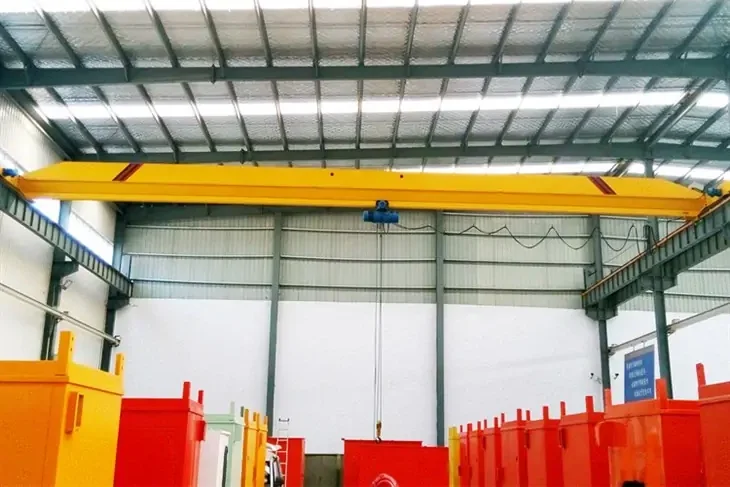
Single Girder Overhead Cranes
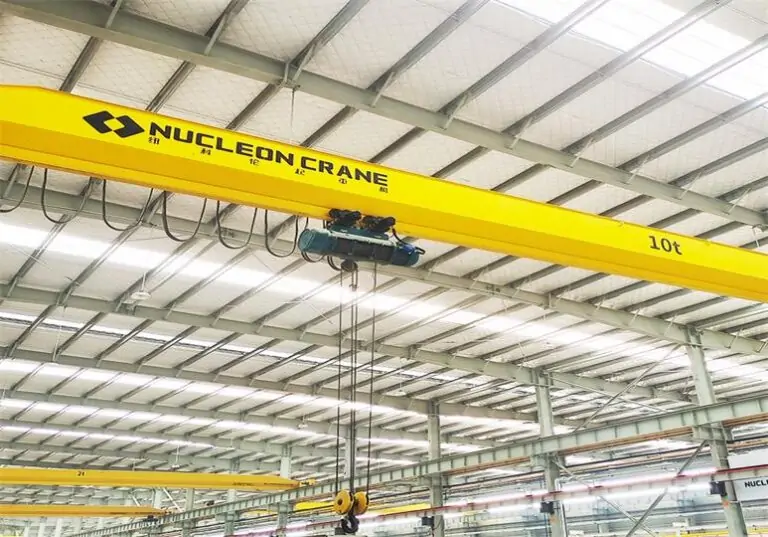
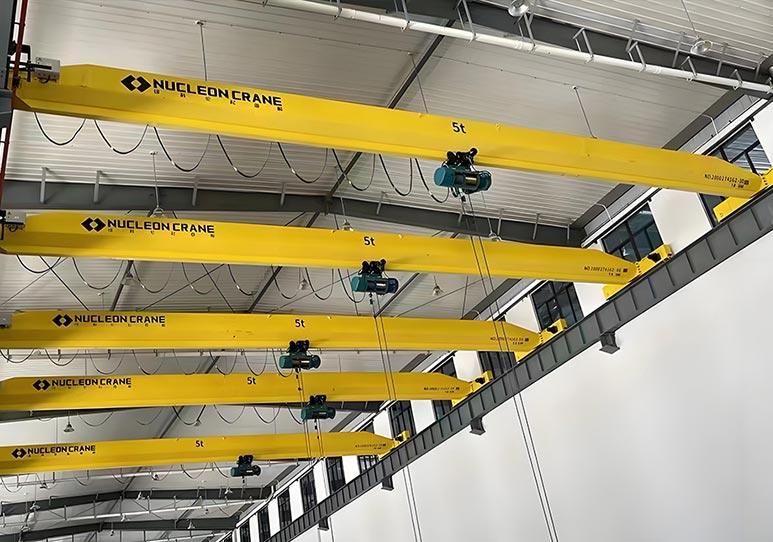
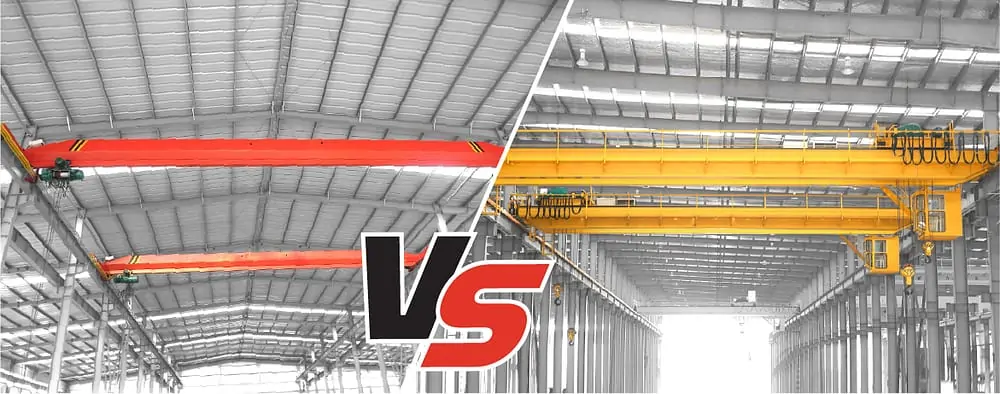
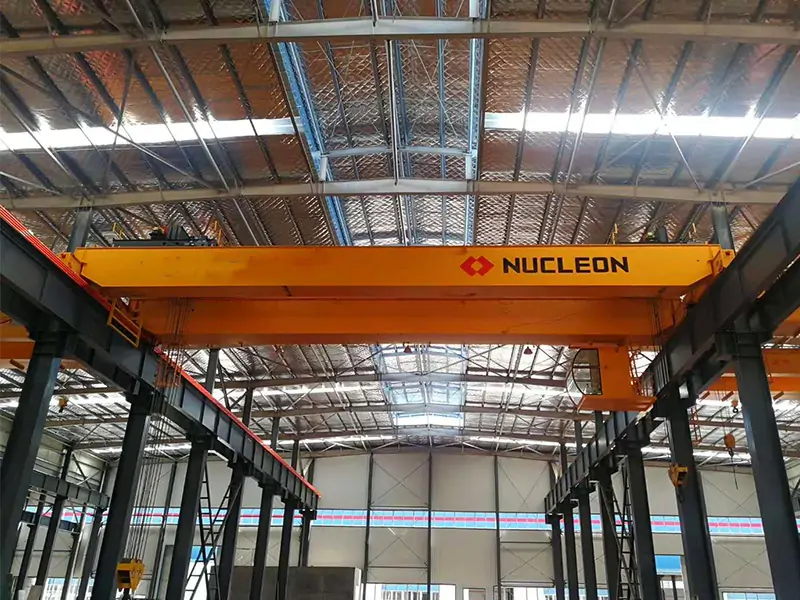
رافعات علوية أحادية العارضة use a single main girder to support the lifting trolley. They are the most common choice for light to medium-duty applications, with rated loads typically ranging from 1 to 20 tons. Single-girder structures are less expensive, place less load on the plant structure, and are easy to install.
Widely used in workshops, warehouses, and light to medium-duty assembly lines, they are suitable for applications with moderate lifting height and usage frequency requirements.
Double Girder Overhead Cranes
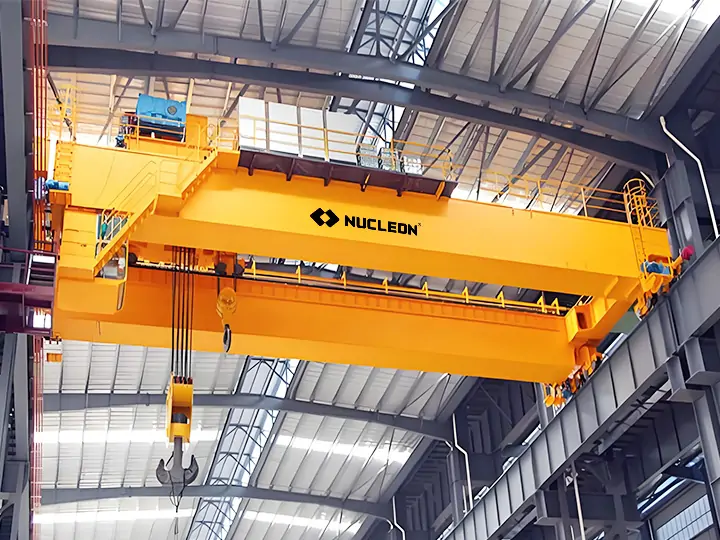
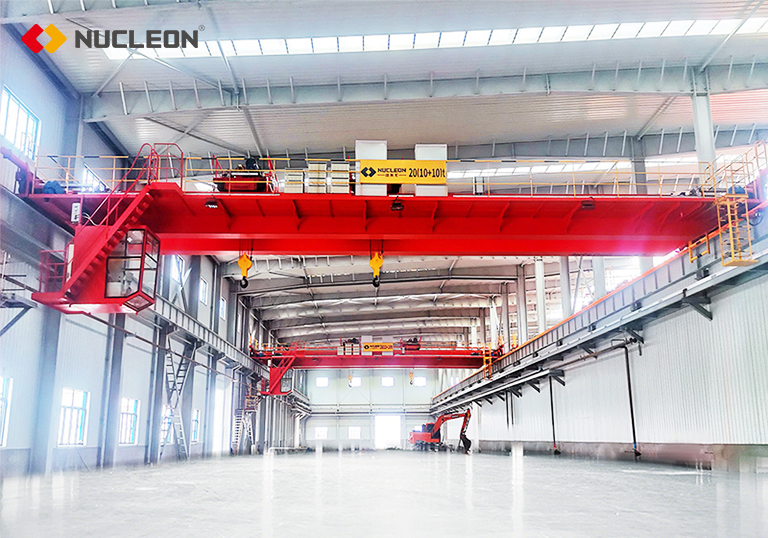
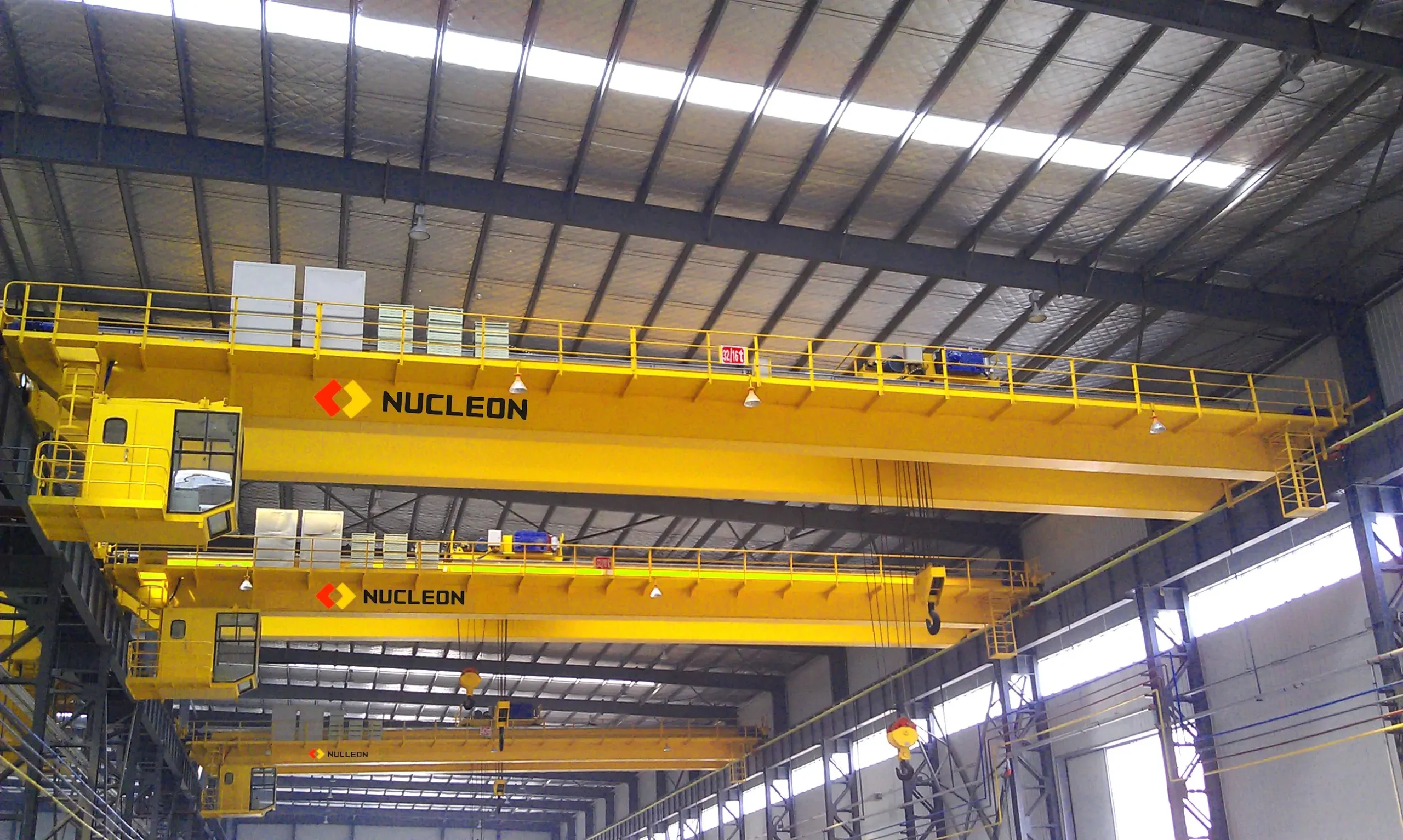
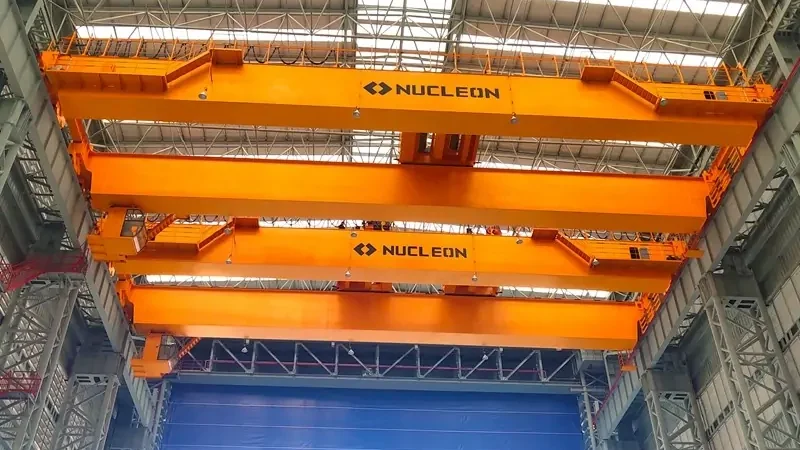
رافعات علوية بعارضة مزدوجة use two parallel main girder units. This structure supports larger lifting capacities, typically from 5 to 500 tons, and the trolley travels between the two girder units, achieving a greater effective lifting height at the same roof height. Double girder cranes are the preferred choice for heavy industrial sites, including steel mills, foundries, and large manufacturing facilities.
The double-beam structure also offers more space for customizing lifting mechanisms and accommodates a wider range of specialized lifting devices.
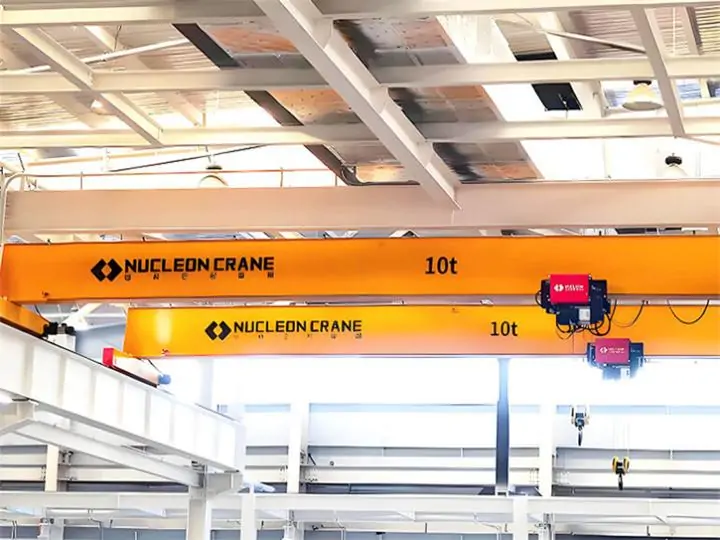
رافعات جسرية أوروبية
European overhead cranes adhere to FEM (European Material Handling Association) design standards and are known for their compact and lightweight structure, maximizing effective lifting height and minimizing wheel pressure on the track beams. FEM designs are increasingly popular in modern manufacturing environments, especially suitable for applications requiring high space utilization and operational precision.
Explosion-proof Overhead Cranes
Plants handling flammable materials, chemicals, or gases require specially designed explosion-proof bridge cranes to prevent the creation of ignition sources in hazardous environments. These cranes must obtain ATEX certification (European market) or equivalent standards, and all electrical components must meet the explosion-proof requirements of the corresponding hazardous area level.
Metallurgical and Specialty Bridge Cranes
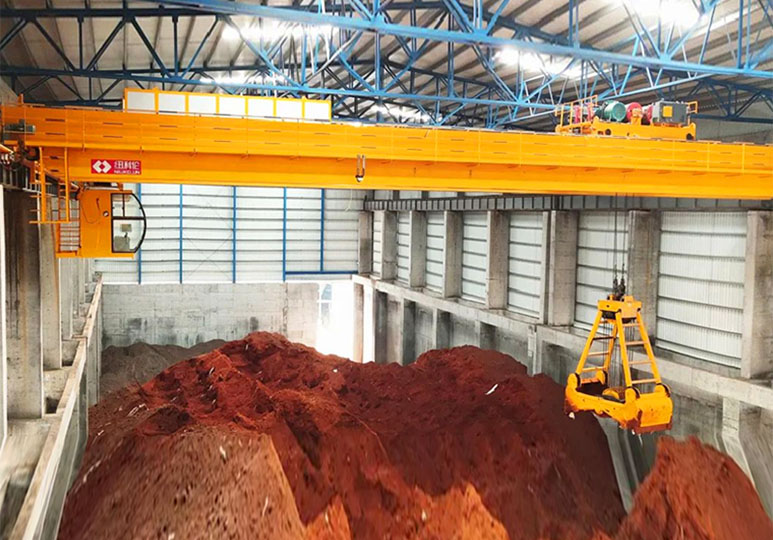
Steel mills, foundries, and other high-temperature environments require metallurgical cranes equipped with heat-resistant components and reinforced structures. Other specialty types include: electromagnetic bridge cranes (for scrap steel handling), grab cranes (for bulk material handling), and foundry cranes (for molten metal handling).
Defining the type of crane before contacting manufacturers helps you screen suppliers based on relevant application experience, rather than relying solely on general capability statements.
Seven Core Standards for Evaluating Bridge Crane Manufacturers
Standard One: Certification and Compliance
Certification is the foundation of a credible assessment. It proves that the manufacturer's products and processes meet recognized safety and quality standards, not just internal claims.
- شهادة CE is a mandatory requirement for selling cranes in the European Economic Area, proving that the product complies with EU Machinery Directive 2006/42/EC. Equipment without the CE mark cannot legally operate in the European market.
- ISO 9001 certification proves that the manufacturer has established a documented, third-party audited quality management system, and that the production process is continuously monitored and controlled.
- The FEM standard (see FEM 1.001 for details) provides a crane classification method by usage level, helping manufacturers to correctly match equipment design to your actual operating conditions, thereby avoiding premature fatigue failure due to underweight equipment selection.
- ECC certification is a prerequisite for entering the Eurasian Economic Union market (including Russia, Kazakhstan, and Belarus).
Always request a complete original certificate containing the issuance date, certificate number, and certification body information. Be wary of manufacturers who only display certification marks on their website without providing traceable documentation.
Standard Two: Engineering Capabilities and Customization Level
Standard products are suitable for routine applications. Non-standard requirements, such as special spans, extreme temperatures, corrosive environments, or multi-machine linkage systems, place higher demands on the manufacturer's engineering depth.
Key questions for assessing engineering capabilities:
- Is the structural calculation completed internally or outsourced to a third party?
- Can a finite element analysis (FEA) report for a customized solution be provided?
- How will interface engineering with existing building track beams be handled?
- How will working conditions exceeding standard specifications be handled?
Manufacturers who can confidently answer customization requirements and provide supporting documentation possess genuine engineering capabilities. Suppliers who avoid these questions may lack the technical resources needed for your project.
Also, pay attention to the completeness of technical documentation: load calculation sheets, electrical schematics, maintenance manuals, spare parts lists, and a full set of documents in your required language.
Standard Three: Manufacturing Quality and Production Transparency
Manufacturing quality directly determines the reliability of a bridge crane over its decades-long service life. Verifying production standards before procurement effectively avoids problems discovered after installation.
Structural manufacturing standards to be verified:
Does the welding process comply with ISO 3834?
Are raw materials traceable to steel mill quality certificates?
Have critical welds undergone documented non-destructive testing (NDT)?
Component sourcing is equally important. Reputable manufacturers use internationally renowned brands for hoisting mechanisms, frequency converters, and electrical control systems. If a manufacturer cannot disclose the suppliers of major components or substitutes unknown brands without explanation, this is a clear warning sign.
Pre-shipment load testing is standard practice for reputable manufacturers. Every bridge crane should undergo a load test before leaving the factory, and a certificate of conformity should be provided with the test results.
For major procurement projects, factory visits (on-site or remote) are strongly recommended. Manufacturers who proactively welcome audits and are willing to share process documentation generally have significantly higher overall quality levels than suppliers who avoid transparency.
Standard Four: After-Sales Service and Technical Support
The overhead cranes purchased today will operate for 20 to 25 years. The manufacturer's ability to provide support throughout the equipment's lifecycle is just as important as the initial quality of the equipment itself.
| Service Capability | Key Questions to Ask |
| Local Service Network | Do you have certified technicians in my region? |
| Spare Parts Availability | Are critical components stocked locally? |
| Breakdown Response SLA | What is your guaranteed response time? |
| Remote Diagnostics | Do you offer IoT-based monitoring? |
| Operator Training | Do you provide commissioning and training support? |
| Warranty Coverage | What does warranty include, and for how long? |
For overhead cranes in continuous production environments, unplanned downtime translates directly to revenue loss. A manufacturer with local service engineers can typically respond within 24 to 48 hours. Relying on overseas teams for breakdown support dramatically extends downtime in critical situations.
Standard Five: Industry Experience and Case Studies
Industry-specific experience is crucial. The clean production environments of automotive assembly plants, the high-temperature dust of steel mills, and the temperature-controlled food processing plants place vastly different demands on the engineering design and control systems of bridge cranes.
Request a list of case studies tailored to your industry and application type, rather than a general portfolio of projects. Proactively contact reference clients and ask directly:
- Was the project delivered on time?
- How efficient was the manufacturer's response during the installation and commissioning phase?
- Have recurring technical problems occurred after installation?
- How was the speed and reliability of spare parts supply?
Direct conversations with existing clients reveal far more information than any sales material.
Standard Six: Financial Stability and Going Concern
Purchasing a bridge crane signifies establishing a long-term relationship with the manufacturer. If a manufacturer exits the market in the 8th year of the equipment's 25-year lifespan, it creates serious problems: no spare parts, no technical support, and inability to fulfill warranty obligations.
Indicators of stability include: over 10 years of operation, verifiable international customer case studies, a dealer network in multiple markets, and holding quality certifications requiring ongoing third-party audits.
For significant capital expenditures, requesting business reference materials from the manufacturer or checking their country's public business registration system is a professional and reasonable due diligence practice.
Standard Seven: Price Transparency and Commercial Terms
Price is important, but price transparency is equally crucial. Vague commercial terms often lead to disputes and budget overruns after purchase orders are signed.
Professional bridge crane manufacturers should provide itemized quotations that clearly list:
- Precise equipment scope (what is included and what is not)
- Payment terms and terms
- Confirmation period from order placement to delivery
- Shipping and packaging costs
- Warranty period and coverage
- Pricing for critical spare parts
A lack of detailed fixed-price quotations makes comparison difficult and often obscures cost-cutting alternatives for critical components. Price transparency is a reliable predictor of a manufacturer's after-sales integrity.
Overhead Crane Manufacturers to Watch: Nucleon Cranes
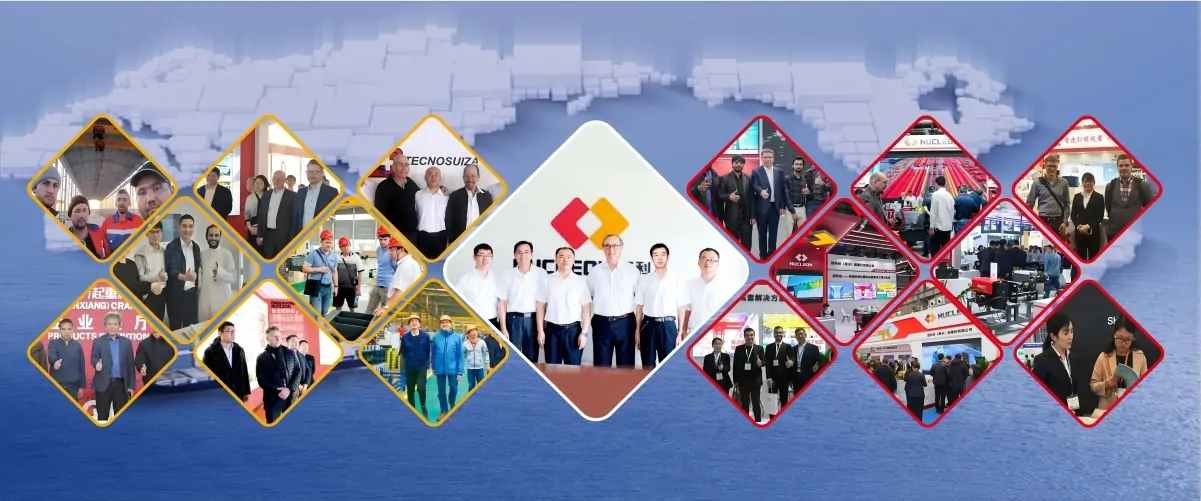
رافعة نووية is a Chinese manufacturer and supplier of bridge cranes with over 20 years of production experience, exporting its products to more than 50 countries and regions worldwide. Its product line covers single-girder bridge cranes, double-girder bridge cranes, European-style cranes, explosion-proof cranes, and metallurgical cranes, all CE certified and manufactured under the ISO 9001 quality management system.
Nucleon provides complete technical documentation, supports non-standard customized designs, and has established regional service and spare parts supply networks on multiple continents. For buyers sourcing bridge cranes from China, Nucleon is a reliable choice with verifiable certifications and case studies.
How to Build Your Bridge Crane Supplier Evaluation Process
A systematic evaluation process leads to better decision-making and provides stronger support for internal approvals.
- 1. Define Requirements — Rated load, span, working class, working environment, control system requirements
- 2. Establish an Initial Candidate List — Identify 5 to 8 manufacturers through industry networks and research
- 3. Preliminary Screening — Verify certifications and exclude non-compliant suppliers
- 4. Technical Evaluation — Issue detailed requests for quotation and evaluate technical solutions against specifications
- 5. Case Study Verification — Contact 2 to 3 existing customers of each shortlisted supplier
- 6. Factory Visit — Conduct on-site or remote visits to final candidate suppliers
- 7. Commercial Comparison — Evaluate the total cost of ownership over the entire lifecycle, not just the purchase price
- 8. Decision Records — Retain evaluation evidence to create an auditable decision file
Conclusion: Choosing a Manufacturer is a Long-Term Investment Decision
Choosing a bridge crane manufacturer is a decision that will impact you for over 20 years. Safety performance, productivity, and maintenance costs all depend on whether this choice is correct.
Price is the easiest criterion to compare, but it should be your last factor to consider, not your first. Start by verifying certifications, engineering capabilities, assessing service infrastructure, and confirming industry experience. Manufacturers that meet these criteria consistently provide superior overall value throughout the entire lifecycle compared to alternatives with lower initial quotes but weaker foundations.
This decision is worth your time. The cost of a wrong choice is not reflected in the purchase price, but in the operational consequences over many years.
احصل على عرض أسعار الحلولFrequently Asked Questions: Choosing a Bridge Crane Manufacturer
Q1: What certifications should I request from the manufacturer?
Minimum requirements include: CE certification (European market), ISO 9001 quality management certification, and compliance with FEM 1.001 or ISO 4301 crane classification standards. EAC certification is also required for the Eurasian market. Always verify the certificate documents directly, not just by looking at the logo on the website.
Q2: Is a factory visit necessary when purchasing from overseas manufacturers?
Yes, for significant capital purchases. Factory visits (on-site or remote) can verify production quality, component sourcing, and testing procedures that cannot be proven by documentation.
Q3: How can I verify the authenticity of a CE certification?
Request a complete CE Declaration of Conformity document. The document should specify the relevant directive (Machinery Directive 2006/42/EC), the Notified Body number (if a third party is involved), and the signature of the company's responsible person. The Notified Body number can be verified through the EU NANDO database.
Q4: What is the standard warranty period for bridge cranes?
Most reputable manufacturers offer a 12-24 month warranty. Some high-quality suppliers have extended the warranty to 36 months. Confirm whether the warranty covers only spare parts, or includes spare parts plus labor, and whether using the manufacturer's own service team is required to maintain the warranty.
Q5: How to evaluate Chinese bridge crane manufacturers like Nucleon?
The same seven criteria apply to evaluating any international supplier: certifications, engineering capabilities, manufacturing quality, service network, industry case studies, financial stability, and business transparency. Established Chinese manufacturers like Nucleon Cranes Group hold internationally recognized certifications and maintain export-grade quality standards. Before making a decision, independently verify certifications, review export records, and communicate directly with their international reference clients.

 English
  العربية
  Español
  Français
  Português
  Русский