

Vietnam's overhead crane demand is being pulled by one thing above all: the "China+1" manufacturing wave concentrating in Bac Ninh, Binh Duong, and Dong Nai, where FDI-backed electronics and component factories need bridge and gantry cranes for automated warehousing. Independent market estimates put Vietnam's broader crane market between roughly $220 million and $490 million depending on scope and methodology, growing at a CAGR generally cited between 4–9% through the early 2030s, according to reports from IMARC Group, Mordor Intelligence, and Ken Research.
If you're a procurement manager or plant engineer sourcing overhead cranes for a new or expanding Vietnam facility, the two questions that actually decide your shortlist are: which standard governs the equipment you're importing, and which supplier can meet it without adding 8–12 weeks to your project timeline. Neither question gets a clear answer from generic market-size articles.
This guide covers what's actually driving demand by region and industry, the capacity and type split buyers are sourcing, the TCVN/QCVN compliance framework you need to confirm before ordering, and how to evaluate Chinese, Japanese/Korean, and local Vietnamese suppliers against your project's real constraints.
Índice
Quick Reference: Overhead Crane Price Range by Capacity (Vietnam Market)
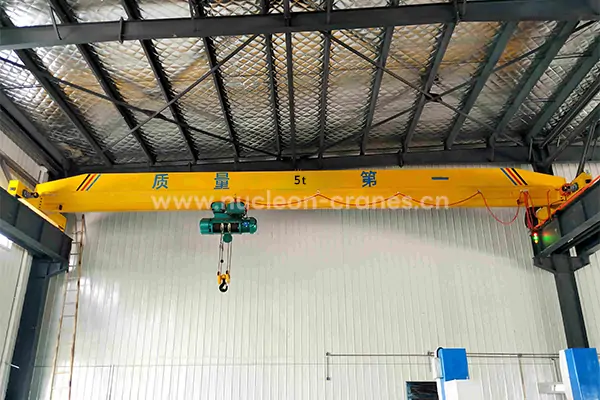
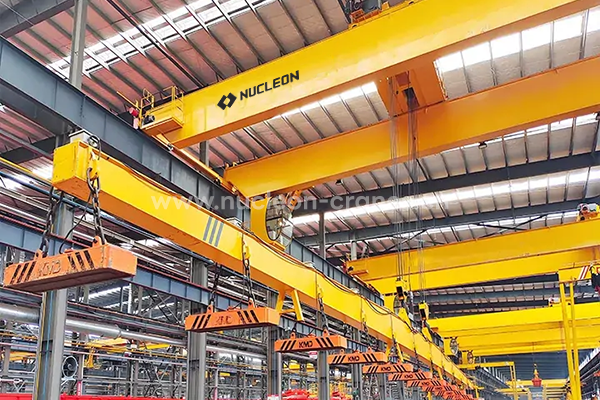
| Capacidade | Configuração típica | Preço de referência de mercado ($) |
| 1–5 toneladas | Viga única, vão padrão | $2,500 – $6,000 |
| 5 a 10 toneladas | Viga simples/dupla | $4,000 – $15,000 |
| 10 a 20 toneladas | Double girder, FEM/TCVN 4244 compliant | $10,000 – $35,000 |
| 20–50 toneladas | Double girder, heavy duty | $25,000 – $100,000+ |
Reference range only — final pricing depends on span, duty class, electrification, and whether local installation is included. [Obtenha um orçamento direto da fábrica para as suas especificações →]
Obter Cotação de SoluçãoVietnam's Overhead Crane Market: Size, Growth Drivers, and Where Demand Concentrates
Vietnam's crane demand is growing faster in the north than the south, driven by electronics FDI rather than construction alone.
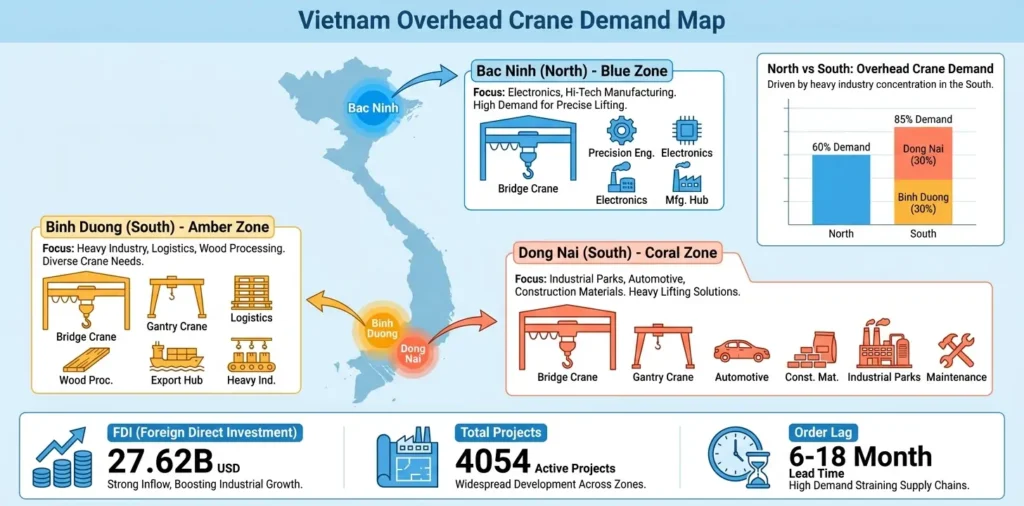
Market-size figures for Vietnam's crane sector vary noticeably by research firm — IMARC Group and Ken Research place the broader crane market (including mobile and tower cranes) in the $220–490 million range with roughly 4–8% CAGR, while some overhead-crane-specific forecasts cite higher figures closer to $1.8 billion when the scope includes rental fleets and adjacent lifting equipment. The spread exists because "crane market" reports don't use a consistent product boundary — some count only new-unit sales, others fold in rental revenue and aftermarket parts. For sourcing decisions, the more reliable signal isn't the aggregate dollar figure; it's where the FDI and construction activity is physically landing, since that's what generates actual crane orders.
That signal points north. Bac Ninh alone hosts more than 21 industrial parks across roughly 8,200 hectares, anchored by Samsung (over $23 billion cumulative investment nationwide, nearly half concentrated in Bac Ninh), Foxconn (~$3.2 billion), and Goertek. These are precision electronics and semiconductor-packaging operations — Amkor's Yen Phong II-C facility is described as the world's largest semiconductor packaging and testing plant — and that kind of production line needs overhead bridge cranes for automated warehousing and clean, vibration-controlled material handling, not the mobile/tower crane demand construction headlines usually reference.
The south (Binh Duong–Dong Nai) still leads in volume but skews toward different crane types. Binh Duong's industrial base — VSIP I–II, Song Than 2, Bau Bang — mixes electronics (Samsung, Kyocera) with textile and furniture manufacturing (Shenzhou International's fabric and apparel plants serve Nike and Adidas), and Dong Nai is building out as an electronics and automotive component hub ahead of Long Thanh International Airport's 2026 completion. This mix means southern demand splits between overhead bridge cranes for factory floors and gantry cranes for outdoor yard and logistics handling — a broader type spread than the north's electronics-driven bridge crane concentration.
The practical takeaway for sourcing timing: Vietnam's national FDI disbursement hit $27.62 billion in 2025 (+9% YoY, a 5-year high) with 4,054 new projects registered, according to industrial market data compiled by Groupe IDEC. New-project registration is a leading indicator — crane orders typically follow factory-shell completion by 6–18 months, so projects registered in 2025 are converting into equipment RFQs through 2026–2027.
Quais são as capacidades e tipos de pontes rolantes que estão realmente em demanda?
Electronics and precision manufacturing buyers in northern Vietnam are sourcing lighter-capacity, higher-precision cranes — not the heavy-tonnage units construction-sector market reports emphasize.
The demand split roughly tracks the regional industry mix described above:
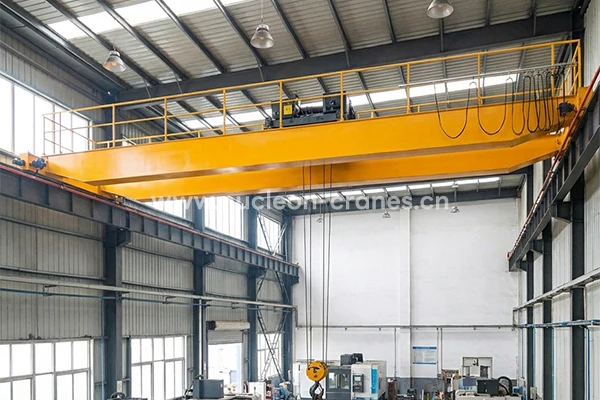
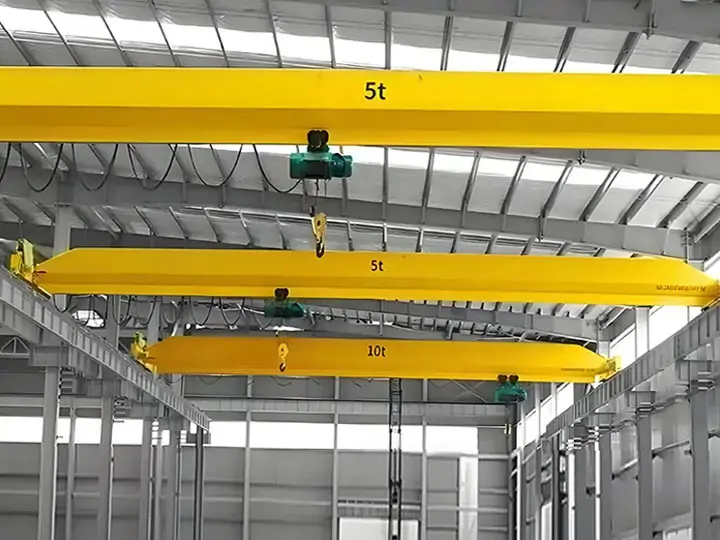
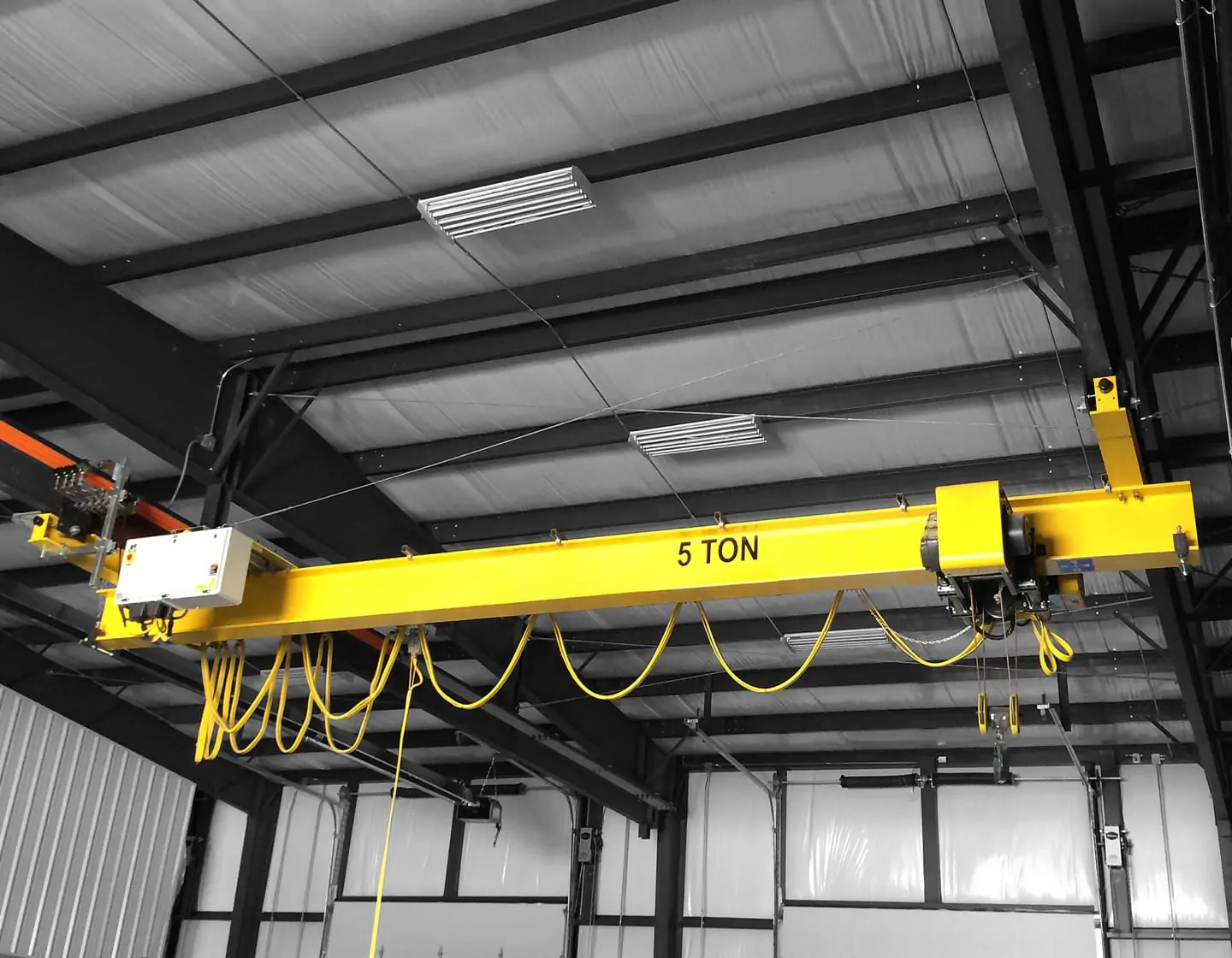
- 1–10 ton single girder overhead cranes dominate electronics, component assembly, and warehousing applications in Bac Ninh, Bac Giang, and Thai Nguyen. These prioritize smooth low-vibration hoisting and stepless VFD speed control over raw capacity — a spec point worth confirming against your supplier's default configuration, since some standard export models are built for construction-site duty cycles rather than continuous, precision material handling.
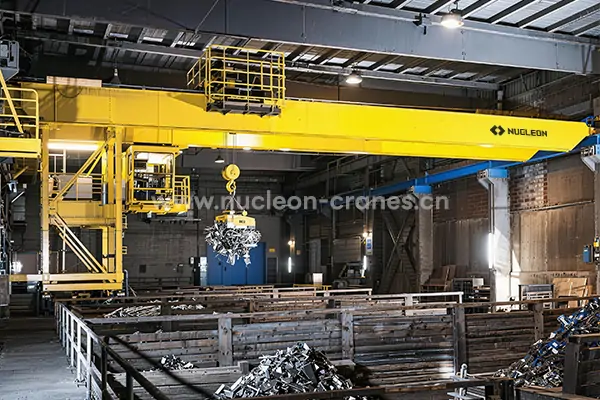
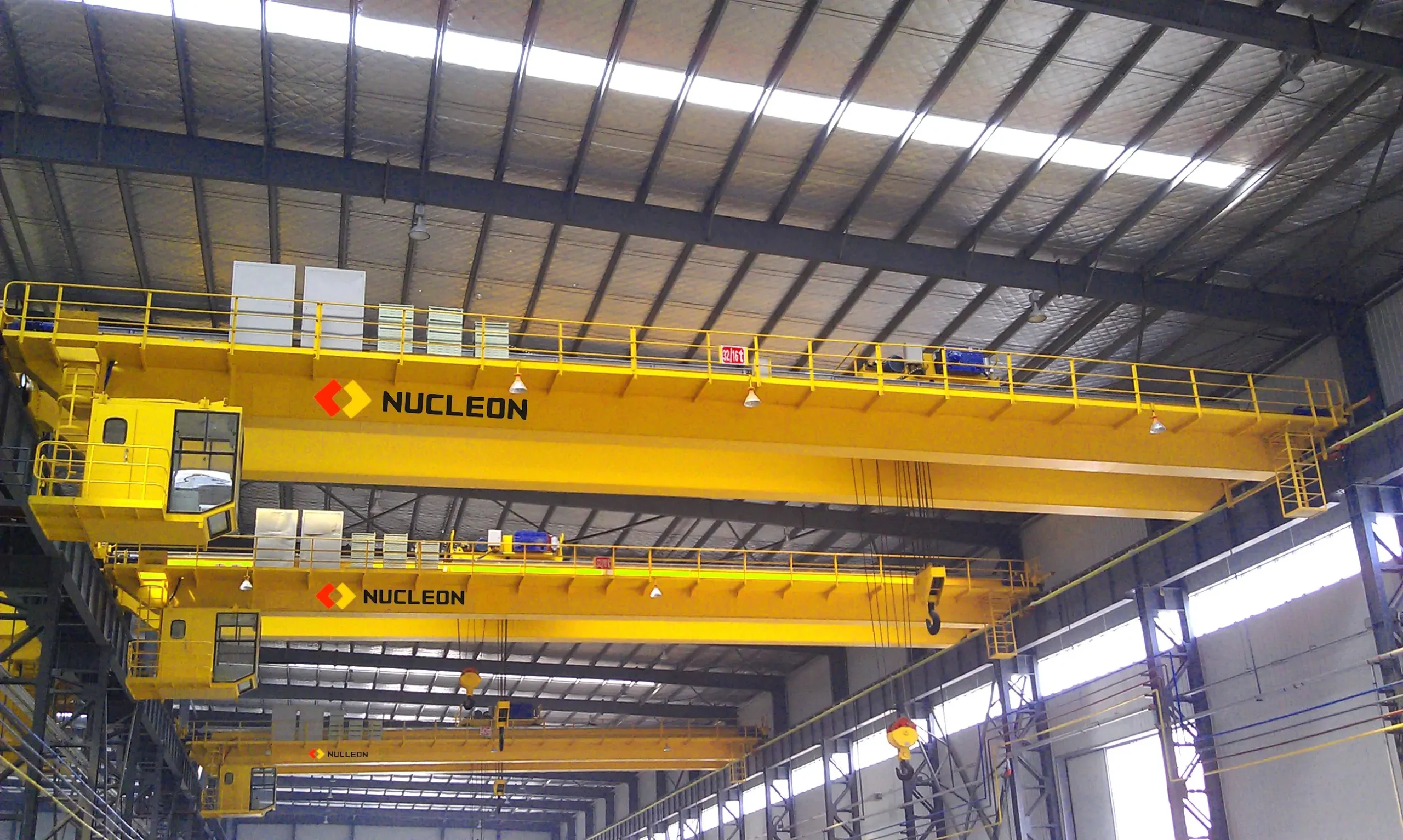
- 10–30 ton double girder cranes serve steel fabrication, automotive component, and heavier machinery workshops concentrated in Dong Nai and Binh Duong.
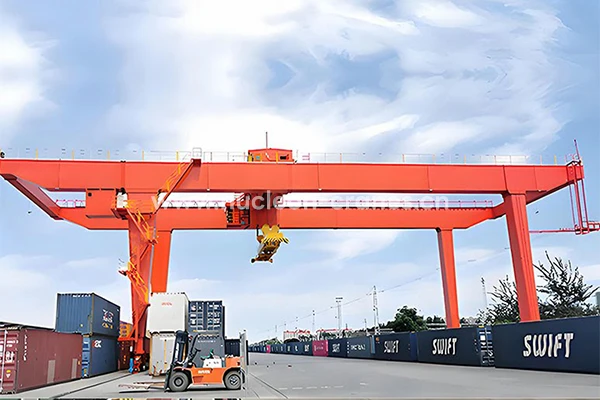
- Pórticos see disproportionate demand in port-adjacent and precast-concrete operations, reflecting Vietnam's ongoing port and infrastructure buildout alongside its manufacturing FDI story.
This is exactly the kind of practical selection detail (for example, which duty class buyers routinely under-spec for continuous-cycle electronics warehousing, or which capacity tier gets over-ordered "just in case") that only shows up from actual quoting history, not from market reports.
Price sits below China-domestic and well below European-import levels, but "cheap" quotes routinely exclude items buyers assume are included. Vietnam's average import price for overhead travelling cranes was reported at roughly $141,000 per unit in 2023 (IndexBox trade data), reflecting a mix skewed toward larger, complete systems — factory-direct unit pricing for standard single/double girder cranes at the capacities above runs well below that blended average, in the $2,500–$100,000+ range shown in the quick reference table. The gap between a quoted equipment price and landed, installed cost typically comes from freight, TCVN-compliant documentation, local electrical customization (Vietnam runs 220/380V, 50Hz three-phase four-wire), and on-site installation — confirm which of these your quote actually includes before comparing suppliers on price alone.
Compliance: TCVN, QCVN, and What Importers Must Confirm Before Ordering
The core technical standard governing overhead and gantry cranes in Vietnam is TCVN 4244:2005 (Lifting Appliances — Design, Manufacture and Technical Inspection), and substantial compliance with it is a condition for obtaining and keeping an operating certificate.
This matters because Vietnam runs two different regulatory tracks that buyers frequently conflate:
- TCVN (Tiêu chuẩn Việt Nam) standards are, in general, voluntary — they function as technical benchmarks used in conformity declarations and quality inspection, developed under Vietnam's Directorate for Standards, Metrology and Quality (STAMEQ).
- QCVN (Quy chuẩn Việt Nam) national technical regulations are mandatory for designated product categories and form the legal basis for the CR Mark conformity system.
TCVN 4244:2005 sits in a special position: although published as a TCVN, it is explicitly written into licensing requirements — the standard's own foreword states that substantial application of its requirements is a condition for granting and maintaining operating certificates for lifting appliances, which covers bridge cranes, gantry cranes, and electric hoists of all types. In practice this means a crane that isn't built to TCVN 4244:2005 specifications (safety factor ranges for hooks, ropes, and brakes; structural design margins; inspection intervals) can be physically installed but denied the operating permit that makes it legal to run — a materially different risk than a "nice-to-have" voluntary standard.
TCVN 4244:2005 also sets specific, checkable parameters rather than vague principles: hook safety factors typically ranging 4.0–5.0 against ultimate material strength, brake torque reserve factors of 1.5–2.5 depending on duty class, and wire rope discard criteria (for example, replacement required once broken wires exceed roughly 10% of total wires in a lay length, or diameter reduction exceeds about 7%). Ask any prospective supplier whether their design documentation references TCVN 4244:2005 by name, or only FEM/ISO/GB standards — the latter are broadly compatible in engineering terms but won't by themselves satisfy a Vietnamese inspector asking for TCVN-referenced certification paperwork.
Where TCVN 4244:2005 does not directly apply — general electrical safety, energy labeling, and certain component-level products — the mandatory QCVN/CR Mark system may still apply separately, adding a second compliance track buyers sometimes miss entirely because their crane-specific paperwork looked complete. Confirming which of your crane's sub-systems (electrical panels, motors) fall under QCVN energy-labeling or safety rules is a step worth doing before shipment, not after customs flags it.
Choosing a Supplier: China vs. Local Vietnamese vs. Japan/Korea
For the 1–30 ton overhead and gantry crane segment that covers most FDI-factory demand, Chinese manufacturers remain the default sourcing choice on cost and lead time — but only some of them design to TCVN 4244:2005 rather than GB/T 3811 alone.
China's crane manufacturing base (concentrated in Henan province, where both Nucleon and most major Chinese overhead crane exporters operate) offers the shortest lead times and lowest landed cost for standard single/double girder configurations, and Vietnam's proximity keeps freight costs manageable compared to sourcing from Japan or Korea. The trade-off buyers should evaluate supplier-by-supplier, not assume industry-wide:
- Documentation alignment: Does the manufacturer's technical file reference TCVN 4244:2005, or only GB/T 3811 (China's domestic standard)? The two overlap substantially in engineering principle but differ in specific safety factor tables and inspection intervals — a supplier used to exporting only within China or to GB-recognizing markets may need to adapt documentation for a Vietnam-bound order, which is worth clarifying at quotation stage rather than after production starts.
- Local installation and after-sales capacity: Whether the supplier has installation partners or engineers who can travel to Bac Ninh/Binh Duong/Dong Nai, versus shipping a complete unit and leaving installation entirely to a local contractor unfamiliar with the specific crane model.
- Voltage and electrical customization: Vietnam's 220/380V, 50Hz three-phase four-wire system needs to be confirmed as a standard configuration option, not a costed change order discovered mid-project.
Japanese and Korean suppliers (reflected in the broader crane market's rental/mobile segment — Tadano, Kobelco, Sumitomo) hold stronger positioning in mobile and marine/offshore cranes tied to Vietnam's oil-and-gas and shipbuilding sectors, but are less commonly the default choice for standard factory-floor overhead bridge cranes, where price sensitivity favors Chinese and increasingly local Vietnamese fabricators (such as Vietnam Steel Structures and Lifting Equipment JSC, majority-acquired by Konecranes in 2021) for domestic-market projects specifically.
For buyers prioritizing TCVN-referenced documentation, factory-direct pricing, and export experience into Southeast Asian FDI corridors, Nucleon Crane's engineering documentation is built around FEM/ISO/GB standards with TCVN 4244:2005 cross-reference support available on request — worth confirming directly against your project's specific inspection and licensing requirements, since exact documentation needs vary by province and inspecting body.
Conclusão
Vietnam's overhead crane demand is real and growing, but it's concentrated in specific corridors (Bac Ninh's electronics FDI cluster, Binh Duong–Dong Nai's mixed manufacturing base) rather than spread evenly, and the deciding factor for most buyers isn't market size — it's whether a supplier's documentation actually satisfies TCVN 4244:2005 licensing requirements before the crane needs an operating permit. Before requesting quotes, confirm your target province's inspection body requirements, ask suppliers directly whether their technical file references TCVN 4244:2005, and get itemized pricing that separates equipment, freight, and local installation. For overhead cranes in Vietnam, that upfront clarity saves more time than any amount of price comparison.
Ready to source overhead cranes in Vietnam?

Especialista de Equipamento
Gestor de Negócios de Gruas com vasta experiência em gestão de projetos de elevação pesada e supervisão operacional. Histórico comprovado na promoção do crescimento da receita e na garantia da conformidade com as normas de segurança.
FAQ
Q1: Is TCVN 4244:2005 mandatory for overhead cranes imported into Vietnam?
TCVN 4244:2005 is formally a voluntary national standard, but substantial compliance with it is a stated condition for obtaining and maintaining an operating certificate for lifting appliances in Vietnam. In practice, this makes it effectively mandatory for any crane you intend to legally operate, even though it isn't enforced the same way as a mandatory QCVN technical regulation at the customs-clearance stage.
Q2: What's the price range for a 10-ton overhead crane sourced for a Vietnam factory?
Factory-direct pricing for a 10-ton single or double girder overhead crane typically runs $4,000–$15,000 as a market reference, depending on span, duty class, and electrification. This figure covers equipment only — freight, TCVN-compliant documentation, and local installation are typically quoted separately and should be requested as itemized line items.
Q3: Should I choose a Chinese or a local Vietnamese crane supplier?
Chinese suppliers generally offer shorter lead times and lower landed costs for standard 1–30 ton configurations, provided their technical documentation references TCVN 4244:2005 rather than only China's domestic GB/T 3811 standard. Local Vietnamese fabricators can offer stronger on-site installation support but at typically higher unit costs for comparable specifications — the right choice depends on whether your project prioritizes cost and speed or turnkey local service.
Q4: Which regions in Vietnam have the highest overhead crane demand right now?
Bac Ninh and the broader Bac Ninh–Bac Giang corridor lead in electronics-driven demand for lighter-capacity precision cranes, tied to Samsung, Foxconn, and Goertek's expanding facilities. Binh Duong and Dong Nai in the south show broader demand across electronics, textile, and automotive component manufacturing, generally favoring a wider mix of capacities and gantry crane types.


 English
  العربية
  Español
  Français
  Português
  Русский